
Micron and Sandisk Face a New China Threat -- 1 Has a Much Bigger Problem
Chinese memory maker CXMT has just started producing small amounts of HBM3E, the advanced high-bandwidth memory that sits next to AI processors and feeds them data. According to The Information, the company plans to expand production in 2027. Chinese chip designers like Alibaba’s (BABA) T-Head and Cambricon are already testing it for their own products. HBM is essentially stacked DRAM, and until now only three companies have made it at scale: SK Hynix (SKHY), Samsung, and Micron (MU). CXMT breaking in signals that China is slowly climbing toward the top end of the memory market.
Here’s What It Means for Micron and Its Peers
This is a rare memory story that points directly at Micron. For a while, the Chinese competition news has hurt NAND suppliers more. But because HBM is built from DRAM, this time the pressure falls directly on the three HBM makers, especially Micron and SK Hynix.
For now, the near-term impact looks small. CXMT is reportedly several years behind the leaders, its yields are low, and sanctions limit its access to the best manufacturing tools. Market leaders have already moved on to next-generation HBM4. Micron’s HBM is effectively sold out through 2027 on long-term contracts. So its pricing and demand are locked in regardless of what CXMT does next. The fact that Micron’s stock has barely moved since this news also indicates that investors do not see this as an immediate threat. The worry is what happens long-term. HBM is the tightest and most profitable part of Micron’s business, and this is an early sign that it won’t stay a three-player club forever.
The interesting part is how this flips the usual script. As I covered earlier, when Chinese competition news hit earlier this year, it dragged SanDisk (SNDK) down harder than Micron. SanDisk makes only NAND flash, so it feels the Chinese supply the most, while Micron’s more diversified mix cushions the blow. This time, that scenario is reversed. CXMT is pushing into HBM, which SanDisk doesn’t make at all, and which happens to be Micron’s most profitable business. So the same broad fear, that China is catching up in memory, now lands on Micron and leaves SanDisk mostly out of it.
About Micron Stock
Micron is a maker of memory and storage products, having become especially important in the semiconductor value chain after memory became a bottleneck in AI development. The company is enjoying record margins and profitability, spending aggressively on capacity expansion at the same time to fulfill the increasing demand for high-bandwidth memory. It is headquartered in Boise, Idaho.
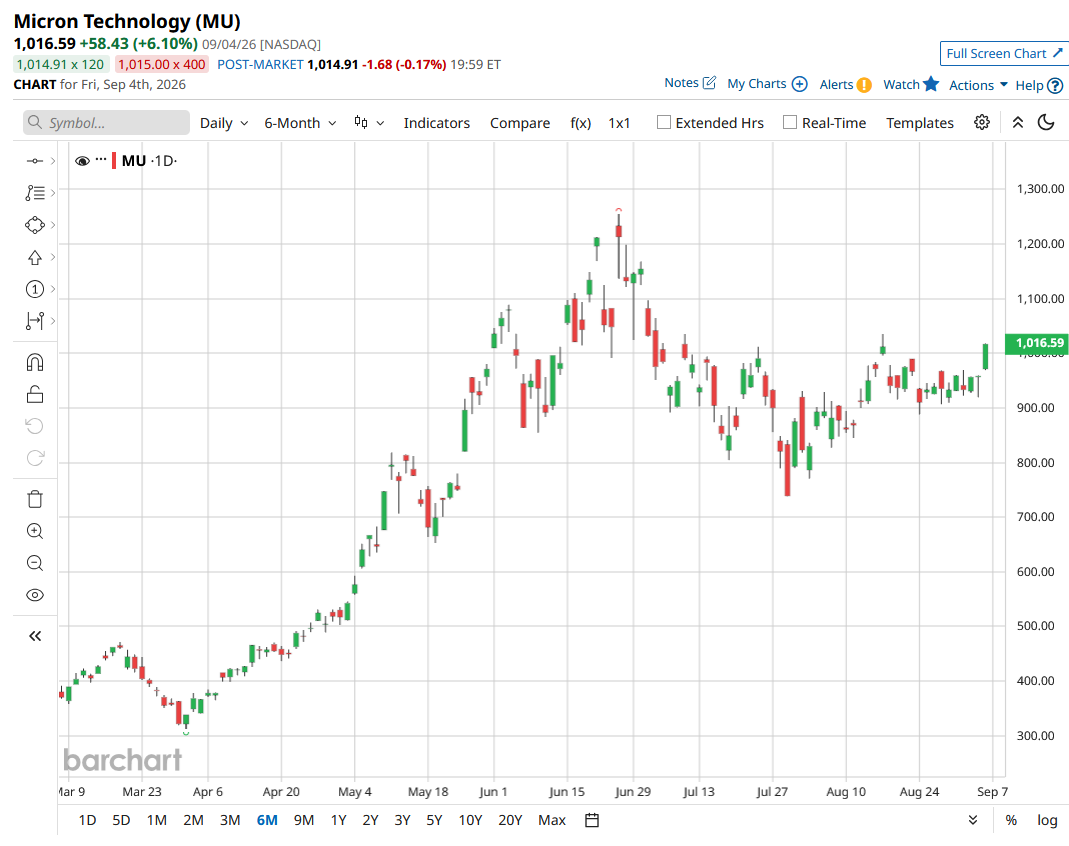
Micron is up 673% in the last 12 months, an incredible performance resulting from the memory shortage. It has, however, delivered zero returns in the last three months despite trading at a sub-10x forward PE. The fear is that the memory cycle has peaked, and this fear could well hinder further upside in the stock.
Micron’s valuation sends mixed signals. The forward GAAP P/E of 13.19x looks cheap, especially for a company of this scale growing this fast. The reason the P/E multiple stays low is the cyclical nature of the memory business. Investors worry that the boom won’t last and that things could change drastically in a few years. The forward Price-to-sales ratio tells a different story. At 8.35x, it sits about 105% above its 5-year average of 4.07x, which shows how far the stock has run. The EPS outlook shows that analysts expect Micron to have a typical memory business trajectory. They estimate earnings to jump 785% in 2026 and 111% in 2027, extraordinary for a company already worth over $1 trillion. The growth is then expected to slow down to 10% in 2028 before turning negative in 2029. That decline is the memory supply catching up with demand. The balance sheet is strong. Micron holds $26 billion in cash against $6.4 billion in debt, leaving it net cash positive by nearly $20 billion. For investors, the low P/E is tempting for a company posting record quarters. But the steadily slowing growth — ending in a decline by the end of the decade — suggests the boom may not last.
Risks Heading Into Micron’s Q4 Earnings
Micron is set to announce its earnings on September 30. While an earnings beat will make the headlines, investors will have their eyes set on various other things. For starters, it will be the memory demand over the course of the next three to five years that will be on the analysts’ minds. The competition from China will be another.
Investors would also keep a close eye on whether the data center demand coming from hyperscalers will continue. This is another fear that keeps the stock’s valuation depressed. If there is a hint of this spending slowing down, or a hint that high bandwidth memory capacity isn’t fully booked for 2027 or 2028, it could cause the stock to crash, despite its low earnings multiple. This is a risk investors take into the earnings, so anyone trading the hype would be better off heading for the exit before the earnings, just as I pointed out and was proven right at the previous earnings report.
What Are Analysts Saying About Micron Stock
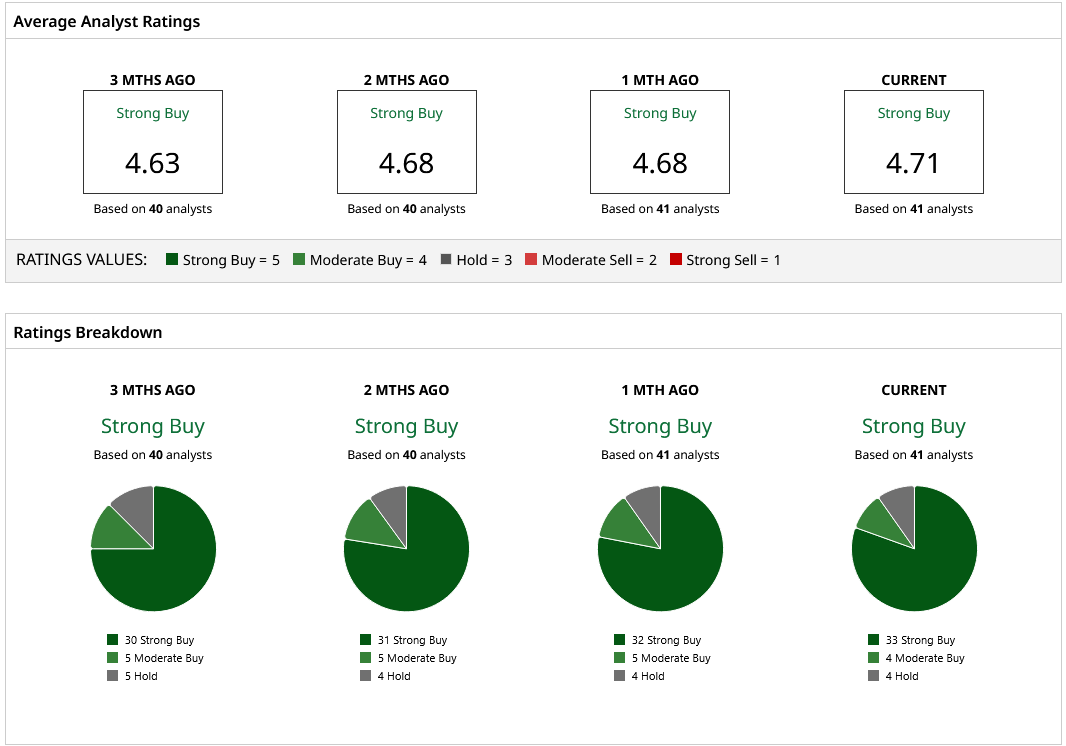
Interestingly, the lowest Wall Street price target for Micron is $1100 by Goldman Sachs, and the stock keeps trading below that. Others like Susquehanna and D.A. Davidson, with their price target of $2000, are much more bullish on the stock. It currently has a mean target price of $1474, suggesting 45% upside from here on. If management is able to deliver the right comments at earnings, this gap would fill very quickly.
On the date of publication, Jabran Kundi did not have (either directly or indirectly) positions in any of the securities mentioned in this article. All information and data in this article is solely for informational purposes. For more information please view the Barchart Disclosure Policy here.