
3 US Industrials That Could Gain From Canada Trade Diversion
Trade friction between Canada and the US is reshaping where factories source steel, machinery and other essentials, and that disruption can create openings for US industrial stocks positioned to step in as Canadian suppliers face new tariffs. Missing this shift could mean watching others react first. This article walks through three US domestically focused industrials tied to this story and explains how the news backdrop touches each one.
The stocks covered below are a small sample of the industrial manufacturers exposed to this trade diversion story. The full screen surfaced 25 more US listed players with equally detailed narratives that are not included here. To see that broader list and move quickly from thesis to potential watchlist, head straight into the US domestic industrials benefiting from Canada–US trade diversion screener to identify, filter and analyze the highest conviction candidates tied to this Canada to US sourcing shift.
Astec Industries (ASTE)
Overview: Astec Industries is a US roadbuilding and construction equipment manufacturer that could benefit if tariff-driven sourcing shifts from Canadian machinery suppliers.
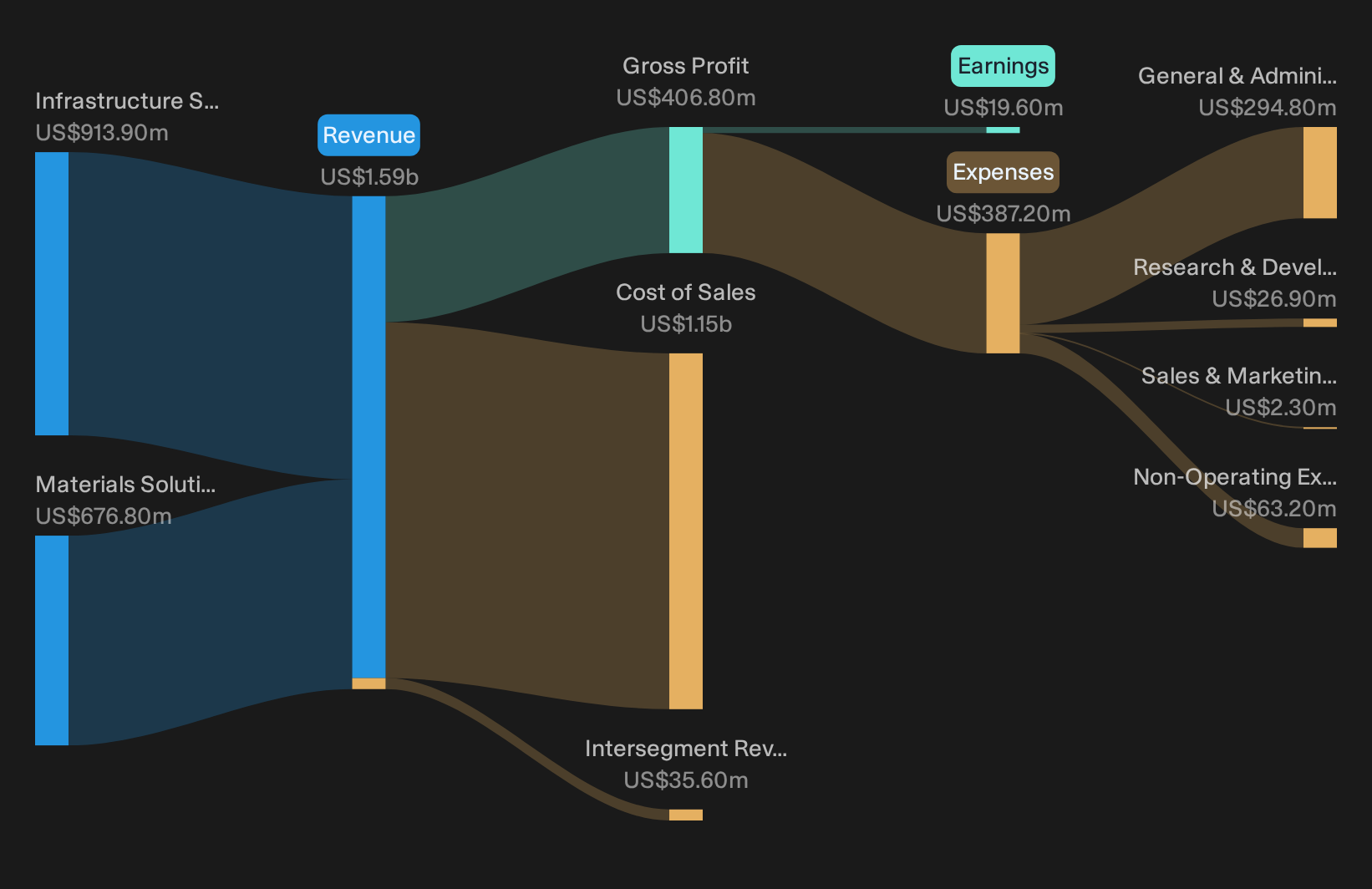
Operations: Astec generated about $913.9 million from Infrastructure Solutions and $676.8 million from Materials Solutions, with a smaller intersegment revenue adjustment of $35.6 million.
Market Cap: US$1.0b
Astec Industries matters for this Canada to US trade diversion story because it already builds the kind of heavy equipment domestic buyers may increasingly prefer onshore when cross-border costs rise.
"Passage of U.S. infrastructure bills, increased state and local transportation contract awards, and ongoing multi-year federal funding are set to drive sustained, visible demand for Astec's core road construction and materials equipment, supporting long-term revenue growth."
What happens to Astec Industries’ margins if one underappreciated cost pressure shifts just as that demand tailwind gathers pace?
If that cost squeeze is the missing piece for you, read the full narrative for Astec Industries to see how Astec Industries’ trade exposure and pricing power could be decoupling.
International Paper (IP)
Overview: International Paper is a Memphis based packaging producer that supplies corrugated boxes and fiber based materials across North American industrial and consumer supply chains, positioning its mills as a potential substitute when buyers look to shift away from Canadian pulp and paper sources.
Operations: International Paper records about $14.9b from Packaging Solutions North America and $9.2b from Packaging Solutions EMEA, with small unallocated and intersegment adjustments.
Market Cap: US$19.7b
International Paper fits this Canada to US trade diversion story as a large scale, domestically rooted packaging supplier that can absorb redirected pulp and paper demand if cross border sourcing becomes more complicated or costly.
"International Paper is benefiting from a long-term shift away from plastic and toward fiber-based, recyclable packaging, as rising sustainability and circular economy priorities among consumers and regulators are boosting demand for its core product lines."
What happens to International Paper’s turnaround potential if a single unseen pressure on containerboard pricing shifts just as demand redirects onshore?
If that pressure point is what you care about most, read the full narrative for International Paper to see how International Paper’s pricing power and earnings path could be shifting.

Sylvamo (SLVM)
Overview: Sylvamo is a Memphis based producer of uncoated freesheet paper and pulp, supplying North American buyers that may replace Canadian imports.
Operations: Sylvamo generates about $1.7b in North America, $904 million in Latin America and $757 million in Europe, with modest inter segment eliminations.
Market Cap: US$1.4b
Sylvamo matters for this Canada to US trade diversion theme because its North American mills already produce the grades buyers are likely to source domestically if cross border pulp and paper flows become more expensive or uncertain.
"Industry supply reductions, such as the closure of major competitor mills and an expected decline in imports due to tariffs, will tighten supply in North America, supporting higher operating rates, stabilizing pricing, and strengthening Sylvamo's revenue and net margins."
What happens to Sylvamo’s reshoring upside if a single cost and balance sheet pressure shifts just as that pricing support kicks in?
That pressure point is exactly what full narrative for Sylvamo unpacks. It reveals how Sylvamo’s reshoring story could accelerate if supply tightness and balance sheet repair start working together.

Seeking Alternatives Before They Fly
Fresh ideas tend to move first. By the time a theme hits headlines, early entries are already riding the breakout. Scan these under the radar lists while it matters and act now.
- Spot companies quietly building momentum in AI infrastructure before attention floods the sector by scanning the 55 AI infrastructure stocks while it is still flying under most radars.
- Zero in on potential compounding machines with strong finances by running the list of solid balance sheet and fundamentals (24 results) and see which balance sheets may hold up when others start dropping.
- Track income ideas with punch by reviewing the 6 dividend fortresses and see which high yield payers could keep portfolios moving instead of getting caught flat footed.
This article by Simply Wall St is general in nature. We provide commentary based on historical data and analyst forecasts only using an unbiased methodology and our articles are not intended to be financial advice. It does not constitute a recommendation to buy or sell any stock, and does not take account of your objectives, or your financial situation. We aim to bring you long-term focused analysis driven by fundamental data. Note that our analysis may not factor in the latest price-sensitive company announcements or qualitative material. Simply Wall St has no position in any stocks mentioned.
Have feedback on this article? Concerned about the content? Get in touch with us directly. Alternatively, email editorial-team@simplywallst.com