
3 Aviation Stocks Worth Watching as Bombardier Tariff Risk Reshapes Regional Fleets
With Washington and Ottawa trading tariff threats and Bombardier suddenly in the political spotlight, aircraft lessors and regional airlines that touch its jets are back on investor radars. Policy risk can reshuffle contract terms, financing costs, and even fleet choices, which creates both openings and pitfalls. This article walks through three stocks from our North American screener that appear positively exposed to this news and explains why each may deserve a closer look now.
The stocks covered below are just a starting sample, and the full screen surfaced 30 more U.S. and Canadian aircraft lessors and regional airlines with equally compelling fleet and contract narratives that are not discussed here. To go straight to the source and identify which profiles line up with your own thesis, analyze the North American Aircraft Lessors and Regional Airlines with Diversified Fleets screener.
AerSale (ASLE)
Overview: AerSale is a US based aviation company that buys, leases, maintains, and eventually tears down commercial aircraft and engines, supplying airlines and lessors with whole aircraft, engine leases, and used serviceable parts that can support a wide range of fleet types. Its mix of asset management, cargo and tanker conversions, and MRO services means AerSale can benefit if operators adjust capacity away from Bombardier and other constrained OEMs and lean more on aftermarket support and flexible leasing.
Operations: AerSale generates most of its revenue from Asset Management Solutions, with about US$138 million from engines and US$38 million from aircraft, alongside Tech Ops MRO services at roughly US$98 million and Tech Ops product sales of about US$29 million.
Market Cap: US$277 million
AerSale provides direct exposure to the commercial aircraft aftermarket at a time when airlines are juggling fleet constraints, regulatory retrofit deadlines, and possible substitution away from certain manufacturers. The company is closely linked to engines and whole aircraft, from leasing to teardown, and has been building higher margin MRO and engineered solutions such as AerSafe and AerAware that relate to regulatory and safety upgrades rather than one off aircraft sales. At the same time, AerSale is currently loss making and uses external borrowing, so any disappointment in lease demand or retrofit activity can affect earnings and balance sheet flexibility. For investors weighing trade driven fleet shifts and aging aircraft trends, AerSale is a business that may warrant closer examination.
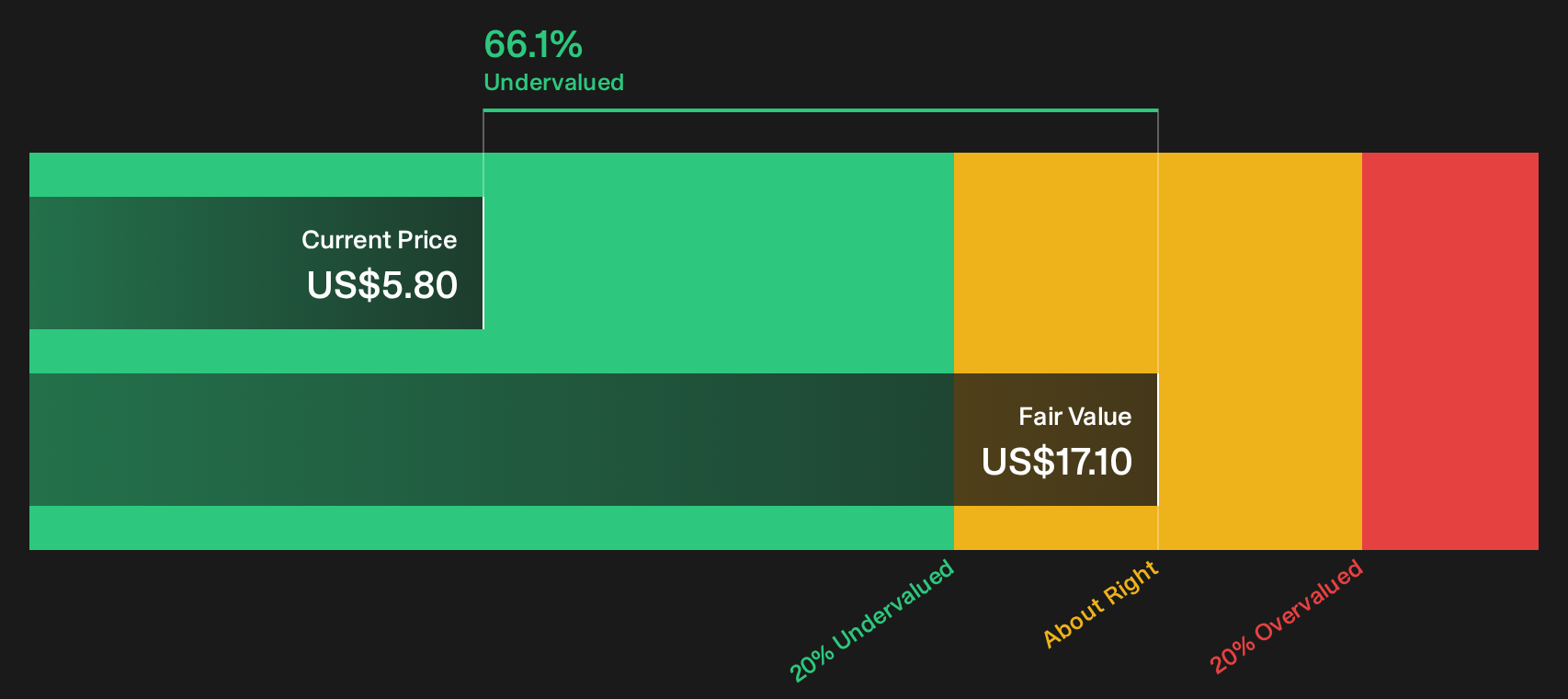
AerSale’s aftermarket reach and regulatory retrofit products could be masking a more complex story around cash needs and future earnings power. To see how those pieces fit together, review the DCF valuation analysis for AerSale
Exchange Income (TSX:EIF)
Overview: Exchange Income is a Winnipeg based company that owns a wide mix of regional aviation businesses and aircraft services alongside a large manufacturing arm, giving investors exposure to essential air services, aerospace support and industrial projects tied to North American fleets. Its aviation operations, which include passenger, freight, medevac and mission systems work, link it directly to the screener theme around regional aircraft and diversified fleets using platforms such as Bombardier and other regional jets.
Operations: Exchange Income generates about CA$2.6b of revenue from its Aerospace & Aviation segment and roughly CA$1.1b from Manufacturing.
Market Cap: CA$6.8b
Exchange Income provides exposure to regional aviation and aerospace services through a diversified platform that also includes manufacturing tied to long term infrastructure and defense spending. Recent record results, higher EBITDA guidance for 2026 and a dividend increase reflect management’s view of the company’s cash flow profile, while contracts such as Air Greenland and SkyAlyne illustrate how its mission systems and Northern aviation capabilities can be relevant as fleet and defense priorities evolve. At the same time, this growth depends on significant debt, a manufacturing arm that can be affected by trade and tariff swings, and a dividend that is not fully covered by free cash flow. For investors who want deeper context on how those trade offs compare, the full narrative and valuation work are essential.
Exchange Income’s record results, 2026 EBITDA guidance and rising dividend hint at a business model that could be decoupling from short term noise. To see what the market might be missing about its growth profile, review the analyst forecasts for Exchange Income

DPC Holdings (DPC)
Overview: DPC Holdings manufactures mission critical engine components and superalloys for aerospace turbines, industrial gas turbines and turbochargers, which ties it into the aircraft leasing theme through demand for maintenance, retrofit and life extension work on existing fleets. If airlines keep aircraft flying longer while trade policy and OEM backlogs play out, DPC’s castings, blades and vanes can sit at the center of that engine work.
Operations: DPC Holdings generates about US$451 million from Europe, US$326 million from North America and US$184 million from Turbo Wheels, partially offset by roughly US$9 million of inter segment sales.
Market Cap: US$6.7b
DPC Holdings provides exposure to the “picks and shovels” of aircraft and turbine life extension at a time when fleets may be reconfigured or kept in service longer due to trade friction and OEM bottlenecks. Multi year engine and IGT contracts, capacity investments in superalloys and new aftermarket blade and vane programs are tied to recurring maintenance rather than one off jet sales. The catch is that DPC is currently loss making, relies heavily on external funding and has a relatively new board, so execution and financing discipline are important considerations. For investors evaluating that trade off, the company’s 2026 guidance, long term contract pipeline and IPO capital raise provide more detail than headline earnings alone.
DPC Holdings looks like an engine story that many investors have only half read, with loss making results sitting against long term turbine contracts and fresh IPO capital. To see how those threads come together by 2026 and what the market might be underestimating, walk through the analyst forecasts for DPC Holdings

Seeking Fresh Alternatives Before They Fly
Some of the most interesting breakout stories start quiet, gain momentum, then move out of reach. Scan these fresh stock ideas before the crowd catches up and act now.
- Spot under the radar quality before momentum builds by running the curated 17 high quality undiscovered gems that filters for strong fundamentals while they are still flying below most investors’ screens.
- Target resilient cash generators while volatility is dropping by checking the hand picked 80 resilient stocks with low risk scores and focus on businesses with sturdier balance sheets and risk profiles.
- Ride the structural shift into automation with the tailored 36 robotics and automation stocks and find companies powering factories, warehouses and infrastructure upgrades while it still matters.
This article by Simply Wall St is general in nature. We provide commentary based on historical data and analyst forecasts only using an unbiased methodology and our articles are not intended to be financial advice. It does not constitute a recommendation to buy or sell any stock, and does not take account of your objectives, or your financial situation. We aim to bring you long-term focused analysis driven by fundamental data. Note that our analysis may not factor in the latest price-sensitive company announcements or qualitative material. Simply Wall St has no position in any stocks mentioned.
Have feedback on this article? Concerned about the content? Get in touch with us directly. Alternatively, email editorial-team@simplywallst.com