
Tesla Stock May Have A European Catalyst Investors Are Missing
(TSLA) investors spend plenty of time arguing about deliveries. Europe may soon give them something more interesting to think about: high-margin revenue from cars (TSLA) has already sold.
France has begun testing (TSLA)'s Full Self-Driving (Supervised) system on public roads and expects to finish its review by mid-to-late September. An EU-wide approval vote could follow as early as October 6, with December the next likely window if that timetable slips. It is rare to get a regulatory decision this important with a date attached to it, which is why investors should be watching.
The easy take is that FSD approval could help (TSLA) sell more cars in Europe. It might. But the more valuable opportunity is already sitting inside the cars there. (TSLA) could activate FSD through a software update and charge owners every month without building another vehicle. With automotive margins under pressure, that is a better business than cutting the price of another Model Y to keep factories moving.
France Has Become The Key
The Netherlands approved FSD Supervised for domestic use in April after testing the system for more than 18 months. Belgium, Denmark, Estonia, and Lithuania followed under the Dutch framework. France did not. In July, French Transport Minister Philippe Tabarot opposed an EU-wide rollout because of concerns about speeding and whether drivers remained attentive enough while using the system.
That opposition mattered. EU approval requires at least 15 of the 27 member states representing 65% of the bloc’s population. France carries enough population weight to make its support important. Its decision to move from opposing FSD to testing it on French roads does not mean (TSLA) has won, but it suggests the stance is no longer a flat rejection.
France is reviewing evidence gathered by (TSLA) and the Dutch regulator. (TSLA) says FSD Supervised recorded 4.1 times fewer collisions than manually driven Teslas over more than 100 million kilometers in five European countries between April and August. I would treat that comparison cautiously. The system is supervised, and the driver must remain alert and ready to take control. Tesla has not solved autonomous driving in Europe.
It is not necessary, at least for this approval. The question in front of regulators is whether FSD Supervised is safe enough to be used as a driver-assistance system on European roads. Investors often jump straight from FSD to a world of driverless robotaxis. The nearer opportunity is less dramatic, but it could start producing revenue much sooner.
(TSLA) is offering FSD Supervised in the Netherlands for €99 a month. At that price, 100,000 subscribers would generate about €119 million of annual revenue. At 250,000 subscribers, the figure rises to almost €300 million. Half a million would produce close to €600 million.
I am not suggesting (TSLA) will reach any of those numbers. We do not know how many European cars would qualify on day one, and older vehicles may lack the hardware required to run the approved system. We also have no reliable evidence yet on European demand. Plenty of owners may subscribe for a month, satisfy their curiosity, and cancel.
The point is that (TSLA) has an installed base; it has barely begun to monetize. The cars are already built and connected. Delivering the software should cost far less than manufacturing another vehicle, so each lasting subscription has the potential to carry attractive incremental margins. (TSLA) said active FSD subscriptions were up 56% year over year in the second quarter. Europe would give it a much larger market in which to see whether that demand holds up.
This comes when the economics of the car business could use some help. (TSLA)'s second-quarter automotive gross margin, excluding regulatory credits, was 16.3%. Heavy investment in AI, robotics, and manufacturing pushed free cash flow to approximately negative $1.1 billion. The car operation still provides most of Tesla’s revenue, but the share price assumes the company will eventually make far more money from software and autonomy. Europe could provide an early test of that claim using actual subscriptions rather than promises about the future.
A Catalyst Does Not Make Tesla Cheap
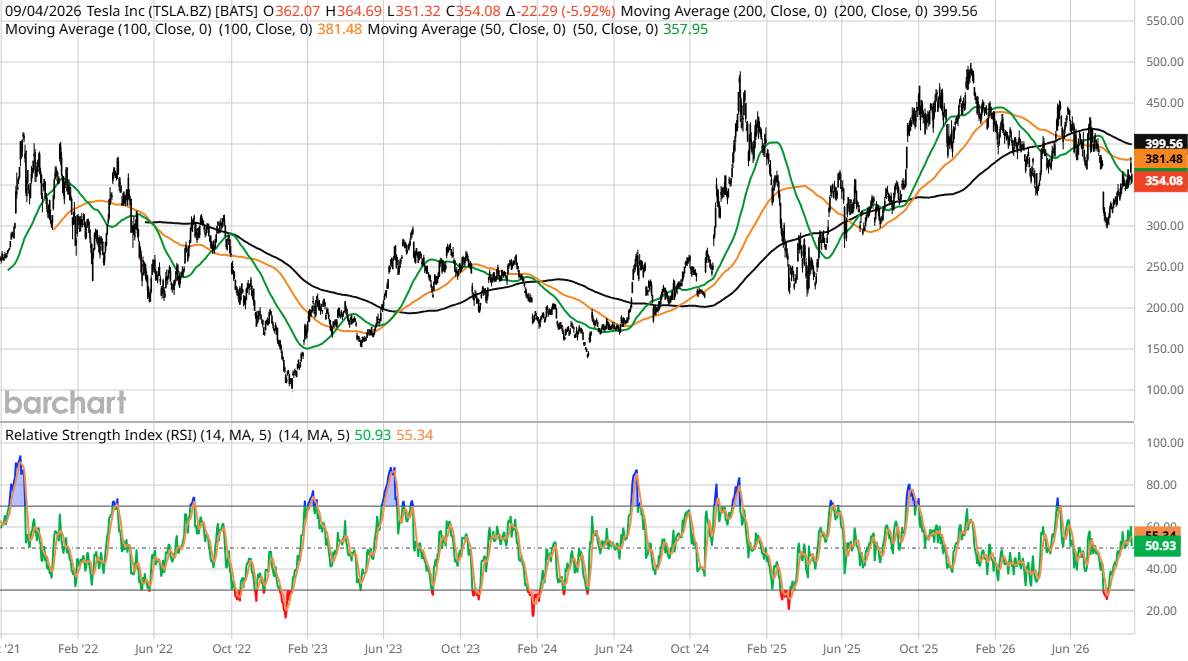
(TSLA) shares recently traded near $354, valuing the company at roughly $1.25 trillion and more than 300 times trailing earnings. Investors are already paying for a lot of success. Even €600 million of annual European FSD revenue would be small beside that valuation, so approval on its own does not make the stock cheap.
What it could do is make one part of the valuation easier to defend. Approval would show that regulators outside the United States are prepared to accept (TSLA)'s camera-led approach. More importantly, paying subscribers would show that Tesla can continue earning from a car years after it leaves the factory. The first year of European FSD revenue may not have a significant impact on earnings. Proof that the model works could matter more.
This is how we look at catalysts at The Edge. The announcement gets the attention, but what follows determines the value. I make the same point in my book, Price Catalysts, available on Amazon. A catalyst needs to change cash flow or change the odds of that cash flow arriving. Otherwise, it is just news.
There are several ways the deal could fail. France could complete its tests and keep its objections. The vote could be delayed until 2027. Approval might initially cover only newer Hardware 4 vehicles, cutting down the number of cars (TSLA) that can be monetized. Even with regulatory clearance, drivers may decide FSD Supervised is not worth €99 every month. Permission to sell a product is not proof that people want to buy it.
That is why I would not buy (TSLA) simply because France has started testing FSD. I would watch for France to finish its review and soften its position, then see whether the EU vote appears on the October agenda. If approval comes, forget the celebration and watch the numbers: eligible vehicles, new subscriptions, and retention after the first few months.
Approval without adoption is a headline. If (TSLA) can persuade European owners to pay every month for software delivered to cars already on the road, it becomes a real earnings catalyst. That is the part of the European FSD story that investors may be missing.
On the date of publication, Jim Osman had a position in: TSLA . All information and data in this article is solely for informational purposes. For more information please view the Barchart Disclosure Policy here.