
Britain's new finance minister's debut did not make waves: the pound is divided into three tiers, and the market is waiting for the October budget to guide the direction
The Zhitong Finance App learned that on Monday, British Chancellor of the Exchequer John Healy delivered his first important speech since taking office, promising to continue the previous fiscal restraint line, make economic growth a top priority, and emphasized that fiscal rules will be strictly followed in the October 28 budget. However, the speech did not provide a clear direction for the pound: the pound rose slightly against the US dollar and remained basically the same against the euro, but fell sharply against the yen to its lowest level since February. Investors are gradually turning their attention to next month's budget to see how Healy balances Prime Minister Andy Burnham's expansionary ambitions with fiscal discipline.
During Monday's trading session, the pound rose 0.1% against the US dollar to 1.3536; against the euro it was 0.8588, slightly stronger than the previous trading day. The pound fell 0.7% against the yen to 209.16, the lowest level since February this year. The yen strengthened across the board on the same day, becoming the most prominent theme in the foreign exchange market.
Analysts believe that there are multiple factors behind the strengthening of the yen, including possible capital return, investors closing Japanese arbitrage transactions, political pressure from the US, and rising market expectations that the Bank of Japan may speed up the pace of interest rate hikes. In August, the yen hit a 19-year low against the British pound, while it once fell to a 40-year low against the US dollar. Recently, the trend has clearly reversed.
The US dollar weakened against most major currencies as a whole on Monday. The rise of the pound against the US dollar was more in line with the weakening of the US dollar than the strong momentum of the pound itself. Despite this, the pound's rebound halted at least part of last week's decline against the euro and dollar.
Barclays analysts attributed the pound's previous weakening to the pressure brought about by rising global yields and investors initially shifting their focus to the October budget. As the October 28 budget approaches, investors are looking forward to seeing how Healy can advance Burnham's ambitions in housing construction, social care, and defense while maintaining fiscal discipline.
The bank said, “The calm period in August is coming to an end. The market will examine UK policies and fundamentals more deeply, and the risk return of the pound has modestly turned downward.”
Healy emphasizes fiscal discipline: “in line with the Prime Minister”
Speaking at a manufacturing center in the central English city of Coventry, Healy said that fiscal discipline “underpins every promise made by the current administration.” He called growth his top priority and emphasized: “The Prime Minister and I are on the same page in adhering to fiscal rules in the upcoming budget.”
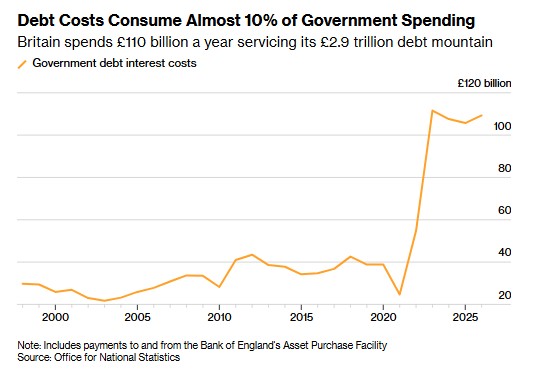
This statement comes at a time when the US-Iran war triggered a sell-off in global bonds and the cost of British borrowing rose to a decades-high level. The recent rise in British Treasury yields is not only related to the war boosting inflation expectations, but also affected by uncertainty about the new Prime Minister Burnham's spending plan. This is eroding the UK's fiscal buffer and boosting market expectations for a possible tax increase in Healy's budget next month.
The speech also highlighted the real dilemma faced by the Burnham-Healy administration: Healy needed to balance Burnham's promise of change with investors' cautious sentiment. Burnham promised “transformational change” to voters, while Healy tried to send a signal to investors that they would continue to follow the cautious line of former Chancellor of the Exchequer Rachel Reeves and former Prime Minister Kiel Stammer.
Healy said that he and Burnham are consistent in “balancing accounts and setting aside buffers to withstand uncertainty, control borrowing to reduce inflation, and reduce long-term pressure on public finances.” However, he declined to respond to the tax increase and postponed the announcement of related matters until the October 28 budget.
Although the new finance minister originally wanted to deliver an optimistic, relatively low-key pre-budget speech focusing on reducing the pressure on living costs, reducing corporate costs, and explaining Burnham's key “decentralization” agenda, the worsening market environment prompted the Ministry of Finance to adjust the tone of external communication. Healy warned on Monday that the current world is “increasingly dangerous and uncertain” and “is putting pressure on Britain.”
He said, “This makes our government's task more difficult and makes it more difficult for every business seeking investment.”
Like her predecessor, Reeves, Healy believes that the path to sustainable public finance lies in stronger economic growth and has made this a top priority. However, the Treasury is well aware that, despite Reeves' efforts, during his tenure, British government bonds once again began trading at a premium over similar US and German bonds.
Healy said the growth will come from the decentralization of political and economic power from Whitehall and Westminster. He announced plans to empower urban areas to attract private investment as part of Burnham's push for devolution of power from the central government. But Burnham's core concept of putting more sectors of the economy under “public control” still lacks details.
Healy's growth challenges were also highlighted on Monday. Jaguar Land Rover announced plans to lay off up to 4,000 employees on the same day, and the company's headquarters is only a few miles from where Healy spoke. Healy declined to answer questions from reporters about the difficulties faced by Britain's largest car manufacturer.
Burnham has now made the transfer of political and economic power from Westminster a key promise during his tenure as prime minister, including giving the mayor more control and managing local economic policies from his new “10 North Downing Street” base in Manchester.
Shouting out to businesses and investment tools
Regarding companies that bore higher payroll taxes under the previous policy, Healy said, “I recognize that since the pandemic, corporate costs, energy bills, regulatory burdens, planning restrictions, and labor costs have all risen, and I want to draw a clear line.” “Whether it's business costs or living costs, the only long-term solution to these problems is growth,” he added.
Healy also promised to use public financial institutions such as the National Wealth Fund and the Commercial Bank of England to attract more private investment into various regions.
According to UK fiscal rules, investment loans made through these public financial institutions are not included in the requirement that “debt as a share of the economy falls before 2029/30” because these loans are considered financial assets that can offset liabilities. As a result, the fiscal rules are mainly affected by the debt repayment costs of additional borrowing.
In her speech, Healy also announced a series of specific measures: extending reforms that limit judicial review in the energy sector to all major infrastructure projects to prevent “unreasonable lawsuits and challenges from hindering economic growth”; promised to reduce corporate regulatory burdens by 25% by the end of the current parliament in mid-2029; reiterated that local governments would be allowed to retain more local income tax revenue and stated that they would develop a fiscal decentralization roadmap in next month's budget; said it would use public procurement “as a moral and financial responsibility”; promised to provide more technical education that met the needs of local businesses; said it would use public procurement “as a” A strategic tool to ensure that more public sectors support British businesses”; set the goal of doubling the number of UK “unicorn” companies and make the country the first customer in the early stages. He said, “Too many ideas born in the UK have to go elsewhere to find the funding needed to grow”; announced a reduction in the Ministry of Finance's discount rate for evaluating the viability of long-term infrastructure projects from 3.5% to 3%. Lower discount rates enable more project values to be reflected in government accounts in advance, making it easier for major infrastructure projects to pass assessments.