
Dell and HPE Posted Record Revenue. Here’s Why the Market Rewarded 1 and Punished the Other.
Dell (DELL) and Hewlett Packard Enterprise (HPE) have both reported earnings, and the market’s verdict could not have been clearer. Dell soared after its results, while HPE fell. But what’s interesting is that both posted record revenue and raised their guidance. So why did the market reward one while punishing the other? The answer is the one thing I flagged in my earnings preview for the two firms: margins. Ahead of earnings, I argued the guidance raise wouldn’t be what moved these stocks, because everyone already expected it. The real test would be margins under rising memory costs. That is exactly how it played out.
Two Strong Quarters, Two Opposite Reactions
HPE actually had a great quarter. Revenue rose 34%, earnings beat, and it hit a record 40% gross margin. It raised its guidance too. But management warned that gross margins would moderate as AI systems become a larger part of the mix, and guided operating margin lower for the next quarter. The company said that memory and flash shortages are expected to linger into 2027. That warning was enough. The soft margin outlook worried investors more than the beat reassured them, and the stock fell after hours.
Dell also raised its full-year revenue guidance to $192 billion, but it went further. The company showed margins expanding. Its server division’s operating margin jumped from 8.8% to 15%, even as memory prices climbed. Management then raised its full-year EPS guidance sharply, signalling it expects that stronger profitability to continue rather than fade. The market rewarded it, and the stock surged.
So the same storm hit both companies. Rising memory costs pressured margins across the board. The difference is that Dell proved it could push prices and mix faster than costs were rising, while HPE told investors the squeeze was still coming. In this AI-focused market, raised guidance is expected. What actually moves a stock now is whether or not the growth is getting more profitable. Dell passed that test. HPE, at least for next quarter, didn’t.
Even After the Surge, Dell Still Looks the Cheaper Stock
Before earnings, Dell was the more expensive stock. Despite its surge, its shares are now the cheaper of the two. Dell sits at a forward GAAP P/E of 20.17x, while HPE trades at 23.15x. That happened even as Dell’s stock climbed, because its earnings estimates rose so sharply that the multiple actually came down. On forward price-to-sales, the two look similar, at 1.64x for Dell and 1.52x for HPE, though both sit well above their own histories. The bigger gap is in the EPS outlook. Dell’s earnings are expected to jump 151% in fiscal 2027, slow down to 10% in 2028, then settle to 22% and 24% in 2029 and 2030, respectively. That dip in 2028 is likely due to earnings being compared with a strong base this year rather than any real weakness.
For HPE, the growth fades every year, going from 97% in 2026, 19% in 2027, 7% in 2028, and 5% in 2029. The balance sheet also works in Dell's favor. Although it has a net debt of roughly $23 billion against HPE’s $16 billion, Dell’s market cap is well over four times the size of HPE, making the debt far easier to manage. In my earnings preview, I chose Dell as the better pick on numbers. Those numbers have now widened the gap further.
AI Infrastructure Stock #1: Dell Technologies
Dell Technologies is one of the world’s largest makers of servers, storage, and personal computers. In recent years, it has become a central supplier in the AI buildout, shipping the data center systems that hyperscalers and enterprises use to run their models. The company, founded in 1984, is based in Round Rock, Tex., and is led by founder Michael Dell.
Year-to-date, Dell’s stock has skyrocketed 304%, comfortably outperforming the S&P 500’s ($SPX) 13% gain during the same period. The company has posted record revenues and raised guidance in back-to-back quarters. This is why the stock has surged sharply after both quarters reported in fiscal 2027.
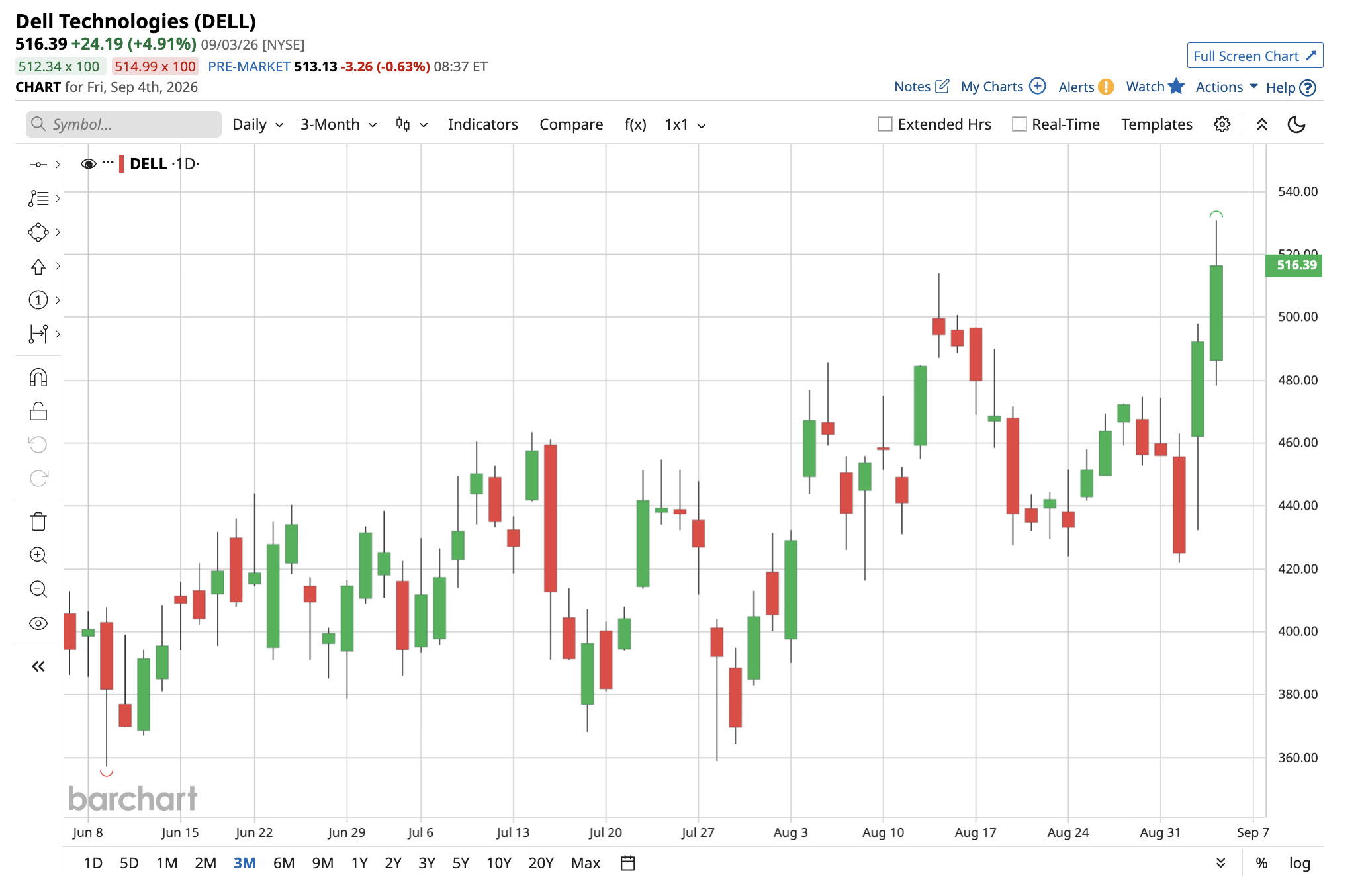
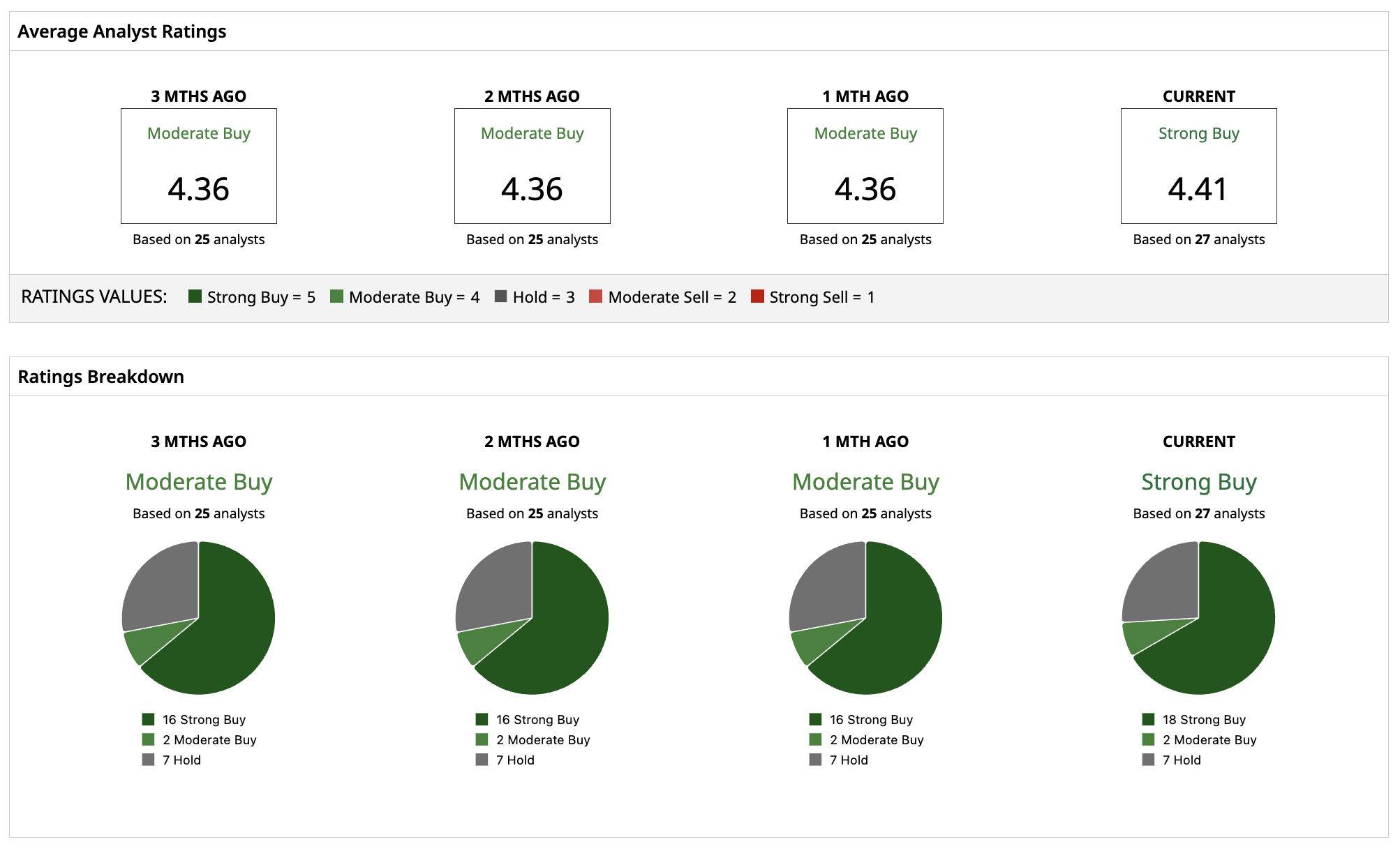
Following the earnings report on Sept. 1, several analyst firms have turned more bullish on Dell’s stock and have raised their price targets. A few names include Bernstein, UBS, J.P. Morgan, and Citi. Based on 27 Wall Street analysts, Dell holds a Strong Buy rating with a mean price target of $575.92. When I covered the stock in the earnings preview, it had a Moderate Buy rating with a mean target of $510. This further indicates analysts are turning more bullish after the quarterly results.
AI Infrastructure Stock #2: Hewlett Packard Enterprise
Hewlett Packard Enterprise supplies the servers, storage, and networking that power enterprise and government data centers. Its Juniper acquisition in 2025 roughly doubled its networking business. The company was formed in 2015 when Hewlett-Packard split into two companies. Led by CEO Antonio Neri, HPE is headquartered in Houston, Tex.
HPE’s stock performance has also been strong this year, climbing 125% against the S&P 500’s 13% gain. The surge this year has come as investors reassessed HPE as an AI networking story. This rally has been driven by strong AI server demand, repeatedly raised guidance, and faster-than-expected cost savings from its Juniper integration.
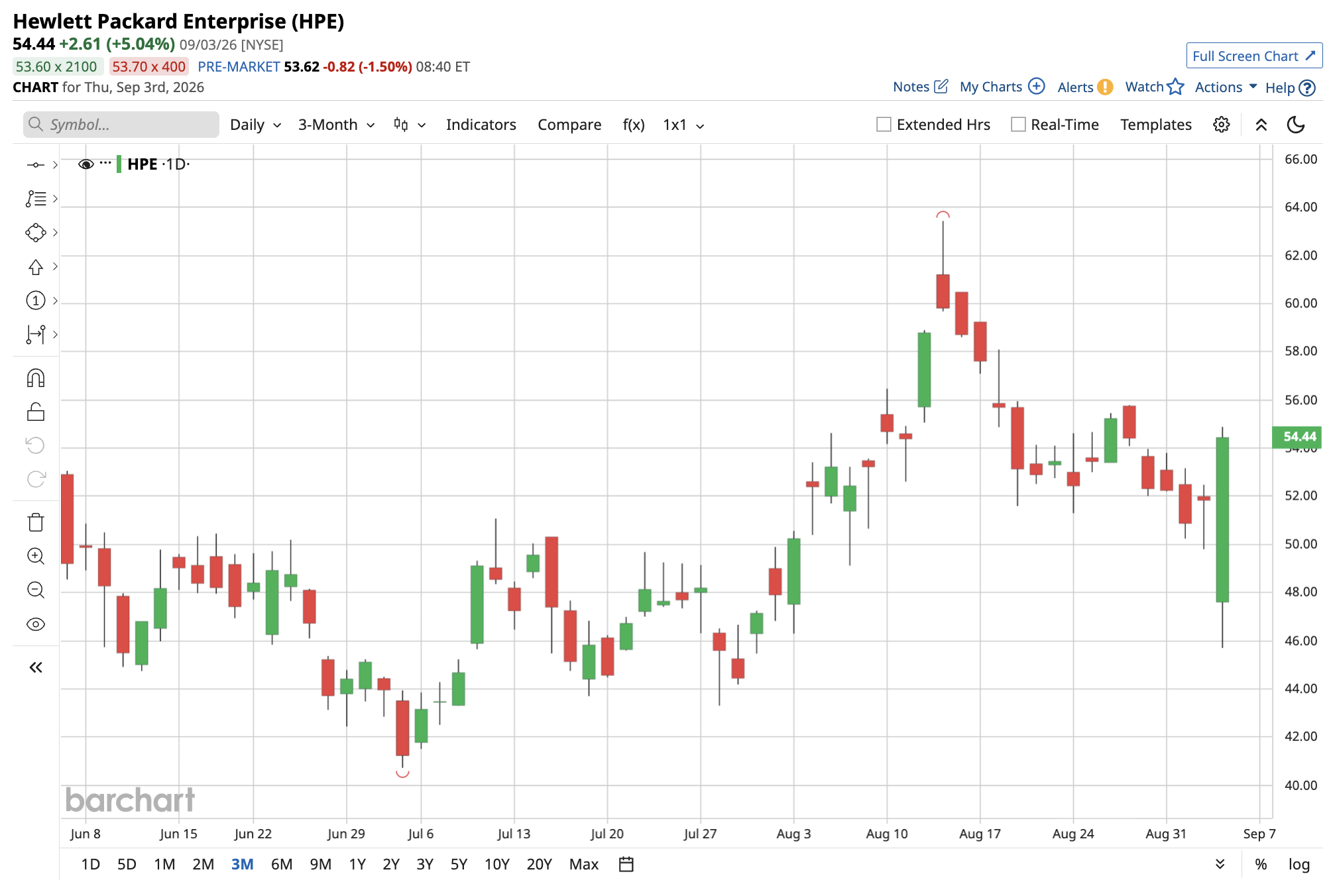
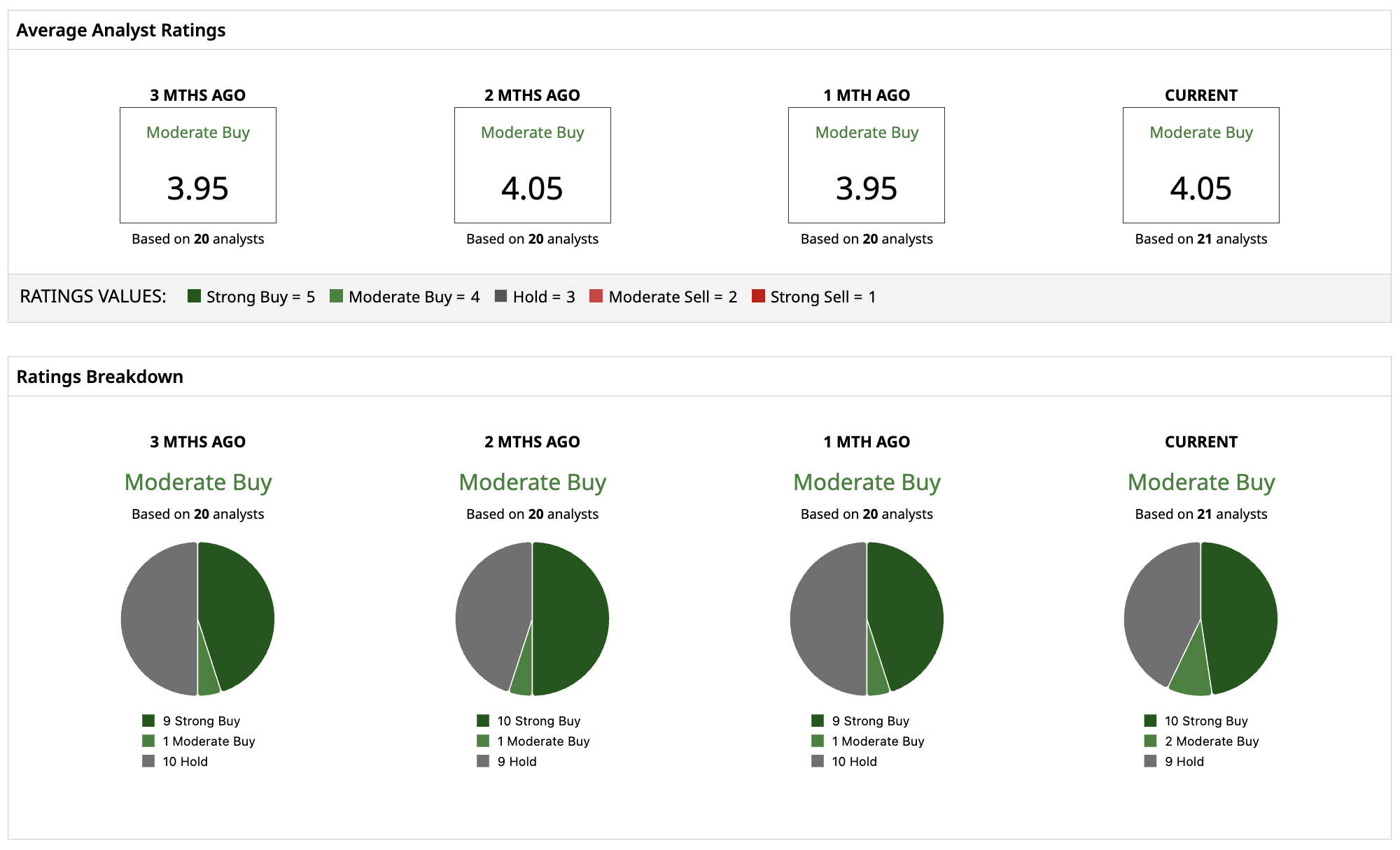
Following the earnings report, HPE couldn’t win analysts’ confidence the way Dell did. While some analyst firms like Morgan Stanley marginally raised HPE’s price target, others like UBS and Wells Fargo decreased theirs. Based on 21 Wall Street analysts, HPE holds a Moderate Buy rating with a mean price target of $68.53. The mean price target has remained roughly the same after the quarterly results.
On the date of publication, Jabran Kundi did not have (either directly or indirectly) positions in any of the securities mentioned in this article. All information and data in this article is solely for informational purposes. For more information please view the Barchart Disclosure Policy here.