
Smart Communications Decision Reference | Market Performance Depends More on Internal Stimulus
[Editor-in-chief Guan Shi]
The US economic sanctions against Iran have made the market quite tense. Nvidia's performance exceeded expectations, forming a certain hedging. The Hang Seng Index adjusted its trend in a narrow range last week.
Walsh's speech at the annual meeting of global central banks in Jackson Hole was an eagle: he made it clear that “fighting inflation is a top priority” and reiterated that the 2% inflation target is “firm and fixed”; the current financial environment “has no restrictions”. If inflation does not fall clearly and quickly enough, the Federal Reserve “still has work to do.” If you look closely, there is no essential difference from previous speeches. US stocks didn't drop much either.
This week's non-farm payrolls data is relatively critical. As the last employment report before the FOMC, it will directly determine the pricing for the pace of interest rate cuts in September.
The current market is difficult to be driven by so-called external benefits; more depends on internal incentives. For example, real estate has ushered in intensive policies: the three departments have jointly issued a document to improve the commercial housing sales system, implement existing housing sales, achieve “what you see is what you get”, and institutionally seal unfinished buildings. Central Bank+General Financial Supervisory Authority's “Opinions on Reforming and Improving Real Estate Credit Management”: Two major changes: first, extending the term of personal mortgages from a maximum of 30 to 40 years; second, “getting a house and then repaying the loan” — personal loans for pre-sale housing can only be issued after the project is completed and registered. Closing all kinds of misappropriation loopholes; Securities Regulatory Commission's “Opinions on Capital Market Support for Constructing a New Model of Real Estate Development”. Support listed housing enterprises to refinance and acquire housing-related assets, promote commercial real estate REITs, and support real estate private equity investment funds. It directly opens up new financing channels for housing enterprises. Let's take a look at how well real estate stocks are performing.
Apple's first folding screen phone will be unveiled, with more than 10,000 domestic flexible screen-related patents; Yu Chengdong first revealed Huawei's new tri-folding machine, laying out a “G” internal folding plan ahead of time; early manuscripts of the Huawei Mate XT 2 tri-folding phone came to light 11 years ago; Apple's first AI glasses are expected to be unveiled in 2027: the first generation has no display and targets voice and visual recognition. Fruit Chain and Huawei Chain are expected to catalyze.
Prices for AI hardware are still bullish. Demand for high-end copper foil soared 260%, and the PCB material manufacturer Jiantao Laminate Board (01888) immediately increased the price of all products by 10%-20%.
Elon Musk: The next major bottleneck for artificial intelligence will be electricity, and SpaceX is paving the way for turbine blade factories to solve the power shortage in data centers. Focus on the concept of gas turbines and transformers.
Other beneficial products, CICC (03908): The merger of Dongxing Securities and Cinda Securities was approved by the Shanghai Stock Exchange; Baidu (09888), the main dual listing on the Hong Kong Stock Exchange and NASDAQ will take effect on September 1.
SheIn is scheduled to go to Hong Kong for an IPO on September 1, and will issue 280 million shares. The issue price range is set at HK$47.6 to HK$49.5 per share, and plans to raise up to HK$13.9 billion.
[This week's gold stocks]
Lingyi Intelligent Manufacturing (01688)
Apple's new CEO will be unveiled with a folding screen. The company's traditional fruit chain is stable. AI server liquid cooling is the core and second growth curve. It is ready to obtain frame production capacity from major North American customers; auto parts are released at a high speed.
As of August 31, 2026, the company spent a total of 439 million yuan to buy back 232.3758 million A shares, total revenue for the 2026 semi-annual report of 25.149 billion yuan (+6.45% YoY), net profit to mother of 764 million yuan (YoY--- 17.88%), net profit after deducting non-net profit: 389 million yuan (YoY--- 35.83%), overall gross profit margin: 16.73%, up 1.65 pct year-on-year.
The company has the largest market share of consumer electronics precision functional parts in the world. Apple's core supply chain, the core supplier of titanium alloy/carbon fiber structural parts for folding screens, the value of folding stand-alone machines has increased significantly.
The company's R&D investment increased rapidly, with 1,442 billion yuan in the first half of 2026, or +27.86% year-on-year; the focus is on liquid cooling and cooling, server power supplies, robots, and folding screen hardware. AI hardware (consumer electronics+computing power cooling power) was 20.464 billion, accounting for 81.37%; of these, thermal management was 2.92 billion, +43.46% year over year. Computing power cooling was the strongest growing sector; battery power was 3,928 billion, +12.73% year over year. The automobile and low-altitude economy was 3,528 billion, accounting for 14.03%, +198.26% year-on-year, with a gross profit margin of 14.08%.
The automobile business rapidly transformed, and the company acquired Zhejiang Xianglong and Jiangsu Keda; products covered drive shafts, interior and exterior parts, and new energy battery modules; customers include BYD, Ideal, NIO, Volkswagen, Toyota, etc., and the automotive sector's revenue in the first half of 2026 was 3.528 billion yuan, a significant increase of 198.26% over the previous year. There are plenty of orders in hand. The main consumer electronics industry has long-term stable orders for Apple folding, mobile phones, wearables, and iPad-related structural parts and power modules; new folding screen products continue to rise. A number of long-term frameworks for auto parts are gradually increasing along with the expansion of production of new energy vehicles.
AI server liquid cooling. The company issued a performance guarantee and undertook liquid cooling frame orders from top computing power customers in North America. The agency estimates that the maximum annual frame size is about 30 billion; the product is compatible with the GB200/GB300/Rubin platform, and the order is scheduled to be produced until 2027; Dongguan and Suzhou cold plates have a monthly production capacity of 50,000 sets, with a yield of 99%; completed Google's factory audit and entered the Google AI server liquid cooling supply chain. The humanoid robot has received ODM orders for more than 100 complete machines from leading customers; thousands of sets of parts and joint modules have been delivered; it is planned that the assembly capacity of the whole machine will be at the level of 100,000 units in 2028. Currently, it is still in the early stages of mass production, and the overall order volume is not large.
[Industry Watch]
The Ministry of Finance injected a total of 70 billion dollars into the five insurers. On September 6, the Ministry of Finance injected a total of 70 billion yuan into the five insurers (China Life Insurance Group's 35 billion yuan, People's Insurance 15 billion fixed increase, Taiping 7 billion yuan, credit insurance 10 billion, and a fixed 15.4% increase in China's 3 billion yuan premium). The scale was lower than market rumors at the beginning of the year. The share capital of listed entities was diluted by 4%-5%, and their solvency could be increased by about 4-6 pcts. Leading brokerage research institutes believe that capital injections are of limited help in expanding short-term equity exposure, but dilution is manageable, strengthens capital resilience and operational flexibility, and superimposes dividend improvement signals to benefit undervalued and high-dividend insurers. The Q4 solvency reform is still a greater catalyst.
The Ministry of Finance injected 260 billion yuan into ICBC and the Agricultural Bank. On September 6, ICBC and Agricultural Bank's fixed increase plans were implemented simultaneously. The total funding limit was 260 billion yuan (Ministry of Finance subscription 200 billion yuan, tobacco etc. 60 billion yuan), statically increasing the core Tier 1 capital adequacy ratios by about 0.34 pct and 0.61 pct respectively. Combined with the total capital injections of about 70 billion dollars by insurers on the same day, the six major banks officially completed the round of core Tier 1 capital replenishment, and the financial injection was extended to insurance state-owned enterprises for the first time. Some analysts said that the amount was lower than the previous market forecast of 300 billion dollars, the pricing was not lower than the average price and probability premium for the first 20 days before the first day of the issuance period. After the mid-term dividend, EPS and dividend dilution were significantly smaller than last year's four banks. The consolidation of capital directly opened up space for credit expansion and risk resistance. Under the dividend allocation logic, the attractiveness of major bank allocations did not decrease, and the solvency and equity allocation capacity of insurers increased simultaneously.
Hong Kong stocks recommend focusing on: ICB/Agricultural Bank (direct increase in core Tier 1 capital, limited dividend dilution), China Life/China Taiping (first fiscal injection, opening up space for solvency and equity investment), major banks with high dividends and construction state-owned enterprises (fiscal easing signals strengthen dividends and steady growth chains).
[Data View]
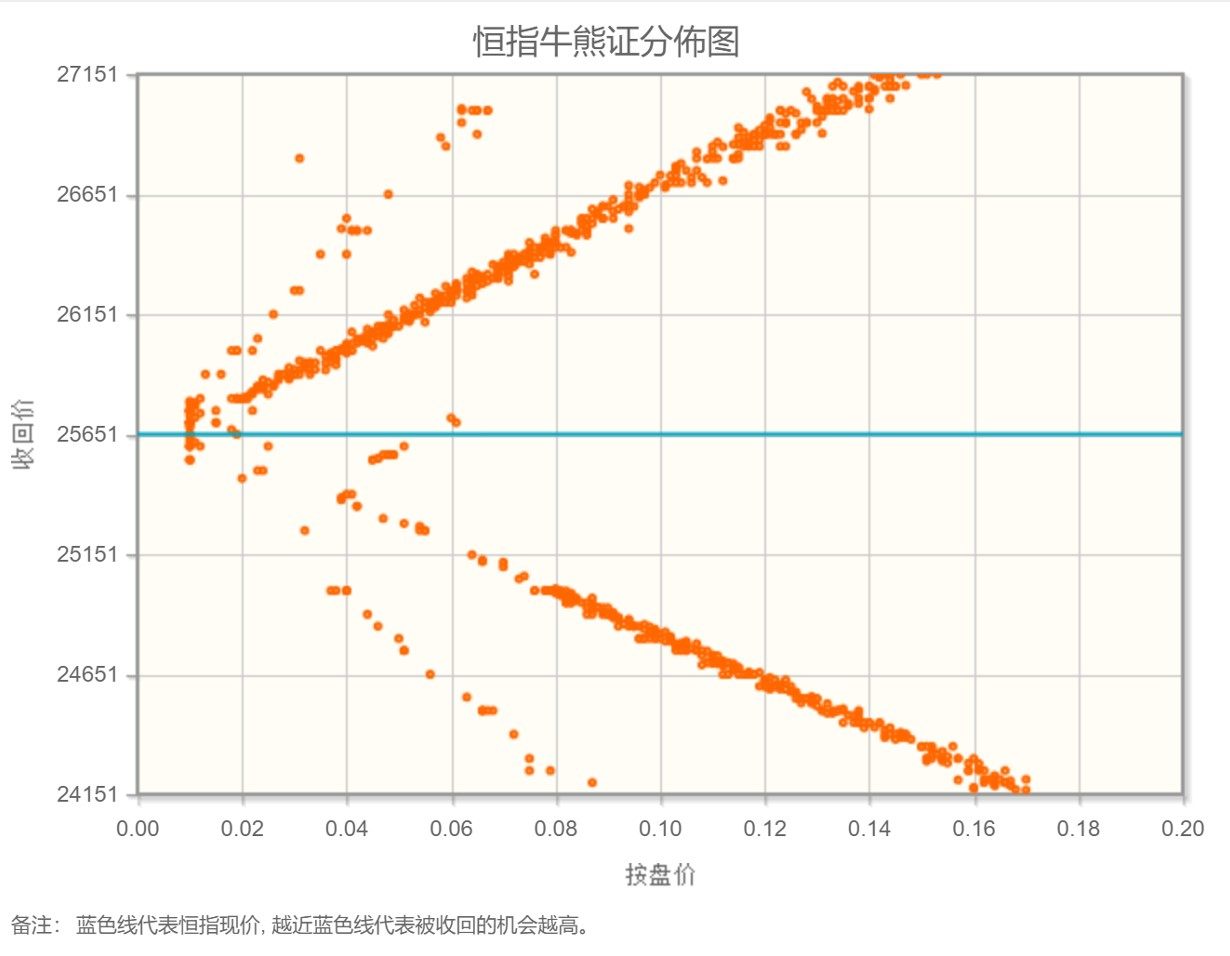
According to data released by the Hong Kong Stock Exchange, the total number of outstanding contracts in the Hang Seng Futures Index (September) was 112,309, and the net number of outstanding positions was 32,616. Hang Seng Futures refers to the settlement date of September 29, 2026.
The Hang Seng Index is at 25,651 points, and the bull-bear concentration area is close to the central axis. The performance of Hong Kong stocks was observed in the external environment.
[Editor's Testimonial]
The author observed the characteristics of differentiation at the capital level last week: the pace of capital inflows to the south slowed marginally, and there was a slight return of active foreign capital. And this is exactly in line with the historical law of “reverse market layout to the south, and foreign investment lags behind”. Looking at the sector, financial stocks led the way, while adjustments were made in technology, pharmaceuticals, and raw materials, and there are clear signs that capital is moving in the direction of high certainty.
Currently, Hong Kong stocks are in an external stress testing window. A short-term breakdown still needs to be verified by three major signals: Southbound capital returning to a continuous net inflow, Hang Seng Technology's volume breaking through previous highs, and the spread of the AI market to the application side. In a volatile market, structural opportunities will remain the main line, and direction selection is far more important than position level.