
Morgan Stanley Stock And 2 Trading Firms Tied to Bond and Yen Market Swings
Right now, bond markets sit at the crossroads of fresh US inflation data, revived Fed rate hike talk, and shifting expectations for both Treasury yields and the yen. That mix can reshape trading flows across fixed income, FX, and derivatives, which feeds directly into certain banks and brokers. This article walks through 3 stocks exposed to these forces and explains how the same story can mean opportunity or risk for your portfolio.
The three stocks below are just a sample of the banks and brokers most exposed to fixed-income and interdealer flows. The full screen surfaced 34 more companies with equally detailed stories that are not covered here. To go straight to the broader opportunity set, analyze and compare potential ideas inside the US and Japan Fixed-Income Trading & Interdealer Broker Banks screener.
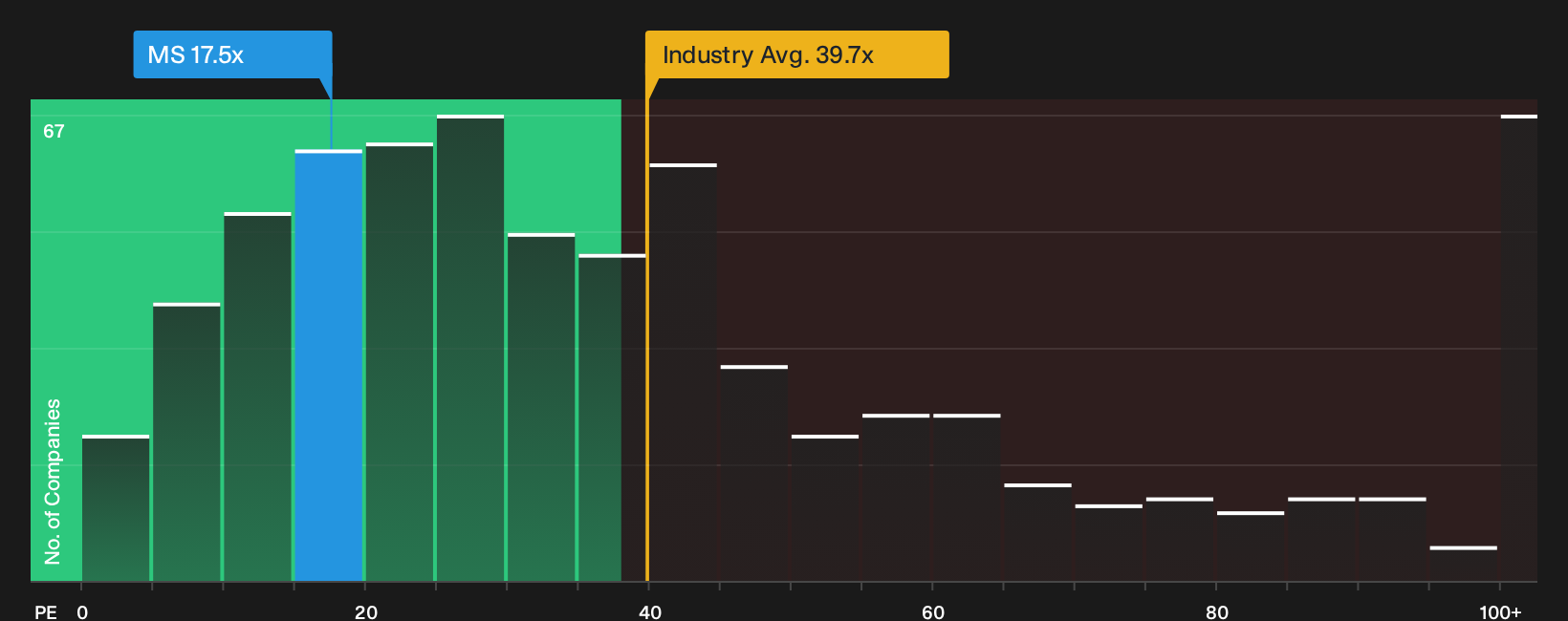
Morgan Stanley (MS)
Morgan Stanley is one of the largest global dealer banks linked directly to the screener theme, with a deep footprint in fixed income, FX and derivatives trading alongside its investment banking and wealth management franchises. It generates about US$38b from Institutional Securities, US$34b from Wealth Management and around US$6.6b from Investment Management, with small intersegment eliminations. The company’s market cap of roughly US$341b reflects a scale that lets it absorb and service heavy flows when bond and currency markets are busy.
For investors watching the inflation and rate story, Morgan Stanley offers rare breadth. Its fixed income and FX desks can see heavier client activity when volatility picks up, while its large wealth and investment management arms bring in recurring fees that can steady results through different cycles. That mix comes with trade offs. Reliance on wholesale funding, weaker free cash flow coverage of dividends and recent insider selling all ask for closer scrutiny. If you want exposure to fixed income trading and market making without giving up the strengths of a global wealth platform, Morgan Stanley is a stock that deserves a closer look later in this list.
Morgan Stanley’s massive trading engine and steady fee businesses can look like a rare combination, yet the real story sits in how the 3 key rewards and 2 important warning signs might be skewed by one crucial pressure point
Virtu Financial (VIRT)
Virtu Financial is a pure play on the US and Japan Fixed-Income Trading & Interdealer Broker Banks theme, using high speed technology to make markets and provide execution across fixed income, FX, equities, ETFs and derivatives for banks, brokers and institutions. The business is heavily tilted to Market Making, which generated about US$2.7b in revenue, with Execution Services adding roughly US$667 million and a minor segment adjustment. With a market cap of about US$10.0b, Virtu Financial gives you direct exposure to trading volumes and rate or currency volatility at a sizeable but still focused scale.
If you think the next leg of the rates and FX story will keep screens busy, Virtu Financial is one of the clearest ways to express that view. Most of its revenue is tied to market making across asset classes, so swings in inflation expectations, Treasury auctions and yen moves can quickly feed into trading activity. Analysts see room for earnings to grow even while revenue is expected to decline, helped by efficiency gains and a business mix that now includes analytics and pre or post trade tools. The trade off is a capital intensive model funded entirely through external liabilities, meaningful leverage and recent insider selling, which all raise the stakes if volatility dries up. For investors who can tolerate those pressures, the combination of rate sensitive trading exposure, an experienced board and a valuation that reflects some of these risks makes Virtu a stock worth studying more closely in this theme.
Virtu Financial’s rate sensitive trading engine could be masking a very different earnings path than many investors expect. Before you decide how it fits your portfolio, review the analyst forecasts for Virtu Financial and see what might be hiding behind the volatility story.

Goldman Sachs Group (GS)
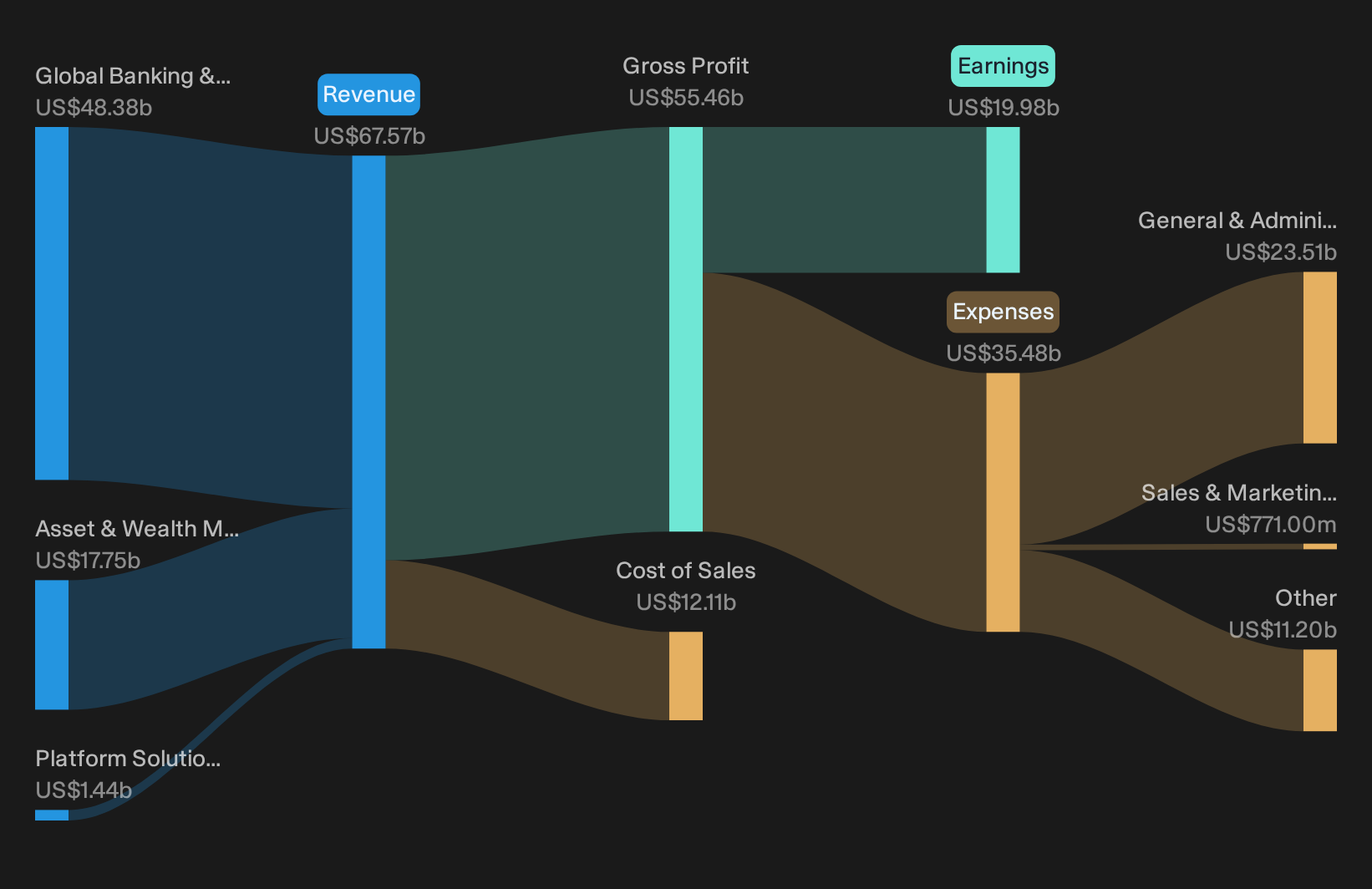
Goldman Sachs Group is one of the clearest plays on this screener’s theme, since its Global Banking & Markets arm handles client trading and market making across fixed income, currencies, commodities and derivatives worldwide. That segment contributes about US$48.4b in revenue, alongside roughly US$17.8b from Asset & Wealth Management and US$1.4b from Platform Solutions, giving the bank multiple fee and trading engines tied to rates and FX activity. With a market cap of around US$314.2b, Goldman Sachs sits in the top tier of global dealers in US Treasuries, swaps and FX flows.
If you expect the next leg of the rates and USD/JPY story to keep bond desks busy, Goldman Sachs gives you direct exposure to that through a large fixed income and FX franchise, plus growing fee businesses in asset and wealth management. Recent deals in AI infrastructure and ETFs show how it is positioning around long term themes. At the same time, heavy use of external funding, dividend coverage questions and regulatory or geopolitical shocks all keep risk firmly on the table. The mix of volatility linked trading income and more stable fee streams can be attractive, but the real interest for you is how that balance holds up when inflation data, Fed decisions and yen swings all hit at once.
Goldman Sachs Group may be quietly decoupling, with trading strength and wealth fees telling a more nuanced story than headlines suggest. Before you decide what that means for your portfolio, review the analysis report for Goldman Sachs Group to unpack the details.
Seeking Fresh Alternatives Beyond These Banks
Fresh themes can move from quiet to breakout while most investors are still watching yesterday’s story. Do not get caught chasing. Scan these ideas before the crowd and act now.
- Spot income workhorses with resilient cash flows and high yields by combing through the curated 11 dividend fortresses while they are still flying under the radar for now.
- Track the next wave of AI infrastructure demand by following momentum across the 55 AI infrastructure stocks before valuations fully reflect the story.
- Look for early compounding potential in curated operators across the list of solid balance sheet and fundamentals (52 results) to find quality while it still trades like a quiet alternative.
This article by Simply Wall St is general in nature. We provide commentary based on historical data and analyst forecasts only using an unbiased methodology and our articles are not intended to be financial advice. It does not constitute a recommendation to buy or sell any stock, and does not take account of your objectives, or your financial situation. We aim to bring you long-term focused analysis driven by fundamental data. Note that our analysis may not factor in the latest price-sensitive company announcements or qualitative material. Simply Wall St has no position in any stocks mentioned.
Have feedback on this article? Concerned about the content? Get in touch with us directly. Alternatively, email editorial-team@simplywallst.com