
RPC (RES) Stock Looks Undervalued On Cash Flow But Overvalued On Earnings
RPC stock has delivered a strong 5 year return, yet the current checks on price raise questions about how much value is left. The company screens as undervalued on an intrinsic value estimate using a Discounted Cash Flow (DCF) approach, while market based multiples paint a more expensive picture.
- RPC has returned 83.9% over the past 5 years, which puts recent gains in focus when judging whether the current price still offers an attractive entry point.
- Future cash flow delivery and capital discipline can support the intrinsic value case, while any setback in margins or drilling activity may weaken the cash generation that underpins that view.
- The broader valuation checks give RPC a low value score of 2 out of 6, which leans expensive rather than a clear bargain on most measures.
For investors, the debate is whether the current share price already reflects the cash flows implied by the intrinsic value estimate or whether the discount to that estimate still offers a meaningful margin of safety.
Spot opportunities that look similar to RPC's set up by scanning our hand picked list of 52 high quality undervalued stocks.Is RPC Still Cheap on Cash Flow?
The Discounted Cash Flow (DCF) model here uses projected cash flows rather than earnings multiples to frame RPC’s value. The latest twelve month free cash flow is reported as a loss of $13.99 million. However, the model assumes recovering cash generation over the next decade, with free cash flow moving into positive territory and then growing steadily.
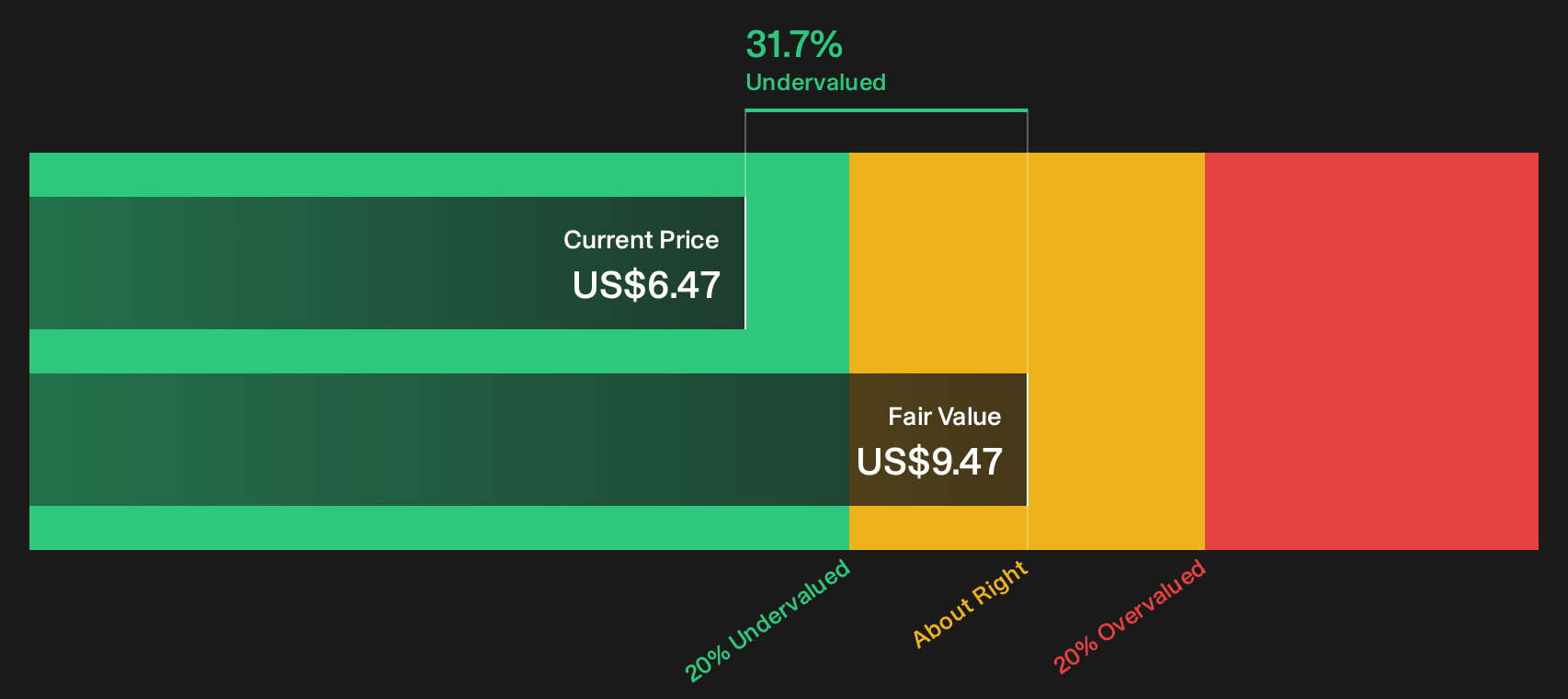
On those assumptions, the DCF model points to an intrinsic value of about $9.47 per share. Compared with the current share price, this implies RPC trades at roughly a 31.7% discount, which screens as undervalued on cash flow terms even after its strong 5 year share price run. The key question for you is whether the company can actually deliver the projected free cash flow recovery that underpins this valuation.
On the DCF numbers alone, RPC stock appears undervalued relative to the cash flows currently built into the model.
Our Discounted Cash Flow (DCF) analysis suggests RPC is undervalued by 31.7%. Track this in your watchlist or portfolio, or discover 52 more high quality undervalued stocks.
Has RPC Run Too Far on Earnings?
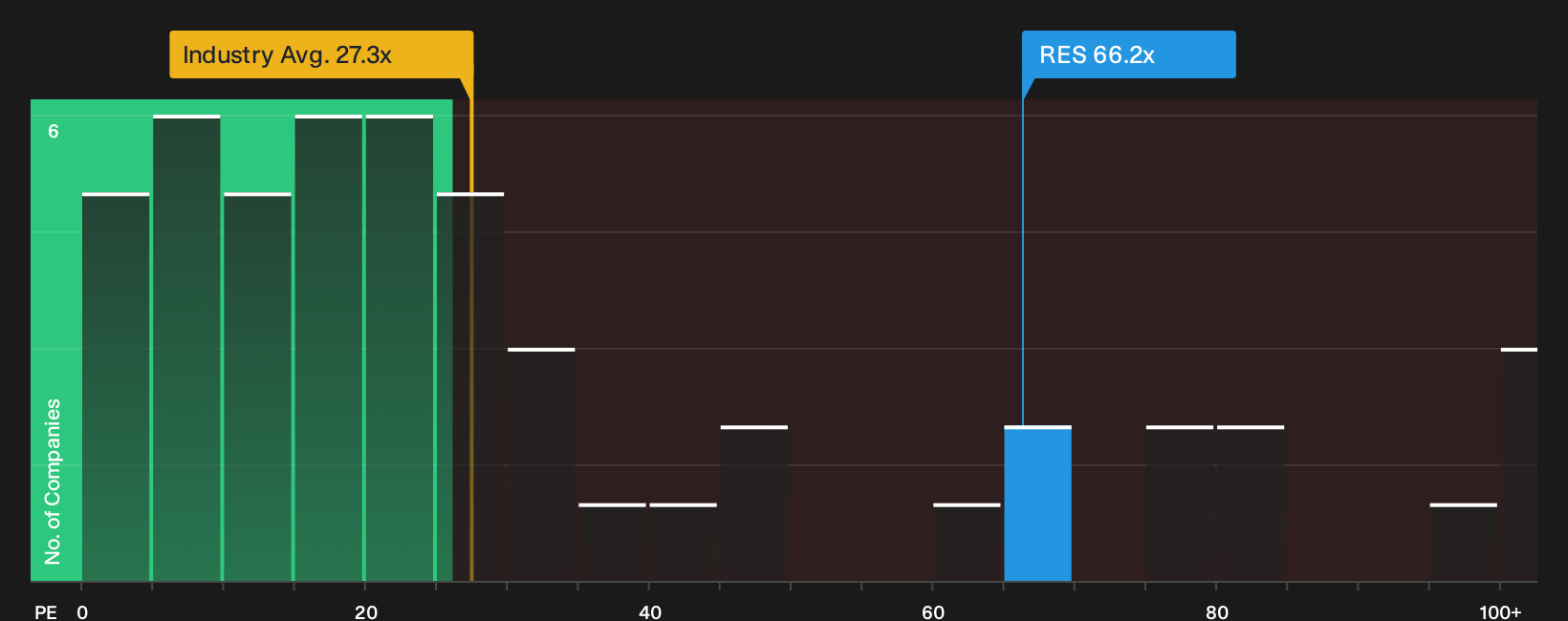
The P/E ratio is a useful cross check for RPC because earnings are a key focus for many investors in Energy Services stocks. RPC currently trades on a P/E of 66.2x, which is well above the Energy Services industry average of 27.3x and also higher than the peer group average of 53.5x.
The Fair P/E Ratio model, which looks at factors such as RPC’s profitability profile, industry, size and risk, points to a P/E closer to 30.7x. That is less than half of where the stock trades today. On this framework, the market is asking investors to pay a premium for each dollar of RPC earnings compared with what the model suggests and compared with many sector peers.
On earnings multiples, RPC stock appears overvalued relative to both the modelled fair value and typical Energy Services levels.
See what the numbers say about this price — find out in our valuation breakdown.
The RPC Narrative: What Would Justify Today's Price?
Simply Wall St Narratives for RPC pick up where the valuation checks leave off and focus directly on the future that would need to unfold for today's price to look either too high or too low. Rather than leaving you with a single output from a ratio or model, these narratives set out the underlying assumptions about RPC's growth, margins and earnings so you can watch how the real world stacks up against them on the Community page.
RPC stock has drawn sharply different narratives from the community, with one side focused on technology led upside and the other on structural headwinds.
Bull case: 28% undervalued
"Analysts broadly agree that RPC's strategic M&A, particularly the Pintail acquisition, adds revenue scale and accretive earnings, but this may understate the impact…"
Read the full Bull Case to see why RPC could be undervalued
Bear case: 29% overvalued
"The accelerating global shift to renewable energy sources continues to undermine the long-term demand for conventional oil and gas services, meaning RPC's addressable market is likely to contract over time and limit revenue growth prospects…"
Read the full Bear Case to see why RPC could be overvalued
Do you think there's more to the story for RPC? Head over to our Community to see what others are saying!
The Bottom Line
For RPC, the Discounted Cash Flow (DCF) work points to an intrinsic value above the current share price, while the earnings multiples suggest the stock screens as overvalued against peers. The low overall value score implies the broader checks are weak, so that intrinsic value signal needs careful scrutiny rather than blind trust. The gap between the two views comes down to whether future cash flows can recover as assumed or whether current enthusiasm has pushed the P/E too high. The crux from here is whether RPC can sustain the cash generation and margins that would justify both the DCF indication of upside and today’s richer earnings multiple.
This article by Simply Wall St is general in nature. We provide commentary based on historical data and analyst forecasts only using an unbiased methodology and our articles are not intended to be financial advice. It does not constitute a recommendation to buy or sell any stock, and does not take account of your objectives, or your financial situation. We aim to bring you long-term focused analysis driven by fundamental data. Note that our analysis may not factor in the latest price-sensitive company announcements or qualitative material. Simply Wall St has no position in any stocks mentioned.
Have feedback on this article? Concerned about the content? Get in touch with us directly. Alternatively, email editorial-team@simplywallst.com