
The “slow bear” of the global bond market is coming in 2026: far less intense than in 2022, but painful or more prolonged
The Zhitong Finance App learned that a bond sell-off storm that has swept through developed economies around the world is spreading at an accelerated pace. On September 1, from the US and Japan to the UK, Germany, and Australia, multinational treasury bonds were sold off simultaneously, and long-term yields climbed to the highest level in many years or even decades. The Bloomberg Global Government Bond Index yield has been rising for four consecutive trading days to 3.72%, the highest since mid-2008. However, although the immediate sell-off seems quite drastic, it is still not the same as the bond “massacre” caused by soaring inflation four years ago.
Digital comparison: “pain” in 2026 vs “crash” in 2022
This year, the storm swept through almost every corner of the developed economy — Japan's 10-year Treasury yield hit 3% for the first time since 1996; US 10-year Treasury yields topped 4.8%, approaching the highest point since October 2023; British 30-year Treasury yields hit new highs since 1998; and German and French treasury yields climbed to their highest level in more than a decade.
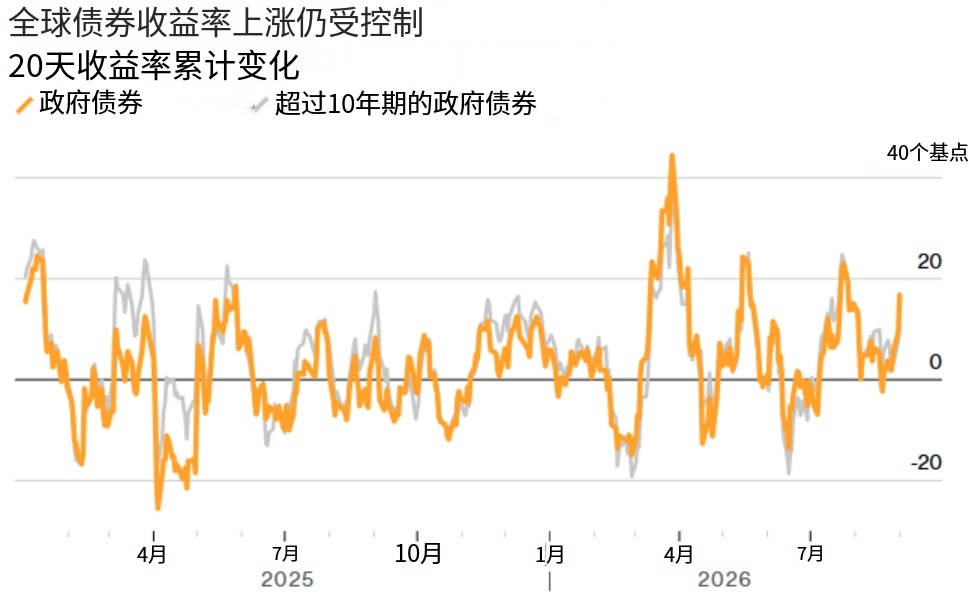
However, this apparently fierce sell-off is still not the same as the inflation-induced bond market crash four years ago. According to the data, global government bond yields have increased by a cumulative total of about 17 basis points over the past 20 trading days, compared to 62 basis points in the same period in 2022. From peak to bottom, bond prices fell 4.2% cumulatively in 2026, far lower than the 23% decline in 2022.
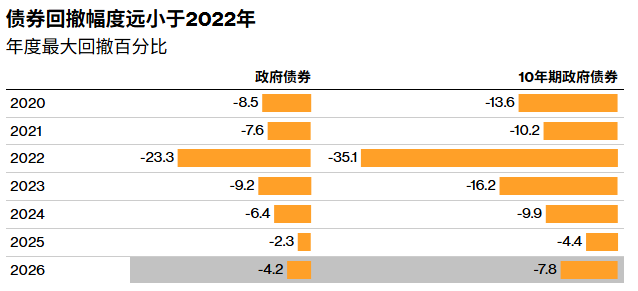
The difference is in the starting point. At the beginning of 2022, global bond yields were at historically low levels, which meant that prices were extremely sensitive to changes in interest rates. However, the current yield has recovered from a higher level, and coupon income provides investors with a greater price decline buffer — the average coupon rate for bonds in the Bloomberg Global Treasury Total Return Index was 2.68% this year, up from 1.84% in 2022. Higher coupon income partially offsets capital losses.
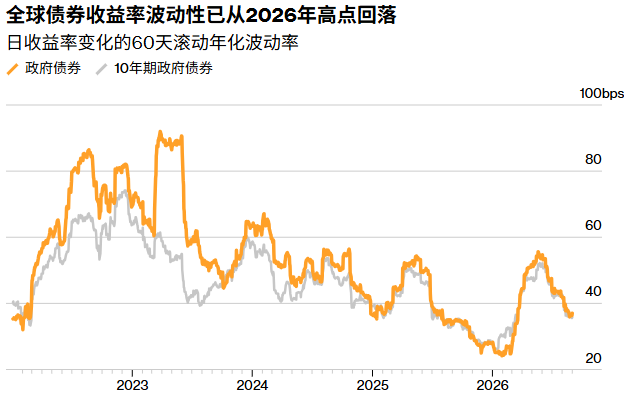
Although the current sell-off wave shows little sign of abating, the relatively moderate changes in yield so far have brought some comfort to experienced market watchers. Meanwhile, the volatility of Bloomberg's global government bond yields has fallen from a peak of 56 basis points in May to 37 basis points, far below the peak of about 92 basis points in 2022 — this kind of “passivation” fluctuation is probably the norm when the market absorbs multiple structural pressures.
“Maybe it's a reassurance pill.” Stephen Miller, a consultant at GSFM at Sydney Investment Management Company, said that although he doesn't think bonds have reached the level of “strong purchases,” at current yield levels, “bonds are already worth considering for investors aiming to obtain profits.”
Kerry Craig, a Melbourne-based global market strategist at J.P. Morgan Asset Management, also pointed out that “the actual situation is far less bad than the bond market reflects.”
Triple pressure: inflation, supply, and the end of the “era of cheap capital”
Although the scale of this sell-off is smaller than in 2022, the driving factors behind it are more complex, diverse, and superimposed.
Soaring oil prices and rekindling inflation
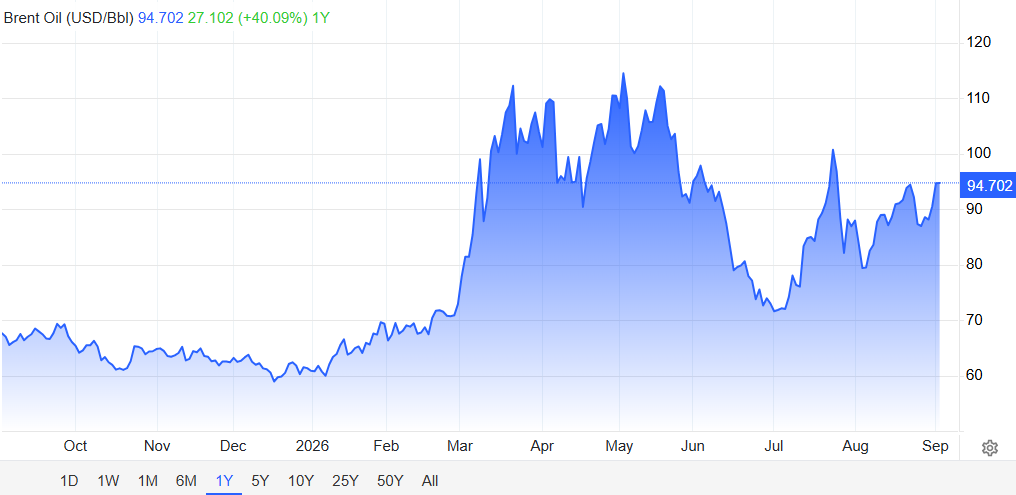
The ongoing escalation of the US-Iran conflict has pushed international oil prices back above $90 per barrel. Brent crude oil surpassed $91 per barrel on Tuesday, and the European benchmark gas price also hit a three-and-a-half-year high. The market is worried that energy transportation in the Strait of Hormuz will continue to be disrupted, and the potential upward pressure on energy prices will be difficult to quickly subside. The rise in oil prices has directly strengthened inflation expectations, making the market more worried that interest rates will need to stay high for a longer period of time.
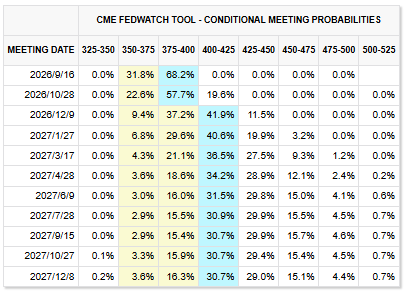
Federal Reserve Chairman Kevin Walsh's hawkish speech at the annual meeting of global central banks in Jackson Hole on Friday became a direct catalyst for this round of sell-off. The rate swap market's pricing probability of the Federal Reserve's interest rate hike in September has soared from 34% before Walsh's speech to 68%.
Supply torrents: the double squeeze of government debt and AI debt issuance
Deeper pressure comes from oversupply in the bond market. The US federal government debt surpassed 40 trillion US dollars for the first time in August, and interest expenses for this fiscal year are expected to be close to 1.2 trillion US dollars. At the same time, the artificial intelligence boom has spawned another huge demand for financing — large-scale technology companies such as Alphabet, Amazon, Meta, Microsoft, and Oracle have issued a total of about 220 billion US dollars in bonds this year for data center and AI infrastructure construction. When the government and tech giants simultaneously compete for capital in the bond market, supply pressure is significantly amplified.
Japan: The last pillar of the global “era of cheap capital” has collapsed
The sharp rise in Japanese treasury yields has far-reaching systemic significance. For a long time, the low yield on US bonds depended partly on the continued inflow of cheap foreign capital from low-interest economies such as Japan. The yield on 10-year Japanese bonds was only about 1.5% a year ago, but now it has doubled to 3%. 3% is the interest rate assumption used by the Japanese government to estimate the cost of interest payments on treasury bonds when preparing the 2026 budget — market interest rates have broken through the government's budget assumptions. The share of international investors in monthly cash transactions of Japanese treasury bonds has risen from 12% in 2009 to about two-thirds, which means that some of the funds previously flowing to US bonds are flowing back to Japan. Bloomberg strategists pointed out that G10 fixed income traders are paying more and more close attention to Japanese treasury bonds, and Australian bonds are also increasingly following the pricing of Japanese bonds rather than US bonds.
Bank of Japan Governor Kazuo Ueda has hinted at an interest rate hike in September, and market expectations for an early rate hike continue to heat up. As the world's largest holder of overseas US bonds, Japan's rising domestic yield may trigger a return of global capital, putting additional pressure on the US bond market. Meanwhile, the market has fully set the ECB to raise interest rates next week, and the probability that the Bank of Japan will raise interest rates in September is 92%.
The senior interest rate strategist for Asia Pacific at TD Securities said, “The more inflationary, the higher and longer the policy interest rate. Fiscal deterioration and higher term premiums will continue to be the focus of the market”.
The next hurdle in the market: a 5% “psychological line of defense”
Currently, no one asserts that yields have peaked. Analysts pointed out that whether it is rising energy prices and inflationary pressure, a shift in savings to investment preferences, fluctuations in the bond market caused by Trump-style adventurism, greater fiscal risk premiums, or the “crowding out effect” brought about by the issuance of bonds by giant companies, it is difficult to find a reason to believe that the rise in yield will stagnate in the short term.
Ronald Albari, chief investment officer of the US wealth management agency LNW, warned that if the 10-year US bond yield exceeds 5%, it will be “the last straw to crush the camel” and may cause the market to sell off risky assets. Nancy Van Den Houghton, chief economist at the Oxford Institute of Economics, stated, “Long-term interest rates are still vulnerable to upward pressure given the risk of rising inflation, geopolitical uncertainty, record scale of corporate borrowing, and huge issuance of government bonds.” Rising yields on Japanese treasury bonds are another potential source of pressure, as it could cause global capital to flow back to Japan.
The impact of this bond sell-off went far beyond the bond market itself. Treasury bond yields are an important benchmark for the financing costs of the entire economy — from home mortgages to car loans, student loans, to corporate finance, the overall rise in borrowing costs will be transmitted to every corner of the real economy. Under multiple pressures from the ongoing war in Iran, persistent inflation, and uncontrolled fiscal deficits, the repricing of the global bond market may have just begun.
Compared to the “fast bear” in 2022, which was triggered by aggressive interest rate hikes by the central bank, this time the pain is more subdued, more enduring, and harder to find a clear end. Ayako Sera, senior market strategist at Sumitomo Mitsui Trust Bank, stated, “The negative elements of bonds have been steadily accumulating, but until now, there has been no decisive catalyst enough to force investors out of the market.”