
Hershey (HSY) Stock Could Trade Below Fair Value While Earnings Look Fair
Hershey stock has pulled back over the past year, yet a Discounted Cash Flow (DCF) intrinsic value estimate still points to a large gap between the current share price and what the cash flow math suggests. At the same time, broader valuation checks screen as mixed rather than a clear bargain, especially with competitive pressure weighing on sentiment.
- Over the past 5 years, Hershey has returned about 14.9%, which is a modest gain that leaves recent weakness in focus for long term holders.
- On the supportive side, steady branded confectionery cash flows can underpin the DCF view of undervaluation. However, recent market share losses in chocolate to competitors such as Mars may limit how confident investors feel about that implied upside.
- The broader valuation picture is mixed, with Hershey scoring 3 out of 6 checks, which screens it as neither clearly cheap nor clearly expensive on standard metrics.
The issue now is whether Hershey's current price better reflects the caution around competition or the DCF based intrinsic value that points to a larger margin of safety.
Compare Hershey's mixed valuation score and DCF gap with other hand picked opportunities by scanning 50 high quality undervalued stocks that may also be pricing in cautious sentiment.
Does Hershey Look Undervalued on Cash Flow?
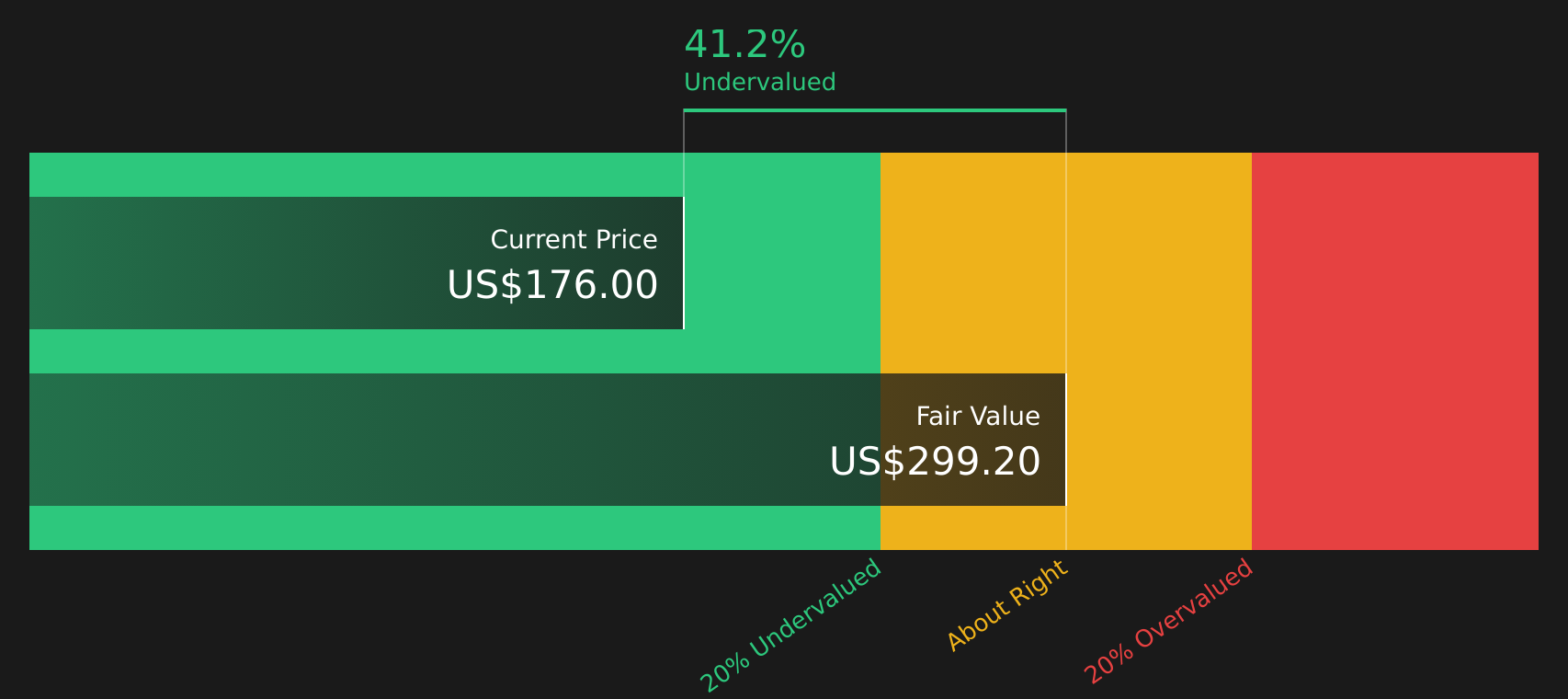
The Discounted Cash Flow (DCF) method estimates what Hershey is worth based on the cash it is expected to generate for shareholders. For Hershey, the model uses latest twelve month free cash flow of about $2.0b and assumes those cash flows keep growing rather than shrinking, which is consistent with a mature branded food business.
On that basis, the DCF model points to an estimated intrinsic value of about $299 per share. That implies the stock is trading at roughly a 41.2% discount to the cash flow based estimate. Recent warnings about market share losses in chocolate from competitors such as Mars help explain why sentiment is cautious even though the cash flow profile still supports a higher value.
Overall, the Discounted Cash Flow workup suggests Hershey stock appears undervalued relative to the cash it is projected to generate.
Our Discounted Cash Flow (DCF) analysis suggests Hershey is undervalued by 41.2%. Track this in your watchlist or portfolio, or discover 50 more high quality undervalued stocks.
Is Hershey Fairly Priced on Earnings?
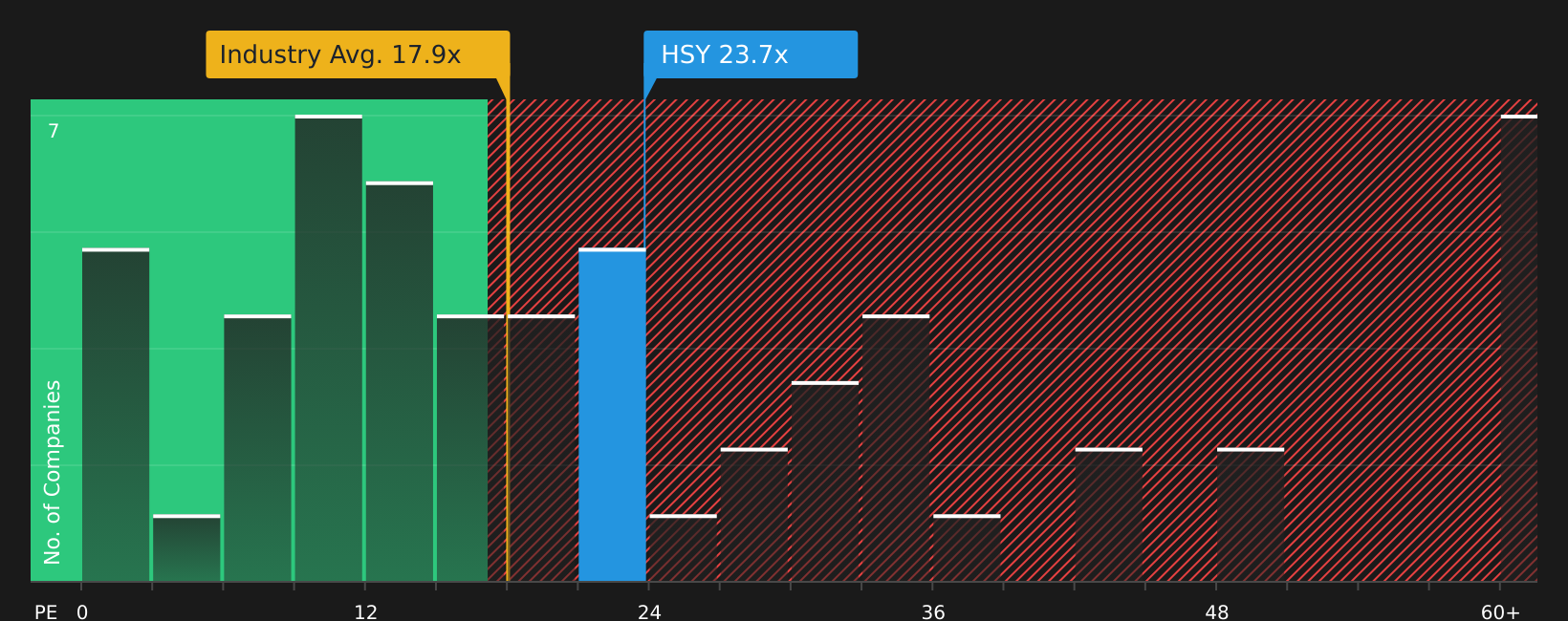
P/E is a useful lens for Hershey because earnings are a key focus for investors in a mature branded food business. Hershey trades on a P/E of about 23.7x, which is above the wider food industry average of around 17.9x. It also sits below a peer group average of roughly 31.6x, so the market is neither assigning a clear discount nor a clear premium compared with similar stocks.
A more tailored fair P/E ratio for Hershey, which factors in its margins, size and risk profile, lands at about 21.9x. That is only slightly below the current 23.7x level. The gap suggests the stock is not obviously cheap, but it is also not pricing in extreme optimism relative to what the model would expect.
On the P/E multiple, Hershey stock looks roughly fairly valued compared with what the tailored model suggests is reasonable.
See what the numbers say about this price — find out in our valuation breakdown.
The Hershey Narrative: What Would Justify Today's Price?
Simply Wall St Narratives for Hershey take the valuation puzzle you have just seen and link it directly to the assumptions about Hershey's future growth, margins and earnings that would need to hold for the stock to be worth materially more or less than today. Where a ratio or model gives a single number, these narratives spell out the underlying future path that number relies on, so you can watch how Hershey's actual progress lines up over time on the Community page.
The community is split on Hershey, with one camp focused on brand strength and earnings recovery potential while the other questions whether growth is rich enough for the current price.
Bull case: 29% undervalued
"Ongoing supply chain optimization, recent capacity expansions, especially the new vertically integrated chocolate processing plant, and investments in automation equip Hershey with improved agility..."
Read the full Bull Case to see why Hershey could be undervalued
Bear case: 122% overvalued
"The binding constraint is growth, not quality: this business protects the downside far better than it compounds the upside..."
Read the full Bear Case to see why Hershey could be overvalued
Do you think there's more to the story for Hershey? Head over to our Community to see what others are saying!
The Bottom Line
The intrinsic value work using Discounted Cash Flow (DCF) points to Hershey trading at a clear discount, while the market multiple view is closer to about right and echoes the mixed broader checks. That split comes from DCF leaning heavily on the durability of Hershey cash generation, while the P/E reflects current growth expectations and sentiment around competition. The key question for you is whether recent pressure on chocolate share and growth proves temporary, which could support the intrinsic value view, or more persistent, which could leave the current multiple closer to fair.
This article by Simply Wall St is general in nature. We provide commentary based on historical data and analyst forecasts only using an unbiased methodology and our articles are not intended to be financial advice. It does not constitute a recommendation to buy or sell any stock, and does not take account of your objectives, or your financial situation. We aim to bring you long-term focused analysis driven by fundamental data. Note that our analysis may not factor in the latest price-sensitive company announcements or qualitative material. Simply Wall St has no position in any stocks mentioned.
Have feedback on this article? Concerned about the content? Get in touch with us directly. Alternatively, email editorial-team@simplywallst.com