
The Ministry of Finance bought and rescued the market “worth nothing”! In September, a wave of 215-billion corporate bonds surged, and it is feared that the benefits of US bond repurchases will be completely wiped out
The Zhitong Finance App notes that since 2006, the yield on the longest-term US Treasury bonds has never remained at such a high level for such a long time; with huge fiscal deficits, a new wave of corporate debt issuance, and the upcoming potentially decisive US Federal Reserve meeting, investors are expected to remain vigilant in the next few weeks.
The 30-year US Treasury yield rose to 5.34% in mid-August, the highest level since 2007, and only 10 basis points away from the 22-year high. According to the data, as of Monday, the yield had closed above 5% for 55 trading days since the beginning of January, the highest number of days in the year to close above this mark since 2006. On Tuesday, that yield was 5.27%.
Although Treasury Secretary Bessent shocked the market last month by announcing an expansion of repurchases of old bonds to curb rising yields, many investors still don't expect a continuous reversal in yield. Following the record issuance volume in August, corporate bonds are expected to be issued at US$215 billion in September, which will offset the impact of purchases by the Ministry of Finance. At the same time, few people expect the US fiscal deficit concerns, which have been suppressing government bonds, to subside in the short term.
“Until the welfare system reform changes the deficit pattern,” said John Briggs, head of US interest rate strategy at Oriental Huili North America. “Buybacks are worth nothing but water.”
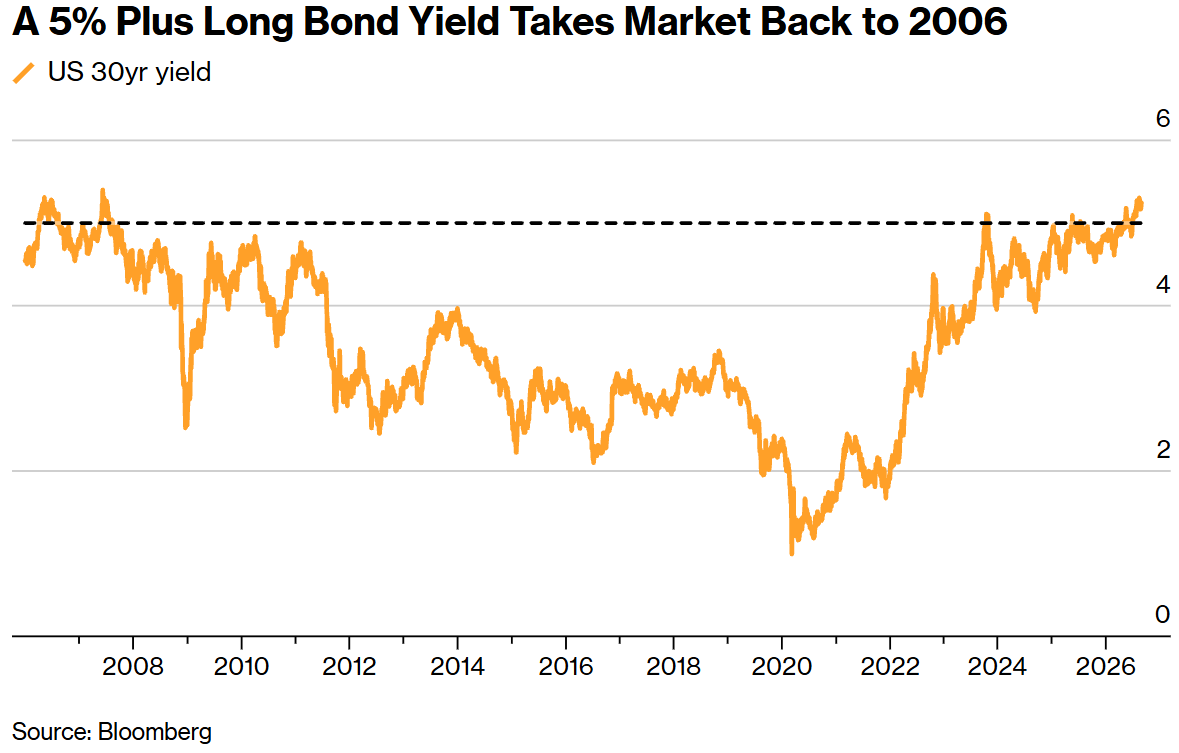
Long-term bond yields of more than 5% brought the market back to 2006 levels
Meanwhile, the US Federal Reserve meeting in September will test Chairman Kevin Walsh's determination to raise interest rates in the face of stubborn inflation; if the Federal Reserve hesitates on this matter, the sell-off of long-term US bonds is expected to intensify further.
Following Walsh's hawkish speech in Jackson Hole last week, traders on Monday expected the possibility of the Federal Reserve raising interest rates by about 17 basis points at the September 15-16 meeting to be close to 70%. The August employment data to be released on Friday and the key inflation data scheduled to be released on September 11 will further demonstrate the accumulation of upward price pressure in the economy.
Since longer-term bonds are more likely to be affected by inflation concerns, even as consumer prices rise at an accelerated pace, signs that the Federal Reserve will keep interest rates unchanged will provide investors with more reasons to stay away from struggling 30-year treasury bonds.
Gregory Faranello, head of US interest rate trading and strategy at AmeriVet Securities, said, “If you want to lower long-term yields, you must raise interest rates.” He expects the Federal Reserve to raise interest rates and is optimistic about 10-year and shorter-term US Treasury bonds.
However, there are others who have been betting that the market will weaken further. US bond options trading on Monday showed that traders are aiming for a higher 30-year yield. One of the deals is betting that the yield will soar to around 5.7% before the contract expires on November 20.
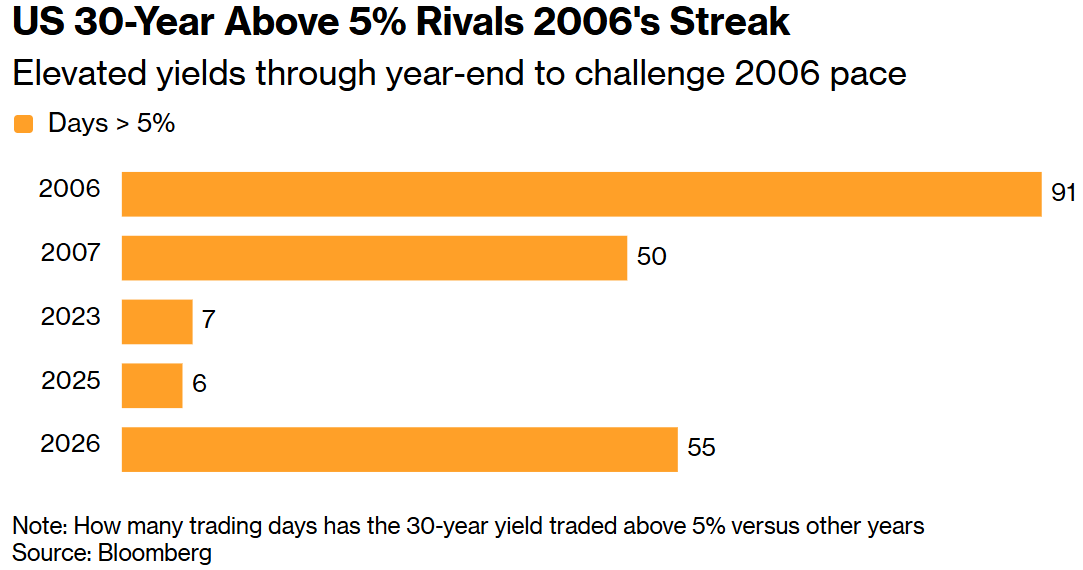
The US's 30-year growth rate of over 5% is comparable to the continuous growth rate in 2006
In the $31 trillion US Treasury bond market, the situation is further complicated by the gap position of 30-year US bonds. Demand for longer-term US bonds mainly comes from investors such as insurance companies and pension funds, which seek to match liabilities that have continued for decades. In contrast, bond fund managers who want to reduce interest rate sensitivity (i.e. long-term) in their portfolios tend to limit their long-term exposure.
Bank of America interest rate strategists Megan Sveber and Eleanor Shaw wrote in a report released on Monday that “despite Treasury buybacks and other recent policy measures, investors are still wary of increasing the term.” “Official sector purchases have shrunk, making the market increasingly dependent on price-sensitive private demand to absorb the steady supply of treasury bonds.”
After the yield rose about 65 basis points from its low during the year, some investors questioned how much long-term US bonds would fall further. Natixis strategist Briggs, who was previously bearish on the long term throughout the year, has turned “more neutral” at current levels.
He said that the 30-year yield “is still slowly rising, but term premiums and real yields have come a long way; you don't have to go up at a high rate forever.”
Priya Misra, fund manager at J.P. Morgan Asset Management, said that the treasury buyback may help boost demand for long-term treasury bonds, but “it is likely to dwarf the massive supply shock brought about by AI infrastructure construction.”
“We may be nearing the peak of long-term returns, but given all the intertwined negative currents, there is still uncertainty in the market,” she said.