
Rebang Pharmaceutical-B (09637) Interim Report In-depth Reading: Growth and Compounding on the Kidney Disease Circuit
The Zhitong Finance App learned that on August 26, Libang Pharmaceutical (09637) handed over an impressive questionnaire on its first interim results after its launch: the revenue scale increased 8.6 times that of the same period last year. What is more noteworthy is that this report card coincides with the accelerated commercialization of innovative drugs for kidney disease around the world and continuous capital revaluation of high-quality assets. As a result, the Chinese vertical specialist Biopharma path represented by Libang gradually became clear.
According to the financial report for the second quarter of 2026 disclosed by the US nephrology specialty pharmaceutical company Travere Therapeutics during the same period, the US net sales of the core product FILSPARI reached US$141.1 million in a single quarter, an increase of 96% over the previous year; the launch of new FSGs indications and the growth of the IgA nephropathy business led to the launch of 2012 new patients. After the announcement of the results, the company's stock price rose about 14% after the market. In April of this year, FILSPARI was approved by the FDA for use in FSGS, becoming the first approved drug for this long-term lack of targeted therapy. Travere's performance explains that it anchors innovative drugs for nephropathy that clearly do not meet demand, and has the opportunity to open up a complete path from R&D and supervision to market entry and commercialization, and grow into large-scale commercial assets.
This trend is not an exception. In 2023, the total value of Novartis's acquisition of Chinook Therapeutics reached a maximum of US$3.5 billion; in 2024, Calliditas, which owns the IGA nephropathy product, was acquired by Asahi Kasei for about US$1.1 billion; Ardelyx's pioneering NHE3 inhibitor Xphozah was approved by the FDA in 2023, opening up a new path for hyperphosphatemia in dialysis patients different from traditional phosphorus binders. Together, these cases show that when innovative drug pricing returns to clinical value, Biopharma, which is deeply involved in the field of vertical diseases and has continuous R&D and specialist commercialization capabilities, is gaining higher industrial recognition. Under these global coordinates, Rebang's first interim report outlines the growth of a Chinese vertical specialist, Biopharma.
Verification of overseas samples: Nephrology innovation can become a “big business”
According to the global burden of disease study published in “The Lancet,” there were about 697.5 million patients with chronic kidney disease worldwide in 2017, with a prevalence rate of about 9.1%, and the number of related deaths was about 1.2 million; there were about 132.3 million Chinese patients. In addition to the large patient base, chronic kidney disease has a long course of disease, many complications, and long-term treatment. Patients may successively experience proteinuria, decreased renal function, renal anemia, hyperphosphatemia, and even dialysis, thus creating a need for continuous treatment throughout the different stages of the disease.
According to the International Society of Nephrology, there is still a clear gap in early identification, standardized treatment and accessibility of kidney replacement treatments in global nephrology; the KDIGO 2024 guidelines further emphasize delaying disease progression through risk stratification, early intervention, and complication management. This means that the increase in the industry comes not only from the size of patients, but also from the increase in the penetration rate of diagnosis and treatment and the upgrading of treatment plans.
Travere validated the commercialization potential of rare glomerular disease products, Calliditas' merger and acquisition with Chinook demonstrated the strategic value of differentiated nephropathy assets, and Ardelyx proved that the new mechanism has the opportunity to open up new categories beyond traditional treatments. The differentiation of Libang is that it does not bet on a single indication, but instead builds a gradient matrix of “commercialized products - core varieties during registration period - global clinical assets - frontier disease correction pipeline” around the entire course of chronic kidney disease.
The first interim report presents “dual channel” value delivery
During the reporting period, Rebang Pharmaceutical achieved operating revenue of RMB 104.2 million, an increase of 8.6 times that of the same period last year.
Disassembling the revenue structure, two types of revenue of a different nature just confirm the company's dual ability to grow: Meishinra® contributed 24.8 million yuan in product sales revenue, an increase of about 105% over the previous year, verifying the company's ability to access hospitals, academic promotion and commercialization in the field of nephrology; AP306 equity cooperation outside of Greater China brought licensing revenue of 79.3 million yuan, which indicates that the value of the company's assets under development has obtained market-based pricing from overseas industry partners.
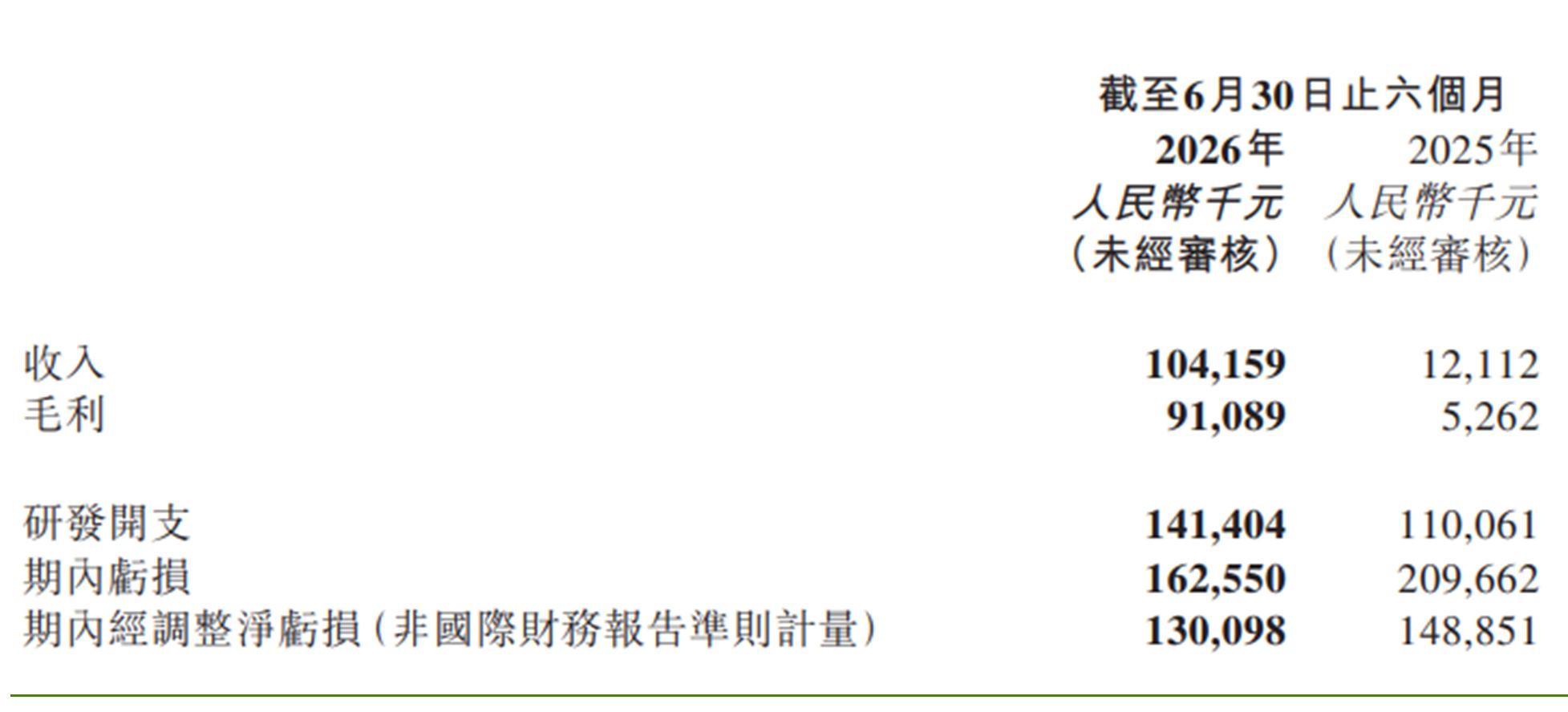
The two types of revenue have different attributes, but they each respond to the two core propositions of Biotech's growth path: whether the commercialization side can achieve continuous sales of products in hospitals, and whether the R&D side can gain value recognition in the global market.
Although license revenue is not a recurring product sales revenue, its value lies in the early conversion of long-term R&D assets into revenue and industrial resources. Rebang retains all rights in AP306 in Greater China, and has promoted overseas development with R1 Therapeutics, forming a lightweight overseas path to “preserve the core market, introduce global resources, and share development investment”.
By the end of the reporting period, the company's total cash and term deposits were approximately RMB 1,393 billion. The sufficient capital reserves were sufficient to support AP301 registration and commercialization preparations, the global clinical promotion of AP306, and the simultaneous development of cutting-edge pipelines such as AP303 and AP308.
This is the core field of Biopharma and pure R&D biotech: the source of enterprise value is no longer solely dependent on clinical data catalysis, but gradually extends to multiple closed loops of product sales, asset licensing, global cooperation, and continuous research and development.
From “today's earnings” to “tomorrow's space”
Rebun's pipeline layout can be understood as a value growth curve with a clear time level.
Mesilla® stands for “today.” Its sales revenue doubled year-on-year, which not only provided a stable current cash flow, but also helped the company complete nephrology hospital coverage, doctors' academic awareness and marketing system ahead of schedule. After future self-developed products are launched, this mature specialist channel network can be directly reused, greatly shortening the new product release cycle.
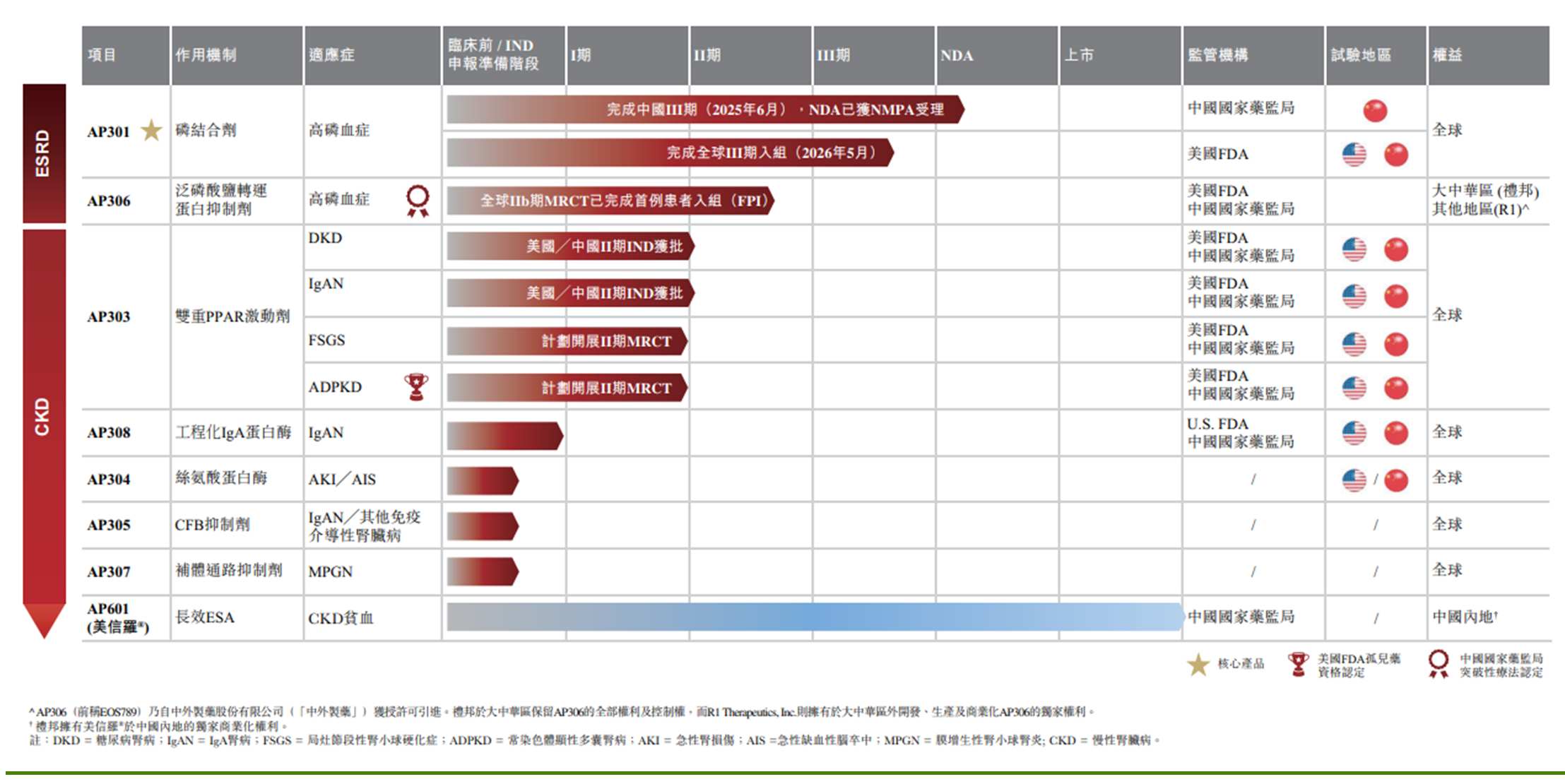
AP301 stands for “recent cash out.” As the company's best-in-class oral iron-phosphorus binder, AP301 is used to treat hyperphosphatemia in dialysis patients. It has differentiated advantages such as high phosphorus binding efficiency, no chewing, and almost no systemic absorption in the gastrointestinal tract. In August 2026, its new drug marketing application in China was accepted by the State Drug Administration; the global Phase III multi-regional clinical trial has also completed enrolling all patients. The valuation logic of AP301 is gradually shifting from “probability of clinical success” to “review and approval, pace of marketing, and commercialization volume”.
AP306 stands for “Product Upgrading and Globalization”. It can simultaneously inhibit the three key phosphorous transporters NAPi-IIb, pIT-1, and pIT-2, and play a role at the source of intestinal phosphorus absorption. According to completed phase II clinical data, AP306 can control the average blood phosphorus within the better range recommended by KDIGO. The average daily maintenance dose is about 300 mg, which is only about one-sixteenth of the positive control drug sevilam carbonate in the test. Currently, this product has been recognized as a breakthrough therapeutic drug by the State Drug Administration, and the first global phase IIb clinical trial has completed randomization and administration of the first test subjects.
Ardelyx's commercial practice has proven that the non-phosphorous conjugate mechanism can obtain both regulatory and clinical approval in the hyperphosphatemia market. AP306 uses different pan-phosphorous transporter inhibitory mechanisms, and there is an opportunity to drive further product iterations in this therapeutic field.
AP303 and AP308 represent the “long-term growth height” of Rebun. AP303 is an oral dual PPAR agonist intended to delay or block the progression of chronic kidney disease, covering many major indications such as FSGS, DKD, IgA nephropathy, and ADPKD. It has completed phase I clinical trials, and applications for phase II clinical trials in China and the US have all been approved, and preparations are underway to begin the trial. Travere's rapid launch in the FSGS and IgA nephropathy markets has proven that differentiated drugs for glomerular diseases can quickly open up the specialty market once clinical verification is completed. Although AP303 is at an earlier stage, its basket-style development strategy covers multiple high-protein urinary nephropathy, reserving a broad scope of indications for subsequent clinical concept verification.
AP308 is an engineered recombinant IgA protease that attempts to directly cut and remove the pathogenic IgA complex that has been generated. Compared with existing treatment pathways that reduce IgA production or inhibit downstream damage, the mechanism is closer to the root cause of the disease and aims to achieve a functional cure for IgA nephropathy. Relevant pre-clinical research results have been published in “Kidney International”, verifying therapeutic potential.
From commercialized Mexilla®, to AP301, which is about to be marketed, to AP306 in the global clinical phase, and AP303 and AP308 in the direction of disease correction, Rebon Pharmaceuticals has built a clearly structured product hierarchy. This graded pipeline layout allows the company's long-term value not to be tied to the success or failure of a single product, nor to rely on the catalysis of a single clinical node.
The real advantage of vertical specialization is that abilities can be compounded
The core value of vertical specialty Biopharma has never been a simple product build-up, but the continuous reuse and compound benefit growth of R&D, clinical, and commercial resources in the same disease field.
The core terminals of Libang's different products are highly compatible, mainly focusing on nephrology, dialysis centers, and long-term management of patients with chronic kidney disease. The hospital network built by Mesilla® can directly undertake the marketing and promotion of AP301; the accumulated clinical resources and expert network in the field of hyperphosphatemia can support the clinical promotion of AP306; and the professional brand recognition formed among nephrologists and research institutions will also help the subsequent clinical development of AP303 and AP308.
As the product matrix continues to be enriched, a single channel no longer only serves one drug, and the R&D team's understanding of disease mechanisms, clinical endpoints, and patient recruitment can also be reused across pipelines. What this has brought about is not a simple expansion of scale, but rather a continuous increase in specialist operating leverage.
This is also an industry rule confirmed by leading overseas specialty pharmaceutical companies such as Travere, Calliditas, and Ardelyx: once companies on the vertical track break through the closed loop of clinical and commercialization of their first product, subsequent growth momentum comes not only from increased sales of new products, but also from the reuse value of established R&D awareness, doctors' networks, and market access capabilities.
Long-term shareholders increased their holdings, and the capital market began to recognize this path
The revaluation of global nephropathy assets is being transmitted domestically and is clearly reflected in Rebon Pharmaceuticals' stock price and capital movements.
On August 5, after Travere announced strong quarterly results, Rebon Pharmaceuticals rose by more than 15% in the market and finally closed up 13.07% to HK$33.22. The products of the two companies are not completely consistent, but the positive response from the market shows that investors are beginning to re-examine the value of similar scarce assets in China using the progress of commercialization of innovative drugs for kidney disease around the world.
Long-term shareholders' continued increase in positions has released a more clear signal of confidence. According to public equity disclosure, on July 17, Tencent Holdings increased its holdings of Libang Pharmaceuticals by 238,500 shares, with an average price of about HK$27.97 per share, involving an amount of about HK$6.701 million. After increasing its holdings, it recently held about 22.916,200 shares, and its shareholding ratio rose to about 10.09% of the issued H shares.
Tencent is not a short-term investor who entered after listing, but an early long-term shareholder who accompanied the company in multiple rounds of financing. After Libang's listing, it continued to increase its holdings through the secondary market. Essentially, the old shareholders used real money to express their continued confidence in the company's subsequent registration declarations, clinical progress, and commercialization prospects.
Conclusion: Biopharma Samples from Chinese Vertical Specialists
Travere, Calliditas, Ardelyx, Akebia, and Chinook have embarked on different growth paths: some rely on major products to quickly scale out of the revenue curve, some use new mechanisms to rewrite treatment patterns, and others have become targets of mergers and acquisitions of giants with high-quality pipelines.
Rebun doesn't need to copy any of them. It is forming a more unique growth path: building a commercial chassis with Mesilla® in advance, opening a recent cash out window with AP301, linking global development resources with AP306, and extending to the cutting edge of disease correction and source treatment with AP303 and AP308.
The significance of this interim result goes far beyond the 8.6-fold increase in revenue, but also lies in the simultaneous formation of three core competencies: market-proven specialist commercialization capabilities, innovative asset value creation capabilities recognized by overseas industries, and continuous research and development capabilities covering the entire disease cycle.
When a Biotech also has stable product revenue, core assets close to commercialization, deeply tied global cooperation, a clear long-term pipeline, and abundant cash reserves, its value positioning has already changed. Biopharma, a vertical specialty with global competitiveness, is on the rise of China's innovative nephrology drug circuit.