
Hitachi Stock and Other Nuclear Energy Picks Tied to Germany’s Power Demand
Germany’s role as a growth engine for Eurozone manufacturing puts reliable, large scale power squarely in the spotlight, and that is where nuclear energy stocks come into focus. Stronger industrial output needs electricity that is stable and less exposed to fuel price swings. That creates a timely opening for investors studying nuclear energy stocks. This article highlights 3 stocks from the Nuclear Energy Stocks screener that warrant closer attention.
The three nuclear energy stocks covered next are just a starting sample, and the full screen surfaced 33 more companies with equally detailed narratives that are not covered in this article. To go deeper into this theme, use the Nuclear Energy Stocks screener to analyze, filter, and identify the nuclear energy stocks that best fit your own conviction and risk profile.
Hitachi (TSE:6501)
Overview: Hitachi is a diversified industrial and technology group that supplies digital systems, power grids, and mobility solutions worldwide, with its Green Energy & Mobility segment providing nuclear reactor engineering, construction, control systems, and long term service through Hitachi GE Nuclear Energy. This nuclear infrastructure role sits alongside broader activities in IT services, rail systems, factory automation, and equipment for sectors such as healthcare and semiconductors.
Operations: Hitachi generates most of its revenue from Energy at ¥3,464.3b, Connective Industries at ¥3,352.3b, and Digital Systems & Services at ¥3,012.3b, supported by Mobility at ¥1,380.6b and Others at ¥534.1b.
Market Cap: ¥23,300.8b
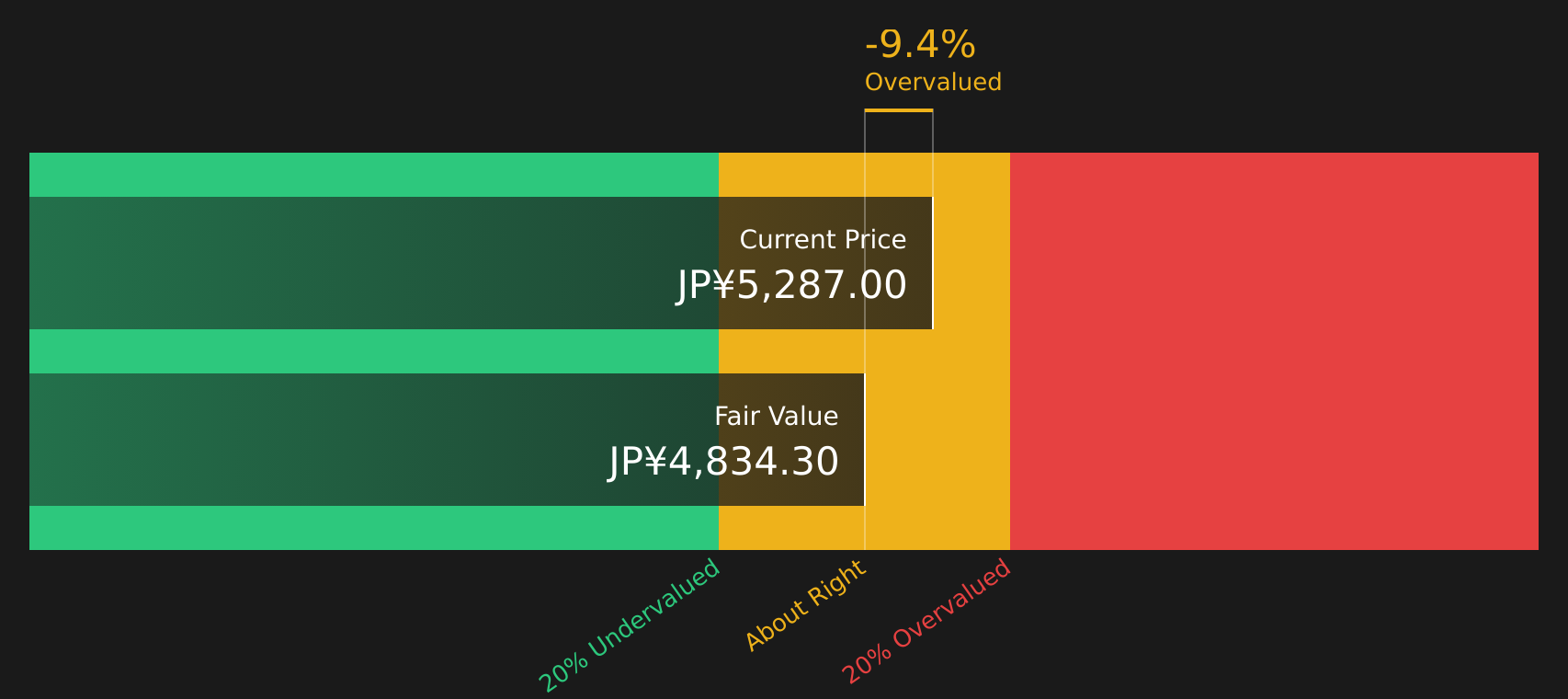
Investors looking at nuclear energy infrastructure may wish to consider how Hitachi links reactor engineering and long life maintenance contracts with wider energy grid and digital control capabilities. The company is tied into long cycle projects through Hitachi GE Nuclear Energy, while partnerships with OpenAI, Google Cloud, and Intel are intended to bring AI and cybersecurity into mission critical systems that can include nuclear and broader power assets. At the same time, large capex programs, project cost pressure, and underperforming pockets such as China elevators could affect returns if conditions change. The stock currently trades on a relatively high P/E compared with the wider Japanese industrials group, so an investor’s view on nuclear and grid modernization demand is an important consideration.
Hitachi’s mix of nuclear infrastructure, grid technology, and AI partnerships can make its current P/E look very different once you see the full picture. Start with the DCF valuation analysis for Hitachi and notice what the headline number might be missing.
Build your own nuclear infrastructure shortlist
Hitachi and the two other nuclear focused stocks in this article all surfaced from a single screener, but the real edge comes when you design your own filters. Use our flexible Screener to blend valuation, growth, balance sheet, and risk checks, or start with any of our curated Investing Ideas for ready made themes.
ITOCHU (TSE:8001)
Overview: ITOCHU is a global trading and investment group that handles everything from food, textiles, machinery, and real estate to energy and chemicals, with its Metals & Minerals segment directly trading nuclear fuels and related materials as part of a broad commodity portfolio.
Operations: ITOCHU generates revenue across multiple segments, led by Food at ¥5,140.1b, Energy & Chemicals at ¥3,223.0b, General Products & Realty at ¥1,567.4b, Machinery at ¥1,526.5b, Metals & Minerals at ¥1,283.3b, ICT & Financial Business at ¥1,156.9b, Textile at ¥697.6b, and The 8th at ¥519.6b.
Market Cap: ¥14,545.6b
ITOCHU gives you exposure to the nuclear energy supply chain through its nuclear fuel trading, while most revenue still comes from consumer, energy, and industrial businesses such as Food and Energy & Chemicals. That mix matters because it links the stock to nuclear fuel flows without tying your entire thesis to one commodity cycle. The company is also active in energy transition projects, such as the Casablanca waste to energy plant, and is returning capital through a sizeable buyback plan, which provides extra context for the current valuation. On the risk side, higher debt and sensitivity to resource markets can still unsettle earnings. The key consideration is how you weigh that nuclear fuel niche inside an increasingly sustainability focused and consumer driven portfolio.
ITOCHU’s mix of consumer powerhouses and nuclear fuel trading can make the stock’s current profile easy to misread at a glance. Walk through the 2 key rewards and 1 important warning sign to see how that wider portfolio might be quietly reshaping where the real risk and upside could sit next.

Mitsubishi Heavy Industries (TSE:7011)
Overview: Mitsubishi Heavy Industries is a global heavy engineering group that develops and supplies energy systems, including light water nuclear reactors, fuel cycle technology, and long term services, alongside gas and steam power, wind turbines, and industrial machinery. Beyond nuclear, it is active in aircraft engines, defense and space systems, environmental equipment, transport infrastructure, and air conditioning and refrigeration solutions.
Operations: Mitsubishi Heavy Industries generates most of its revenue from Energy Systems at ¥2,175.8b, Aircraft, Defense & Space at ¥1,419.4b, and Plants & Infrastructure Systems at ¥873.0b, with smaller contributions from Others and internal segment adjustments.
Market Cap: ¥13,214.1b
Investors looking at nuclear energy infrastructure may find Mitsubishi Heavy Industries interesting because its nuclear reactor design, manufacturing, and post operational services sit inside a much broader energy and industrial portfolio that is already backing cleaner power and large scale infrastructure. The order book tied to energy transition projects and advanced machinery is large, profit margins and earnings have been improving, and recent results show higher revenue and net income. Together, these factors indicate active project execution that can support nuclear lifecycle work. At the same time, a relatively high P/E, foreign exchange swings, order concentration in defense, and pressure in some industrial segments mean the stock carries execution and valuation risk that may warrant closer inspection before making any decision.
Mitsubishi Heavy Industries has an energy transition order book that could be masking how nuclear lifecycle work fits into the story. Walk through the analysis report for Mitsubishi Heavy Industries to see what the current P/E might really be hinting at.

Curious About What You Might Be Missing
Fresh ideas can move fast. Some themes are building quiet momentum while others carry the risk of being missed once prices start moving. Review these areas that are under the radar for now.
- Identify income workhorses before yields begin to change by checking our curated group of 31 dividend fortresses that aim to keep paying while prices move around.
- Look for resilient balance sheets and steady cash engines using the hand picked list of solid balance sheet and fundamentals (41 results) rather than focusing on stories that may not hold up later.
- Explore potential infrastructure opportunities on the grid as electrification demand evolves and review the focused 39 power grid technology and infrastructure stocks while valuations still look reasonable.
This article by Simply Wall St is general in nature. We provide commentary based on historical data and analyst forecasts only using an unbiased methodology and our articles are not intended to be financial advice. It does not constitute a recommendation to buy or sell any stock, and does not take account of your objectives, or your financial situation. We aim to bring you long-term focused analysis driven by fundamental data. Note that our analysis may not factor in the latest price-sensitive company announcements or qualitative material. Simply Wall St has no position in any stocks mentioned.
Have feedback on this article? Concerned about the content? Get in touch with us directly. Alternatively, email editorial-team@simplywallst.com