
Glyphosate Ban Could Cost Illinois Farmers $300M-$600M per year
Newly published research provides first evidence-based assessment, likely revenue loss
WESTMINSTER, Colo., Aug. 18, 2026 /PRNewswire/ -- Recently published research in the journal Weed Technology assigns a significant annual cost to Illinois farmers if they were no longer able to use the herbicide glyphosate. More specifically, the results "indicate that for corn and soybean producers combined, the statewide loss will be in the order of U.S. $300 to $609 million per year, or about a 1.8% to 3.6% revenue loss."
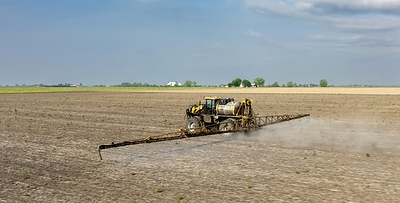
Glyphosate is an effective broad-spectrum herbicide, first sold as the active ingredient in Roundup®, and later used in other herbicide products, such as Rodeo®, Durango®, and Accord®. The Weed Science Society of America (WSSA) classifies glyphosate as a Group 9 herbicide. Since its introduction in 1974, multiple studies have credited glyphosate for helping to facilitate widespread conservation crop production practices that have resulted in significant soil improvements and cost savings region-wide.
Despite the product's positives, the study's authors recognize that "growing regulatory scrutiny, litigation, herbicide resistance, and public concern, however, have raised the possibility of restrictions or a complete ban on glyphosate." They also state, "Our manuscript is the first one to offer a transparent, evidence-based assessment of how glyphosate removal would affect farm revenues through yield and cost channels."
According to Sandy Dall'erba, Professor, University of Illinois at Champaign-Urbana, and the study's corresponding author, "The results of this study provide guidance for producers, crop advisors, and policymakers regarding the economic and some management consequences of a potential glyphosate ban in Illinois row-crop systems." He and co-authors Corey Lacey, Illinois Soybean Association, and Aaron Hager, Professor, University of Illinois at Champaign-Urbana, write that "overall, the findings suggest that while Illinois corn and soybean producers can adapt to a glyphosate ban, such adaptation will require slightly higher input costs, more complex management, and careful planning to maintain profitability."
More specific, practical findings and implications from the study include:
- "A complete loss of glyphosate without adaptation would result in substantial yield losses, particularly for corn. However, such a scenario is unlikely in practice, because producers will rapidly adjust their weed management strategies."
- "Substitution toward alternative herbicides is feasible but comes at a cost. Most viable alternatives … require multiple applications, tighter timing windows, and increased attention to environmental conditions, which can increase both financial costs and operational complexity."
- "Even under successful substitution, the results suggest that modest yield penalties are likely during the transition period. This highlights the importance of integrated weed management, including combining chemical and nonchemical means of weed control, to mitigate potential yield losses."
- "Finally, this study underscores the importance of early adaptation. Producers who proactively diversify their approach to weed management, test alternative chemical formulations, and adjust their operational practices are more likely to limit both cost increases and yield impacts in the event of reduced glyphosate availability."
More information about the study is available in the article: Understanding the Systemic Impacts of a Glyphosate Ban on Illinois Agriculture: Economic, Agronomic, and Community Perspectives. This research article is among others recently featured online in Weed Technology, a WSSA journal, published by Cambridge University Press. Dall'erba can be contacted about the study at dallerba@illinois.edu.
About Weed Technology
Weed Technology is a journal of the Weed Science Society of America, a nonprofit scientific society focused on weeds and their environmental impact. Weed Technology publishes original research and scholarships in the form of peer-reviewed articles focused on understanding how weeds are managed. The journal focuses on applied aspects concerning weed management in agricultural systems, weed/crop management systems, new weed problems, new technologies for weed management, herbicides used to manage undesired vegetation, and special articles emphasizing technology transfer to improve weed control. To learn more, visit www.wssa.net.
 View original content to download multimedia:https://www.prnewswire.com/news-releases/glyphosate-ban-could-cost-illinois-farmers-300m-600m-per-year-302852871.html
SOURCE Weed Science Society of America
