
Dear HP Stock Fans, Mark Your Calendars for August 26
HP (HPQ) has given investors plenty to celebrate in 2026, but Aug. 26 could be the next major test. The PC maker is scheduled to report its fiscal third-quarter results after the market closes, giving investors a fresh look at whether the artificial intelligence (AI) PC boom is translating into sustainable growth.
HPQ stock is already up roughly 31% year-to-date (YTD), compared with the S&P 500's ($SPX) return of 13% so far this year. The stock has also climbed from a 52-week low of $17.56 to recently trade above the $29 level.
That rally makes the upcoming earnings report particularly important. Investors will want to know whether HP can continue growing revenue while dealing with rising memory, storage, and processor costs.
Despite its rally, HP doesn't look expensive. HPQ stock trades at roughly 8.9 times trailing earnings and about 10 times forward earnings. Its price-to-sales (P/S) ratio is also only 0.49 times, which is far lower than the broader industry average.
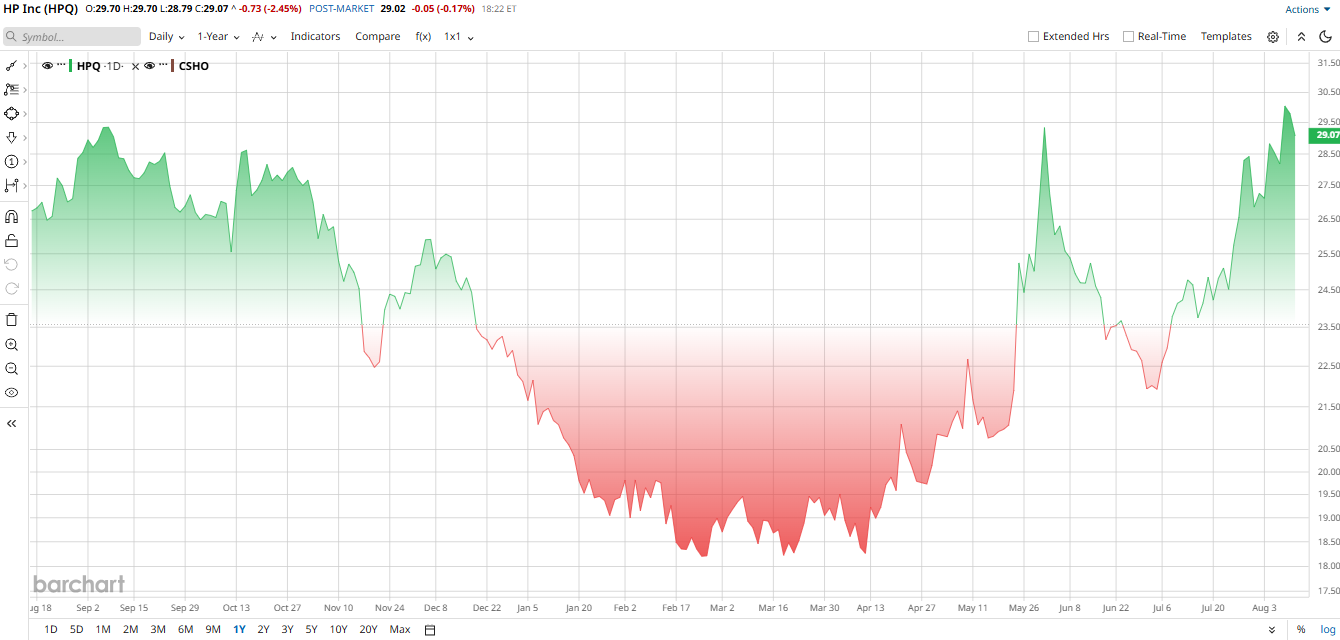
HP's Latest Quarter Was Strong
HP's most recent quarterly results give investors a solid reason to remain optimistic heading into the Aug. 26 report. For fiscal Q2 2026, the company generated $14.41 billion in revenue, up 9% year-over-year (YOY) and above Wall Street's $14 billion estimate. Non-GAAP EPS came in at $0.86 per share, up 21% YOY and comfortably beating the $0.71 consensus estimate.
The Personal Systems business was especially strong, with revenue increasing 13% to $10.2 billion. AI PCs also represented about 44% of shipments, up from roughly 35% in the previous quarter.
Management expects fiscal Q3 EPS of $0.61 to $0.71, with the midpoint of $0.66 slightly above the $0.64 consensus estimate.
That means Aug. 26 isn't simply another earnings date. It will show whether HP can continue beating expectations while navigating a tougher cost environment.
Why the Next Earnings Report Matters
The biggest issue heading into the next report is margins. HP has warned that higher memory, storage, and CPU costs will pressure profitability during the second half of fiscal 2026. Management expects margins to reach a trough in Q4 before improving.
That puts the focus on more than just revenue and EPS. Investors will be watching AI PC adoption, Personal Systems margins, pricing power, and management's full-year outlook. A stronger-than-expected report or an improved forecast could give HPQ stock another catalyst after its strong run.
On the other hand, weak margins or cautious guidance could quickly remind investors why HP remains a low-multiple hardware stock.
HP Is Pushing Deeper Into AI
HP isn't relying entirely on traditional PCs to drive its next phase of growth.
The company has been expanding its AI-focused computer lineup and recently introduced new devices designed around AI workloads. It has also been building out its HP IQ ecosystem, which aims to connect AI PCs, workplace devices, and meeting environments.
In June, HP also announced a partnership with OpenAI to deploy its enterprise AI platform Frontier across its operations.
These initiatives are important because HP cannot justify the costs of a round of replacement hardware merely with new additions to the desk side. The firm is trying to use AI in a larger part of its hardware and software stack.
Wall Street Remains Cautious on HPQ Stock
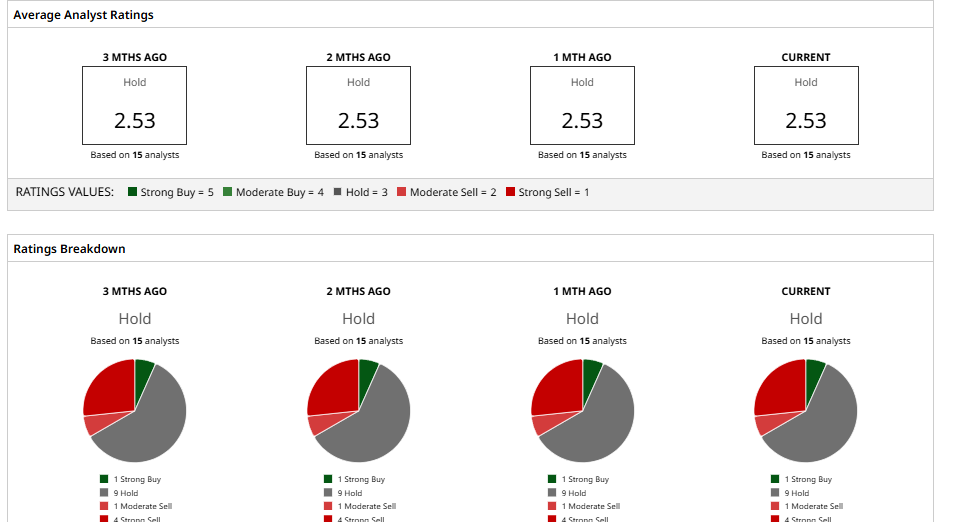
The consensus rating on HPQ stock is a “Hold,” with the average price target of $24.73 implying roughly 15% potential downside from current levels.
The analyst community remains divided on the stock. Morgan Stanley maintains a “Sell” rating with a $19 target, while Goldman Sachs also has a “Sell” rating and a $21 target. Barclays is similarly cautious with an “Underweight” rating and a $19 target. The bear case has to do with margin pressure, PC competition, and issues regarding HPQ stock, with much of the bull market on AI PCs already priced in.
That means Aug. 26 is a very important date. There is no doubt that HP has made solid contributions to earnings growth, and the firm is upgrading PCs in interesting ways with AI. For investors, it remains to be seen whether the momentum can hold up without compromising profits.
On the date of publication, Nauman Khan did not have (either directly or indirectly) positions in any of the securities mentioned in this article. All information and data in this article is solely for informational purposes. For more information please view the Barchart Disclosure Policy here.