
The high level of inflation has not abated! The Reserve Bank of Australia is expected to remain on hold and maintain a hawkish stance this week
The Zhitong Finance App learned that the Reserve Bank of Australia will announce the latest interest rate decision on Tuesday. Currently, economists and traders generally expect that the Reserve Bank of Australia will keep the cash interest rate unchanged at 4.35% for the second consecutive meeting at that time, while reaffirming its preparations to further tighten monetary policy to cope with continued strong inflationary pressure.
Market participants will pay close attention to this interest rate resolution statement and the updated quarterly economic forecast to find any signs on whether the Reserve Bank of Australia's monetary policy committee has ended the austerity cycle after raising interest rates by a total of 75 basis points this year, or whether it is really willing to further tighten the policy. The press conference held by Reserve Bank of Australia Chairman Michelle Bullock after the interest rate decision was announced will also be the focus of market attention.
Carl Ong, a fixed income research analyst at MFS Investment Management, said, “Our core expectation is that hawks stand still.” However, he added that due to continued price pressure, the possibility of interest rate hikes cannot be completely ruled out. The truncated average inflation indicator that the Reserve Bank of Australia is closely watching has been above the midpoint of its 2%-3% target range since the end of 2021. Ang added: “Simply put, inflation is falling too slowly, so the door to this round of austerity has not been completely closed, and there is still a possibility of further policy tightening.”
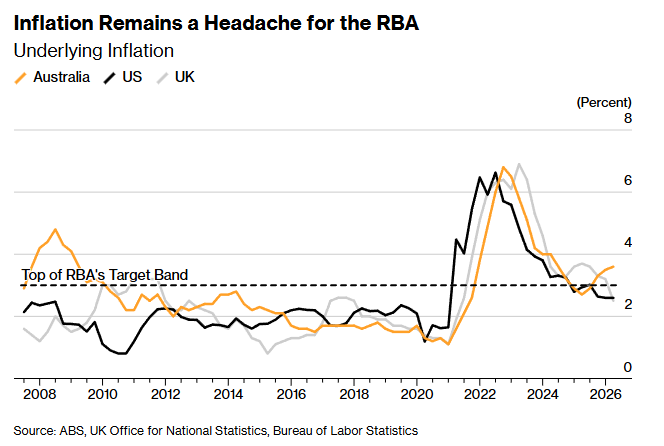
Inflation remains a challenge facing the Reserve Bank of Australia
On Tuesday, the market will focus on the latest forecast released by the Reserve Bank of Australia in its quarterly “Monetary Policy Statement” to understand how the central bank assesses future economic trends. Currently, economists generally expect that the Reserve Bank of Australia will continue to maintain a long-term suspension of interest rate hikes for the rest of this year and most of next year.
Commonwealth Bank of Australia economist Belinda Allen predicts that the Reserve Bank of Australia may fall slightly ahead of schedule to inflation expectations below 3%, and is also expected to raise the unemployment rate forecast. Australia's unemployment rate is currently 4.4%, higher than the Reserve Bank of Australia's forecast of 4.2% in May. However, the past two employment reports show that recruitment activity is still strong. The previous economic forecast was based on an assumption that cash interest rates would reach 4.7% by the end of this year.
Alan said, “The central bank will maintain a hawkish tone until we see an actual slowdown in the economy and a return in inflation.” The bank does not expect the Bank of Australia to adjust interest rates for the rest of the year. According to current pricing in the money market, the probability that the Bank of Australia will raise interest rates by December is about 60%.
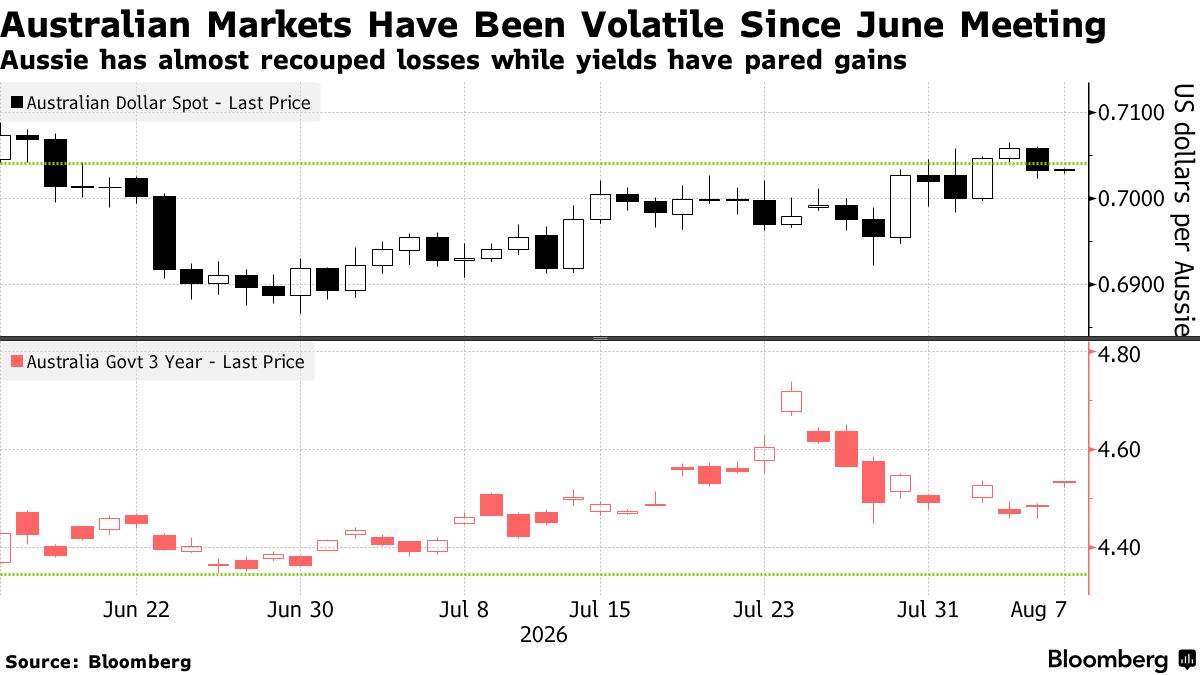
Raising interest rates three times in a row this year shows that the Reserve Bank of Australia is determined to ensure that inflation does not get out of control again. Through this series of interest rate hikes, the Reserve Bank of Australia rescinded the easing policy of the same scale implemented last year. But the challenge remains serious — Australia's core inflation rate is still one of the highest among major advanced economies.
The Reserve Bank of Australia's current policy position is also affected by the deterioration of the real estate market, and part of the decline in the housing market is due to previous interest rate hikes and government tax policy adjustments. Housing price declines were mainly concentrated in Sydney and Melbourne, where housing prices fell 5.3% and 5.5%, respectively, from their peak. However, it also highlights the previous high rise in housing prices — the median price of Sydney homes is still at 1.24 million Australian dollars (about 870,000 US dollars).
Australian policymakers will continue to focus on the effects of the so-called “wealth effect”, that is, how changes in asset prices — particularly real estate prices and stock prices — affect household consumption and borrowing behavior. Shane Oliver, senior chief economist at AMP Ltd., said: “The Reserve Bank of Australia is likely to continue its austerity trend. We expect another rate hike before the end of this year because inflation is still too high and it may take too long to fall back to the target level, which could lead to a further rise in inflation expectations.”