
IPO News | Zhejiang Mailing once again submitted to the Hong Kong Stock Exchange as the world's largest provider of green shipping equipment and systems
The Zhitong Finance App learned that according to the Hong Kong Stock Exchange's disclosure on August 7, Zhejiang Zhejiang Mailing Green Aviation Technology Co., Ltd. (abbreviation: Zhejiang Mailing) submitted a listing application to the main board of the Hong Kong Stock Exchange, with CITIC Securities and CMB International as co-sponsors. The company submitted its listing to the Hong Kong Stock Exchange on January 30, 2026.
Company profile
According to the prospectus, Zhejiang Mailing is the world's leading provider of green shipping equipment and systems. Green shipping equipment and systems refer to shipping equipment and systems that can reduce greenhouse gas emissions, limit pollutant emissions, improve resource efficiency, and protect marine ecosystems, with the aim of minimizing the impact of shipping on the environment.
In order to meet the needs of global shipping groups, shipowners and shipyards, the company has built “five major business lines”: (i) ship exhaust emission control and purification systems, (ii) ship energy efficiency gain systems, (iii) ship upgrading and related services, (iv) intelligent ship operation and maintenance systems, and (v) marine new energy systems. These business lines cover equipment design and production to ship modification, on-board installation, commissioning and technical support to comprehensively help enhance the value of ships. According to Insight Consulting, the company is the world's largest provider of green shipping equipment and systems in terms of revenue in 2025.
The breakdown of revenue by line of business is as follows:
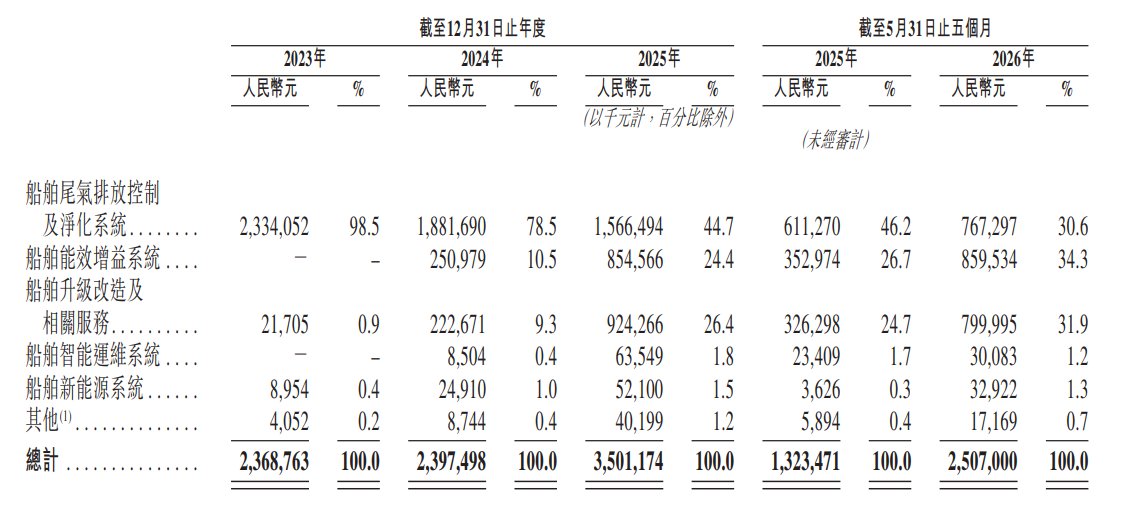
According to Insight Consulting, in 2025, in terms of revenue, the company is the world's largest supplier of marine exhaust emission control and purification systems. The company's main product in this business line is the exhaust gas purification system (EGCS), which ranked first in the world in terms of revenue in 2025; the company's greenhouse gas continuous emission monitoring system (GHGCEMS) is the first related product in the world to obtain a classification society certification; the company's flagship product, the shaft generator system for marine energy efficiency gain systems, was launched in 2024 and delivered that year. In 2025, the company was the world's second-largest provider of marine energy efficiency gain systems in terms of revenue.
The company relies on the rich experience accumulated over many years in serving global shipping groups, shipowners and shipyards, combined with deep insight into market trends, and continues to expand the company's business line. The company's ship upgrading and related service lines rely on an intelligent ship transformation base integrating R&D verification, modular intelligent manufacturing, actual ship transformation, service feedback and global scheduling. Thus, it effectively helps shipping companies, shipowners and shipyards maintain and enhance the value of their ship assets in a cost-effective manner. Furthermore, in order to cope with the market trend of smart ship and clean energy, the company launched an intelligent ship operation and maintenance system and a new marine energy system, reflecting the company's comprehensive technical reserves.
Global demand for ship exhaust emission control and purification continues to grow. The global shipping industry is responsible for more than 80% of international trade transportation tasks, and is also an important source of global emissions of greenhouse gases and air pollutants. According to Insight Consultancy data, the shipping industry will account for about 2.4% of global anthropogenic greenhouse gas emissions in 2024. Since the implementation of the global “Sulphur Limit Order” in 2020, sulfur oxide (SOx) emissions have been drastically reduced, and the previous 13% global share is history. However, emissions within the shipping industry are highly concentrated: in 2024, container ships, bulk carriers, and tankers contributed more than 60% of the shipping industry's carbon emissions. According to Insight Consultancy data, the global green shipping equipment and systems market is expected to grow at a compound annual rate of 31.7% from 2025 to 2030, and the scale is expected to reach RMB 151.6 billion by 2030.
Financial data
Revenue:
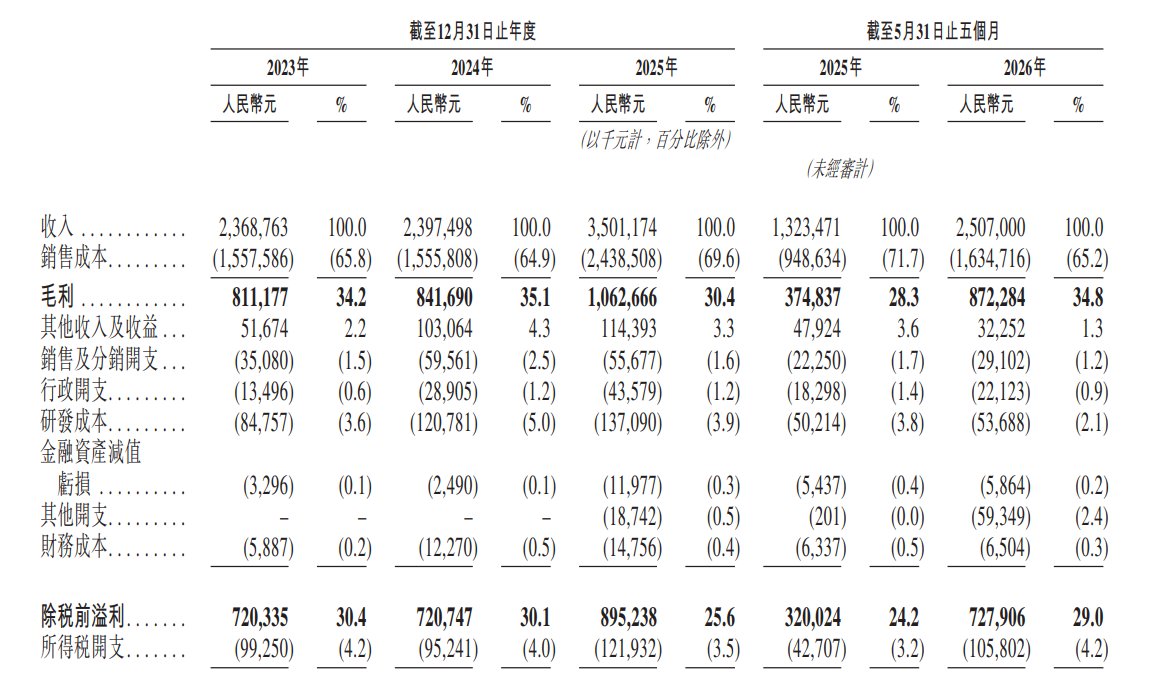
In the five months ended May 31 in 2023, 2024, 2025, 2025 and 2026, the company achieved revenue of approximately RMB 2,369 billion, RMB 2,397 billion, RMB 3,501 billion, RMB 1,323 billion, and RMB 2,507 billion.
Net profit:
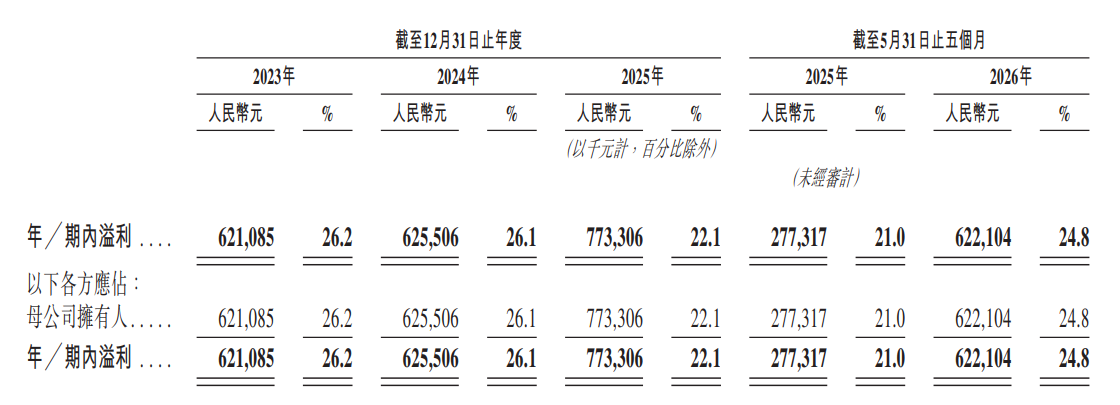
For the five months ended May 31 in 2023, 2024, 2025, 2025 and 2026, net profit was approximately RMB 621 million, RMB 626 million, RMB 773 million, RMB 277 million, and RMB 622 million, respectively.
Gross profit margin:
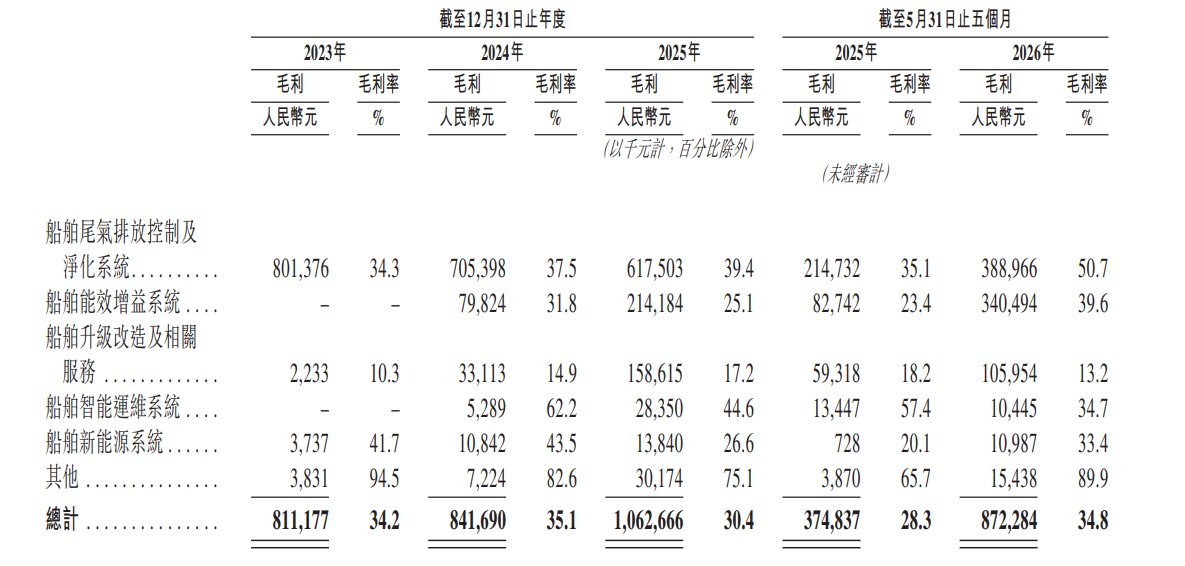
For the five months ending May 31 in 2023, 2024, 2025, and 2026, gross margins were 34.2%, 35.1%, 30.4%, 28.3%, and 34.8%, respectively.
Industry Overview
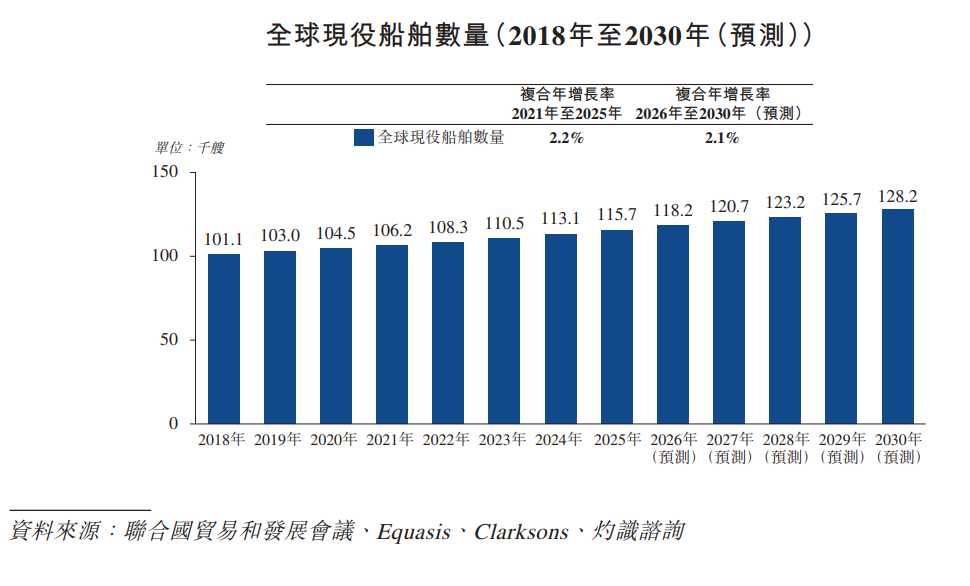
Supported by resilient shipping trade demand, the number of global ships has continued to grow steadily in recent years. The number of ships in service worldwide increased from 106,200 in 2021 to 115,700 in 2025, with a compound annual growth rate of 2.2% from 2021 to 2025. Looking ahead, the global fleet size is expected to maintain a steady growth trend. It is expected to reach 128,200 ships in 2030, with a compound annual growth rate of 2.1% from 2026 to 2030.
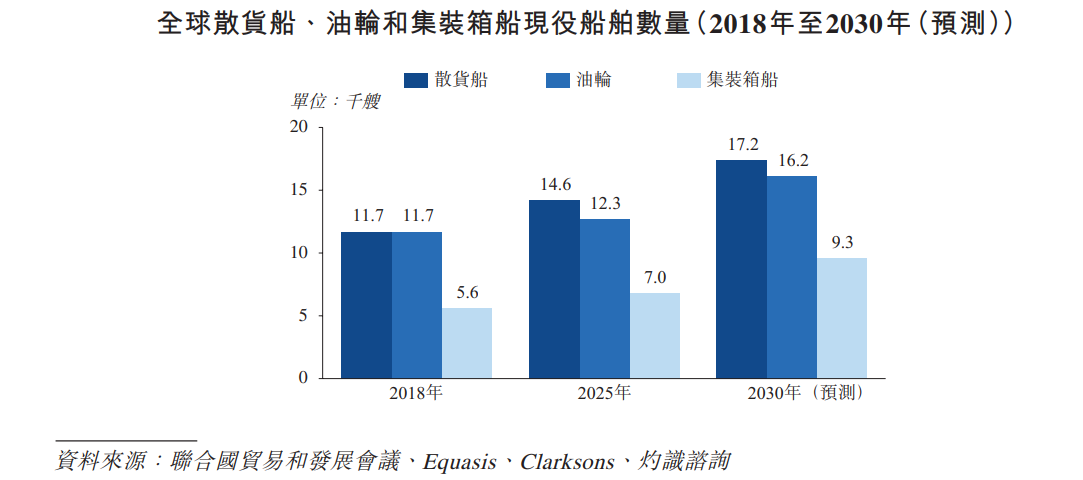
Driven by dry bulk trade activities and demand for fleet renewal, and thanks to continued growth in crude oil and refined oil transportation and continued investment in larger tonnage and more advanced ships, the number of active bulk carriers has grown from 11,700 in 2018 to 14,600 in 2025, and is expected to reach 17,200 in 2030. The number of tankers currently in service increased from 11,700 in 2018 to 12,900 in 2025, and is expected to reach 16,200 by 2030. The number of active container ships has increased from 5,600 in 2018 to 7,000 in 2025, and is expected to reach 9,300 by 2030.
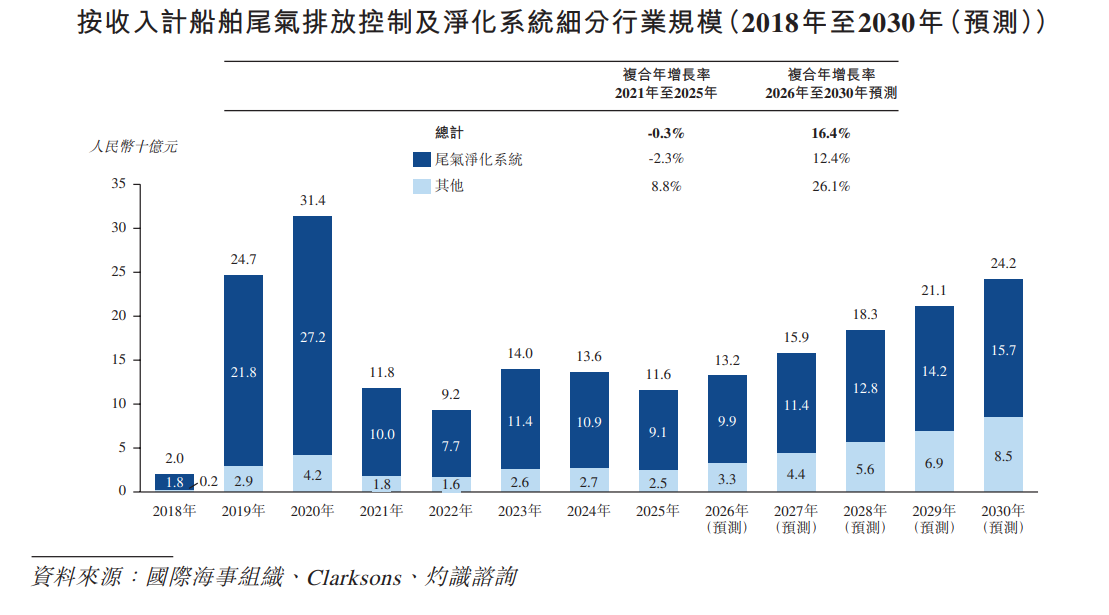
In terms of revenue, the scale of the global green shipping equipment and systems industry increased from RMB 5.8 billion in 2018 to RMB 39.1 billion in 2025, with a CAGR of 17.5%. Relying on the 2026 IMO NZF mid-term measures vote, the 2028 implementation of relevant greenhouse gas emission reduction rules, and the adoption of shaft generators, alternative fuel systems and other advanced technologies as the industry shifts from compliance upgrades to systematic decarbonization and digitalization, the market size is expected to reach RMB 151.6 billion in 2030, with a compound annual growth rate of 31.7% from 2026 to 2030, thus achieving more diversified and stable growth.
In the overall market, the marine exhaust emission control and purification system segment has always been the dominant foundation, and the marine energy efficiency gain system segment is becoming a key driver of incremental growth. In terms of revenue, the market size for ship upgrading and related services is RMB 7.5 billion in 2025, and is expected to grow at a CAGR of 28.2% from 2026 to 2030. In terms of revenue, the market size of intelligent ship operation and maintenance systems is RMB 1.3 billion in 2025, and is expected to grow at a compound annual rate of 32.2% from 2026 to 2030. In terms of revenue, the market size of marine new energy systems is RMB 7.2 billion in 2025, and the compound annual growth rate from 2026 to 2030 is expected to be 38.8%.
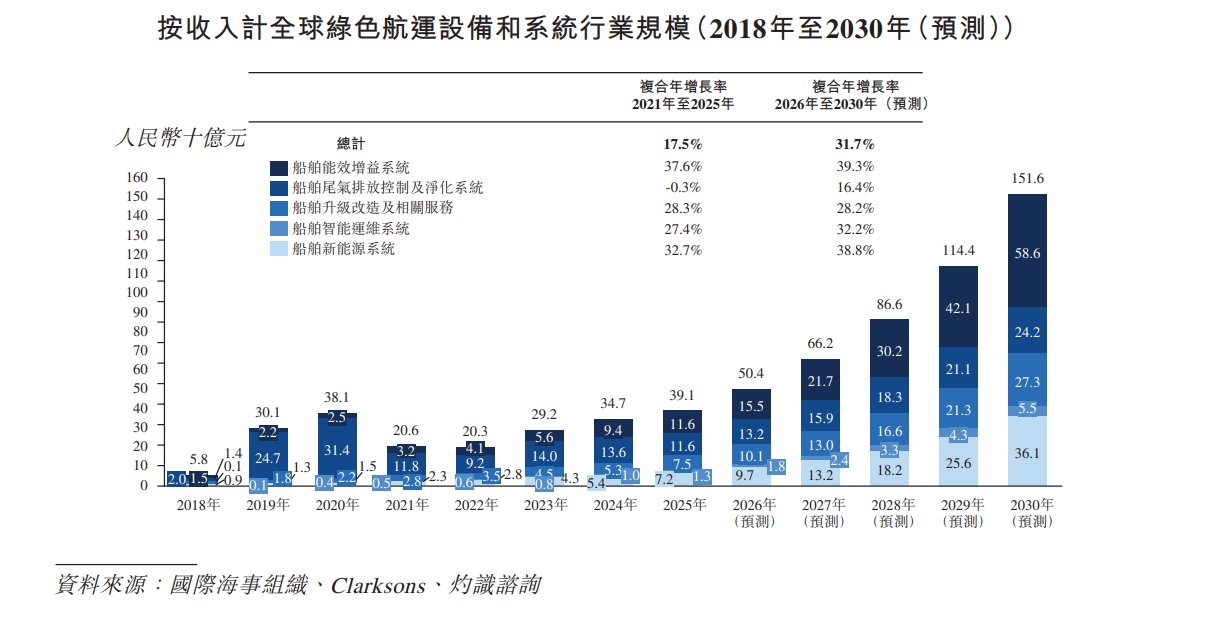
The size of the marine exhaust emission control and purification system segment grew from RMB 2 billion in 2018 to RMB 11.6 billion in 2025 in terms of revenue, and is expected to resume growth from 2026 and reach RMB 24.2 billion in 2030. It is supported by multiple emission control technologies and decarbonization solutions, including carbon capture systems and nitrogen oxide treatment equipment. As the largest segment by revenue, the market size of exhaust purification systems expanded rapidly from 2019 to 2020, then gradually slowed down due to moderate demand for modifications, reaching RMB 9.1 billion in 2025, and is expected to reach RMB 15.7 billion in 2030.
Looking ahead, growth is expected to be driven mainly by stable demand for new shipbuilding installations, supported by increased shipbuilding activities and expansion of emission control regions. The integration of carbon capture and scrubber systems may further enhance their long-term correlation, making exhaust gas purification systems both a compliance solution and a platform for broader emission reduction.
Board Information
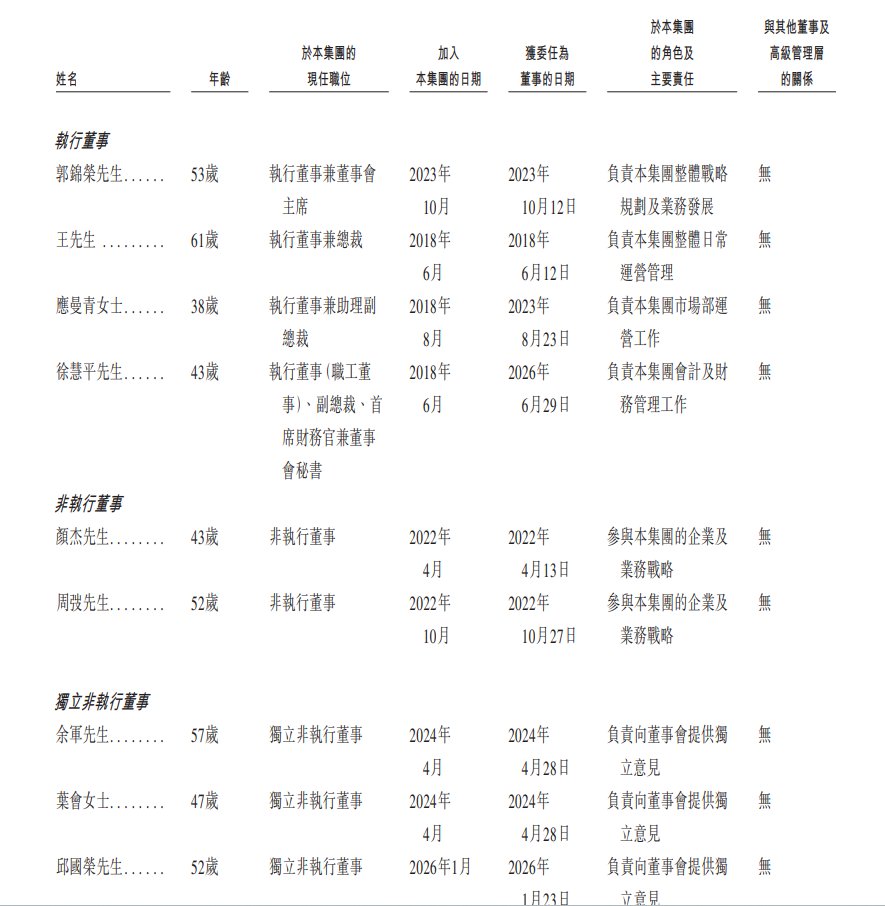
The Board consists of nine directors, including four executive directors, two non-executive directors and three independent non-executive directors.
Shareholding structure
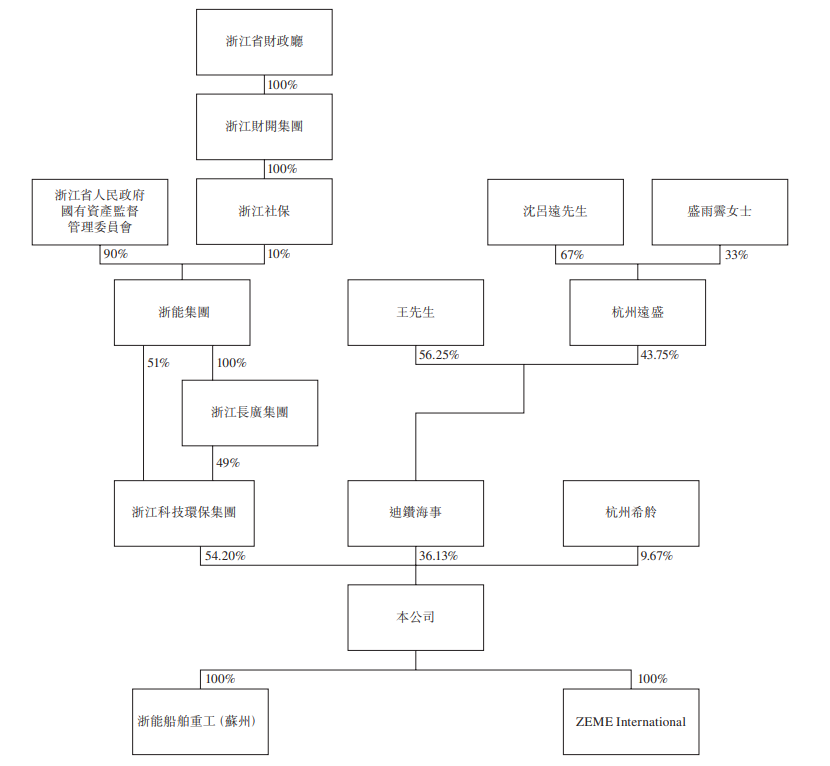
As of the last practical date, Hangzhou Xiyi had four general partners, namely Mr. Wang, Mr. Guo Jinrong, Mr. Shen Haitao, and Mr. Xu Huiping, holding partnership interests of approximately 10.34%, 10.34%, 9.31% and 9.31% respectively. Mr. Xu Huiping is the managing partner. According to the relevant planning documents, the executive partner is responsible for the daily operation and management of Hangzhou Xiyu, while important business matters such as revising the partnership agreement, providing guarantees, handling real estate, and accepting new partners must be jointly decided by the general partners.
According to the number of senior management members of the company, Hangzhou Xilong stipulated four general partners when it was established. The general partners should be members of the company's senior management. Each general partner exercises the right to vote independently, and general partners (with the exception of Mr. Wang) do not routinely accept Mr. Wang's instructions. As a result, no single general partner has control over Hangzhou Xiyu.
Intermediary team
Co-sponsors: CITIC Securities (Hong Kong) Limited, CMB International Capital Limited
Company Legal Adviser: Related to Hong Kong Law and US Law: Han Kun Law Firm Limited Liability Partnership; Related Chinese Law: Han Kun Law Firm
Co-sponsor Legal Adviser: Relevant Hong Kong Legislation: King & Wood Mallesons; Related Chinese Law: King & Wood Mallesons
Auditors and reporting accountants: Ernst & Young
Industry Advisor: Insight Industry Consulting Co., Ltd.