
The geopolitical crisis is impacting global refining capacity! The imbalance between supply and demand may cause gasoline prices in the US to continue to be “hot” this fall
The Zhitong Finance App learned that even after the peak summer driving period is over, US gasoline prices may remain high. The reason is that refining capacity is in short supply due to the Russian-Ukrainian conflict and the Middle East war, and the global fuel market is facing a tight supply situation.
According to data from the American Automobile Association (AAA), the current price of gasoline in the US is about 4.06 US dollars per gallon. Although it is lower than the high of 4.56 US dollars per gallon set during the year, it is still 36% higher than the price before the Middle East war broke out on February 27.
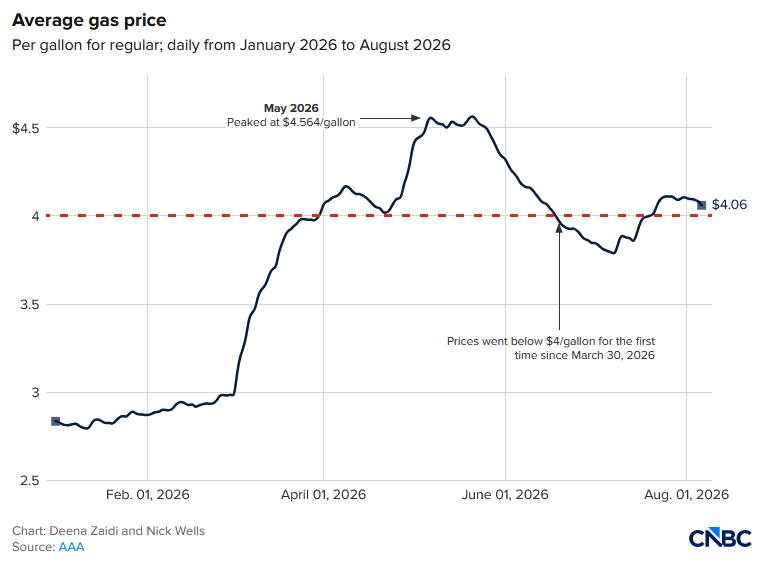
Patrick DeHaan, head of petroleum analysis at gasoline analysis company GasBuddy, said that if the US and Iran are unable to reach a stable agreement on navigation through the Strait of Hormuz, American drivers may face record high gasoline prices during Labor Day (that is, September 7) this year. He added that US gasoline prices hit an all-time high of $3.83 per gallon during Labor Day in 2012.
De Haan said that although seasonal factors will reduce demand and gasoline prices should fall somewhat in the fall, the shortage of global refining capacity may cause gasoline prices to remain high during this period.
Gary Simmons, chief operating officer of refiner Valero Energy (VLO.US), said in an earnings conference call last week that the Middle East war and the Russian-Ukrainian conflict have brought about 5 million b/d refining capacity to a standstill. Brian Mandel, executive vice president of marketing at Phillips 66 (PSX.US), also stated on the earnings call: “Due to problems in Russia and the Middle East, the fundamentals of the refining market are very tight and are being further tightened.”
ExxonMobil (COM.US) CEO Darren Woods said on Friday that the refining capacity currently available to meet demand is at an all-time low. He pointed out that due to disruptions to shipping in the Strait of Hormuz, the Middle East region's refining capacity of about 3 million b/d cannot be supplied to the market. Meanwhile, Ukraine's drone attacks on Russian refineries also led to the shutdown of about 1 million barrels/day refining capacity.
Marathon Crude Oil (MPC.US) CEO Marian Manning said on Tuesday: “As far as the Persian Gulf conflict is concerned, the pace at which refineries in the Middle East have resumed operations is indeed very slow.” “Any further supply disruptions in the region could lead to further supply restrictions.”
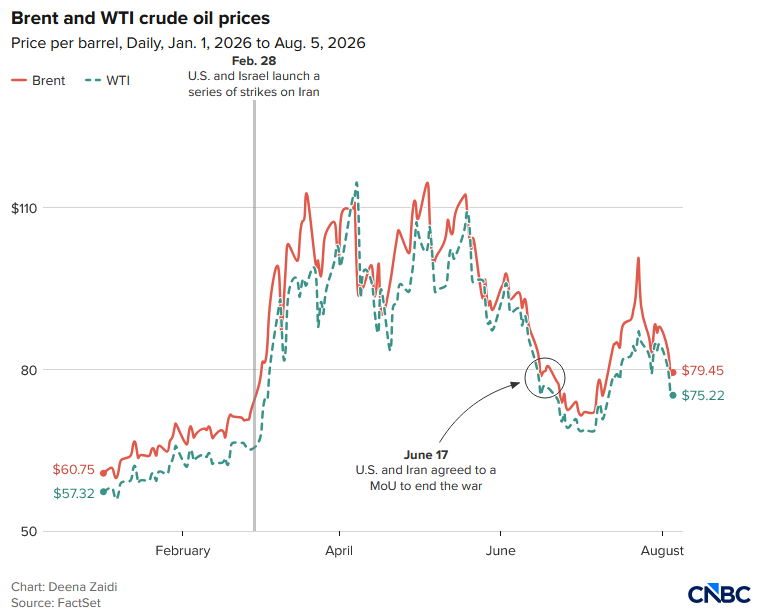
Woods said that the tight refining market explains why fuel prices are still expensive even if the price of crude oil falls sharply from this year's high. Woods explained that in the past, the market had sufficient refining capacity, so gasoline prices were mainly determined by the cost of crude oil. Today, restrictions in the refining process have created a “disconnect between crude oil prices and gas station prices.” In other words, gasoline prices are now determined by refining demand, not by crude oil prices.
Woods said, “This is why we haven't seen the price of crude oil rise as fast as some people expected, nor have we seen the price of refined oil products fall at the same time as the price of crude oil falls because there is such a disconnect in the market.”
At the same time, against the backdrop of tightening global fuel supply due to the closure of refineries in the US and geographical conflicts over the years, US refiners are fully operating to meet the strong demand in the market, and have obtained rich profits as a result. According to the financial report released by Valero Energy last week, in terms of earnings per share, the company achieved the strongest quarterly performance in history; the company's net profit for the second quarter increased more than fourfold year-on-year, from US$714 million in the same period last year to US$3.7 billion, a record high.
PBF Energy (PBF.US) and HF Sinclair (DINO.US) recorded the best profit performance since 2022 and 2023, respectively — HF Sinclair's net profit in the second quarter increased by about four times to reach US$892 million; PBF Energy changed from a loss situation in the same period in 2025 to profit, and net profit increased by more than 1 billion US dollars. The second-quarter profits of Marathon Crude Oil and Phillips 66 increased by more than 300% year over year, reaching $5.1 billion and $3.8 billion, respectively.
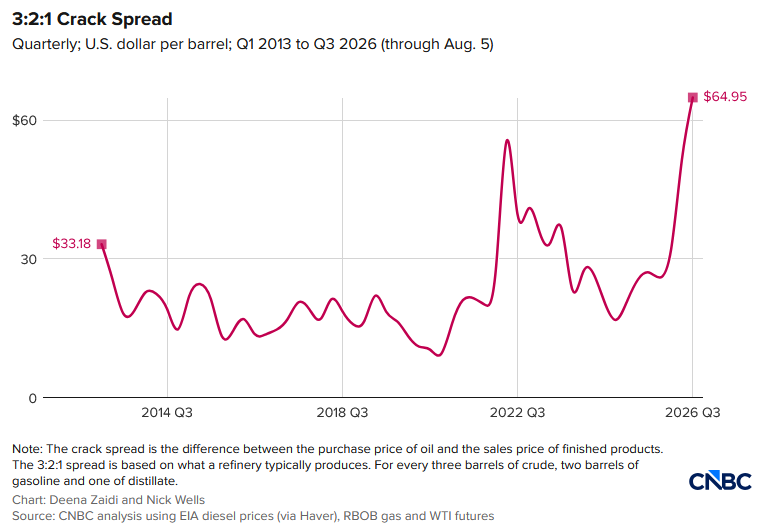
Refiners benefit from huge profit margins between crude oil procurement costs and sales prices of refined oil products such as gasoline and diesel. This indicator is known as the “cracking price difference.” The data shows that at the end of July, the cracking price difference once exceeded 70 US dollars, almost equivalent to the price of a barrel of US crude oil at the time. Refiners are also unwilling to give up this rare “spectacular wealth” so easily. De Haan said that some refineries are delaying maintenance plans to take advantage of current high profit margins.
Phillips 66 estimates that currently about 7 million b/d refining capacity has stopped in Asia and the Middle East, while Russia has closed another 1.4 million b/d refining capacity. Mandel said that if the Strait of Hormuz reopens, there will be more crude oil supply in the market, but limited refining capacity will cause the supply of refined oil products to remain insufficient. “Whether the refinery can resume operations will depend on the extent of damage and the ability to obtain spare parts, which will take quite a while,” he said. It takes a long process to get the refinery back online.”