
Walsh's vague statement triggered a crisis of trust in the Federal Reserve, and major banks such as Barclays and HSBC bolster inflation-preserving bonds
The Zhitong Finance App learned that although Federal Reserve Chairman Kevin Walsh has repeatedly emphasized the core position of fighting inflation, the market still questions that its policy actions are lagging behind and that their determination to fight inflation is insufficient. In this context, top international investment banks such as Barclays and HSBC are unanimous in their voices, optimistic about the allocation value of US inflation-protected bonds, and believe that such anti-inflationary bonds will continue to outperform ordinary treasury bonds.
Policy guidelines are vague and compounded multiple risks, and the yield on US long-term bonds hit a 20-year high
Last week, the yield on US long-term treasury bonds rose to the highest level in nearly 20 years. The core reason was that Walsh declined to say how policymakers would control inflation, raising concerns that the Federal Reserve might be too late to act. Although Walsh has publicly stated many times that the Federal Reserve has a “zero tolerance” attitude towards continued high inflation, the vague policy guidelines have not dispelled market doubts.
The rise in US bond yields in this round was not driven by a single factor; the combination of multiple risks further amplified market fluctuations.
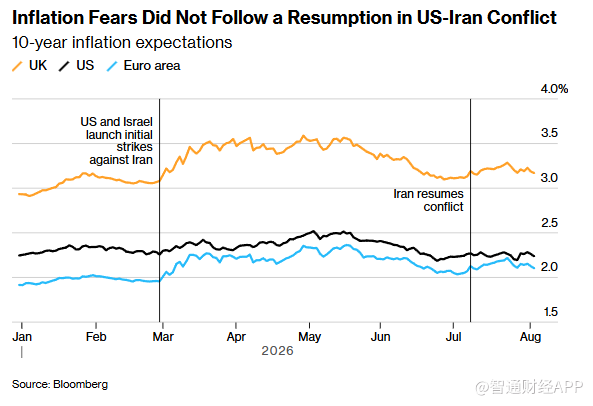
On the one hand, the international crude oil market has fluctuated sharply, and fluctuations in energy prices continue to inject inflationary pressure; on the other hand, the US government's high fiscal spending has heightened market concerns. It is worth noting that the current break-even inflation rate, which measures market inflation expectations, is close to the lowest level in a year, reflecting the market's current underestimation and slack off about the risk of inflation.
A number of major foreign banks have spoken out intensively and are unanimous in their bullish inflation-preserving bonds
Jon Hill, head of US inflation market strategy at Barclays, said, “I expect the market to include higher inflation risk in the yield curve because the credibility of the position previously interpreted by the market as 'dovish suspension' is questionable. This will mean that the break-even inflation rate will widen, and the performance of inflation-protected bonds will be significantly superior to traditional ordinary bonds.”
On July 29, the Federal Reserve maintained the federal funds rate target range of 3.5% to 3.75%, suspending interest rate adjustments for the fifth time in a row. The three regional Federal Reserve presidents voted against and advocated a 25 basis point increase in interest rates, showing that internal divisions have intensified. Walsh emphasized that it will stick to the 2% inflation target and weaken the forward-looking guidance. The next meeting is expected to be held in September.
After the Federal Reserve's interest rate meeting in July, HSBC's Diraj Narula reiterated his interest in long-term US inflation-preserving bonds and pointed out that he was concerned about the Federal Reserve's “long-term commitment to controlling inflation.”
Judging from market performance during the year, inflation-protected bonds have shown greater resilience to fluctuations. According to the data, the Bloomberg inflation-protected bond index rose slightly by 0.3% during the year, while the traditional sovereign bond index fell 0.7% during the same period.
Inflation-linked bonds protect investors by paying higher yields adjusted for inflation. Currently, the real yield on US 30-year inflation-protected treasury bonds is 2.93%. It hit 3.04% last Friday, the highest level since 2008.
Jorge Gallayo of Société Générale said, “We still believe that, judging from the current actual yield, inflation-protected bonds have investment value.” He also pointed out that the possibility of a comprehensive peace in the Middle East is “extremely low,” and that the low inflation break-even point indicates that the market has underestimated the chain risk of rising energy prices leading to overall prices and wages.
The resurgence of the US-Iran conflict has not heightened concerns about inflation
Institutional funding takes the lead in laying out market inflation perceptions or ushering in a reshaping
Institutional funding has taken the lead. Kevin Kidd, investment manager at True Potential Investments, has raised the holding ratio of inflation-protected sovereign bonds to 20% of the company's total fixed income positions. He believes that the current tolerance of major central banks, especially the Federal Reserve, for rising inflation far exceeds the policy tone conveyed to the outside world.
Kidd said, “We believe that the major central banks are willing to tolerate higher levels of inflation than they claim.”
Stefan Koopman, senior macro strategist at Rabobank, believes that the core logic of allocating inflation-protected bonds does not simply rely on inflation continuing to be above 2% of the Fed's target value; more importantly, the center of inflation has already moved.
“The 2% inflation rate is likely to be more and more like a lower limit than an upper limit,” he said.