
LIC Shares Sale Puts CDSL Stock And Indian Financials In Focus
The Indian government’s plan to raise up to $3.3b by selling a 6.5% stake in Life Insurance Corporation of India at a 10% discount has put the spotlight firmly on financial sector stocks. Large capital raising and disinvestment can reshape liquidity, sentiment and attention across India’s financial sector, which matters if you hold or are considering banks, insurers or diversified financials. This article walks through 3 stocks from our Indian Financial Sector Stocks screener that appear positively exposed to the LIC stake sale story, and explains what this could mean for your portfolio decisions.
Central Depository Services (India) (NSEI:CDSL)
Overview: Central Depository Services (India) is one of India’s core market plumbing companies, running the electronic system that holds investors’ shares, processes transfers, pledges and e-voting, while also handling KYC records, e-insurance, e-lockers and other digital record services for brokers, issuers and policyholders.
Operations: CDSL generates most of its revenue in India from depository activity of ₹9.6b, supported by ₹1.8b from data entry and storage and a smaller ₹34m from repository services, alongside other unallocable income.
Market Cap: ₹276.34b
Central Depository Services (India) sits right at the heart of the LIC stake sale story because every extra demat account, IPO and secondary trade lives on its rails. The company benefits from a large base of retail accounts and a mix of record keeping, KYC and value added digital services that support recurring fees, and analysts expect steady earnings and revenue growth with high return on equity. At the same time, you need to weigh fee caps, rising technology and compliance costs, and pressure on profit margins, especially with the stock already trading on a rich P/E multiple. Put together, CDSL offers one way to get exposure to India’s formalising savings system, and the LIC event makes valuation discipline particularly important.
Central Depository Services (India) sits at the crossroads of LIC related trading, yet the real story may be in the earnings quality behind that rich P/E. Get the full picture with the analysis report for Central Depository Services (India)

HDFC Asset Management (NSEI:HDFCAMC)
Overview: HDFC Asset Management is one of India’s largest mutual fund houses, running equity, debt, balanced and real estate portfolios for millions of investors while managing money on their behalf in listed markets. It acts as the investment manager for a wide range of funds, using fundamental analysis to pick securities and collect management fees on the assets it oversees.
Market Cap: ₹1.11t
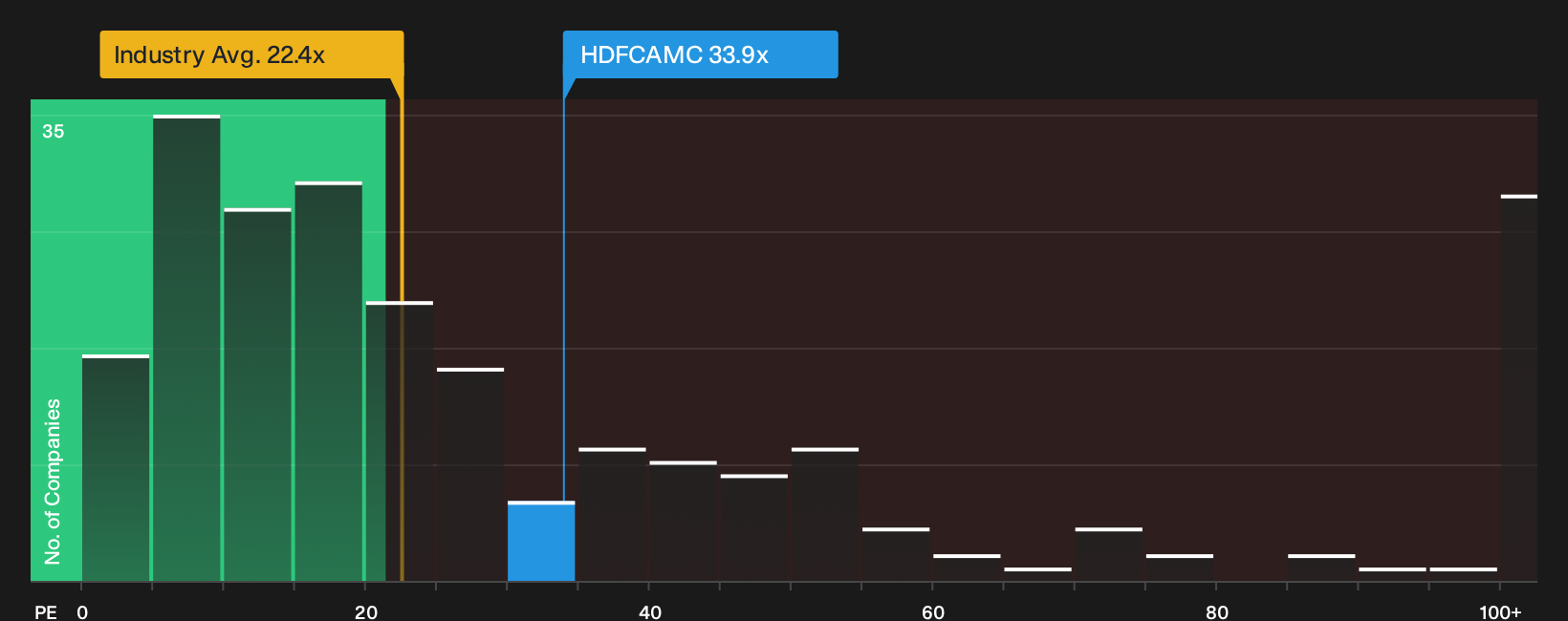
HDFC Asset Management gives you direct exposure to India’s mutual fund growth story, where rising financial literacy and digital access are pulling more savers into markets. The LIC stake sale and similar transparency moves can draw fresh attention to equity funds and systematic investment plans, which matters for a manager with high profitability, strong brand trust and a long history of retail engagement. At the same time, you need to weigh fee pressure from passive funds, rising talent costs and a premium valuation that prices in a lot of optimism. For long term investors, the key consideration is whether HDFC Asset Management can continue to translate its industry position into resilient inflows and durable earnings quality as competition intensifies.
HDFC Asset Management’s premium story hinges on whether its mutual fund engine can keep pulling in money faster than fee pressure erodes it. Get the full analyst forecasts for HDFC Asset Management and see what could shift that balance next.
BSE (NSEI:BSE)
Overview: BSE is India’s oldest stock exchange, providing a trading platform for equities, derivatives, debt, currencies, mutual funds and other securities, alongside data, index, depository and training services for investors and institutions in India and overseas.
Operations: BSE generates about ₹51.2b in revenue from facilitating trading in securities and related services, with roughly ₹50.8b coming from India and a smaller ₹667m from outside India.
Market Cap: ₹1.46t
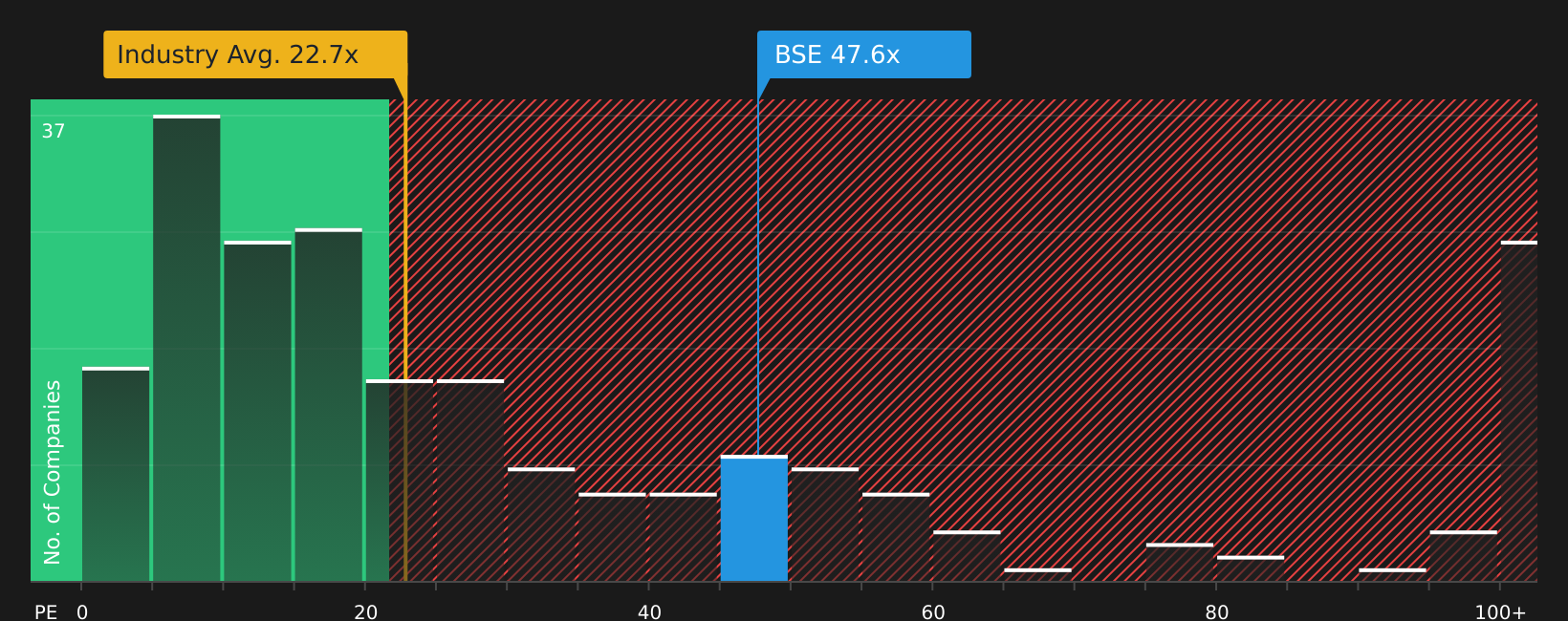
BSE sits at the center of India’s capital markets, so events like the LIC stake sale that can lift trading volumes and new investor participation are worth attention. Management is investing in infrastructure, derivatives and digital platforms to capture more of that activity. At the same time, the company’s valuation, reliance on external funding and ongoing regulatory and technology spend mean there is limited room for disappointment. To assess whether this mix of opportunities and risks fits your portfolio, the detailed company narrative and available forecasts can provide further context.
BSE’s expanding platform reach could be masking a far tighter margin for error than many investors realise. Review the analysis report for BSE to see how one underappreciated pressure point could change the story.
The three stocks covered here are only a starting point, and the full Indian Financial Sector Stocks screener surfaces 32 more Indian financial sector companies with equally compelling stories for you to review. Use Simply Wall St to identify the catalysts that matter to you, filter for the specific trends and financial health metrics discussed here, and analyze which opportunities best fit your highest conviction ideas.
Take Control of Your Investment Journey
If BSE or any of these companies sound like a great opportunity, register for FREE with Simply Wall St and add your companies to a Watchlist to monitor the share price against the fair value the ideal entry point. Once you've made your move, manage your holdings with our Portfolio Command Center that filters out the noise to deliver only the most critical, actionable updates. Throughout your journey, our Community allows you to filter the best ideas from thousands of investor perspectives. By uncovering hidden catalysts and risks early, you'll accelerate your decision-making and stay one step ahead of the market.
Seeking Fresh Alternatives Before Others Do
New breakout themes can move quickly while attention is still low and prices have not fully caught the momentum. Scan these fresh ideas before the crowd and consider them while they are still in an earlier phase.
- Target sturdy compounders with resilient balance sheets and disciplined cash flows by running the curated list of solid balance sheet and fundamentals (413 results), which is currently flying under the radar.
- Explore long term income opportunities from companies built around reliable payouts by checking the hand picked 433 dividend fortresses before valuations reflect broader yield-driven interest.
- Track infrastructure and hardware suppliers involved in AI demand with the focused 55 AI infrastructure stocks while more potential entry points are emerging.
This article by Simply Wall St is general in nature. We provide commentary based on historical data and analyst forecasts only using an unbiased methodology and our articles are not intended to be financial advice. It does not constitute a recommendation to buy or sell any stock, and does not take account of your objectives, or your financial situation. We aim to bring you long-term focused analysis driven by fundamental data. Note that our analysis may not factor in the latest price-sensitive company announcements or qualitative material. Simply Wall St has no position in any stocks mentioned.
Have feedback on this article? Concerned about the content? Get in touch with us directly. Alternatively, email editorial-team@simplywallst.com