
IPO Outlook | Can Lanhai Puqi Pharmaceutical overcome the commercialization gap by splitting the JAK inhibitor 10 billion with “partial delivery”?
After experiencing the collapse of the Beijing Stock Exchange and delisting from the new Third Board, Puqi Pharmaceutical submitted a second listing to the Hong Kong Stock Exchange on July 24 in an attempt to seize the critical window period when the core products are close to commercialization and complete the “backwater war.”
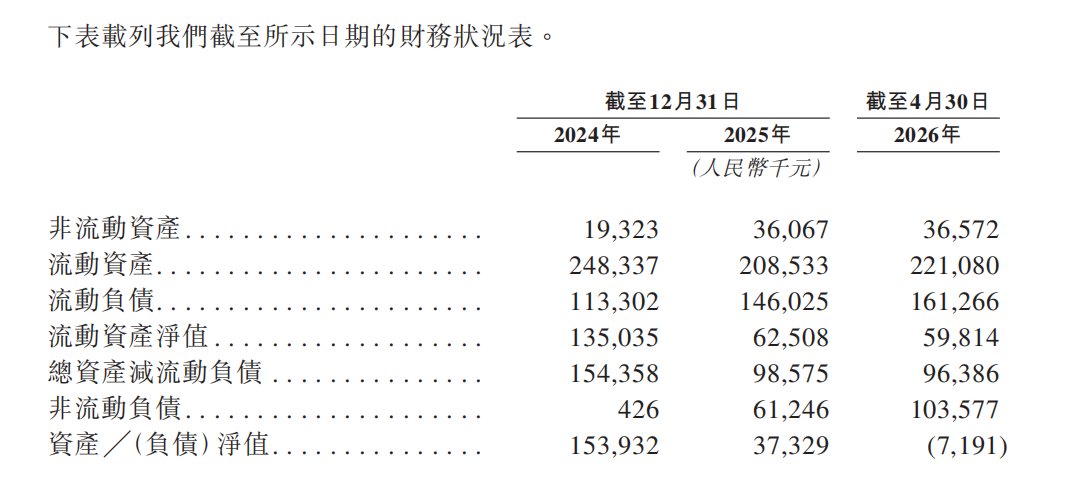
This biotech company, which focuses on topical delivery of targeted therapies to treat immune inflammatory diseases, was accepted by the State Drug Administration in February 2026 for the marketing application of the new drug in the gel dosage form of the core product, prumexitinib (PG-011), which is only one step away from commercialization. However, financial data shows that in the first four months of 2024, 2025 and 2026, the company invested 146 million yuan, 128 million yuan and 54.492 million yuan respectively, with a cumulative loss of nearly 400 million yuan during the period. By the end of April 2026, the company's net assets had turned negative 7.191,000 yuan, and it was in an insolvent situation. Facing increasingly intense competition on the atopic dermatitis circuit (3 oral JAK1 inhibitors have been approved in China, and 22 drug candidates are under development), Puqi Pharmaceutical chose differentiated dosage forms of external gels and nasal sprays as a breakthrough, and has successively reached commercial cooperation with Jichuan Pharmaceutical and Xiansheng Pharmaceutical to pave the way for product launch. The move to Hong Kong stocks this time is not only another key adjustment in its capital market path, but also a “defense war” for cash flow and whether R&D can continue.
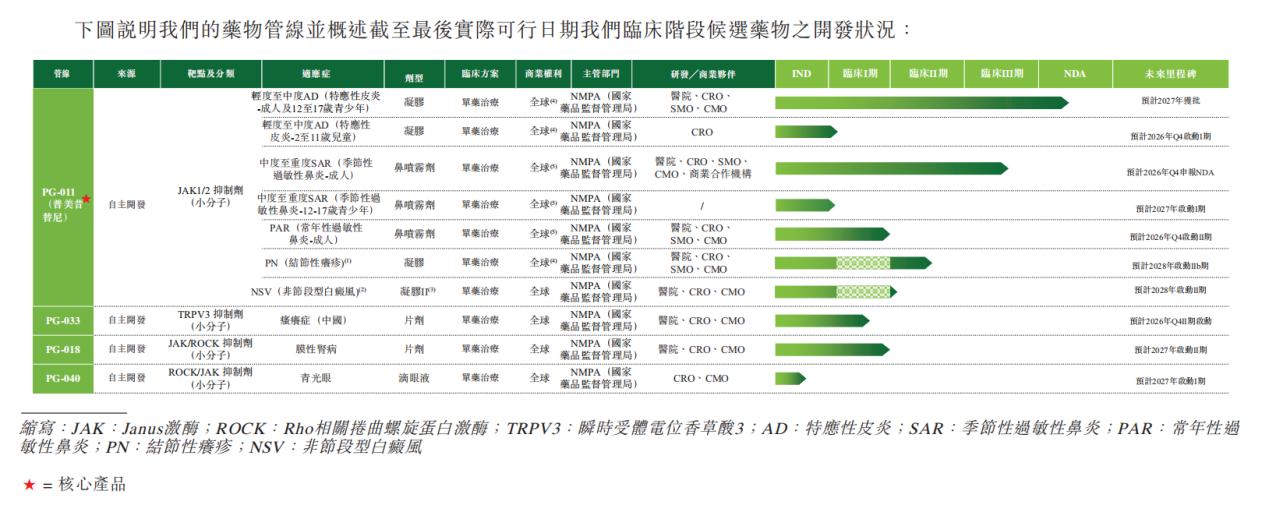
Segmenting the 10-billion JAK inhibitor market with “partial delivery”
In a context where systemic treatment with JAK inhibitors is facing safety disputes and the efficacy boundaries of traditional topical drugs are becoming increasingly obvious, Puqi Pharmaceutical chose a differentiated path of “avoiding the edge and opening up a different approach”: limiting the effective suppression of JAK1/2 to the area of the lesion, and entering the two major immune-inflammatory disease markets of atopic dermatitis and allergic rhinitis through two dosage forms, gel and nasal spray, respectively. The essence of this strategic choice is to rebalance the “efficacy - safety - compliance” triangle - raising safety to a level sufficient to support long-term chronic disease management without sacrificing efficacy, thereby leveraging a large group of mild to moderate patients who are concerned about oral systemic drugs.
Judging from the size of the market, this path is supported by clear business logic. According to Frost & Sullivan data, China's atopic dermatitis drug market is expected to grow from 13.2 billion yuan in 2025 to 48.4 billion yuan in 2033, with a compound annual growth rate of 17.6%; the allergic rhinitis drug market will rise from 5.3 billion yuan to 23.6 billion yuan, with a compound growth rate of more than 20%. The two major markets together have a long-term space of more than 70 billion yuan, which is enough to accommodate segmented track leaders with differentiated advantages. Puqi Pharmaceutical's core chip lies in the “window of time” -- as the first topical JAK inhibitor gel to be submitted to the NDA in China, it is expected to be approved for marketing between 2026 and 2027, leading subsequent competitors for at least 12 to 18 months.
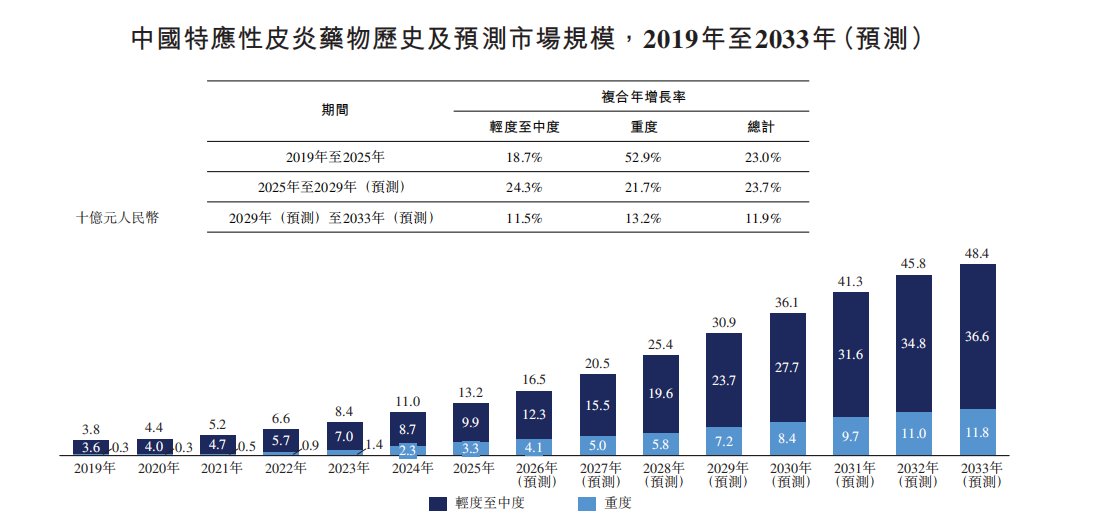
However, dosage form innovation is not risk-free arbitrage. Although topical gels avoid the risk of systemic exposure to oral JAK inhibitors, their efficacy is highly dependent on dermal penetration efficiency of the drug, patient adherence to medication, and individual differences in lesion site. Clinical data shows that the performance of prumexitinib gel at key efficacy endpoints is encouraging, but whether it can reproduce the excellent data in clinical trials in a real-world environment still needs to be verified after marketing. In addition, there are already 3 topical JAK inhibitor formulations in China that are in phase III clinical or NDA stages, and the pace of competitive follow-up directly determines the actual length of Puqi Pharmaceutical's window period. From a financial perspective, the success of this strategy depends not only on the approval of the product itself, but also on whether the company can use the established channel cooperation between Jichuan Pharmaceutical and Xiansheng Pharmaceutical to achieve rapid terminal delivery within 12 months after approval, transforming the first-mover advantage into a real amount of prescriptions and market share. If commercialization falls short of expectations, the first-mover advantage may be quickly diluted after the influx of competitors, and the valuation logic will also fall back from “exclusive product premium” to “homogenized competitive discount.”
How does the commercialization path compete with the capital chain?
For a biotechnology company that has been established for nearly 10 years, has accumulated losses of about 400 million yuan, and is already insolvent, the act of submitting a listing application to the Hong Kong Stock Exchange itself already reflects the urgency of the current financial situation and the pressure to countdown to commercialization. As of April 30, 2026, Puqi Pharmaceutical's net assets have turned negative at 7.191,000 yuan, which means that if a new round of financing cannot be completed in the short term, the company will face a real risk that the operating capital chain will break down. Seen from this perspective, the 18A Hong Kong stock listing is not a strategic option, but rather a survival requirement — the “one-step” approach to approval of the core products is the moment when the company's cash flow is most tight, because R&D expenses, commercialization preparation costs, and production facility investment still need to be continuously spent before approval, yet revenue has not yet been generated.
But the other side of risk is opportunity. The marketing application for prumexitinib gel was accepted by the State Drug Administration in February 2026. According to the standard review cycle, it is expected to be approved in the first half of 2027. This means that the company is in the “darkest before dawn” stage. Once approved for listing, cash flow will reach an inflection point from zero to one. Puqi Pharmaceutical has adopted a pragmatic “asset-light” strategy in terms of commercialization — reaching commercial cooperation with mature pharmaceutical companies such as Jichuan Pharmaceutical and Xiansheng Pharmaceutical, rather than building a huge sales team of its own. From a financial perspective, this decision has dual significance: on the one hand, it drastically reduces the consumption of sales expenses on cash flow, concentrates limited funds on subsequent expansion of indications (pediatric atopic dermatitis, prurigo, vitiligo, etc.) and phase III clinical promotion of nasal sprays; on the other hand, with the partner's dermatology and respiratory channel resources, it is expected that rapid dosage can be achieved after approval, shortening the time cycle from approval to break-even.
However, the certainty of commercialization still needs to be carefully assessed. There are many competitors in the field of topical treatment of atopic dermatitis, such as glucocorticoids, calcineurin inhibitors, and PDE-4 inhibitors, and some varieties have entered the collection or medical insurance catalogue, and the price system is mature.
As a new drug with an innovative mechanism, prumexitinib gel faces the dilemma of “it is difficult to get medical insurance at a high price, and it is difficult to cover R&D costs at a low price.” Allergic rhinitis nasal sprays face more serious market education challenges — JAK inhibitors are a new mechanism for treating allergic rhinitis. It takes time for doctors to develop prescription habits, and nasal hormones and antihistamines already occupy the vast majority of the market share and are inexpensive. Therefore, the key point of Puqi Pharmaceutical's transition from Biotech to Biopharma is not the date the NDA is approved, but the critical scale of whether prescriptions can reach the break-even point within 12 months after approval. If listing financing is successfully completed, products are approved as scheduled, and commercial cooperation is effectively implemented, the company is expected to achieve revenue breakthroughs and narrow losses around 2028; if any link is delayed or falls short of expectations, the pressure on the capital chain will increase again, and may even trigger the risk of revaluation of gambling terms or valuations.
The final outcome of this “race between capital chain and commercialization” will determine whether Puqi Pharmaceutical will become a leading segment in the field of local immune inflammation treatment, or another Biotech regret sample that has stopped after product approval but is difficult to sustain.