
Fortrea (NASDAQ:FTRE) Reports Strong Q2 CY2026, Full-Year Sales Guidance is Optimistic

Clinical research company Fortrea Holdings (NASDAQ:FTRE) reported Q2 CY2026 results exceeding the market’s revenue expectations, but sales fell by 4.5% year on year to $678.2 million. The company’s full-year revenue guidance of $2.66 billion at the midpoint came in 1.8% above analysts’ estimates. Its non-GAAP profit of $0.23 per share was 27.2% above analysts’ consensus estimates.
Is now the time to buy Fortrea? Find out by accessing our full research report, it’s free.
Fortrea (FTRE) Q2 CY2026 Highlights:
- Revenue: $678.2 million vs analyst estimates of $648 million (4.5% year-on-year decline, 4.7% beat)
- Adjusted EPS: $0.23 vs analyst estimates of $0.18 (27.2% beat)
- Adjusted EBITDA: $58.7 million vs analyst estimates of $50.28 million (8.7% margin, 16.8% beat)
- The company lifted its revenue guidance for the full year to $2.66 billion at the midpoint from $2.6 billion, a 2.1% increase
- EBITDA guidance for the full year is $212.5 million at the midpoint, above analyst estimates of $210.1 million
- Operating Margin: 2.2%, up from -46.5% in the same quarter last year
- Free Cash Flow Margin: 2.9%, similar to the same quarter last year
- Market Capitalization: $1.96 billion
"Our second quarter results reflect continued progress against our strategy and disciplined execution across the business," said Anshul Thakral, CEO of Fortrea.
Company Overview
Spun off from Labcorp in 2023 to focus exclusively on clinical research services, Fortrea (NASDAQ:FTRE) is a contract research organization that helps pharmaceutical, biotech, and medical device companies develop and bring their products to market through clinical trials and support services.
Revenue Growth
A company’s long-term sales performance is one signal of its overall quality. Any business can experience short-term success, but top-performing ones enjoy sustained growth for years. Over the last five years, Fortrea’s demand was weak and its revenue declined by 3% per year. This was below our standards and suggests it’s a low quality business.
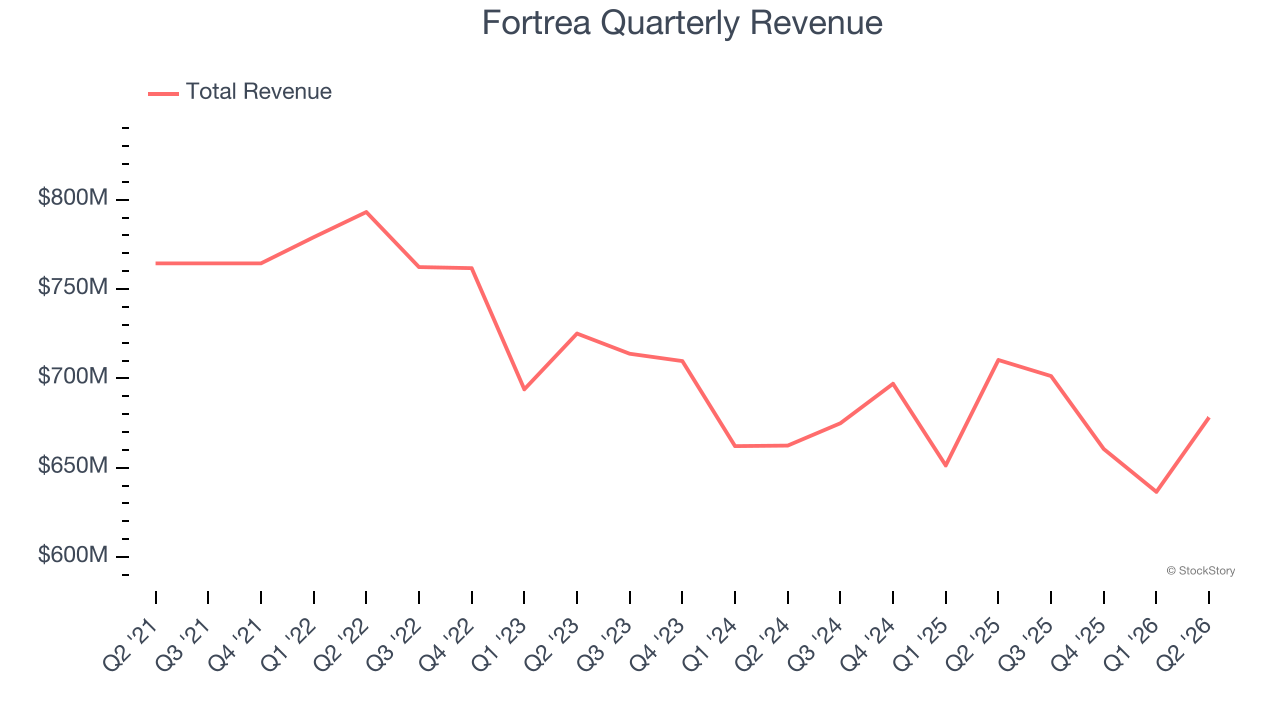
Long-term growth is the most important, but within healthcare, a half-decade historical view may miss new innovations or demand cycles. Fortrea’s annualized revenue declines of 1.3% over the last two years suggest its demand continued shrinking. 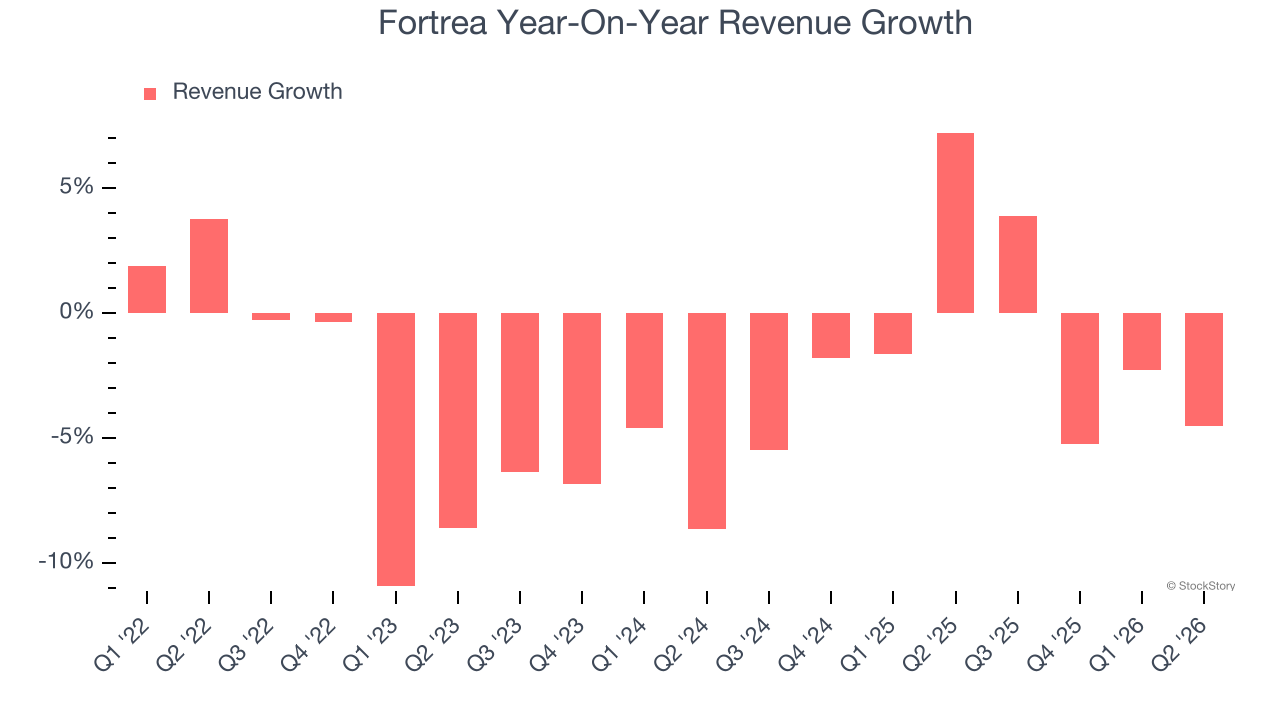
This quarter, Fortrea’s revenue fell by 4.5% year on year to $678.2 million but beat Wall Street’s estimates by 4.7%.
Looking ahead, sell-side analysts expect revenue to remain flat over the next 12 months. This projection doesn’t excite us and suggests its newer products and services will not accelerate its top-line performance yet.
ALSO WORTH WATCHING: Nvidia’s Quiet Partner. Nvidia’s chips cost a hundred grand. The connectors that make them work cost even more. One company makes them all.
Every AI server needs specialized infrastructure the chip companies don’t make. High-speed cables. Power connectors. Thermal sensors. This 90-year-old company built a monopoly on it. The AI boom just started. This stock is still flying under the radar. Claim The Stock Ticker Here for FREE.
Adjusted Operating Margin
Adjusted operating margin is one of the best measures of profitability because it tells us how much money a company takes home after subtracting all core expenses, like marketing and R&D. It also removes various one-time costs to paint a better picture of normalized profits.
Fortrea was profitable over the last five years but held back by its large cost base. Its average adjusted operating margin of 7.9% was weak for a healthcare business.
Looking at the trend in its profitability, Fortrea’s adjusted operating margin decreased by 5.4 percentage points over the last five years. Fortrea’s performance was poor no matter how you look at it - it shows that costs were rising and it couldn’t pass them onto its customers.
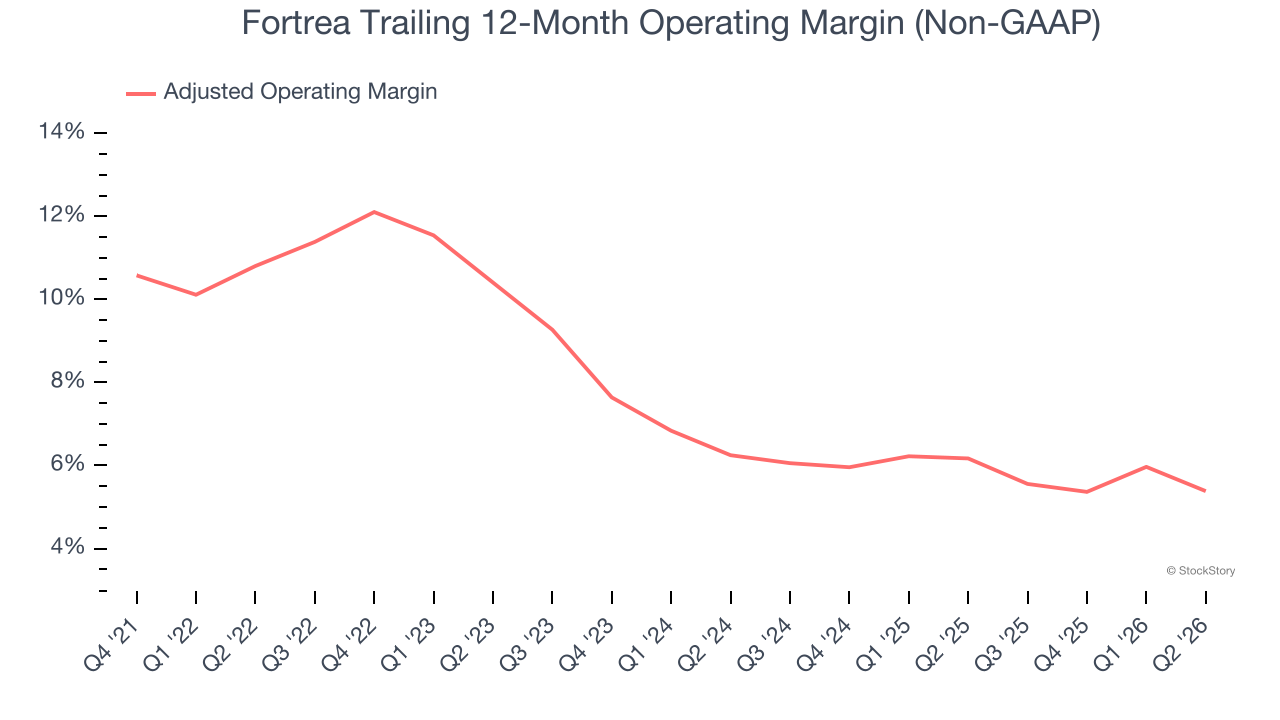
In Q2, Fortrea generated an adjusted operating margin profit margin of 4%, down 2.3 percentage points year on year. This contraction shows it was less efficient because its expenses increased relative to its revenue.
Cash Is King
If you’ve followed StockStory for a while, you know we emphasize free cash flow. Why, you ask? We believe that in the end, cash is king, and you can’t use accounting profits to pay the bills.
Fortrea has shown mediocre cash profitability relative to peers over the last five years, giving the company fewer opportunities to return capital to shareholders. Its free cash flow margin averaged 3.7%, below what we’d expect for a healthcare business.
Taking a step back, an encouraging sign is that Fortrea’s margin expanded by 6.9 percentage points during that time. The company’s improvement shows it’s heading in the right direction, and we can see it became a less capital-intensive business because its free cash flow profitability rose while its operating profitability fell.
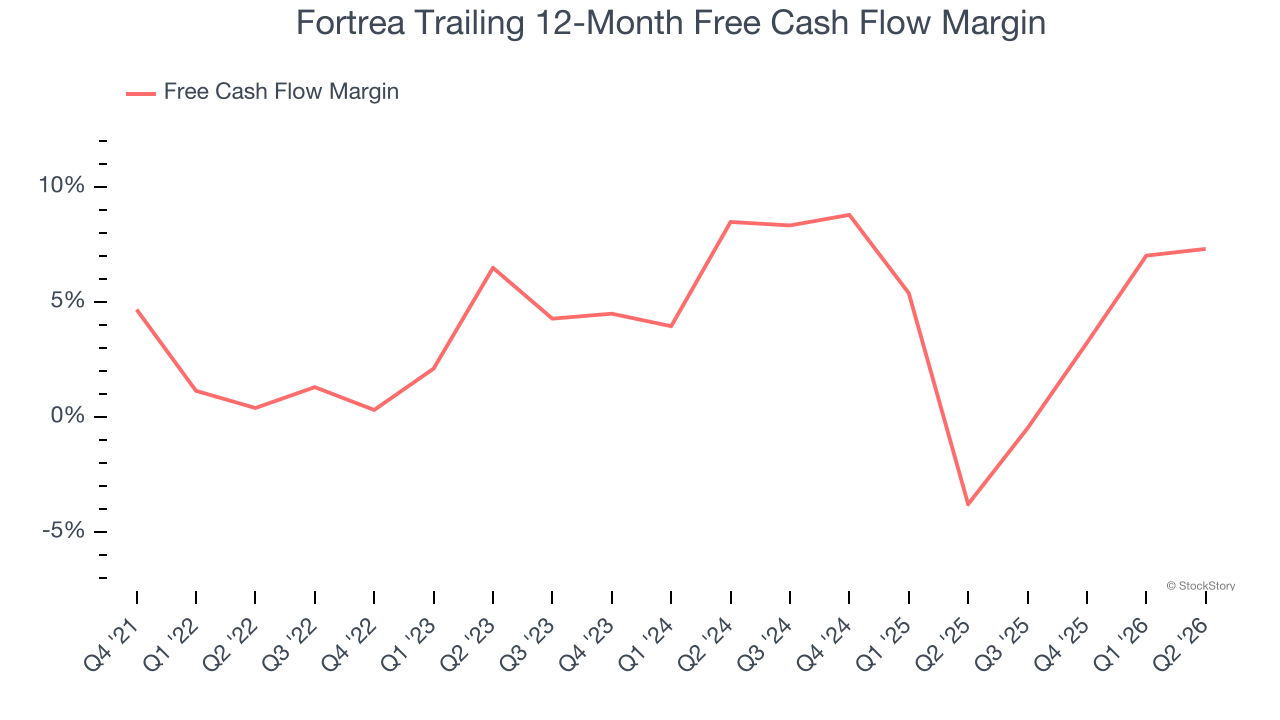
Fortrea’s free cash flow clocked in at $19.9 million in Q2, equivalent to a 2.9% margin. This cash profitability was in line with the comparable period last year and its five-year average.
Key Takeaways from Fortrea’s Q2 Results
It was good to see Fortrea beat analysts’ EPS expectations this quarter. We were also glad its revenue outperformed Wall Street’s estimates. Zooming out, we think this was a solid print. The stock remained flat at $20.68 immediately after reporting.
Is Fortrea an attractive investment opportunity right now? What happened in the latest quarter matters, but not as much as longer-term business quality and valuation, when deciding whether to invest in this stock. We cover that in our actionable full research report which you can read here (it’s free).