
Paychex (PAYX) Stock Looks Fairly Valued After a 21% Slide
Paychex stock has retreated over the past year, yet the current US$113.55 share price sits at a point where the Discounted Cash Flow (DCF) intrinsic value estimate suggests meaningful upside, while traditional earnings multiples look roughly in line with the market. That split leaves investors weighing a seemingly attractive DCF signal against a more neutral read from broader valuation checks.
- Over the last 12 months, Paychex has delivered a decline of 20.7%, which puts recent returns at odds with the more constructive message from its intrinsic value estimate.
- Expected cash generation from its payroll and HR services can support the DCF outlook, while any pressure on client growth or pricing power may limit how much of that intrinsic value the market is willing to reflect in the share price.
- On Simply Wall St's broader checks, Paychex screens as a mixed picture rather than a clear bargain or clear overvaluation, passing only 3 of 6 valuation tests here.
The issue now is whether Paychex's current price discount to the DCF intrinsic value estimate offers a genuine margin of safety or simply reflects risks that the headline metrics do not fully capture.
Find out why Paychex's -20.7% return over the last year is lagging behind its peers.
Is Paychex a Bargain on Cash Flow?
The Discounted Cash Flow (DCF) model values Paychex by projecting future free cash the business can generate for shareholders. On this measure, Paychex recently produced last twelve‑month free cash flow of about US$2.34b, and the model assumes that cash flows continue to grow from this base rather than swinging sharply higher or lower.
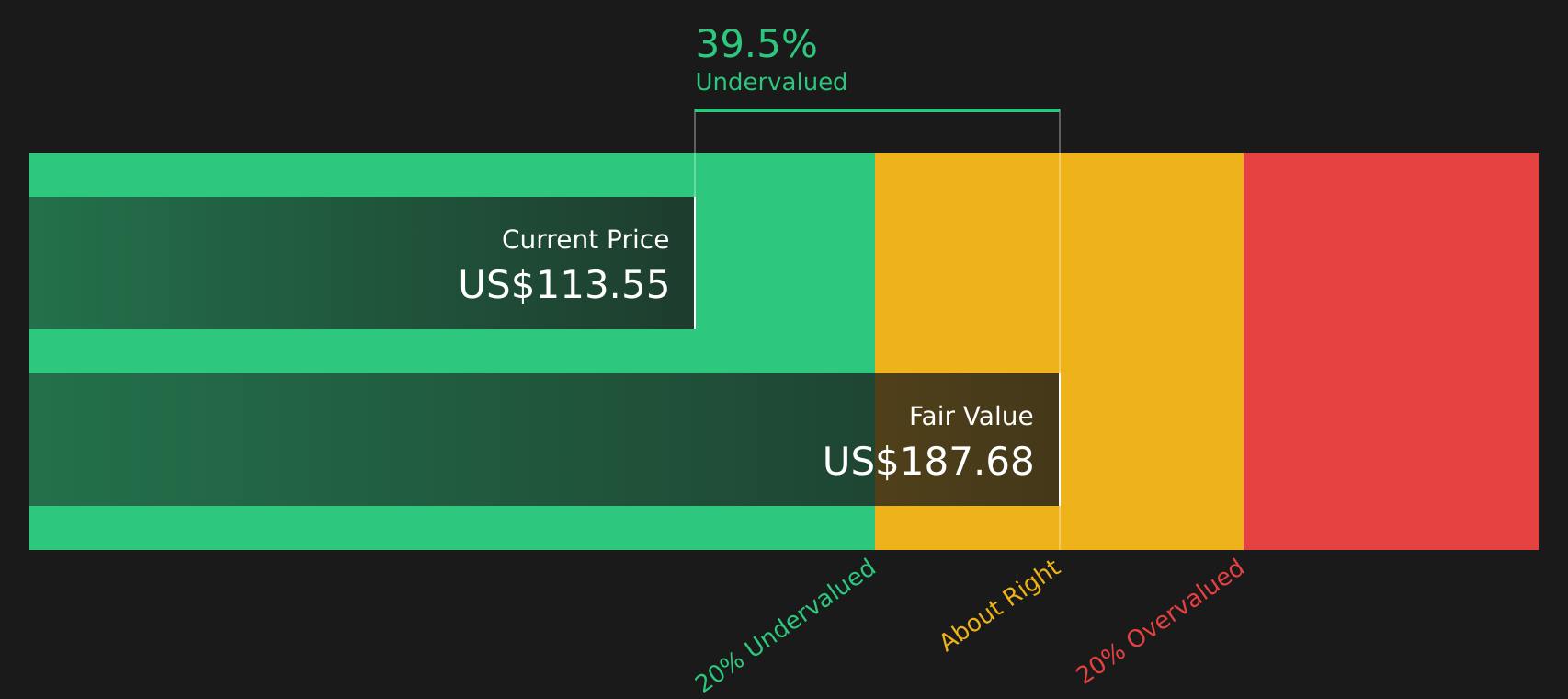
Rolling those projections forward, the DCF approach points to an estimated intrinsic value of about $187 per share, compared with the current $113.55 share price. That gap suggests the stock trades at a significant discount to what its projected cash generation could support, with the model indicating Paychex is 39.4% undervalued on this basis.
Based on the DCF numbers alone, Paychex stock currently screens as undervalued.
Our Discounted Cash Flow (DCF) analysis suggests Paychex is undervalued by 39.4%. Track this in your watchlist or portfolio, or discover 49 more high quality undervalued stocks.
Where Does Paychex Sit on Earnings?
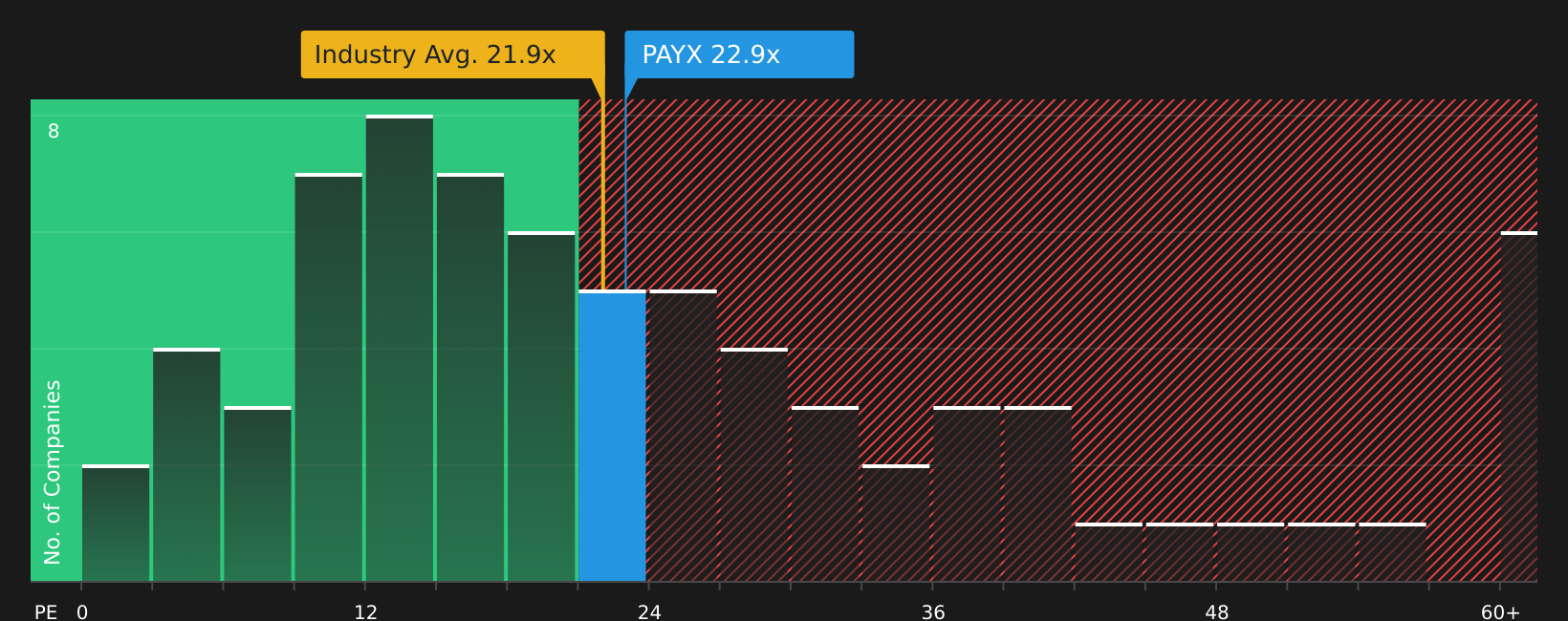
The P/E ratio is a useful cross check for Paychex because earnings are a key output of its fee based payroll and HR services model. Paychex currently trades on a P/E of about 22.9x, which sits slightly above the Professional Services industry average of 21.9x and the peer group average of 19.3x.
Simply Wall St's model suggests a fair P/E for Paychex of around 23.1x once its size, margins and risk profile are taken into account. That is very close to where the stock is currently priced, implying investors are paying a going rate for its earnings rather than a clear discount or premium compared with what the tailored fair multiple would suggest.
On the P/E measure, Paychex looks priced roughly in line with what its earnings profile would justify.
See what the numbers say about this price — find out in our valuation breakdown.
The Paychex Narrative: What Would Justify Today's Price?
Simply Wall St Narratives for Paychex pick up where the valuation split leaves off by spelling out what growth, margin and earnings paths would need to hold for Paychex's stock to be worth materially more or less than today's price, and they sit on the company's Community page. Rather than relying on a single multiple or cash flow model, each narrative outlines the assumptions behind its fair value so you can compare them with actual results over time.
Community views on Paychex sit far apart, with one camp focused on AI and Paycor upsides while the other zeroes in on execution and margin risk.
Bull case: 14% undervalued
"The integration of Paycor expands the reach of Paychex into larger clients and adds about US$10 billion of total addressable market..."
Read the full Bull Case to see why Paychex could be undervalued
Bear case: 8% overvalued
"Integration challenges with Paycor and rising employee costs threaten margins, while reliance on relief programs underscores revenue vulnerabilities amidst uncertain economic conditions..."
Read the full Bear Case to see why Paychex could be overvalued
Do you think there's more to the story for Paychex? Head over to our Community to see what others are saying!
The Bottom Line
For Paychex, the Discounted Cash Flow (DCF) intrinsic value estimate points to a sizeable discount, while the P/E view suggests the stock is priced about right relative to its earnings profile. That split reflects different emphases, with the intrinsic value lens tied to long term cash generation and the market multiple shaped by how investors feel about growth and comparable stocks today. Broader checks sit in the mixed tier. The key question is whether Paychex can sustain the cash flows implied by the DCF without margin or execution setbacks turning that apparent discount into a value trap.
This article by Simply Wall St is general in nature. We provide commentary based on historical data and analyst forecasts only using an unbiased methodology and our articles are not intended to be financial advice. It does not constitute a recommendation to buy or sell any stock, and does not take account of your objectives, or your financial situation. We aim to bring you long-term focused analysis driven by fundamental data. Note that our analysis may not factor in the latest price-sensitive company announcements or qualitative material. Simply Wall St has no position in any stocks mentioned.
Have feedback on this article? Concerned about the content? Get in touch with us directly. Alternatively, email editorial-team@simplywallst.com