
Shell (02423) Zuo Donghua: Under mature markets, the real estate brokerage industry needs to redefine value
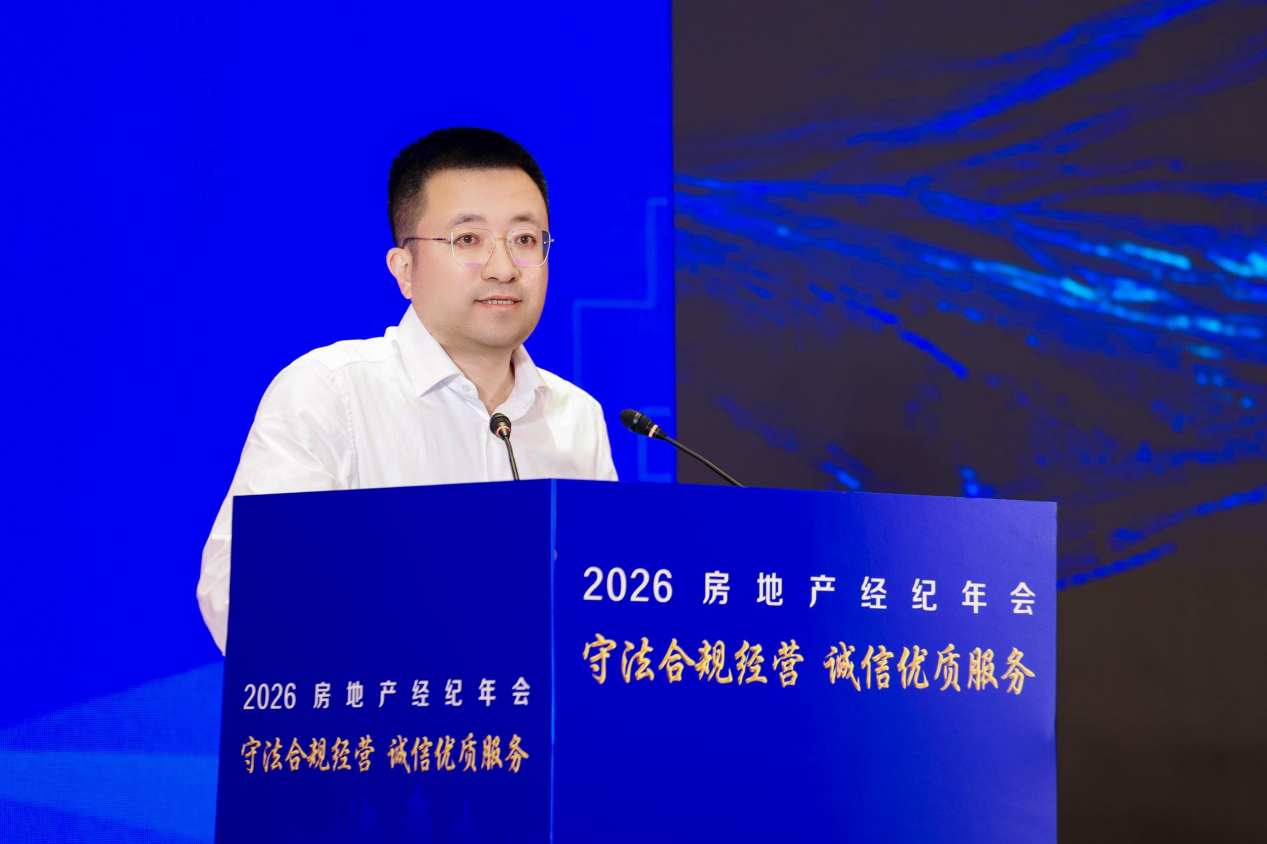
Zhitong Finance App learned that on July 23, Zuo Donghua, Party Secretary and Executive President of Shell Group (02423), delivered a speech on “Industry Value in Mature Markets” at the 2026 Real Estate Brokers' Annual Meeting. He suggested that the current real estate brokerage industry is experiencing a triple turn of “market, technology, and demand” at the same time. The market is moving from incremental to stock, technology is moving from “Internet +” to “AI+,” and consumer demand is shifting from focusing on asset appreciation to focusing on real life.
Zuo Donghua said that under the triple change, the industry needs to move from facilitating a transaction to serving a living life, and agents also need to change from “people who deliver information” to “people worth trusting.”
Second-hand transactions accounted for more than 50% of the first time, and the market no longer generally rose or fell
“The market has gone from an incremental era to an era of stocks 'dominated by second-hand distribution'. We call it a mature market.” Zuo Donghua said that mature markets are first reflected in changes in the trading structure. From 2008 to 2009, second-hand housing transactions in first-tier cities surpassed new housing for the first time; around 2015, new first-tier cities successively entered the dominant phase of second-hand housing; by the first half of 2026, the country's second-hand housing turnover accounted for more than 50% for the first time. China's real estate market is structurally entering an era of stock.
The stock market is no longer simply a general rise or fall in housing prices; it is more clearly divided. Shell Research Institute's monitoring of 321 active trading districts in Beijing shows that from February to June 2026, transaction prices in 185 residential areas rose, while 136 were still being adjusted. The median overall rise and fall rate was 1.6%. Even if they are located in the same sector and business district, there may be big differences between different neighborhoods and different apartment types.
According to Zuo Donghua, looking at the market today, we must not only ask whether the overall price is rising or falling, but also on where the transaction took place and what kind of housing demand it supports. After entering a mature market, houses are returning to the “human” scale: from paying too much attention to asset attributes to returning to residential attributes; from pursuing exchange value to returning to use value.
This change is also reflected in consumer language. Shell's customer interviews in the Chengdu and Chongqing region revealed that “life languages” such as marriage, childbearing, schooling for the elderly, and employment migration are replacing “asset languages” such as whether they will increase, and have become more advanced considerations in home buying decisions. Zuo Donghua believes that transaction volume should no longer be simply viewed as a “thermometer” of market sentiment, but should be understood as the rate at which consumer life events occur. “Behind every transaction, there is a restructuring of life relationships.”
The stronger the AI, the more important the judgment and responsibility of people in the brokerage industry
Following the Internet's promotion of transparency in listing information and improving transaction efficiency, AI is bringing about a new round of technological change.
Zuo Donghua gave an example. In the past, agents often took hours to screen 10 properties for clients, design a route, and sort out the advantages and disadvantages of the houses. Today, AI agents can complete initial solutions within minutes. As standardization work is gradually taken over by AI, service models that simply rely on information transmission will face transformation.
“When all these jobs have been taken over by the machine, what is left in our hands that cannot be replaced?” Zuo Donghua believes that AI is good at data, calculation, and standardized delivery, but it cannot replace human judgment and responsibility in complex decisions. It can provide housing valuation and analysis of pros and cons, but it cannot bear transaction risks for customers, and it is also difficult to handle customers' anxiety and unease in making major decisions.
“It's not AI that makes people unimportant; it's AI that makes things that only humans can do more important than ever before.” Zuo Donghua said that AI will continue to develop rapidly in the next ten years, but there is no need to worry about being in it. The more technology develops, the more it is necessary to clearly understand the irreplaceable value of people.
Moving from “helping to trade” to “helping to stay good”
Based on a triple turn, it ultimately points to a restructuring of industry values. Zuo Donghua believes that in the past, the industry was more in the “world of housing,” focusing on circulation efficiency and asset value; mature markets required the industry to enter the “world of people,” focus on real living experiences, and return to being consumer-centered.
On the seller's side, brokerage services should help complete the “commercialization conversion” of a house that has been living for many years and identify real selling points; on the buyer's side, it is necessary to complete the “lifestyle transformation” to help consumers determine whether a home is really suitable for their family structure, life stage, and lifestyle. The value of the industry is to establish greater certainty between transactions, contracts, and post-signing services, so that sellers can sell with confidence and buyers can buy with confidence.
Regarding the new value of the real estate brokerage industry, he also outlined a six-stage value chain from “helping to buy and sell” to “helping to stay good.” Explain the market and understand requirements before the transaction, ensure transparent and accurate information and assist judgment during the transaction, and provide safety and risk protection after the transaction, as well as continuous services during the move-in period, occupancy period, and replacement period. “From a deal to a lifetime of companionship.”
“In the past, the industry paid more attention to how many businesses were done; in the future, it will focus on how many people are truly valuable and whether they are worthy of long-term trust.” Zuo Donghua said.