
IPO Foresight | Scarce Dual Targets+Global First, Gaoguang Pharmaceutical's Red Sea Circuit “rolls out” a new story?
Recently, the main board of the Hong Kong Stock Exchange welcomed an innovative pharmaceutical company, Hangzhou Gaoguang Pharmaceutical Co., Ltd. (abbreviation: Gaoguang Pharmaceutical), with CICC and CMB International as co-sponsors.
In the context of the increasing “internal circulation” of the domestic JAK inhibitor circuit, Gaoguang Pharmaceutical has pioneered a new approach and has become one of the few innovative pharmaceutical companies in China that simultaneously lays out “self-prevention of inflammation+central nervous system disease” with the unique advantages of high selectivity and high brain permeability of its dual-target inhibitors.
Similar to many 18A innovative pharmaceutical companies, Gaoguang Pharmaceutical has no products approved for listing, and the fastest R&D progress is in Phase III clinical trials. This IPO was not only due to tight funding, but also burdened with 1.2 billion yuan of pressure on gambling agreements.
According to public information, Gaoguang Pharmaceutical has completed six rounds of financing, raising a total of about 662 million yuan in capital, and a valuation of about 2,462 billion yuan after the most recent round of investment. A number of well-known investment institutions appeared in the company's shareholder list, including Hankang Capital, AstraZeneca China Capital, Kaitai Capital, Dr. Tan Fenlai, Yifeng Capital, Zeyue Venture Capital, Kangjun Capital, AIHC Capital, Huajin Capital, Infiniti Capital, and Gao Lin Capital.
With two scarce core assets in hand, can Kaoguang Pharmaceutical's IPO attract capital into the market?
Layout two popular fields, what are the highlights of the R&D pipeline?
The fields of autoimmune diseases and neurodegenerative diseases that Takamitsu Pharmaceutical focuses on have extremely impressive market potential.
Among them, autoimmune diseases include various common diseases such as rheumatoid arthritis, ankylosing spondylitis, and atopic dermatitis. The patient base is huge and the medication cycle is long, making it the second largest drug market in the world after tumors. According to the data, the global self-immunization drug market grew from US$116.9 billion in 2019 to US$143.1 billion in 2024, and is expected to expand further to US$179.5 billion in 2028.
Represented by Alzheimer's disease and Parkinson's disease, neurodegenerative disease is a highly heterogeneous neurological disease. Its core pathological characteristic is progressive loss of central or peripheral nervous system neurons, which in turn seriously impairs patients' memory, cognition, behavior, sensory function, and motor control ability.
The Zhitong Finance App learned that due to extremely complex pathogenesis and natural blocking of the blood-brain barrier, the development cycle of new drugs related to neurological diseases is extremely long and the failure rate is extremely high.
According to public reports, the number of people with Alzheimer's disease and other dementias in China is close to 17 million, and Parkinson's disease patients have exceeded 5 million, making it a huge medical burden that continues to increase; the relevant global market size has reached 61 billion US dollars in 2025, and is expected to increase to 114.1 billion US dollars by 2035, driven by trends such as population aging.
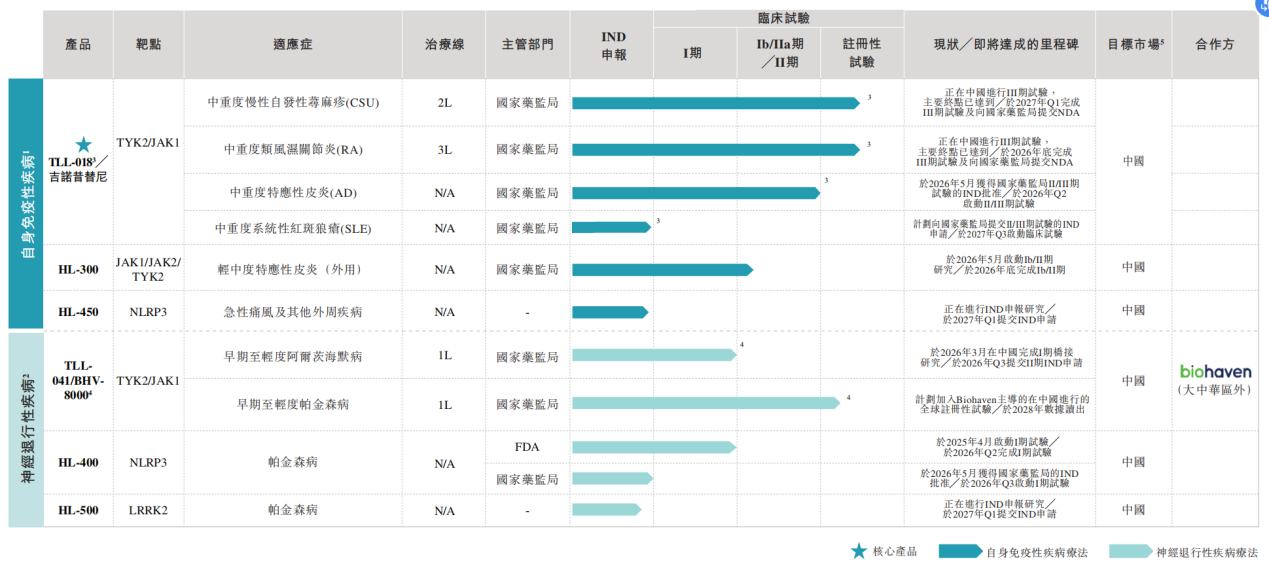
Gaoguang Pharmaceutical's R&D pipeline has a total of 7 self-developed small molecule drug candidates. Of these, 4 drugs are in the clinical stage and 3 are in the pre-clinical stage. Among them, the biggest differentiating highlight is the TYK2/JAK1 dual-target inhibitor.
JAK is an important family of non-receptor tyrosine kinases. Among them, JAK1 plays a central role in systemic inflammatory response, immune response, and neurological development, and has become a popular target for the development of new drugs for diseases such as inflammation, cancer, and autoimmunity.
TYK2 mainly affects immune-related signaling. It can only mediate cytokines such as IL-IL-12 and interferon type I, and promote the production of inflammatory cytokines such as IL-IL-23. It interferes less with other cytokines, and therefore has a high level of drug safety.
The Zhitong Finance App learned that currently most kinase inhibitors (including all approved or developed JAK inhibitors) contain typical hydrogen bond donors. By innovatively removing this hydrogen bond donor, Kaoguang Pharmaceutical has successfully developed a kinase inhibitor with higher selectivity and ability to penetrate the blood-brain barrier. This combination of dual properties is the first case among JAK inhibitors available so far.
With this technological breakthrough, the company was able to achieve higher safety in JAK inhibitors and effectively address the blood-brain barrier penetration problem that has plagued the treatment of neurodegenerative diseases for a long time.
In the field of self-immunity, the company's core product, TLL-018 (genoxitinib), is a selective TYK2/JAK1 inhibitor, and two phase III registration tests are being carried out domestically for chronic spontaneous urticaria (CSU) and rheumatoid arthritis (RA); HL-300 is a potent, skin-only TYK2/JAK1/JAK2 inhibitor, which is being developed as a topical medication for mild to moderate atopic dermatitis (AD).
In the field of neurodegenerative diseases, the company's core products, TLL-041/BHV-8000, are brain-penetrating and selective TYK2/JAK1 inhibitors to treat neuroinflammatory diseases including Parkinson's disease and Alzheimer's disease.
In addition, the rest of the company's pipeline has also deployed candidate drugs such as HL-400 (a brain-penetrating NLRP3 inhibitor for the treatment of CNS diseases) and HL-500 (an LRRK2 inhibitor used in the treatment of Parkinson's disease).
Can the differentiated dual target advantage break through the Red Sea?
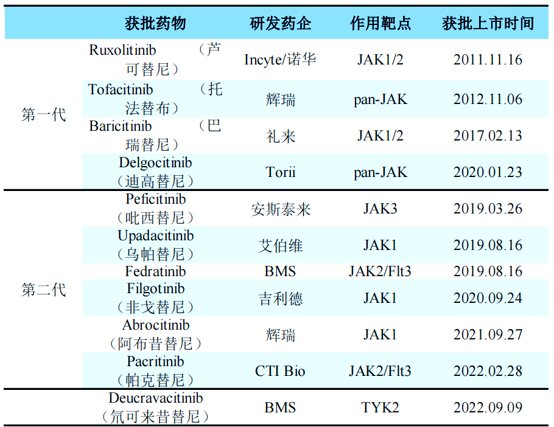
Competition on domestic JAK inhibitor tracks is becoming increasingly intense. First-generation non-selective products (such as Novarucotinib, Pfizer tofacib, and Eli baritinib) can simultaneously inhibit multiple targets of JAK1, JAK2, JAK3, and TYK2. Although the curative effect is clear, they can easily interfere with normal immune function and cause adverse reactions such as infection, anemia, and abnormal blood lipids. Therefore, they are marked with a black box warning by the FDA, and clinical application is limited.
Second-generation highly selective inhibitors (such as abbaviupatinib and Pfizer abucitinib) can accurately target specific subtypes, inhibit disease-related signaling pathways while reducing effects on other cytokine functions, and significantly improving safety.
However, even though second-generation products have safety advantages, many second-generation highly selective JAK inhibitors have been approved for marketing in China, and more than 10 JAK inhibitors are still in clinical trials. The level of congestion on the racetrack can be seen.
Highlight Pharmaceuticals' core product, TLL-018 (ginoxitinib), is the only highly selective TYK2/JAK1 inhibitor in the world. It is scarce, and its R&D progress is in the first tier in the world.
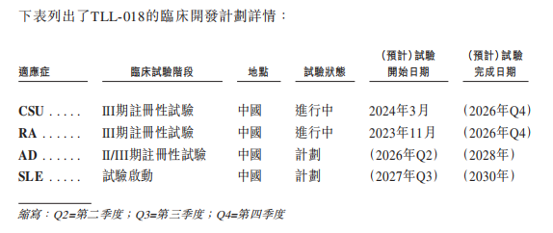
Since 2026, the clinical progress of TLL-018 has continued to send positive signals. In January, the drug obtained positive top-line data in the phase III clinical trial of chronic spontaneous urticaria (CSU). The mid-term analysis has reached the main end point. It is significantly superior to placebo in terms of main efficacy indicators and many secondary efficacy indicators, and has good safety and tolerability;
In April, the phase III clinical trial of TLL-018 for rheumatoid arthritis completed the main efficacy analysis. It also reached the main end point and all secondary endpoints. It showed superior efficacy to tofacib in terms of the proportion of patients with ACR50, ACR20/70, DAS28≤3.2, and DAS28<2.6 at 24 weeks. Based on the above positive data, on June 24, 2026, TLL-018 tablets are intended to be included in the breakthrough therapeutic drug program for the treatment of rheumatoid arthritis.
The Zhitong Finance App learned that with regard to the future schedule, Gaoguang Pharmaceutical plans to submit an NDA application for rheumatoid arthritis indications in China by the end of 2026, which is expected to be one of the first batch of domestically produced self-developed JAK inhibitors; at the same time, the company expects to submit a marketing application for CSU indications in the first quarter of 2027, which is expected to become the world's first JAK inhibitor for the treatment of CSU.
Furthermore, for moderate to severe atopic dermatitis, the company plans to launch phase II/III registration tests directly in China in the second quarter of 2026 and obtain IND approval in May 2026; expansion of indications for systemic lupus erythematosus is also being planned, and its IND application was approved in August 2023.
Currently, the global market for JAK1/TYK2 dual-target inhibitors is still empty, and most of the relevant pipeline layouts are in the early clinical stages. Against this background, TLL-018 has established a certain leading edge and is expected to seize market opportunities.
However, it should be noted that currently TLL-018 has only completed a comparative study with the first-generation JAK inhibitor tofatib, and no head-to-head clinical trials with other JAK inhibitors have been conducted. Compared with the overall competitive advantage, long-term efficacy, safety and final market positioning of existing standard treatments, it still needs to be continuously verified and evaluated through subsequent clinical practice and further research.
Another core product of Gaoguang Pharmaceutical, TLL-041, also performed well in clinical data for neurodegenerative diseases. It has become the world's first and only selective TYK2/JAK1 inhibitor with brain penetration, and has the triple unique advantages of high brain permeability, high selectivity, and biomarker mechanism verification.
Clinical studies have shown that through kinase spectrum analysis of 358 human kinases, TLL-041 is more than 20 times more selective for TYK2 and JAK1 than JAK2 and JAK3, and has extremely low off-target activity. This differentiated safety characteristic effectively avoids the risk of hematological and immunosuppression associated with a wide range of JAK inhibitors.
Preclinical studies confirmed that after oral administration, significant drug concentrations were shown in brain tissue and cerebrospinal fluid, and dose-dependent neuroprotective effects were observed in human neuronal models of dsRNA-induced neuroinflammation. This also solved the pain point where concentrations of previous therapeutic drugs were difficult to directly measure after entering brain tissue, and it was difficult to evaluate the relationship between efficacy and clinical endpoints.
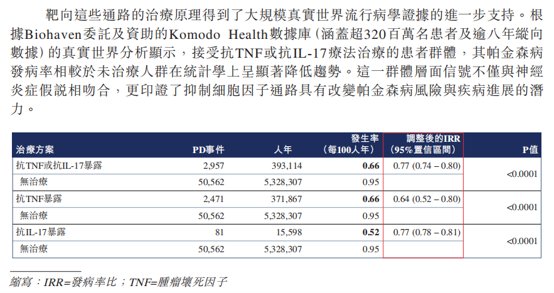
In terms of commercial rights, TLL-041 has authorized overseas rights to BioHaven. According to the cooperation agreement between the two parties, Gaoguang Pharmaceutical can receive a down payment of 10 million US dollars, 721,136 shares of Biohaven common shares, and enjoy clinical and commercial milestone payments of up to US$950 million, plus tiered sales royalty fees after subsequent products are launched. In August 2025, the company received the first milestone payment for the project, amounting to US$15 million.
Currently, BioHaven has initiated a global Phase II/III registration study on early Parkinson's disease. This is also the first known application of TYK2/JAK1 inhibitors in neurodegenerative diseases. In China, Gaoguang Pharmaceutical completed the pharmacokinetic bridging study of TLL-041 in March 2026. The next step is to participate in Biohaven's Parkinson's disease global registration research project, and submitted the clinical research plan for this registration trial to the State Drug Administration in December 2025, and is currently awaiting feedback.
According to the prospectus, for the three months ending March 31 in 2024, 2025, and 2026, Gaoguang Pharmaceutical lost approximately 226 million yuan, 312 million yuan, and 73.121 million yuan respectively. R&D expenses for 24-25 were 127 million yuan and 151 million yuan, respectively. The company is also facing considerable cash flow pressure. By the end of 2025, the balance of cash and cash equivalents left on the company's accounts was only 256 million yuan, highlighting the urgency of IPO financing.
In addition, past financing comes with investor redemption rights. If the company fails to complete the qualified listing before the end of 2027, investors have the right to redeem it according to the original investment principal plus 20% annual interest rate. As of the end of March 2026, the book value of this financial instrument had reached 1,2006 billion yuan, and the full amount was included in current liabilities. If the listing process is delayed, huge pressure on gambling repurchases may threaten the company's ability to continue operating.
Overall, Gaoguang Pharmaceutical's scarce pipeline is quite interesting. TLL-018's past clinical data is positive, and it has already been the first to receive a milestone down payment, and its potential commercial value has been recognized by the market. If TLL-018 succeeds in subsequent head-to-head trials, or if TLL-041 performs well in clinical Parkinson's disease in the future, it is expected to receive a considerable valuation premium, which is worthy of continued market attention.