
Xiaomi (SEHK:1810) Stock Looks Roughly Fair After AI Home Appliance Optimism
Xiaomi’s share price has swung sharply over the past few years, and with the stock up 148.6% over 3 years but still down heavily over the last 12 months, the key tension now is that the Discounted Cash Flow (DCF) intrinsic value estimate points to around 10.1% upside while the broader valuation checks suggest the stock is closer to fairly priced.
- Xiaomi has returned 148.6% over the past 3 years, which puts the recent weakness in a longer track record of strong gains for long term holders.
- Expectations around Xiaomi’s AI powered home appliance ecosystem can support higher cash flow assumptions, while the capital intensive push into electric vehicles may weigh on margins and keep valuation sensitive to execution risk.
- With Xiaomi scoring 3 out of 6 on our valuation checks, the picture is mixed rather than a clear bargain or a clear overvaluation.
The issue now is whether the current price adequately reflects Xiaomi’s intrinsic value or still leaves a reasonable margin of safety for new money going in.
Find out why Xiaomi's -51.0% return over the last year is lagging behind its peers.
Is Xiaomi Still Cheap on Cash Flow?
The Discounted Cash Flow (DCF) model estimates what Xiaomi might be worth today based on its projected future cash generation. Xiaomi’s latest twelve month free cash flow sits at about CN¥16.7b, and the model assumes those cash flows grow over time before settling into a more mature phase rather than shrinking away.
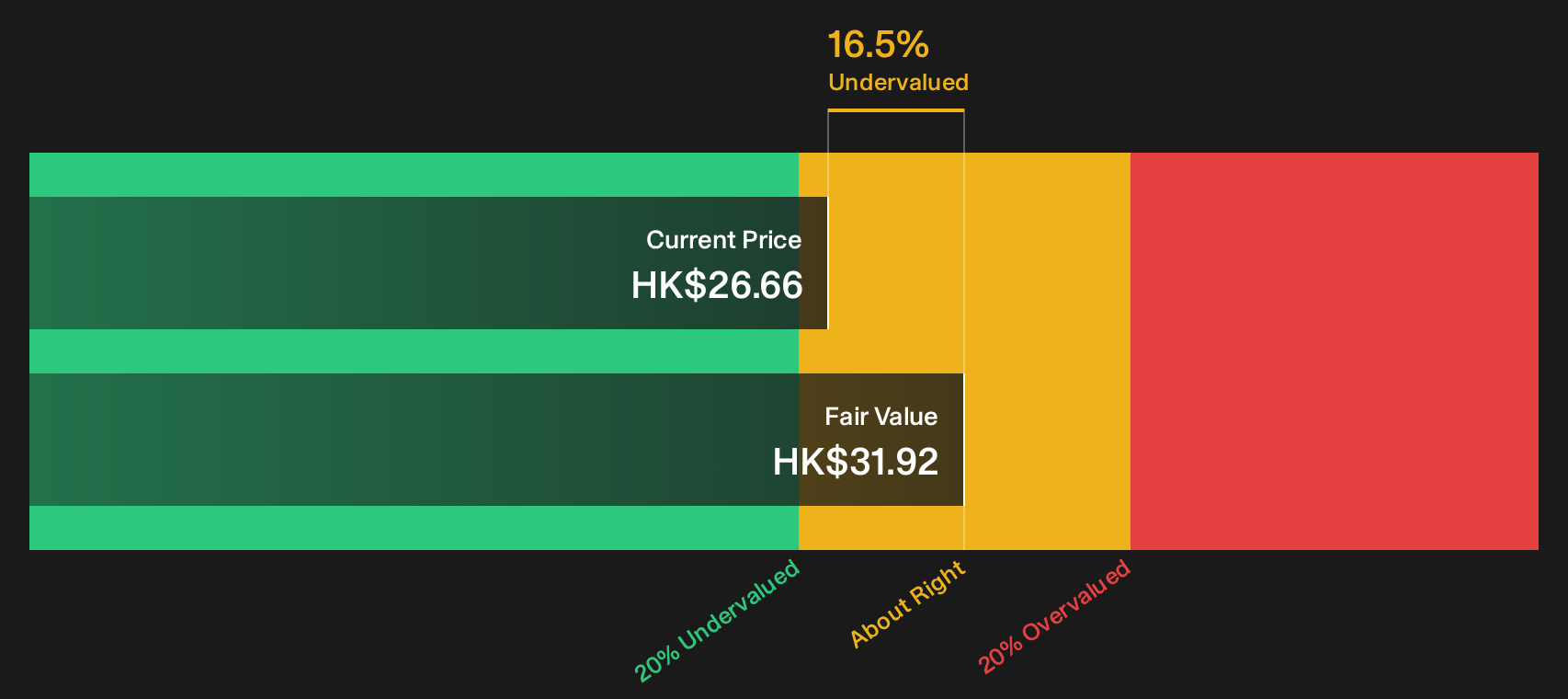
On these cash flow projections, the DCF points to an intrinsic value of around HK$30.57 per share, implying roughly 10.1% upside to the current market price. Because the recent focus on AI powered home appliances and the capital needs of the new electric vehicle line can both affect future cash generation, the model effectively assumes that Xiaomi can keep funding growth while still producing healthy free cash flow.
Morgan Stanley highlights Xiaomi as a potential beneficiary of AI powered home appliances. The market attention around that theme helps explain why the share price is already relatively close to the DCF estimate rather than at a deeper discount.
On balance, the DCF workup suggests Xiaomi stock currently looks undervalued relative to its projected cash flows.
Our Discounted Cash Flow (DCF) analysis suggests Xiaomi is undervalued by 10.1%. Track this in your watchlist or portfolio, or discover 219 more high quality undervalued stocks.
Does Xiaomi Look Fairly Valued on Earnings?
P/E is a useful yardstick for Xiaomi because earnings are a key focus for investors weighing its mix of hardware, software and services. Xiaomi currently trades on a P/E of about 17.2x, which is below the wider tech industry average of 23.4x and also below the peer group average of 47.9x. That gap indicates the market is not pricing Xiaomi at a premium to sector peers despite attention on its AI powered ecosystem and new electric vehicle line.
Compared with a modelled fair P/E of around 16.8x, Xiaomi’s current multiple sits very close to what might be expected given its size, industry and risk profile. The small premium to this fair ratio is modest and does not clearly point to the stock being either cheap or expensive on earnings alone.
Overall, Xiaomi appears to be priced roughly in line with what its earnings profile and risk level would suggest on the P/E multiple.

See what the numbers say about this price — find out in our valuation breakdown.
The Xiaomi Narrative: What Would Justify Today's Price?
Simply Wall St Narratives for Xiaomi sit between the valuation work above and the question of what needs to happen next for the stock to be worth materially more or less than today’s price. They spell out the earnings, growth and margin paths that would support each view. Each one links its number to a clear outlook on Xiaomi's future growth, profitability and risks that you can revisit on the Community page as new information emerges.
Community views on Xiaomi now split between a high-upside rebuild of the ecosystem and a far more cautious read on hardware margins and growth risk.
Bull case: 39% undervalued
"Accelerated R&D investments in core areas like AI, chips, smart EVs, and connected hardware enable differentiated offerings and ecosystem lock-in, allowing Xiaomi to ride the trend of AI-hardware-software convergence…"
Read the full Bull Case to see why Xiaomi could be undervalued
Bear case: 14% overvalued
"Smartphone market saturation and lengthening replacement cycles worldwide are expected to severely constrain unit sales growth, intensifying price competition and putting downward pressure on Xiaomi's revenue growth and gross margins over the long term…"
Read the full Bear Case to see why Xiaomi could be overvalued
Do you think there's more to the story for Xiaomi? Head over to our Community to see what others are saying!
The Bottom Line
For Xiaomi, the Discounted Cash Flow (DCF) work suggests some undervaluation, while the P/E view points to a stock that is priced about right against peers. That split mostly comes down to how confidently you treat future cash flows given the capital needs of electric vehicles and the potential of AI powered devices. With broader checks looking mixed, the key question is whether Xiaomi can convert its ecosystem story into durable margins without requiring so much investment that the cash flow thesis frays. How that balance between growth spending and cash generation plays out is what will likely decide whether today’s pricing proves attractive or not.
This article by Simply Wall St is general in nature. We provide commentary based on historical data and analyst forecasts only using an unbiased methodology and our articles are not intended to be financial advice. It does not constitute a recommendation to buy or sell any stock, and does not take account of your objectives, or your financial situation. We aim to bring you long-term focused analysis driven by fundamental data. Note that our analysis may not factor in the latest price-sensitive company announcements or qualitative material. Simply Wall St has no position in any stocks mentioned.
Have feedback on this article? Concerned about the content? Get in touch with us directly. Alternatively, email editorial-team@simplywallst.com