
IPO outlook | Series B investors lost nearly 40%, and Cinde Technology's IPO was “changing hands” or hiding hidden worries
The listing process of Shandong Xinde Technology Co., Ltd. (hereinafter referred to as “Cinde Technology”) in Hong Kong has had its ups and downs.
On June 5, the International Department of the Securities Regulatory Commission issued a request for supplementary materials, pointing directly to core issues such as the evolution of Cinde Technology's equity, shareholder situation, employee shareholding plans, and standardized operation. This included the need to provide additional explanations on the rectification situation that was banned by the military for three years due to collusive bidding.
This regulatory inquiry seems to have had a rapid ripple effect. On June 9, ICBC International quickly resigned as the overall coordinator. Whether this was a “coincidence” that made the market “playful.” Meanwhile, on June 30, the Hong Kong Stock Exchange revealed Cindy Technology's revised overall coordinator announcement. ICBC International is out of the market, with China Thai International as the sole client.
Joint insurance is generally a negative sign in Hong Kong stock IPOs. The market believes that this may be because the bookkeeper lacks confidence in the issuance, or that it may be due to concerns about project compliance/probability of passing the hearing and taking the initiative to retreat.
This has undoubtedly added to a certain extent the variables of Cindy Technology's IPO in Hong Kong. Industry insiders pointed out that if a new overall coordinator or cornerstone investor is not introduced in the future, Cindy Technology's distribution pricing and fund-raising scale may be under greater pressure.
A-shares have all been “broken” three times, and Series B investors have already lost 37.46%
Cindy Technology's IPO path can be called a “broken history” — it has been 21 years since it tested the waters and went public in Singapore without incident in 2005. However, its bond with the Chinese capital market began in 2008.
Cinde Technology, which first broke into A-shares in 2008, was rejected because the fund-raising product did not even get an approval number from the Ministry of Agriculture, which was a technical mistake; in 2010, the company broke through A shares twice, but since actual controller Li Chaoyang gave the core trademark a “free license” to Weifang Trust, which he controls, the Development and Review Commission determined that the pricing of related transactions was unfair and suspected of transferring benefits.
After more than ten years of silence, Cindy Technology restarted preparations in 2021, wanted to break through A-shares for the third time, and signed listing cooperation agreements with Zhongtai Securities, Zhitong Clubhouse, and Zechang Law Firm. However, in the 2021 Air Force Logistics Department's 1.4 million yuan livestock and poultry epidemic prevention materials inquiry project, Xinde Technology was verified due to collusive bidding, and the Air Defense Procurement and Supply Bureau granted a “3-year ban on military mining” + simultaneous ban on related enterprises controlled and managed by actual controller Li Chaoyang. At this point, it is only half a year since the A-share counseling and filing. The prospectus has not yet been officially submitted, and the A-share channel has been blocked by the compliance red line.
Spanning 14 years and trifecting A-shares, Cindy Technology's IPO trajectory outlines a map of decline from “technical damage” to “management loopholes” to “lack of integrity.” What is reflected behind the three denials is the systemic collapse of its internal control system and failure to comply with the bottom line of compliance. Against this background, ICBC International withdrew from the co-sponsor after the regulatory inquiry or was slightly “meaningful,” which inevitably did not cause the market to think about it.
It is worth noting that due to various factors such as the ban on military mining and the industry entering a downturn period, Cinde Technology's valuation declined significantly compared to the B round of financing in 2025. The Zhitong Finance App found that after the B-round financing in 2021, the post-investment valuation of Cinde Technology was RMB 2,888 billion, but the valuation after the C round was only 1.8 billion yuan, a discount of about 37.46%. This means that the B-round investors introduced by Cindy Technology in 2021 have all lost money and are deeply invested. If the Hong Kong stock issue price is discounted further compared to the C round, the losses of such investors may expand further.
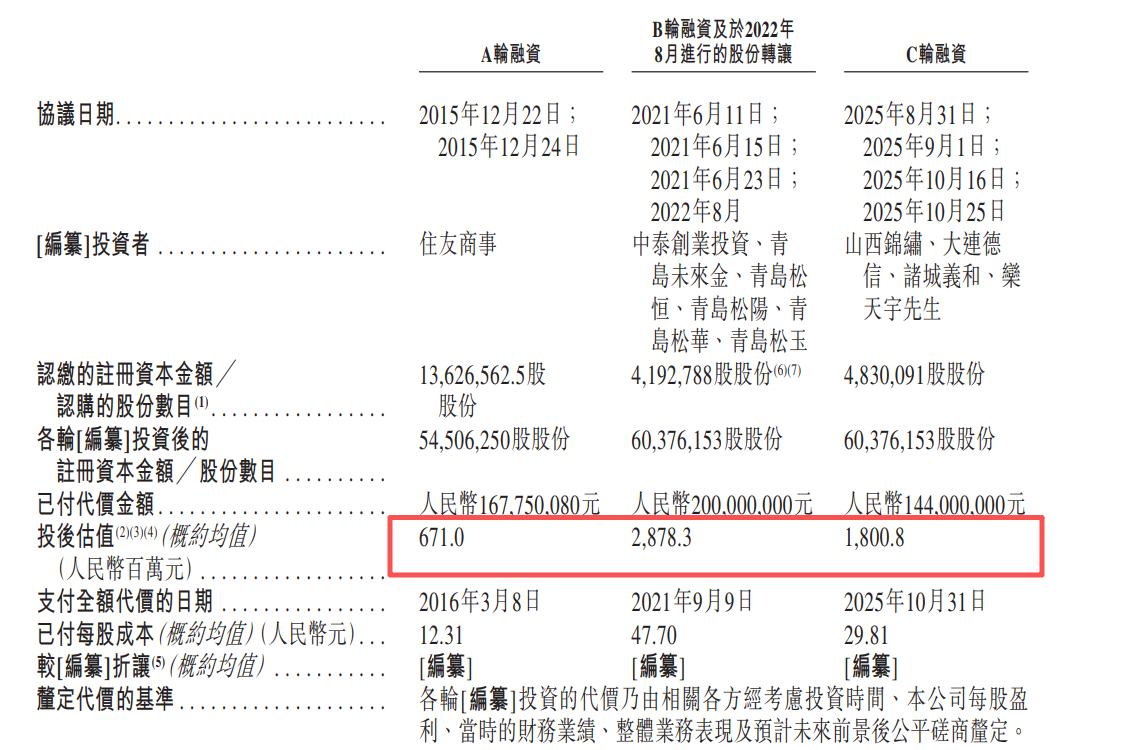
Judging from the shareholding structure, the shareholder structure of Cinde Technology before the IPO presented a four-tier pattern of “actual controller dominance+deep industry development+follow-up investment by state-owned brokerage companies+employee shareholding bonds”. Among them, founder Li Chaoyang obtained a total of 45.08% of voting rights through the “direct shareholding of 25.98% +19.10% of BVI Internet International”, and his control is stable.
As the largest external shareholder, Sumitomo Corporation of Japan holds 22.57% of the shares. It already entered the A round of financing and is the industrial pivot of Cinde Technology's “overseas expansion+new pet growth curve”. In addition, industrial collaborators also include Sany Hong Kong, a subsidiary of Sany Heavy Industries, and Shanxi Jinxiu, a leading agricultural and animal husbandry company in Shanxi, which hold 2.98% and 1.67% of the shares, respectively.
In terms of brokerage firms and state-owned assets, the sponsor Zhongtai Venture Capital, a wholly-owned subsidiary of Zhongtai Securities, formed a “sponsor+follow-up investment” bond. The Qingdao state-owned asset camp consists of the Pingdu “Qingdao Future Gold” and the Jimo district “Qingdao Songhua/Songhua/Songyu”, holding a total of about 5.56% of the shares. Most of these investors entered the market at a high point in round B. In addition, Cinde Technology has two employee-owned platforms “Weifang Myowan” and “Weifang Jisheng”, which hold 1.79% and 1.72% of the shares respectively.
“Alpha fulfillment” under the industry's triple squeeze, and the new growth curve is unlikely to bear fruit in the short term
Undoubtedly, the pressure on the issuer side of Cindy Technology has increased sharply under the double impact of Series B investors mired in inverted valuations and ICBC International's withdrawal. However, the old shareholders' account losses will inevitably put pressure on the pricing game. In this context, the core anchor that determines the company's value — “fundamentals” — is particularly critical at this moment.
Established in 1999, Xinde Technology's products cover veterinary biological products (such as vaccines, antibodies, transfer factors, etc.), Chinese veterinary medicine, chemical preparations, animal feed and feed additives. As of September 30, 2025, the company has obtained production numbers for nearly 300 veterinary drug products, providing guarantees for the prevention and control of core livestock diseases such as avian influenza virus, Newcastle disease virus, mycoplasma chicken, porcine circovirus, and swine epidemic diarrhea virus.
Among them, veterinary biological products are the company's core product line. In the first three quarters of 2025, this business accounted for 69.1% of revenue, while vaccine products were the leading products, accounting for 53.8% during the same period. Their revenue from antibody products and transfer factors accounted for 7.6% and 7.7%, respectively. In addition, chemical preparations, feed and feed additives, Chinese veterinary medicine, and other ancillary products accounted for 16%, 5.7%, 2.8%, and 6.4% of the company's total revenue, respectively.
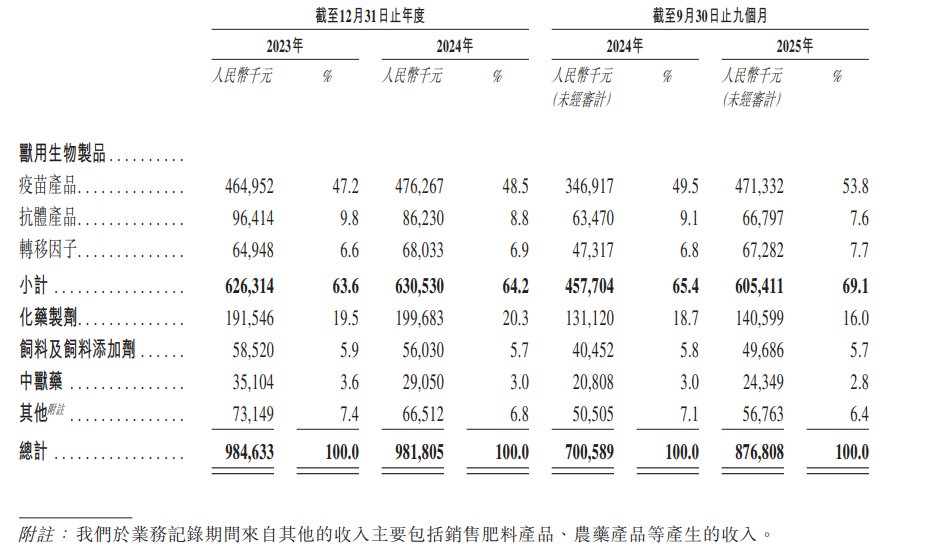
However, judging from performance, Cinde Technology has fluctuated to a certain extent. In 2024, Cindy Technology's revenue was about 982 million yuan, which remained stable overall compared to about 985 million yuan in 2023. However, net profit for the period was 28.118 million yuan, down 19.12% from the previous year.
There are two main reasons for the contraction of the profit side in 2024. The first is the decline in gross margin. Due to increased competition in the market, the average selling price of antibody products declined, so gross margin fell from 46.3% to 46% during the reporting period. Second, the increase in sales and distribution expenses due to rising labor costs and the rise in R&D expenses affected the release of the profit side.
By the first three quarters of 2025, Cindy Technology's performance had increased significantly. Among them, revenue increased 25.15% to about 887 million yuan, mainly due to the increase in the number of products supplied by the company and the increase in contacts with major customers since 2024. Net profit during the reporting period was 556.71 million yuan, an increase of 117.55% over the previous year. This was mainly due to the increase in revenue and the increase in gross margin, which accelerated the release of the profit side.
The Zhitong Finance App found that Xinde Technology's gross margin for the first three quarters of 2025 was 49.7%, an increase of nearly 2 percentage points over the previous year. This was mainly due to the increase in the share of revenue from veterinary biological products with high profit margins, while direct sales to large customers who purchased in bulk increased cost efficiency.
In fact, the domestic animal insurance industry is mired in the triple squeeze of “policy reshaping, price collapse, and clear pattern”, especially on the poultry race track. In 2025, the complete withdrawal of government procurement was forced to force market-based bidding. Industry giants such as Wen's have already pushed the bivalent vaccine to the cost line of 22 yuan/bottle; compounding the low price of chemicals and the homogenization of more than 1,500 GMP companies, it is imperative to reshuffle the industry.
In this context, Cindy Technology's contrarian growth in the first three quarters of 2025 can be called “unexpected,” but this is not a reversal of the industry's beta, but rather an “alpha realization” at a specific stage. The company mainly relied on the first-mover dividend of “quadrivalent vaccine+suspension cultivation” during the market-based window of government and mining, combined with active optimization of the product structure, digestion of backlog orders and low base effects, and was able to record elastic performance in the Red Sea.
However, the short-term pulse of performance cannot overshadow long-term challenges, and Cindy Technology's management also recognises the need to construct a multi-level growth logic to cope with the slow normal state of the industry. In order to promote the company's sustainable growth, Cindy Technology aims to promote the three core strategic divisions and continue to consolidate the company's leading position in the market.
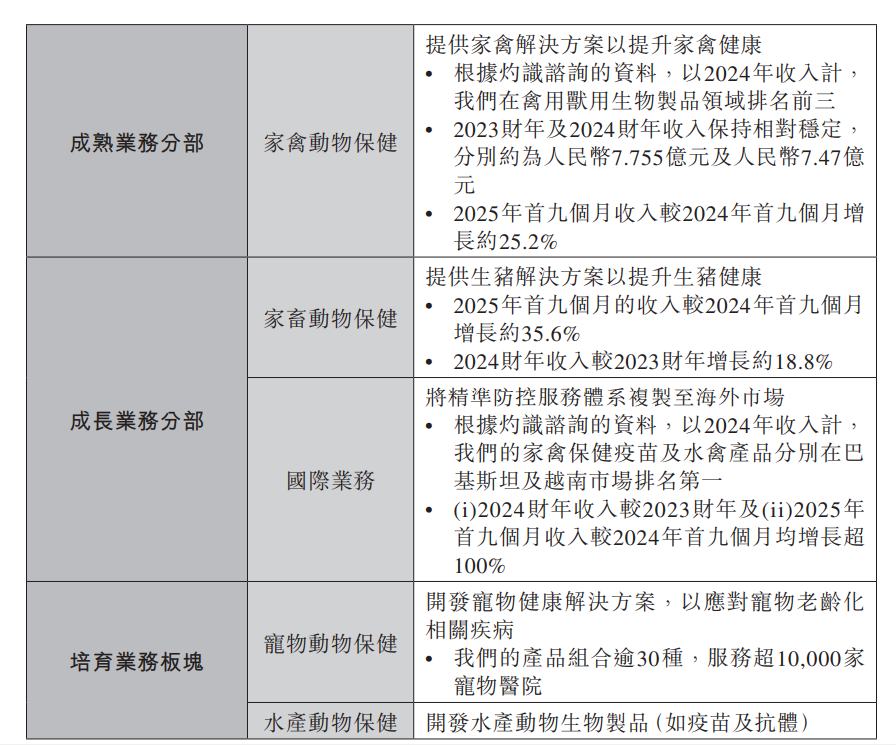
Among them, poultry and animal health, as a mature business division, accounts for nearly 80% of Cinde Technology's total revenue, and the market size of the company's business ranks in the top three in the industry. With its leading market position, this business may be expected to become the “ballast stone” of Cinde Technology.
Meanwhile, livestock and animal health and international businesses are the growing business divisions of Cindy Technology. Both businesses have maintained rapid growth in the past. However, it is worth noting that livestock and animal health products are expected to achieve steady development through synergy with the poultry and animal health business. Although the international business grew rapidly in the past, it is limited by the current revenue share of less than 5.3%, so it is still difficult to take the lead in the short term.
Pet animal health care and aquatic animal health are future growth business segments cultivated by Cinde Technology, but in the first three quarters of 2025, Cinde Technology's revenue from aquatic products and pet products accounted for 0.8% and 1.3% respectively. They are still in their infancy, and their contribution to performance in the short to medium term was almost nil.
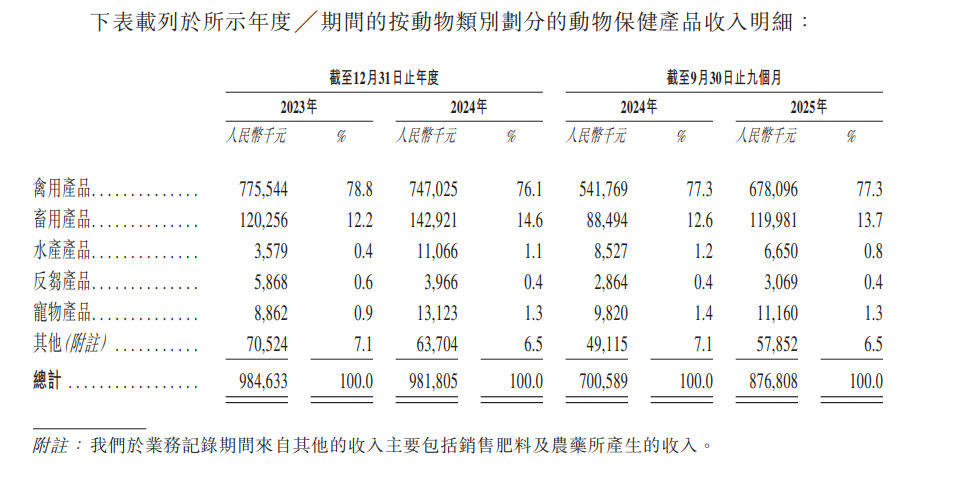
Since there has been no substantial reversal in the industry's supply and demand pattern, and new curves such as pets and international markets are still being cultivated, the high growth rate of Cinde Technology may be difficult to break away from the “pulse-like” characteristics, and there is a relatively high probability that future performance will return to the slow beta of the industry.