
From crypto frenzy to shorting Japanese bonds: revisiting the top 11 bets that will “stop the heartbeat” of the market in 2025
Looking back on 2025, it was another year where “highly confident bets” surfaced endlessly — and in a blink of an eye, the market was turned upside down.
The Zhitong Finance App learned that from Tokyo's bond trading desk, New York's credit approval committee, to the foreign exchange market in Istanbul, the market was not only rich, but also “whipped.” Gold set a new historical record; once dull mortgage giants are bogged down like meme stocks; a textbook-style arbitrage deal blew up in the blink of an eye.
Investors are betting heavily on rapidly changing politics, bloated balance sheets, and fragile storylines, driving exaggerated stock index gains, crowded yield trading, and cryptographic strategies built on leverage, hope, and little else left. Donald Trump returned to the White House, first sinking global financial markets to the bottom and then instantly pulling them out of the water; European military stocks were ignited, and speculators grew bolder in a frenzy one after another. Some positions make a lot of money, but when momentum is reversed, financing is exhausted, or leverage is misdirected, others are destroyed.
As the year comes to an end, we'll take stock of some of the most eye-catching bets of 2025 — winners, losers, and positions that define this era. They made many investors uneasy when planning for 2026 about risk cracks they are all too familiar with: shaky companies, extreme valuations, and trend-following transactions that “work until they fail in an instant.”
Cryptocurrency: Trump quotes
This was once seen as the most powerful momentum gamble in the crypto sector: anyone involved with the Trump brand took it all. During the campaign and after entering the White House, Trump fully embraced digital assets — pushing for comprehensive reforms and placing industry allies in key power seats. His family also stepped down and shouted for “political rocket fuel” coins and crypto companies in the eyes of traders.
The Trump family's brand matrix quickly took shape. A few hours before his inauguration, Trump launched memes and shouted on social media; First Lady Melania Trump followed suit by issuing her own tokens. Later in the year, World Liberty Financial, which is linked to the Trump family, made WLFI tokens open for trading and open doors to retail investors. This was followed by a series of “Trump Neighborhood” deals: Eric Trump co-founded the publicly listed mining company American Bitcoin and entered the market through a merger in September.
Every appearance ignited a wave of appreciation, but they were all short-lived. As of December 23, the Trump meme coin was dying out, down more than 80% from its January high; according to CoinGecko data, the Melania token fell close to 99%. American Bitcoin has also fallen about 80% since its peak in September.
Political action has been taken, and the iron law of speculation has once again dragged them back to the ground. Even with friends in the White House, these deals still can't escape the crypto world's core routine: price first, leverage rush, and liquidity exhaustion. Bitcoin, the weather vane, after falling from a high point in October, is almost certain to be negative according to the current trajectory. For Trump's related assets, politics provides momentum, but it does not protect them. — Olga Kariv
AI trading: the next big short?
The deal appeared in a routine document, but it was far from unusual. On November 3, Scion Asset Management revealed that it holds protected put options from Nvidia (NVDA.US) and Palantir Technologies (PLTR.US) — these are just the core artificial intelligence targets that have driven market gains over the past three years. Scion isn't a whale-grade hedge fund, but its leader is famous: Michael Burry, the “doomsday prophet” famous for successfully predicting the 2008 financial crisis in the book “The Big Short” and the film of the same name.
The exercise price was astonishing: Nvidia's bearish exercise price was 47% lower than its recent closing price, while Palantir was 76% lower. The mystery remains: due to limited disclosure requirements, there is no way for the outside world to know whether these bearish contracts (which give investors the right to sell shares at a set price before a specific date) are only part of a more complicated transaction; moreover, the documents only provide a snapshot of September 30, and Bury may have cut or closed positions since then. However, questions about the AI leader's high valuations and huge spending plans have long since dried up, just waiting for a match — Bury's disclosure just came to light.
Bury shorts Nvidia and Palantir
Investors who became famous due to “big shorts” disclosed their put option positions in the 13F filing
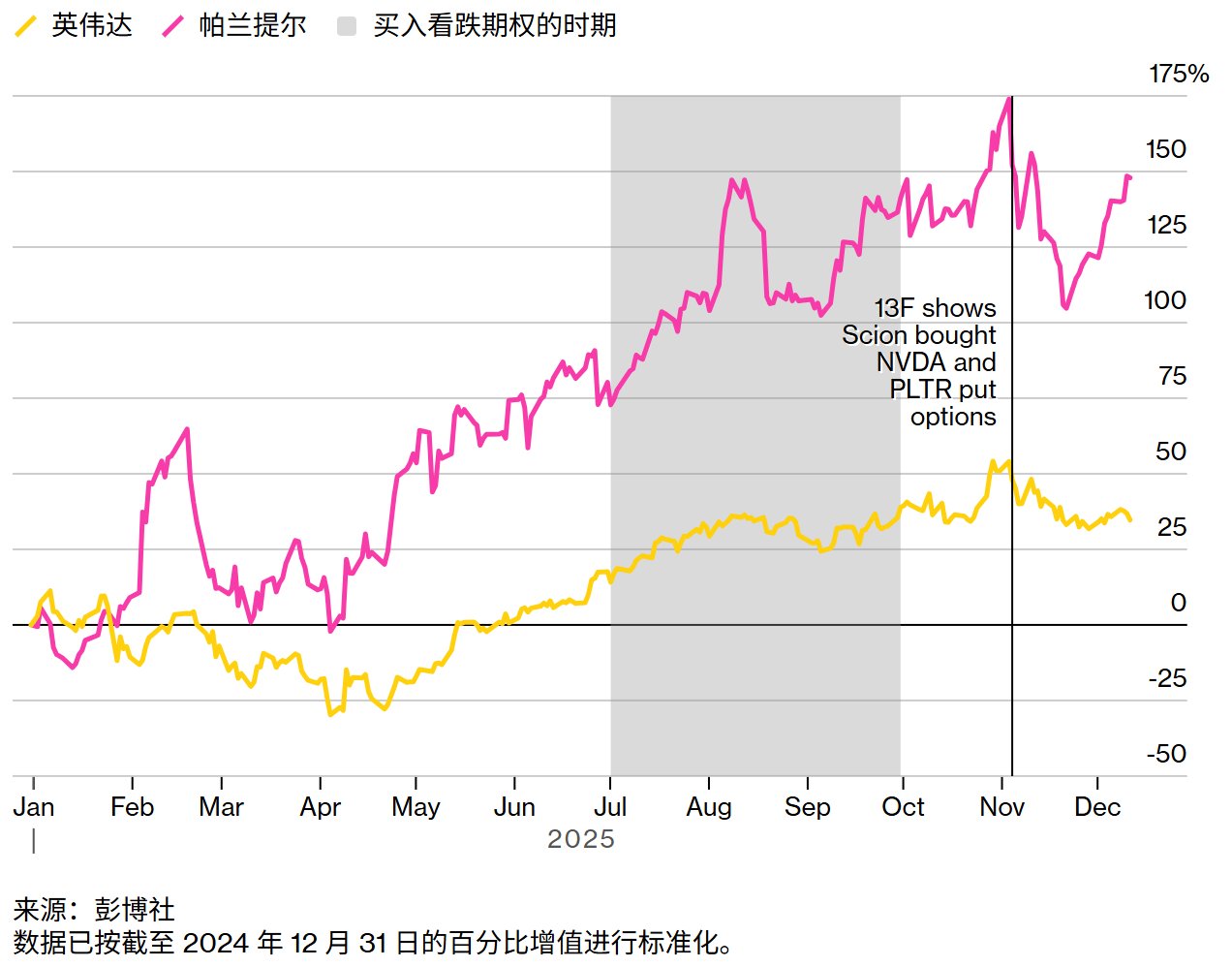
Figure 1
Affected by this, Nvidia, the world's market capitalization king, fell, and Palantir was not spared, even though the two later recovered some of their losses; the NASDAQ index also declined.
There is no way for the outside world to accurately calculate how much Bury has earned. The only clue he left was a post on the X platform: claiming to buy Palantir put options for $1.84, these contracts rose as much as 101% in less than three weeks. This 13F condenses the originally surging doubts into a visible crystal: in a market dominated by a small number of AI-related stocks, huge passive capital inflows, and sluggish volatility, skepticism has always lurked. Whether the deal turned out to be prescient or too hasty, it shows that once beliefs are fractured, even the strongest market narrative can be reversed in an instant. — Michael P Regan
European Defense Stocks: The New World Order
Sudden changes in geopolitics have taken a sector once viewed as “toxic” by money managers: European defense. Trump plans to withdraw from funding Ukrainian armaments, and European governments immediately opened arms, and regional military stocks soared to the skies — as of December 23, Germany's Rheinmetall rose by about 150% during the year, and Italy's Leonardo soared by more than 90% during the same period.
Those asset management institutions, which were once afraid to get involved because of too much controversy, are now changing their rhetoric one after another, even directly rewriting fund regulations.
European defense stock basket soars in 2025
The increase in regional military stocks has surpassed the early days of the outbreak of the war
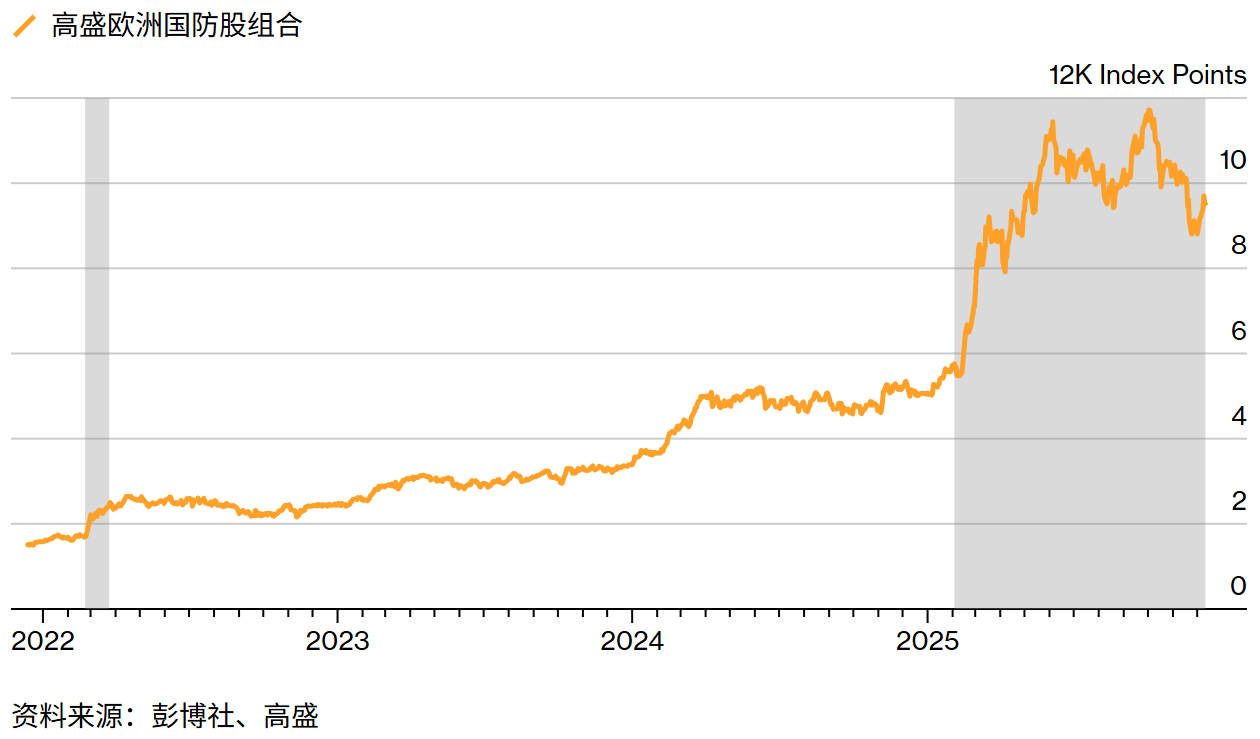
Figure 2
“We removed defense from ESG funds for many years until the beginning of this year,” said Sycomore Asset Management Chief Investment Officer Pierre-Alexis Dumont. “The paradigm has changed; when the paradigm changes, it is necessary not only to take responsibility, but also to defend values. That's why we're focusing on defensive weapons.”
From goggle manufacturers to chemical companies and even a printing company, stocks are being robbed. Bloomberg's European defense stock basket rose more than 70% during the year. The boom spilled over into the credit market — businesses linked only to defense also attracted a large number of potential lenders. Banks even issue “European defense bonds,” following the green bond model, but the funds raised are specifically targeted to borrowers such as arms manufacturers. This marks a repricing of defense from a burden of reputation to a public good, and also reminds people that when geopolitics shift, capital runs faster than ideology. —Isolde Macdonald
Devaluation Deals: Fact or Fiction?
Major countries such as the US, France, and Japan are heavily indebted and lack the political courage to resolve them, prompting some investors to push for gold and crypto assets in 2025, while their enthusiasm for US debt and the US dollar cooled down. This pessimistic story is known as a “devaluation deal,” and is named after an ancient bridge where rulers such as Nero diluted the value of money.
In October, US fiscal concerns collided with the longest government shutdown in history, and the narrative reached a climax. Investors seek safe havens other than the dollar; gold and Bitcoin both hit records in the month — a rare asset often viewed as rivals.
“Gold Record”: Depreciation Deals Drive Precious Metals to Reach New Highs
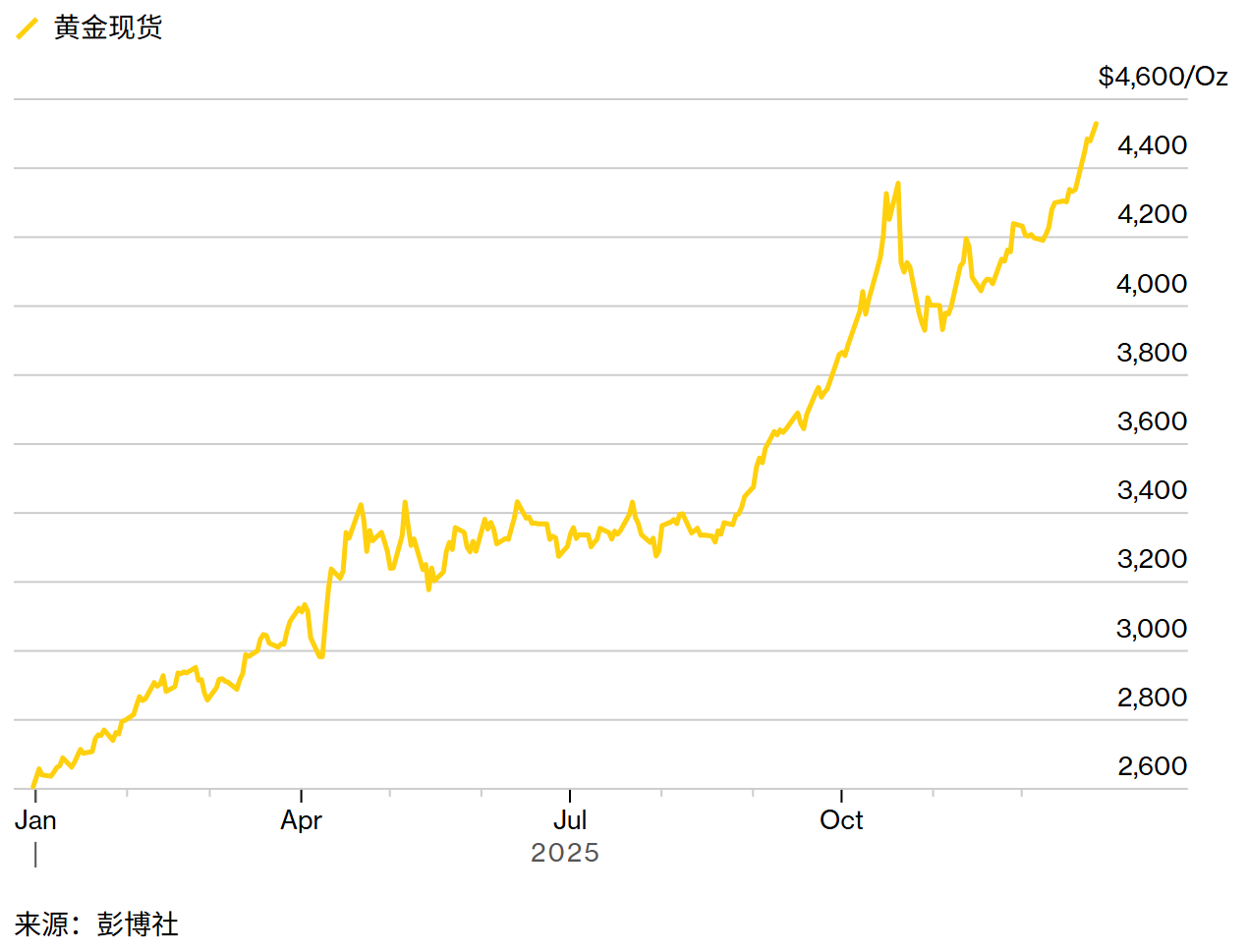
Figure 3
At the story level, devaluation provides a simple explanation for the chaos at the macro level; at the transaction level, it is much more complicated. Since then, Bitcoin has declined as a whole, and the dollar stabilized. Not only did US debt not collapse, it is expected to have the best annual performance since 2020 — a reminder that fears of fiscal erosion can coexist with strong demand for safe assets, especially when growth slows down and policy interest rates peak.
Confusion, another version of the market: from copper and aluminum to silver, fluctuations in metal prices are at least also driven by Trump's tariffs and macroeconomic forces, rather than simply depreciation concerns, blurring the line between inflation hedging and traditional supply shocks. Gold, on the other hand, continued to siege ground and repeatedly reached new highs. In this corner, devaluation transactions continue — not so much a complete denial of fiat money, as a precise bet on interest rates, policies, and protectionism. — Richard Henderson
K-Pop Gives Way: K-Shares Debut
Korean dramas are on the sidelines. When it comes to reversals and incentives, the Korean stock market will be the main protagonist in 2025. Driven by President Lee Jae Myung (Lee Jae Myung)'s “capital market revitalization” policy, the benchmark stock index soared more than 70% in the year up to December 22, reaching the “Kospi 5000” target he called out during his election campaign, easily leading the world's major stock indexes.
It is extremely rare for political leaders to publicly use index points as campaign slogans, and “Kospi 5000” initially did not attract attention. Today, more and more Wall Street banks, including J.P. Morgan Chase and Citigroup, believe that this goal is expected to be achieved in 2026 — thanks in part to the global AI boom, making Korean stocks the preferred target for AI trading in Asia.
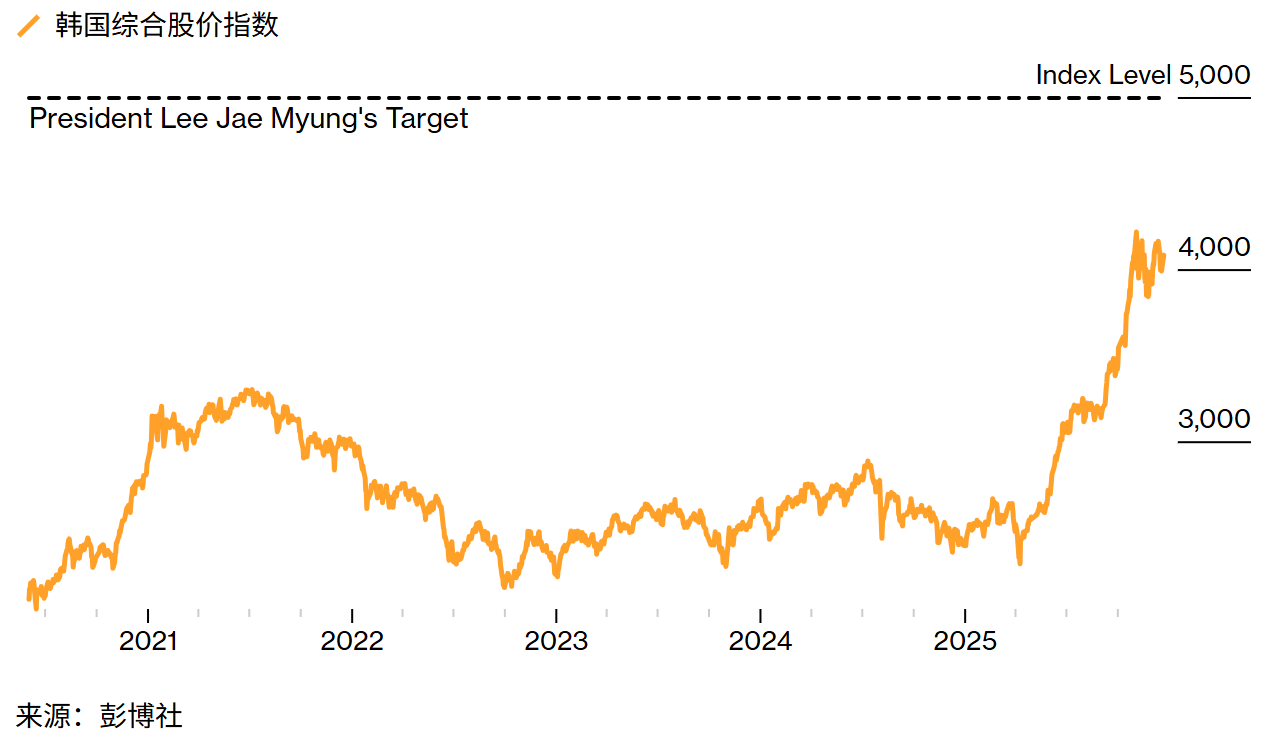
Figure 4
In the carnival where the Korea Composite Stock Price Index (Kospi) led the world, there was one notable absentee: a local retail couple store. Despite Lee's frequent rhetoric about “being a retail investor myself,” his reform agenda still failed to convince domestic investors — whether this market actually counts as a target that “people can hold on for a long time.” At the same time as foreign capital poured in, retail investors made net sales, smashed a record $33 billion into US stocks, and are also chasing high-risk gambling from cryptocurrencies to leveraged ETFs overseas.
The side effect is that the currency is under pressure. The outflow of capital weakened the won, and reminded people that even if the stock market became a big hit, the family's skepticism persisted. ——Ryu Kyung-young
Bitcoin Showdown: Chanos vs. Saylor
There are two sides to everything. Shorter Jim Chanos's arbitrage bet on Strategy Inc. (MSTR.US), a subsidiary of “Bitcoin hoarder” Michael Saylor, not only involved two top personalities, but also quickly became a deal for a referendum on “crypto capitalism.”
At the beginning of 2025, Bitcoin soared, and Strategy's stock price was even more aggressive. Chanos saw an opportunity: Strategy went wild and had its share price premium over its Bitcoin holdings extended too long, and the legendary bear decided that it was unsustainable. So in May, he announced that he would short Strategy and go long on Bitcoin at the same time.
The two immediately publicly exchanged views. In June, Saylor claimed that Chanos “didn't understand our business model at all,” while Chanos paid tribute to the other party on the X platform and explained that it was “complete financial nonsense.”
Strategy's stock price set another record in July, rising 57% during the year; however, as “digital asset treasury companies” emerged in batches and token prices fell from a high level, Strategy and its imitators began to suffer, and the premium contracted. Chanos' bet began to be fulfilled.
Strategy shares are bound to outperform Bitcoin during the year
The premium evaporates, and the bears take profit
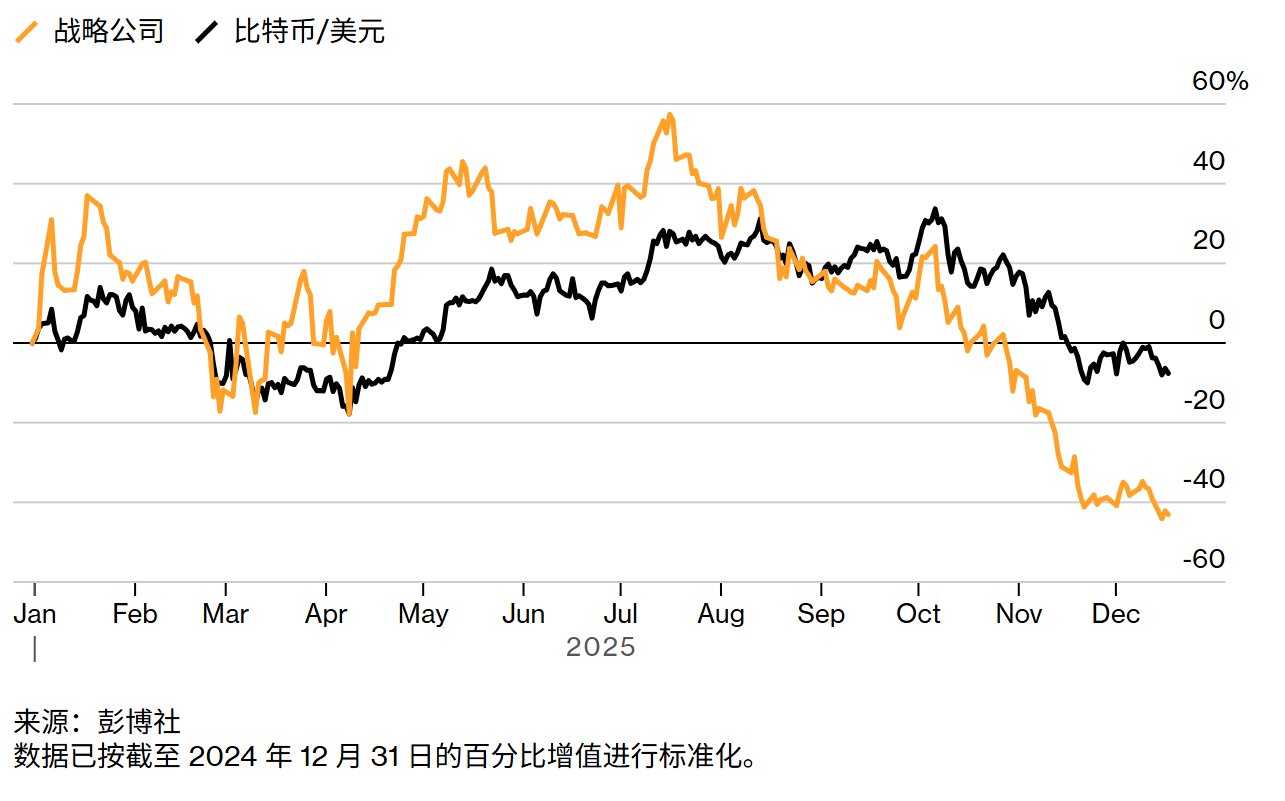
Figure 5
From Chanos publicly shorting until he announced his closing position on November 7, Strategy's stock price fell 42%. In addition to profit and loss, it once again shows the boom-bust model of the crypto industry cycle: the balance sheet is boosted by confidence, and confidence is maintained by price increases and financial engineering; once beliefs are shaken, the premium is no longer a selling point, but a lifeline. — Monique Mullima
Japanese Bonds: From “Widow Makers” to “Cash Cows”
If there are any bets over the past few decades that have repeatedly inflamed macro investors, it is the notorious “widowmaker” — shorting Japan's treasury bonds. The logic seems simple: Japan's public debt is huge, and interest rates will have to rise sooner or later to attract buyers; investors can just take advantage of securities to sell and wait for prices to fall. However, over the years, the central bank's easing policy kept borrowing costs at a rock bottom, and bears eager to collect money were cut. Now, the script has been rewritten.
In 2025, the “widow maker” turned into a “cash cow”: Benchmark treasury yields soared across the board, and the 7.4 trillion dollar Japanese bond market became a paradise for bears. Triggers range from interest rate hikes to Prime Minister Takaichi Sanae's biggest fiscal outlay since launching the pandemic. The 10-year Japanese bond yield broke through 2%, hitting a decades-high; the 30-year yield rose by more than 1 percentage point, setting a new historical record. As of December 23, the Bloomberg Japan Treasury Bond Total Return Index fell by more than 6% during the year, making it the worst performing major bond market in the world.
The Japanese bond market fell sharply this year
The Bloomberg Japan Bond Index is at the bottom of the world's major bond indices
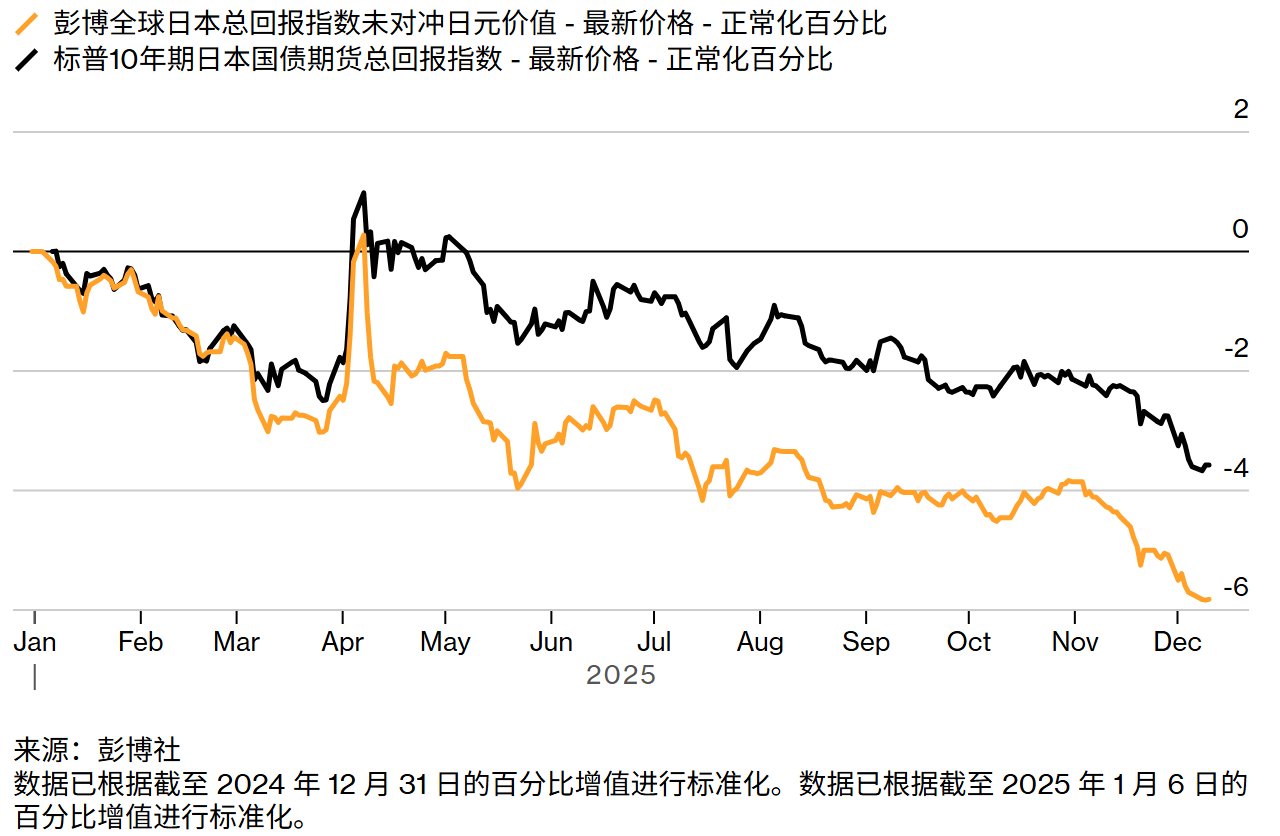
Figure 6
From Schroder to Jupiter Asset Management to RBC Blue Bay, many fund managers discussed some form of Japanese bond sell-off during the year. Investors and strategists are betting that the market is not over yet: the benchmark interest rate is still rising, the Bank of Japan is still cutting back on debt purchases, and Japan is still far ahead and “proudly” at the top of the developed world government debt ratio list. The feeling of being bearish on Japanese bonds is unlikely to subside. — Cormac Mullen
Credit Fragmentation: Turning Back at Your Peers
The richest credit returns in 2025 do not come from enterprises reversing losses, but from “creditor scrambling.” Pacific Investment Management Corporation (PIMCO), King Street Capital (King Street), and Partners Group joined forces to stage a precision siege targeting Envision Healthcare supported by KKR.
This hospital staffing outsourcing company hit rock bottom after the pandemic and is in urgent need of new funding. However, new bonds must use assets that have already been secured by old bonds. Most creditors opposed it, but PIMCO, King Street, and Partners Group fought back and voted to release Amsurg's shares in the outpatient surgery asset locked up by old creditors, and then pledge them to new bonds.
As a result, the three funds obtained Amsurg-backed bonds and later switched to equity; this year, Amsurg sold it to Ascension Health for 4 billion US dollars. According to one estimate, the return rate for peers who refuse to follow the ticket is about 90%, proving that winning the civil war can collect money. Conclusion: In the current credit market where documents are loose and creditors are fragmented, cooperation is simply an option; looking in the right direction is not enough; being overtaken by the flank is the biggest risk. — Eliza Ronalds-Hannon
Fannie Mae (FNMA.US) & Freddie Mac (FMCC.US): “Toxic Twins” Revenge
Since the financial crisis was taken over by Washington, it has always been a mystery when and how mortgage giants Fannie Mae and Freddie Mac “got out of jail.” Hedge fund boss Bill Ackman and other fans are hoarding stocks and hoping to make a big profit during privatization, but due to the protracted current situation, they have been sluggish outside the market for many years.
Trump's re-election ignited a meme frenzy, and the market is betting that the new administration will release people. The excitement level escalated again in 2025: during the year to the September high, the two stocks surged 367%, peaking at 388% in the intraday period, and remained the big winners of the year.
Fannie Mae, Freddie Mac stocks soar due to privatization hopes
There is growing optimism that businesses will break free from government control
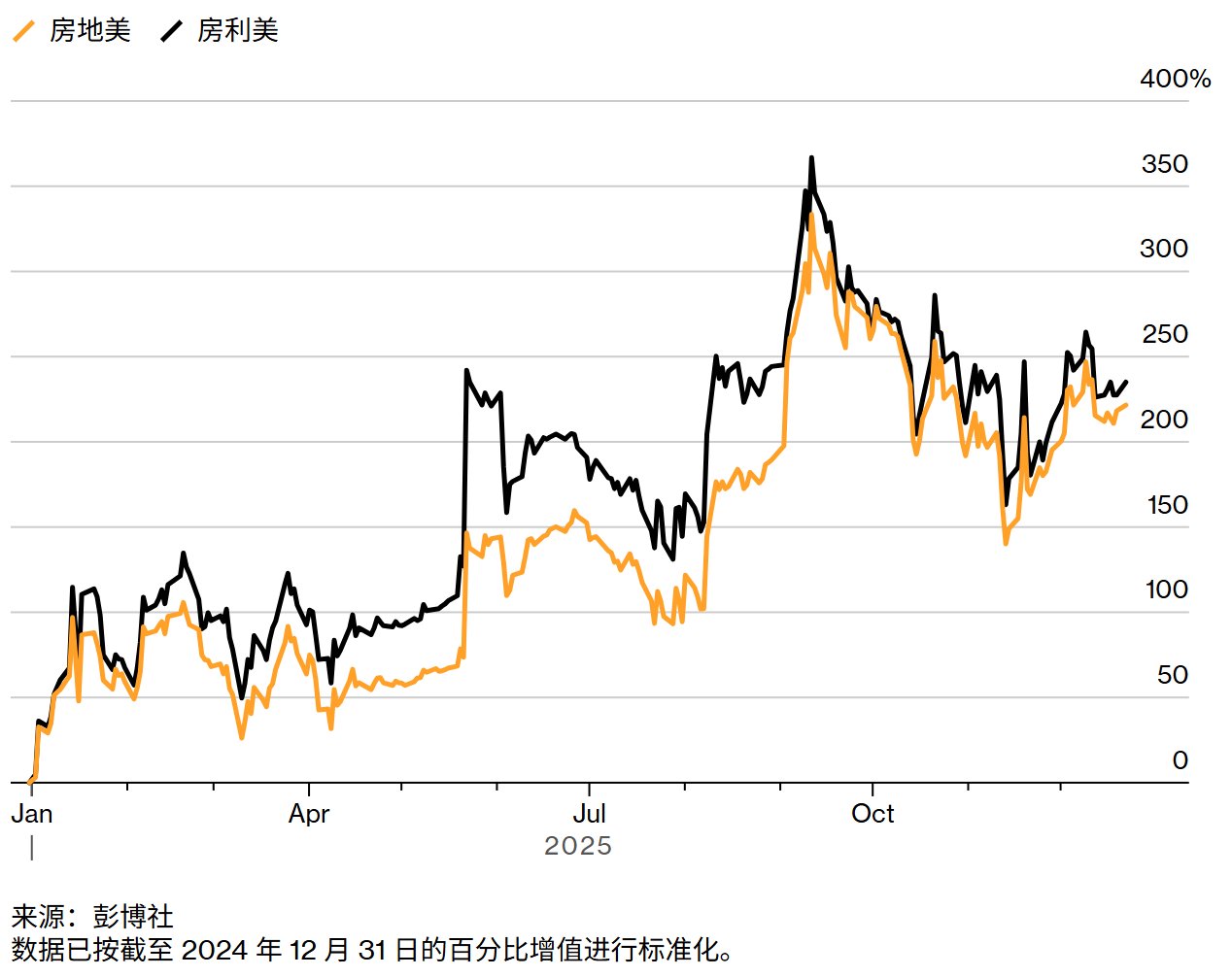
Figure 7
The August news brought sentiment to its peak: the government is considering an IPO, which may be worth more than 500 billion US dollars, and plans to sell 5%-15% of the shares and raise about 30 billion US dollars. The stock price later hesitated due to doubts about “whether and when the IPO will land”, but the bulls are still convinced of the story. In November, Ackman publicly submitted a plan to the White House: re-listing on the NYSE, writing down Treasury's preferred shares, and exercising nearly 80% of the government's common stock options. Even Michael Berry joined the fun. In early December, he announced that he would go long, and lamented in a 6,000-word long post: “toxic twins” may be a thing of the past. —Felice Marantz
Turkish Arbitrage Trading
Turkey's arbitrage deal with unlimited scenery in 2024, and 2025 became the consensus favorite. Interest rates on local bonds are over 40%, and the central bank maintains a stable exchange rate pegged to the US dollar. Traders flocked to exchange low-interest foreign currency for high-yield lira assets. Deutsche Bank, Millennium Partners, Gramercy, etc. entered the market with billions of dollars. On March 19, there were people and even people in Istanbul — as a result, the deal was bombed to pieces within minutes.
On the morning of the same day, Turkish police raided and arrested Istanbul's popular opposition mayor, triggering protests and raging lira, and the central bank was helpless. Kit Jukes, head of foreign exchange strategy at France in Paris, said bluntly at the time: “Everyone was completely caught off guard and there will be no going back anytime soon.”
On the same day, the net asset outflow of the lira is estimated to be about 10 billion US dollars, and the market has not actually recovered. As of December 23, the lira depreciated by about 17% against the US dollar during the year, ranking the worst in the world. Even high interest rates can't provide any amulet, and they can't stop a sudden heavy political punch. — Kerim Karakaya
Debt Markets: Cockroach Alert
Investors' hearts were fueled by the credit market in 2025, not because of a shocking collapse, but because of a series of small holes that unraveled an embarrassing situation. Some companies originally regarded as “everyday borrowers” overturned one after another, leaving lenders with only severe pain to lick their wounds.
Sachs Global restructured the $2.2 billion bond by paying only one coupon, and the new debt itself had fallen below 60 cents; more than half of the market value of the bonds that had just been replaced by New Fortress Energy had evaporated within a year; Tricolor then went bankrupt, and the multi-billion dollar debt position was reduced to ashes within a few weeks. Some of the cases were elaborate scams, while others were rose-colored predictions that never came true. Every time, investors have to explain: How dare they bet heavily on companies with almost no proof of repayment?
Years of low default rates and easy funding have softened standards from lender protection to basic underwriting. First Brands and Tricolor's lenders did not notice that the borrower's loans were repeatedly pledging on the same batch of assets, and collateral for different loans was mixed up into a pot of porridge.
Among this group of lenders is J.P. Morgan Chase. In October, CEO Jamie Dimon shouted a colourful wake-up call to the market: “When you see a cockroach, there's probably another nest in the back.” ——The theme for 2026 is presumably so. — Eliza Ronalds-Hannon