
- PREMIUM
- LIVE QUOTES
- INSTITUTIONS
 Index Options


 State Street
 CME Group
 Nasdaq
 Cboe
Cboe TradingView
 Wall Street Journal
Insiders Who Purchased US$1.91m Of Loop Industries Stock May Not Have Expected 11% Tumble
The recent price decline of 11% in Loop Industries, Inc.'s (NASDAQ:LOOP) stock may have disappointed insiders who bought US$1.91m worth of shares at an average price of US$1.08 in the past 12 months. This is not good as insiders invest based on expectations that their money will appreciate over time. However, as a result of recent losses, their original investment is now worth only US$1.71m.
Although we don't think shareholders should simply follow insider transactions, logic dictates you should pay some attention to whether insiders are buying or selling shares.
The Last 12 Months Of Insider Transactions At Loop Industries
Over the last year, we can see that the biggest insider purchase was by Founder Daniel Solomita for US$915k worth of shares, at about US$1.01 per share. So it's clear an insider wanted to buy, even at a higher price than the current share price (being US$0.96). Their view may have changed since then, but at least it shows they felt optimistic at the time. We always take careful note of the price insiders pay when purchasing shares. As a general rule, we feel more positive about a stock if insiders have bought shares at above current prices, because that suggests they viewed the stock as good value, even at a higher price. Notably Daniel Solomita was also the biggest seller.
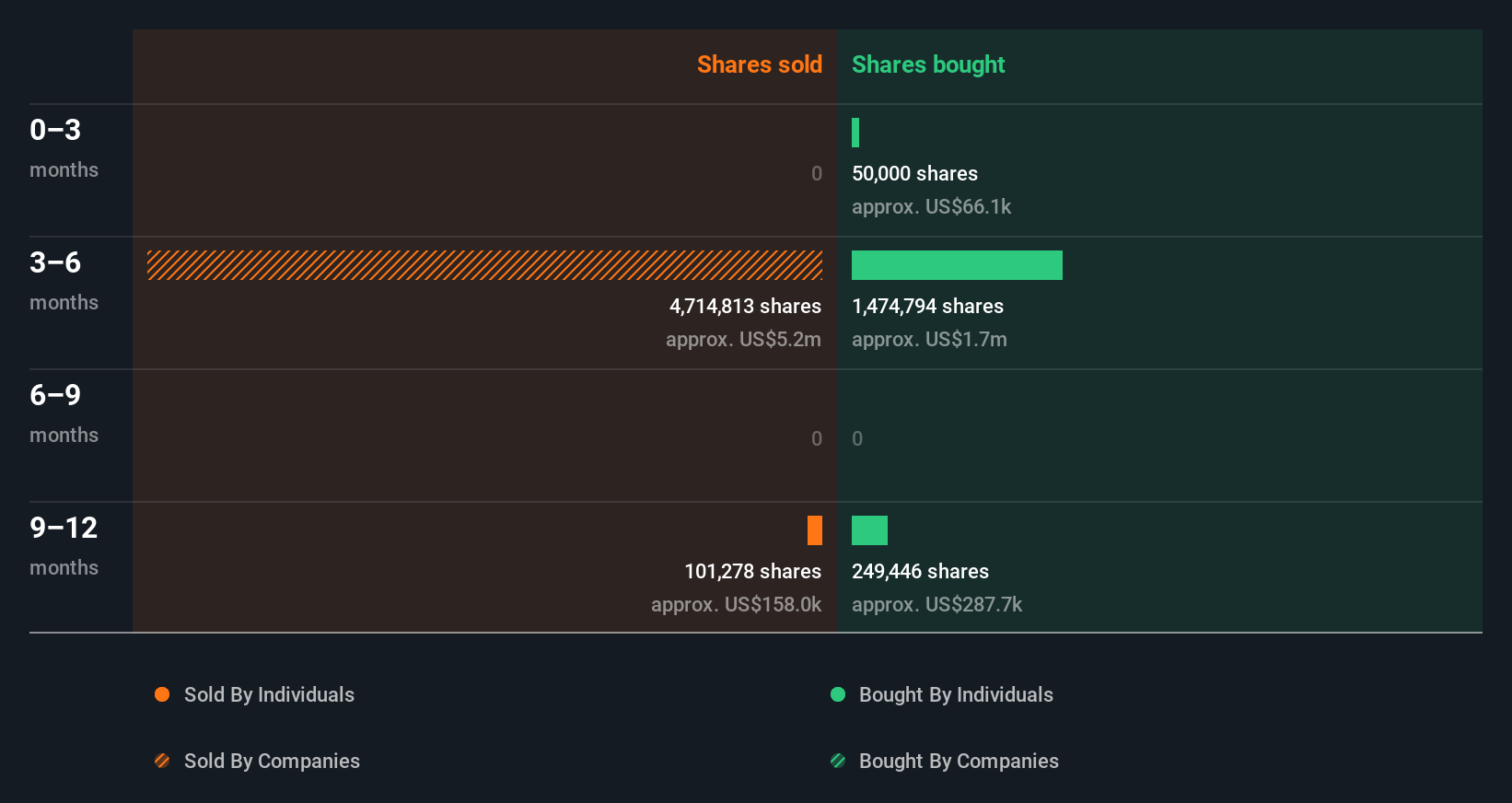
In the last twelve months insiders purchased 1.77m shares for US$1.9m. But they sold 101.28k shares for US$158k. Overall, Loop Industries insiders were net buyers during the last year. The chart below shows insider transactions (by companies and individuals) over the last year. If you click on the chart, you can see all the individual transactions, including the share price, individual, and the date!
Check out our latest analysis for Loop Industries
Loop Industries is not the only stock insiders are buying. So take a peek at this free list of under-the-radar companies with insider buying.
Insiders At Loop Industries Have Bought Stock Recently
It's good to see that Loop Industries insiders have made notable investments in the company's shares. Independent Director Spencer Hart spent US$66k on stock, and there wasn't any selling. This makes one think the business has some good points.
Does Loop Industries Boast High Insider Ownership?
I like to look at how many shares insiders own in a company, to help inform my view of how aligned they are with insiders. Usually, the higher the insider ownership, the more likely it is that insiders will be incentivised to build the company for the long term. Loop Industries insiders own 45% of the company, currently worth about US$21m based on the recent share price. I like to see this level of insider ownership, because it increases the chances that management are thinking about the best interests of shareholders.
So What Does This Data Suggest About Loop Industries Insiders?
It's certainly positive to see the recent insider purchase. And the longer term insider transactions also give us confidence. But we don't feel the same about the fact the company is making losses. Once you factor in the high insider ownership, it certainly seems like insiders are positive about Loop Industries. That's what I like to see! So these insider transactions can help us build a thesis about the stock, but it's also worthwhile knowing the risks facing this company. To that end, you should learn about the 4 warning signs we've spotted with Loop Industries (including 2 which don't sit too well with us).
If you would prefer to check out another company -- one with potentially superior financials -- then do not miss this free list of interesting companies, that have HIGH return on equity and low debt.
For the purposes of this article, insiders are those individuals who report their transactions to the relevant regulatory body. We currently account for open market transactions and private dispositions of direct interests only, but not derivative transactions or indirect interests.
Have feedback on this article? Concerned about the content? Get in touch with us directly. Alternatively, email editorial-team (at) simplywallst.com.
This article by Simply Wall St is general in nature. We provide commentary based on historical data and analyst forecasts only using an unbiased methodology and our articles are not intended to be financial advice. It does not constitute a recommendation to buy or sell any stock, and does not take account of your objectives, or your financial situation. We aim to bring you long-term focused analysis driven by fundamental data. Note that our analysis may not factor in the latest price-sensitive company announcements or qualitative material. Simply Wall St has no position in any stocks mentioned.