
- PREMIUM
- LIVE QUOTES
- INSTITUTIONS
 Index Options


 State Street
 CME Group
 Nasdaq
 Cboe
Cboe TradingView
 Wall Street Journal
Western Union (NYSE:WU) Has Affirmed Its Dividend Of $0.235
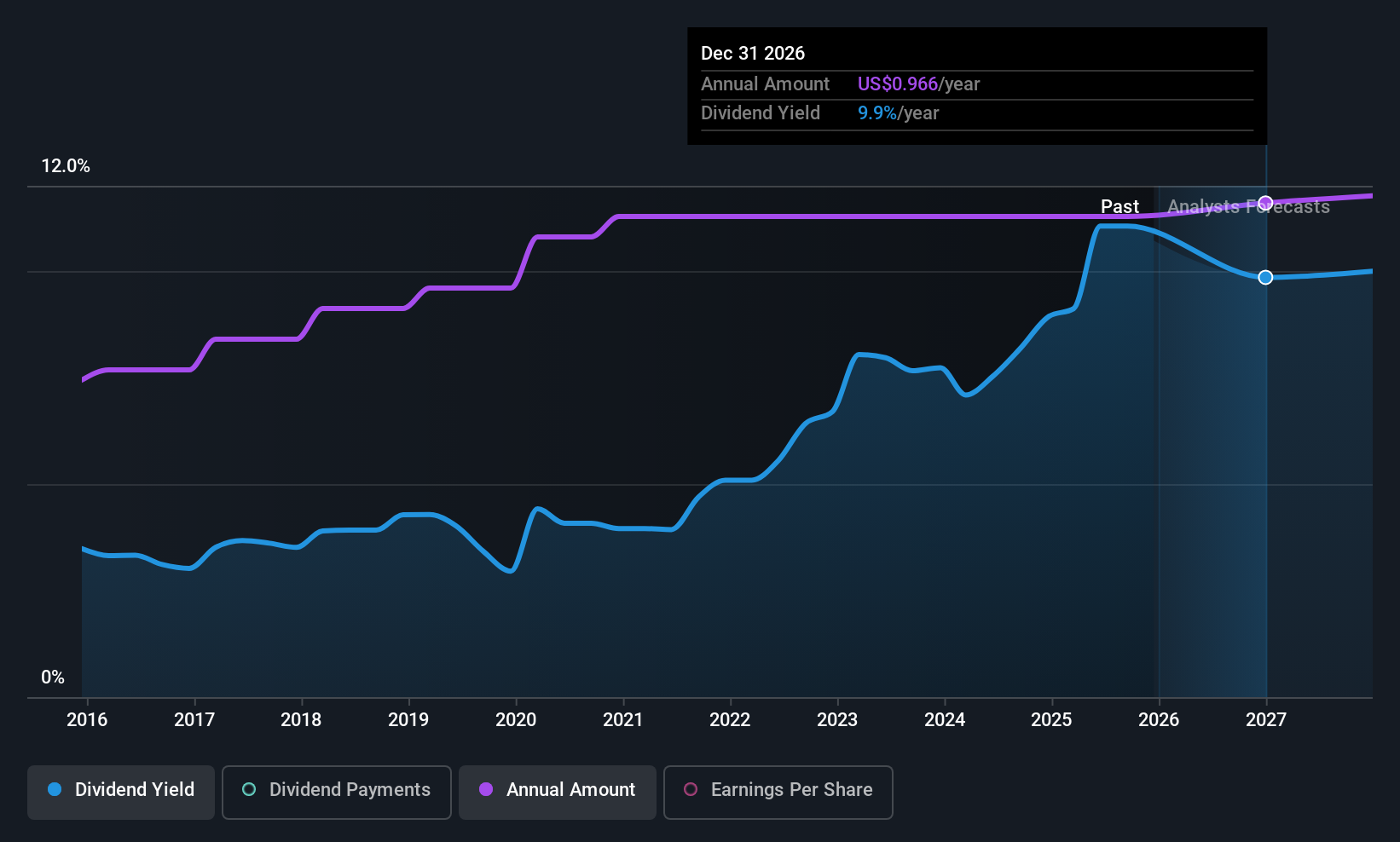
The Western Union Company (NYSE:WU) has announced that it will pay a dividend of $0.235 per share on the 31st of December. This makes the dividend yield 9.6%, which will augment investor returns quite nicely.
Western Union's Future Dividend Projections Appear Well Covered By Earnings
A big dividend yield for a few years doesn't mean much if it can't be sustained. Based on the last payment, Western Union was quite comfortably earning enough to cover the dividend. This means that a large portion of its earnings are being retained to grow the business.
EPS is set to fall by 24.1% over the next 12 months. If the dividend continues along recent trends, we estimate the payout ratio could be 54%, which we consider to be quite comfortable, with most of the company's earnings left over to grow the business in the future.
View our latest analysis for Western Union
Western Union Has A Solid Track Record
The company has an extended history of paying stable dividends. Since 2015, the annual payment back then was $0.62, compared to the most recent full-year payment of $0.94. This implies that the company grew its distributions at a yearly rate of about 4.2% over that duration. Dividends have grown relatively slowly, which is not great, but some investors may value the relative consistency of the dividend.
We Could See Western Union's Dividend Growing
The company's investors will be pleased to have been receiving dividend income for some time. Western Union has impressed us by growing EPS at 7.4% per year over the past five years. Since earnings per share is growing at an acceptable rate, and the payout policy is balanced, we think the company is positioning itself well to grow earnings and dividends in the future.
We Really Like Western Union's Dividend
Overall, we like to see the dividend staying consistent, and we think Western Union might even raise payments in the future. The earnings easily cover the company's distributions, and the company is generating plenty of cash. We should point out that the earnings are expected to fall over the next 12 months, which won't be a problem if this doesn't become a trend, but could cause some turbulence in the next year. All of these factors considered, we think this has solid potential as a dividend stock.
Investors generally tend to favour companies with a consistent, stable dividend policy as opposed to those operating an irregular one. Still, investors need to consider a host of other factors, apart from dividend payments, when analysing a company. Case in point: We've spotted 2 warning signs for Western Union (of which 1 is a bit unpleasant!) you should know about. Is Western Union not quite the opportunity you were looking for? Why not check out our selection of top dividend stocks.
Have feedback on this article? Concerned about the content? Get in touch with us directly. Alternatively, email editorial-team (at) simplywallst.com.
This article by Simply Wall St is general in nature. We provide commentary based on historical data and analyst forecasts only using an unbiased methodology and our articles are not intended to be financial advice. It does not constitute a recommendation to buy or sell any stock, and does not take account of your objectives, or your financial situation. We aim to bring you long-term focused analysis driven by fundamental data. Note that our analysis may not factor in the latest price-sensitive company announcements or qualitative material. Simply Wall St has no position in any stocks mentioned.