
- PREMIUM
- LIVE QUOTES
- INSTITUTIONS
 Index Options


 State Street
 CME Group
 Nasdaq
 Cboe
Cboe TradingView
 Wall Street Journal
Reducing NIMBYism with Affordable Housing Landscaping
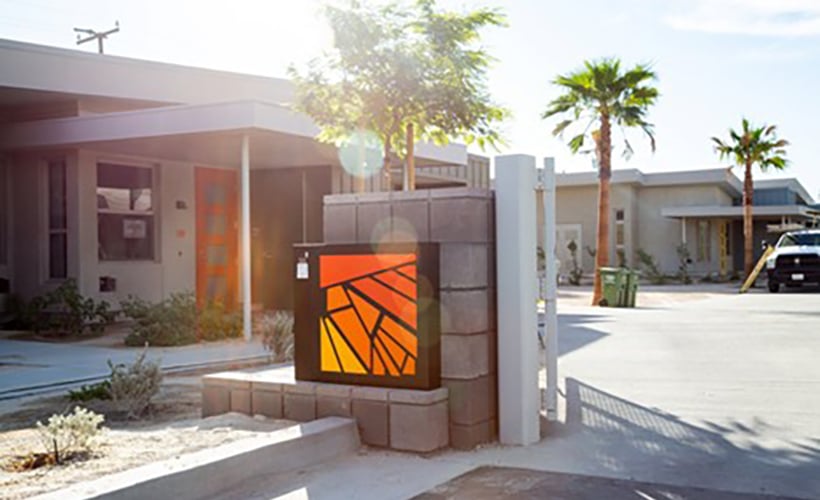
Pictured: Monarch Apartments

There has been plenty of talk about the lack of affordable housing in the United States. Unfortunately, there’s also talk about the challenges connected with building such housing.
“Communities are often divided about adding new affordable housing due to unfair stigmas about integrating with seniors, working class or underserved populations,” said Vince Nicholas, Vice President of Real Estate Development of Community Housing Opportunities Corporation (CHOCH).
There is also the belief that affordable housing is cheap-looking or rundown, creating neighborhood eyesores. Nicholas said that concerns are often raised about the inability of such apartment complexes to blend in with a neighborhood’s aesthetics, especially in areas with meticulous landscaping.
Nicholas and CHOC Chief Strategy Officer Joy Silver told Connect CRE that one key to potentially mitigating the affordable housing concerns of NIMBYs is through thoughtful landscaping and architecture.
“If a multifamily developer is proposing an attractively landscaped complex, then surrounding residents are more welcoming to have it built in their backyards,” Nicholas added. “The key is designing it in a way that actually enhances the surrounding environment, so that it adds value to everyone.”
The Case of Monarch Apartments
The 60-unit Monarch Apartments is situated on 3.62 acres at 3130 N. Indian Canyon Dr. in Palm Springs, CA. CHOCH developed this affordable housing property on land owned by the City of Palm Springs Successor Agency.
Silver explained that the apartment complex is adjacent to Palm Springs communities, which feature western-themed, Mediterranean, and contemporary architectural designs for homes and businesses. “We took all those design components and worked with them to develop the Monarch,” Silver said.
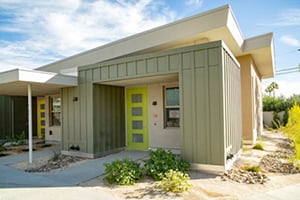
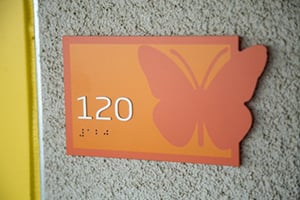
As the property was named for the Monarch butterfly, Nicholas said that it incorporates themed, creative elements, right down to signage, splash pads, and statues.
As for the landscaping strategy, CHOC included milkweed plants to attract the colorful insects to the property while they migrate through the state. Additional landscaping components included drought-resistant plants and palm trees to provide shade for the residents.
The Results
Silver said that she offered early property tours to the neighbors. The reaction was one of astonishment, as well as queries about whether the units were for sale. “When you look at the Monarch, you would not say ‘that’s affordable housing,’” she commented.
The Monarch started taking applications in late 2023, opened in early 2024 and has been 100% occupied since then. According to the website, the waitlist has recently reopened, and applications are now being accepted.
Nicholas said that since the Monarch’s launch, two more affordable housing communities have been approved nearby. “I honestly believe that the landscaping has a lot to do with the attitude shift,” he said.
His advice for multifamily developers involved in affordable housing and landscaping is to keep residents at the top of mind. For example, focus on incorporating allergy-free plants and bushes in senior communities. Developers should also be mindful of water supplies and irrigation systems, particularly in desert climates. As such, succulents (which require little water to thrive) and other drought-tolerant plants could be good landscape strategies in such areas.
“A people-first approach to multifamily landscaping doesn’t just make for a stronger community inside the gates,” Nicholas added. “It also enriches the surrounding neighborhood.”
Photos by Noe Montes
An earlier version of this story appeared on ApartmentBuildings.com.
The post Reducing NIMBYism with Affordable Housing Landscaping appeared first on Connect CRE.