
- PREMIUM
- LIVE QUOTES
- INSTITUTION
 Index Options


 State Street
 CME Group
 Nasdaq
 Cboe
Cboe TradingView
 Wall Street Journal
After the recent decline, Sunho Biologics, Inc. (HKG:2898) Top Key Executive Feng Zhang's holdings have lost 11% of their value
Key Insights
- Significant insider control over Sunho Biologics implies vested interests in company growth
- 58% of the company is held by a single shareholder (Feng Zhang)
- Using data from company's past performance alongside ownership research, one can better assess the future performance of a company
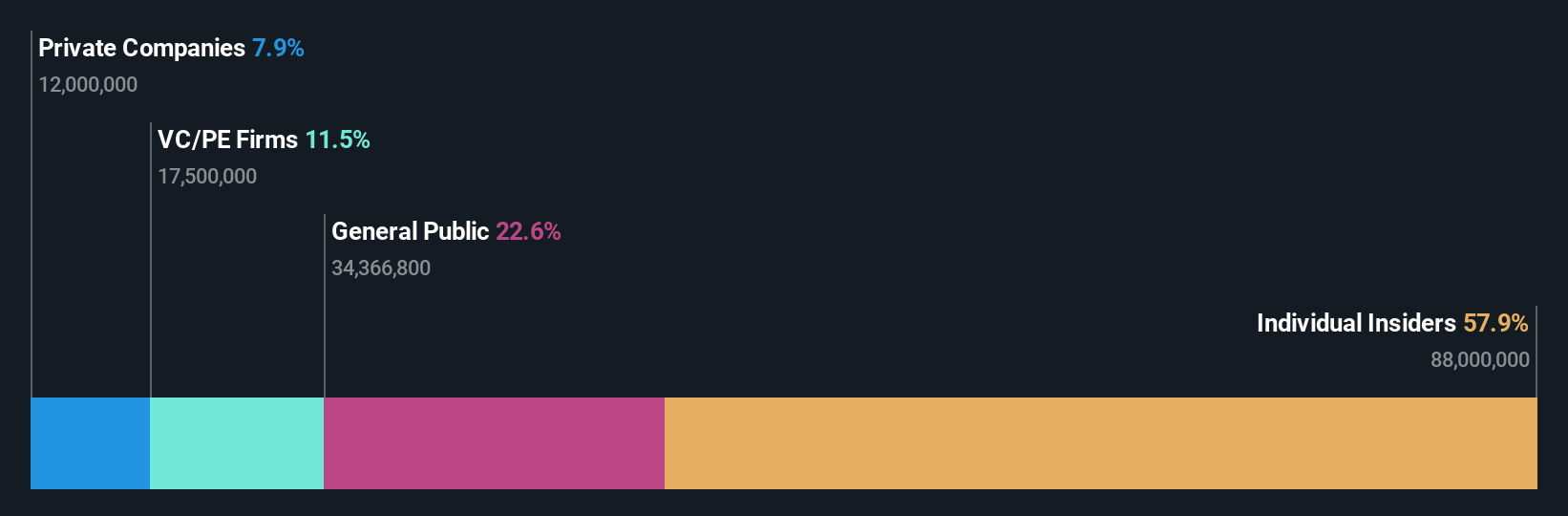
Every investor in Sunho Biologics, Inc. (HKG:2898) should be aware of the most powerful shareholder groups. The group holding the most number of shares in the company, around 58% to be precise, is individual insiders. Put another way, the group faces the maximum upside potential (or downside risk).
And last week, insiders endured the biggest losses as the stock fell by 11%.
Let's delve deeper into each type of owner of Sunho Biologics, beginning with the chart below.
Check out our latest analysis for Sunho Biologics
What Does The Lack Of Institutional Ownership Tell Us About Sunho Biologics?
Institutional investors often avoid companies that are too small, too illiquid or too risky for their tastes. But it's unusual to see larger companies without any institutional investors.
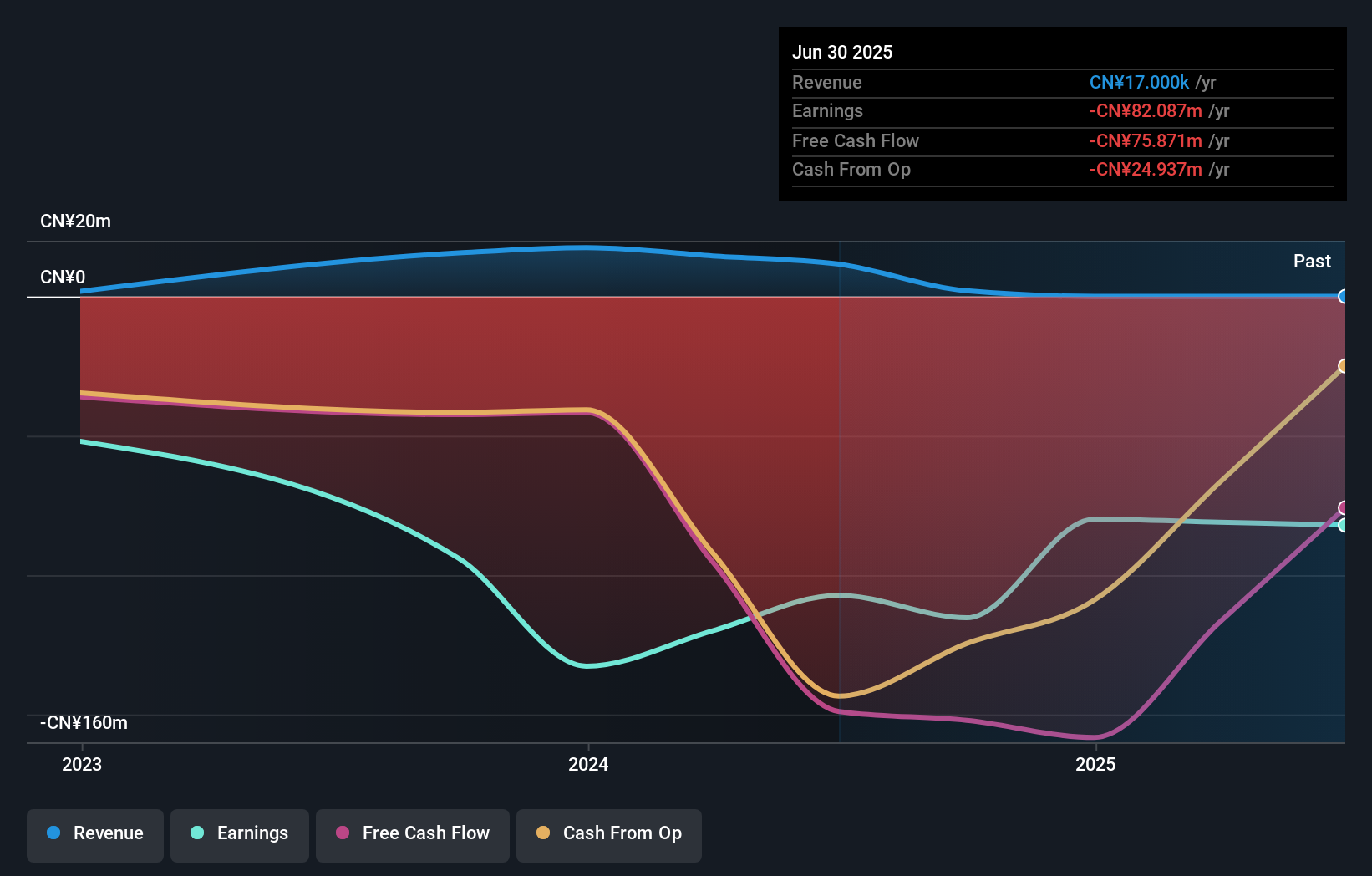
There are many reasons why a company might not have any institutions on the share registry. It may be hard for institutions to buy large amounts of shares, if liquidity (the amount of shares traded each day) is low. If the company has not needed to raise capital, institutions might lack the opportunity to build a position. Alternatively, there might be something about the company that has kept institutional investors away. Sunho Biologics' earnings and revenue track record (below) may not be compelling to institutional investors -- or they simply might not have looked at the business closely.
Hedge funds don't have many shares in Sunho Biologics. Because actions speak louder than words, we consider it a good sign when insiders own a significant stake in a company. In Sunho Biologics' case, its Top Key Executive, Feng Zhang, is the largest shareholder, holding 58% of shares outstanding. Meanwhile, the second and third largest shareholders, hold 12% and 4.0%, of the shares outstanding, respectively.
While it makes sense to study institutional ownership data for a company, it also makes sense to study analyst sentiments to know which way the wind is blowing. As far as we can tell there isn't analyst coverage of the company, so it is probably flying under the radar.
Insider Ownership Of Sunho Biologics
The definition of company insiders can be subjective and does vary between jurisdictions. Our data reflects individual insiders, capturing board members at the very least. Management ultimately answers to the board. However, it is not uncommon for managers to be executive board members, especially if they are a founder or the CEO.
Insider ownership is positive when it signals leadership are thinking like the true owners of the company. However, high insider ownership can also give immense power to a small group within the company. This can be negative in some circumstances.
It seems that insiders own more than half the Sunho Biologics, Inc. stock. This gives them a lot of power. That means they own HK$567m worth of shares in the HK$978m company. That's quite meaningful. Most would argue this is a positive, showing strong alignment with shareholders. You can click here to see if those insiders have been buying or selling.
General Public Ownership
With a 23% ownership, the general public, mostly comprising of individual investors, have some degree of sway over Sunho Biologics. This size of ownership, while considerable, may not be enough to change company policy if the decision is not in sync with other large shareholders.
Private Equity Ownership
With an ownership of 12%, private equity firms are in a position to play a role in shaping corporate strategy with a focus on value creation. Some investors might be encouraged by this, since private equity are sometimes able to encourage strategies that help the market see the value in the company. Alternatively, those holders might be exiting the investment after taking it public.
Private Company Ownership
It seems that Private Companies own 7.9%, of the Sunho Biologics stock. It might be worth looking deeper into this. If related parties, such as insiders, have an interest in one of these private companies, that should be disclosed in the annual report. Private companies may also have a strategic interest in the company.
Next Steps:
I find it very interesting to look at who exactly owns a company. But to truly gain insight, we need to consider other information, too. For instance, we've identified 2 warning signs for Sunho Biologics that you should be aware of.
Of course this may not be the best stock to buy. So take a peek at this free free list of interesting companies.
NB: Figures in this article are calculated using data from the last twelve months, which refer to the 12-month period ending on the last date of the month the financial statement is dated. This may not be consistent with full year annual report figures.
Have feedback on this article? Concerned about the content? Get in touch with us directly. Alternatively, email editorial-team (at) simplywallst.com.
This article by Simply Wall St is general in nature. We provide commentary based on historical data and analyst forecasts only using an unbiased methodology and our articles are not intended to be financial advice. It does not constitute a recommendation to buy or sell any stock, and does not take account of your objectives, or your financial situation. We aim to bring you long-term focused analysis driven by fundamental data. Note that our analysis may not factor in the latest price-sensitive company announcements or qualitative material. Simply Wall St has no position in any stocks mentioned.