
- PREMIUM
- LIVE QUOTES
- INSTITUTION
 Index Options


 State Street
 CME Group
 Nasdaq
 Cboe
Cboe TradingView
 Wall Street Journal
Tachikawa (TSE:7989) Will Pay A Larger Dividend Than Last Year At ¥50.00
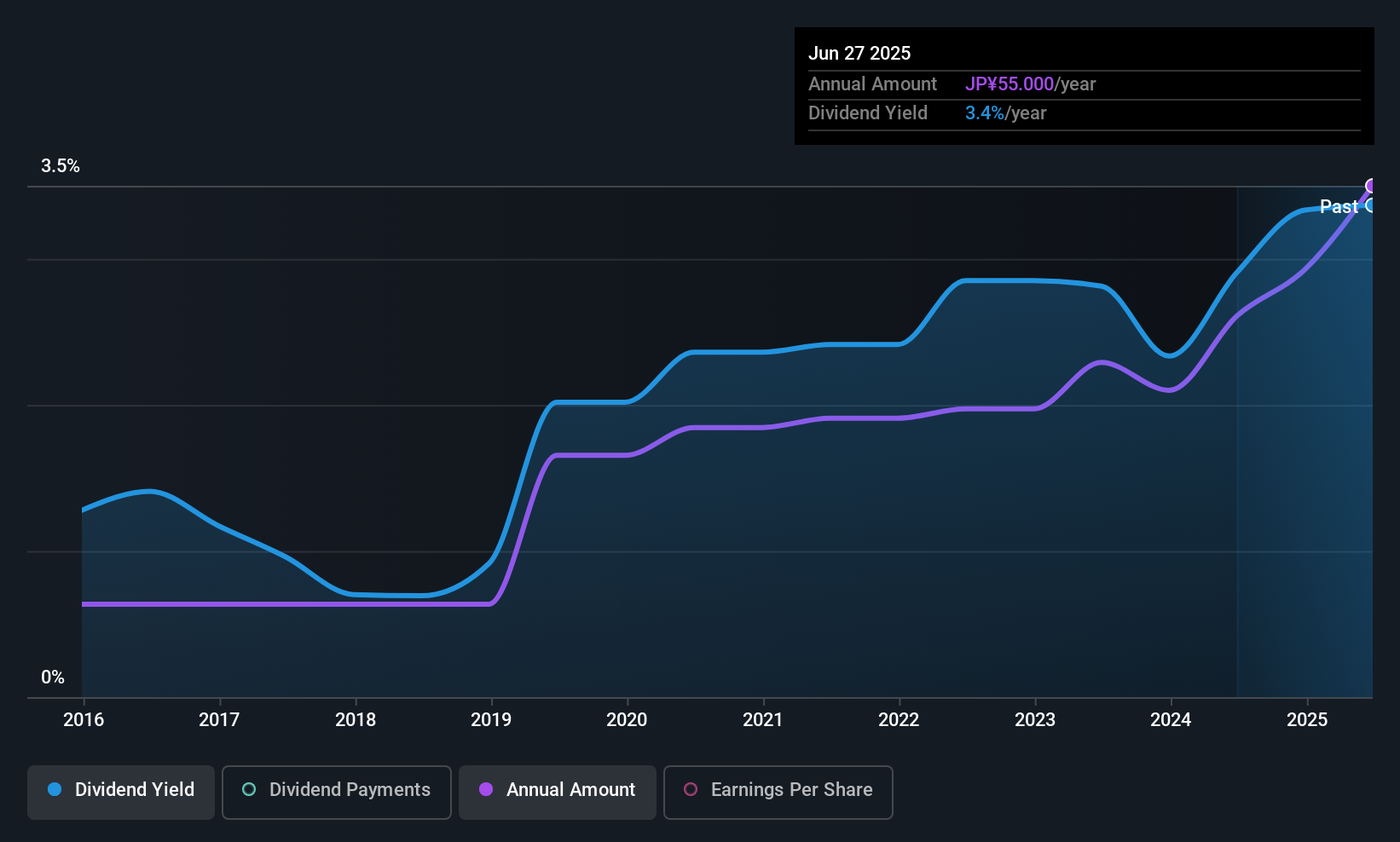
Tachikawa Corporation (TSE:7989) will increase its dividend from last year's comparable payment on the 31st of March to ¥50.00. This makes the dividend yield 3.5%, which is above the industry average.
Tachikawa's Future Dividend Projections Appear Well Covered By Earnings
While it is great to have a strong dividend yield, we should also consider whether the payment is sustainable. However, Tachikawa's earnings easily cover the dividend. As a result, a large proportion of what it earned was being reinvested back into the business.
Looking forward, earnings per share could rise by 1.5% over the next year if the trend from the last few years continues. Assuming the dividend continues along recent trends, we think the payout ratio could be 50% by next year, which is in a pretty sustainable range.
Check out our latest analysis for Tachikawa
Dividend Volatility
Although the company has a long dividend history, it has been cut at least once in the last 10 years. The annual payment during the last 10 years was ¥10.00 in 2015, and the most recent fiscal year payment was ¥70.00. This means that it has been growing its distributions at 21% per annum over that time. It is great to see strong growth in the dividend payments, but cuts are concerning as it may indicate the payout policy is too ambitious.
Tachikawa May Find It Hard To Grow The Dividend
With a relatively unstable dividend, it's even more important to see if earnings per share is growing. Unfortunately, Tachikawa's earnings per share has been essentially flat over the past five years, which means the dividend may not be increased each year. While EPS growth is quite low, Tachikawa has the option to increase the payout ratio to return more cash to shareholders.
Our Thoughts On Tachikawa's Dividend
Overall, this is a reasonable dividend, and it being raised is an added bonus. The payout ratio looks good, but unfortunately the company's dividend track record isn't stellar. The dividend looks okay, but there have been some issues in the past, so we would be a little bit cautious.
Investors generally tend to favour companies with a consistent, stable dividend policy as opposed to those operating an irregular one. Still, investors need to consider a host of other factors, apart from dividend payments, when analysing a company. Taking the debate a bit further, we've identified 1 warning sign for Tachikawa that investors need to be conscious of moving forward. Is Tachikawa not quite the opportunity you were looking for? Why not check out our selection of top dividend stocks.
Have feedback on this article? Concerned about the content? Get in touch with us directly. Alternatively, email editorial-team (at) simplywallst.com.
This article by Simply Wall St is general in nature. We provide commentary based on historical data and analyst forecasts only using an unbiased methodology and our articles are not intended to be financial advice. It does not constitute a recommendation to buy or sell any stock, and does not take account of your objectives, or your financial situation. We aim to bring you long-term focused analysis driven by fundamental data. Note that our analysis may not factor in the latest price-sensitive company announcements or qualitative material. Simply Wall St has no position in any stocks mentioned.