
The UK budget was approved by the market, and British bond yields declined, and giants such as Pioneer and RLAM entered the market to increase positions
The Zhitong Finance App learned that on Wednesday, Pioneer Group and Royal London Asset Management (RLAM) purchased British treasury bonds. British Chancellor of the Exchequer Rachel Reeves' budget plan was largely approved by the market, which contributed to the biggest increase in longer-term British bonds since April.
Like many of her peers, Ales Koutny, head of international interest rates at Pioneer Group, reduced the number of British Treasury bonds held before the budget was introduced because he expected market volatility to increase at that time. But he said he restarted buying 30-year bonds on Wednesday after Reeves issued a statement to raise taxes and strengthen the UK's fiscal position. He said that since current prices are too pessimistic, he may further increase the share of investment.
In an interview, Koutny said: “The budget did not have much impact on the UK's fragile fiscal situation. But the market still labels the country too high a risk premium.”
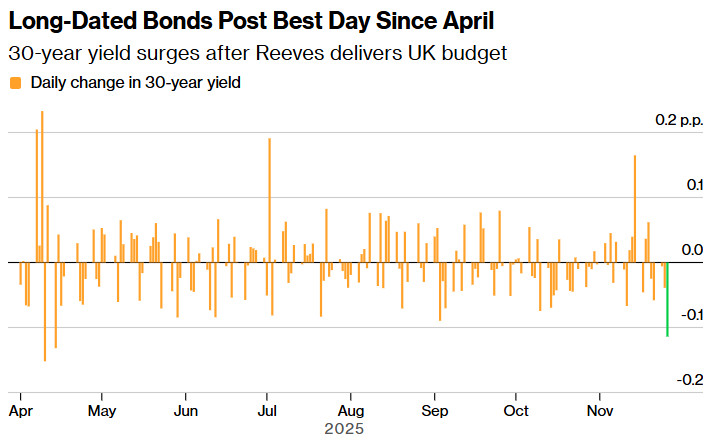
The 30-year British Treasury bond led a rise in the bond market on Wednesday as it was more sensitive to the economic outlook. Its yield fell by 12 basis points, the biggest one-day decline since April (and the period of the worst trade tariff conflict).
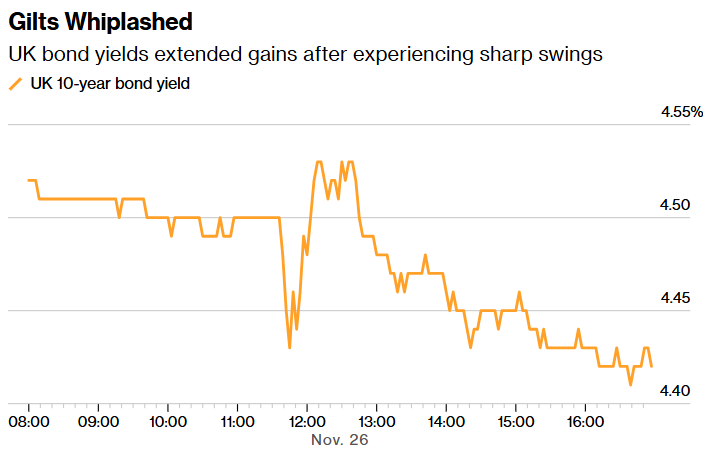
However, the initial market reaction was unclear: at first, after the British financial regulator misissued predictions, the price of British treasury bonds first rose and then fell; only then did Reeves submit the relevant plan to Parliament.
Craig Inches, head of RLAM's interest rate and cash business, took advantage of this volatility, selling the bond when the price went up and buying it again when the price fell. He holds long-term positions in British Treasury bonds in various funds.
RLAM anticipates that strict tax policies will place a heavy burden on households, inhibit economic growth, and create conditions for the Bank of England to cut interest rates further, while also having a positive impact on the bond market.
Inches also said that Reeves also benefited from the Debt Management Office's prudent issuance strategy this year. This strategy enabled part of the UK Treasury bond auction to be cancelled, which further boosted the price of long-term bonds on Wednesday. Inches explained, “We won't be able to get a large enough supply of long-term bonds until April 2026. Therefore, if the UK economy begins to recover, then the supply of long-term bonds is likely to run short. Hurry up and buy it!”
Following the policy leak and major adjustments to the income tax increase policy, Reeves said the government would adopt a more cautious borrowing strategy. As investors carefully scrutinized the details of the budget, they came to the conclusion that a series of tax increases and spending commitments enabled Reeves to increase a critical cash reserve. This has made the British government's position in the bond market relatively more stable, thereby reducing the need to introduce another tax increase plan next year.
On Wednesday, the exchange rate of the pound rose above $1.32 against the US dollar, and bond prices also rose, causing the 10-year UK Treasury yield to fall to 4.42% for the fifth day in a row. Major British banks led the FTSE 100 index up 1%.
Jordan Rochester, head of macro strategy at Mizuho Bank in London, said: “For us, what matters is the numbers rather than the specific events themselves. The market's risk response to this incident appears to be quite good.” The bank advises clients to “reinvest in UK Treasury bonds” after the budget is announced.
The rise in the price of British Treasury bonds on Wednesday marked the end of the upward trend in British Treasury yields. On September 3, Reeves announced the date the budget was introduced. On the same day, the yield on 30-year British Treasury bonds reached the highest level since 1998. Yields have fallen by more than 50 basis points since the day's high, and this rise is also due to market expectations that the Bank of England will lower interest rates by a larger margin than previously anticipated.
The fiscal buffer far exceeded expectations
Traders focus on the UK government's fiscal buffer — this is actually a measure of the extent to which Reeves can act before breaking the rules set by the government itself. The government led by British Prime Minister Keir Stammer has enacted two fiscal regulations aimed at gaining support from bond investors. One of the most important of these is what Reeves calls a “stability” rule: daily government expenses should be covered by tax revenue for the 2029-2030 fiscal year.
In addition to showing that there was a £22 billion buffer that exceeded expectations, the UK Office of Budget Responsibility also lowered its economic growth forecast to reflect lower productivity assumptions, while predicting higher inflation and stronger wage growth.
The analysis points out that the UK's expanding fiscal buffer will protect British treasury bonds from some of the worst situations traders may imagine before the budget is announced. This buffer is much larger than expected by the market, and there is plenty of room for the UK government to deal with any unexpected revenue situations, which is good news for the risk premium set by investors on UK assets.
The principle is that loans are for investment purposes only. Reeves previously only set aside 9 billion pounds of buffer funds in March (actually a backup cash she can withdraw and use in violation of regulations), but now this amount has increased dramatically, far exceeding the average estimate of £15 billion.
To be sure, this lag in fiscal austerity has raised questions about the credibility of the Reeves Plan. The British government is trying to balance bondholders' demands for fiscal prudence with the political reality that lawmakers have already opposed spending cuts this year.
However, despite these concerns, the positive reaction from the market on Wednesday showed that investors were more optimistic about the UK's fiscal direction than before. Gordon Shannon, fund manager at TwentyFour Asset Management, said: “Positions have been adjusted, the UK's anti-inflation trend continues due to lower energy costs, and no major surprises in terms of borrowing or issuance have helped ease market tension. From a more serious perspective, the budget plan's potential drag on medium-term economic growth will also put downward pressure on UK Treasury yields.”