
Cui Dongshu: The overall trend of the national automobile market was strong in October, and the commercial vehicle market is now growing structurally
The Zhitong Finance App learned that Cui Dongshu published an article saying that the automobile market maintained strong growth under the impetus of the national promotional fee policy. The overall trend of the national automobile market was strong in October, and the truck market and bus market showed a clear recovery. Due to the slow pace of retail transmission driving wholesale, retail sales in October 2024 were significantly stronger than wholesale, leading to negative growth in passenger car retail sales in October this year, but due to increased exports and inventories, the sales growth rate of manufacturers was still very good in October. In October, the trend of new energy vehicles was strong. The automobile export market continued to strengthen, manufacturers' inventories changed greatly, and pressure on the industry increased. In October, the commercial vehicle market showed structural growth characteristics driven by new energy sources. Electrification of logistics and transportation accelerated, and electrification of pickup truck models accelerated.
1. Differentiation of automobile passenger trends in 2025
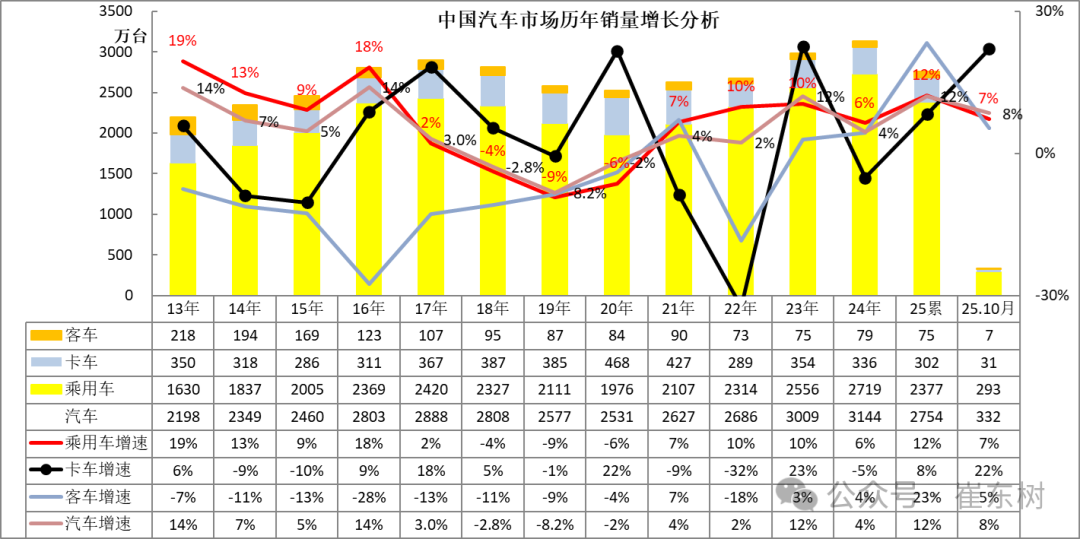
The characteristics of passenger differentiation have been obvious in recent years. Commercial vehicles have weakened, and passenger car consumption has improved. In 2025, the market was driven by policy factors. The growth rate of passenger cars was relatively good at 13%, commercial vehicles were driven by electrification. The trend of new energy commercial vehicles was significantly stronger than last year, and the bus market, including WeChat, achieved strong growth. The trade-in policy has had a strong impact on passenger cars. In particular, the results of the entry period of the policy have been good. Some regions that have recently been suspended have begun to recover, positive progress has been made in the “internal volume” of comprehensive industry management, local auto shows are in full swing, new products are being intensively launched, and the overall trend in the car market is strong.
2. A good start to the automobile market in 2025
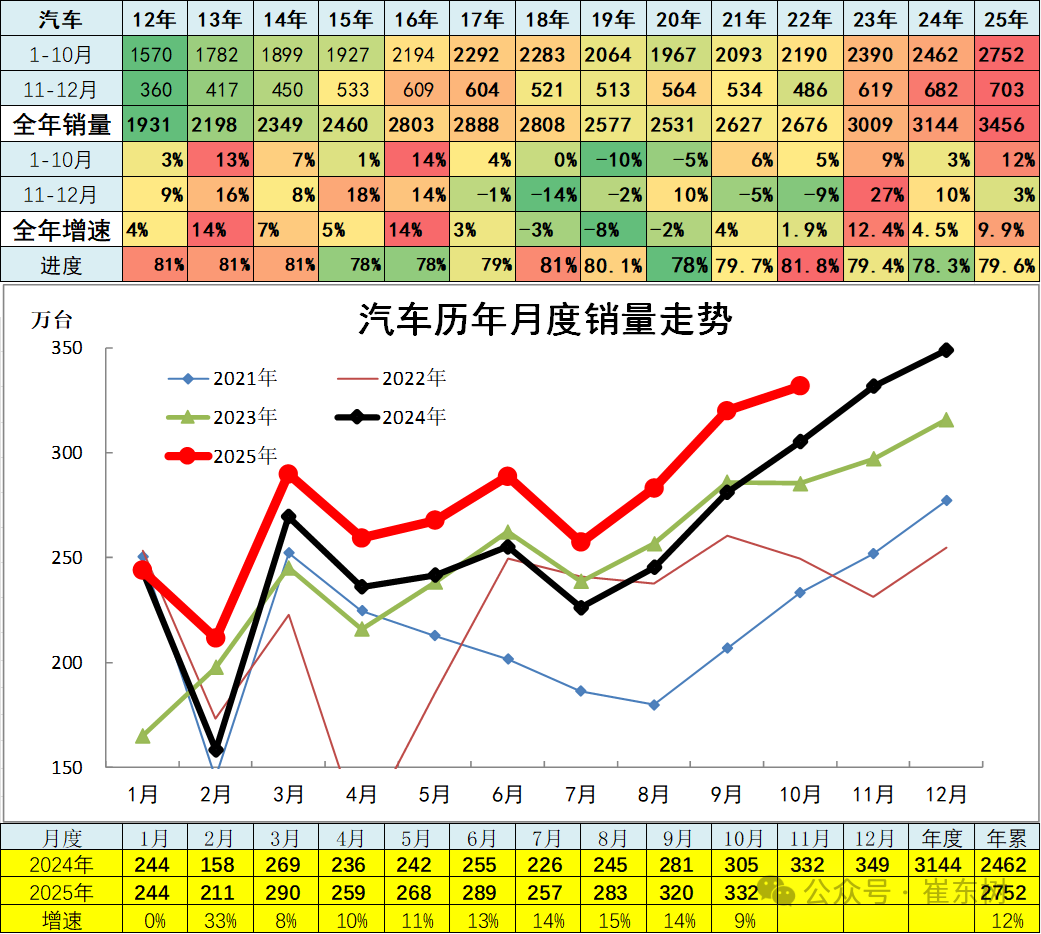
From January to October 2025, the total sales volume of automobiles was 27.52 million units, with a cumulative growth rate of 12%; in October, total automobile sales were 3.32 million units, an increase of 9% over the previous year. This year's subsidy policy subsidies drove high retail growth in the first half of the year, while wholesale was slightly slower. The retail growth rate weakened in July-October, but manufacturer sales were still strong.
3. The performance of major car groups is drastically divided
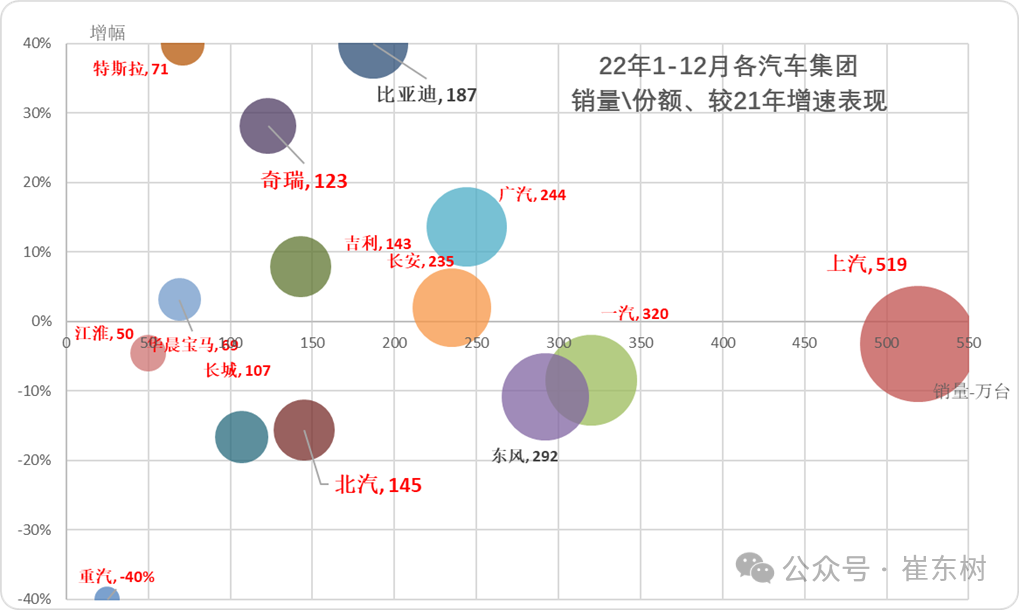
Compared with the 2021 chart above, some car companies performed strongly in 2022, and the growth rate of the industry was seriously divided. The epidemic in early 2022 put a lot of pressure on traditional car companies. In particular, the impact of new energy was compounded by the impact of the epidemic. The performance of large state-owned groups was divided, and GAC and Chery performed well. Among them, Chery's commercial vehicle and passenger car sectors performed well. The performance of various companies in the North, such as FAW, Great Wall, and BAIC, is under pressure.
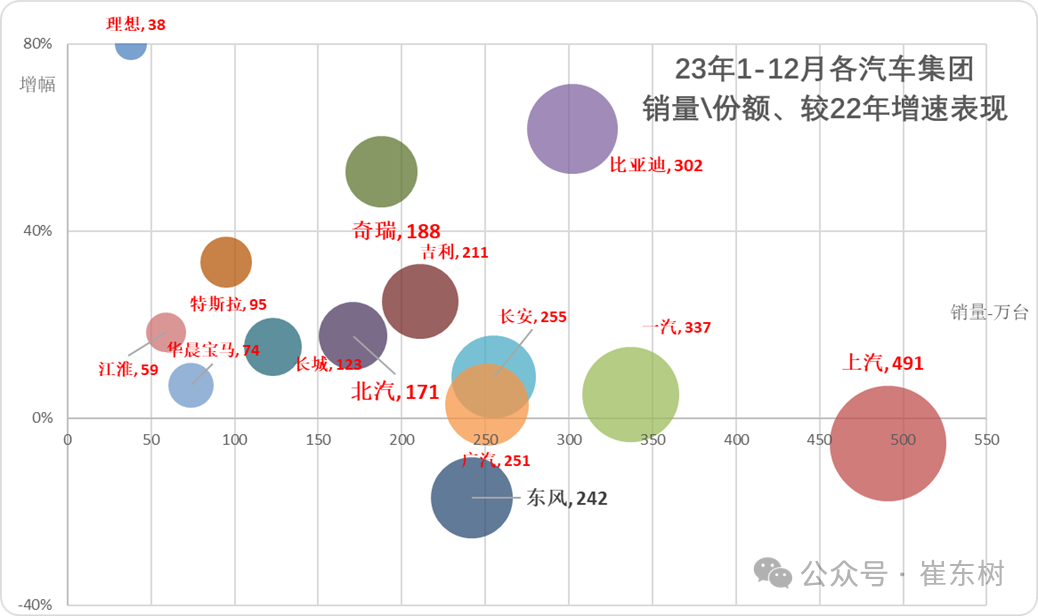
In early 2023, new energy sources drove the trend of the car market to diverge. The top three central enterprises are generally divided, and some state-owned enterprises are left behind. New energy companies such as BYD have performed very well; Chery and Tesla have performed relatively well this year. The performance of second-tier car companies is divided. Due to the continuous loss pressure of new and old kinetic energy conversion and new energy vehicles, the differentiation of own-brand SMEs is seriously sluggish.
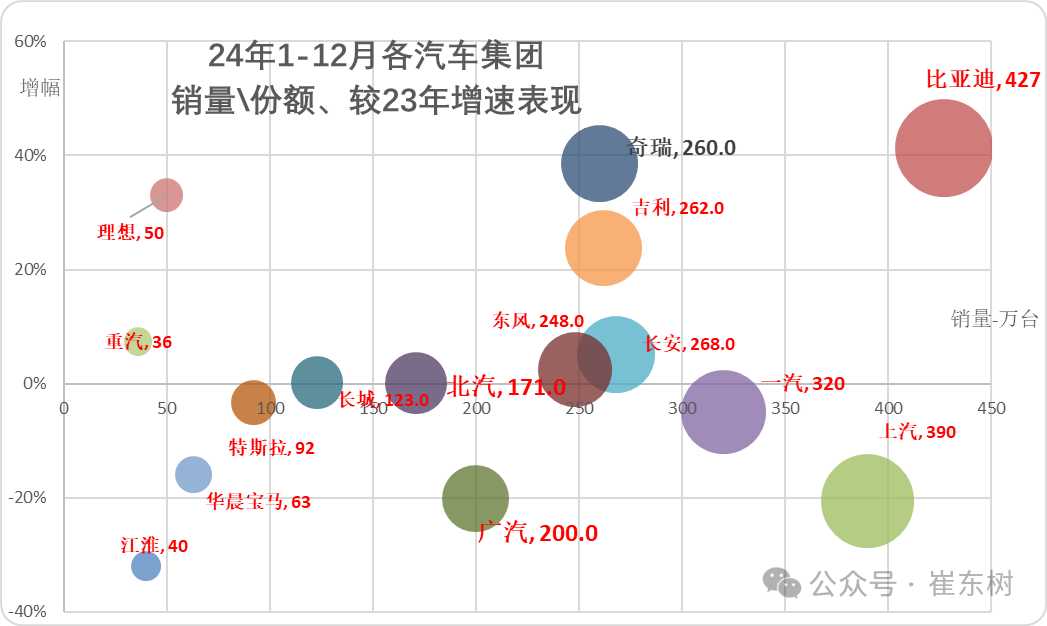
The automobile group's lineup pattern changed completely in 2024. Due to the high demand for passenger car sales and overseas contributions, Chery, Geely, and Dongfeng performed well, and SAIC Motor is still in a sharp decline. The growth rates of new energy vehicles at BYD and Tesla are diverging.
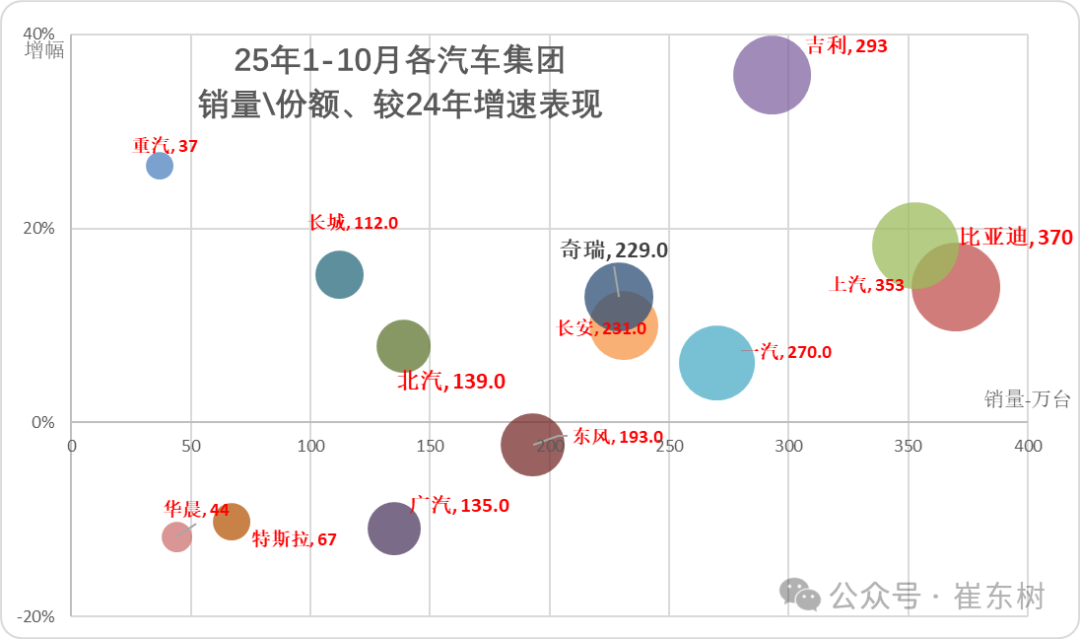
The pattern of manufacturers in the automobile market has changed dramatically, and the industry is showing drastic growth. Private enterprises starting in 2025 replaced state-owned enterprises as the main players in the industry, and the growth rates of Geely (00175), BYD (002594.SZ), Chery, and Great Wall remained at a high level. This phenomenon currently has a sustainable trend. SAIC Motor and Dongfeng showed strong performance in October this year, and their growth rate improved.
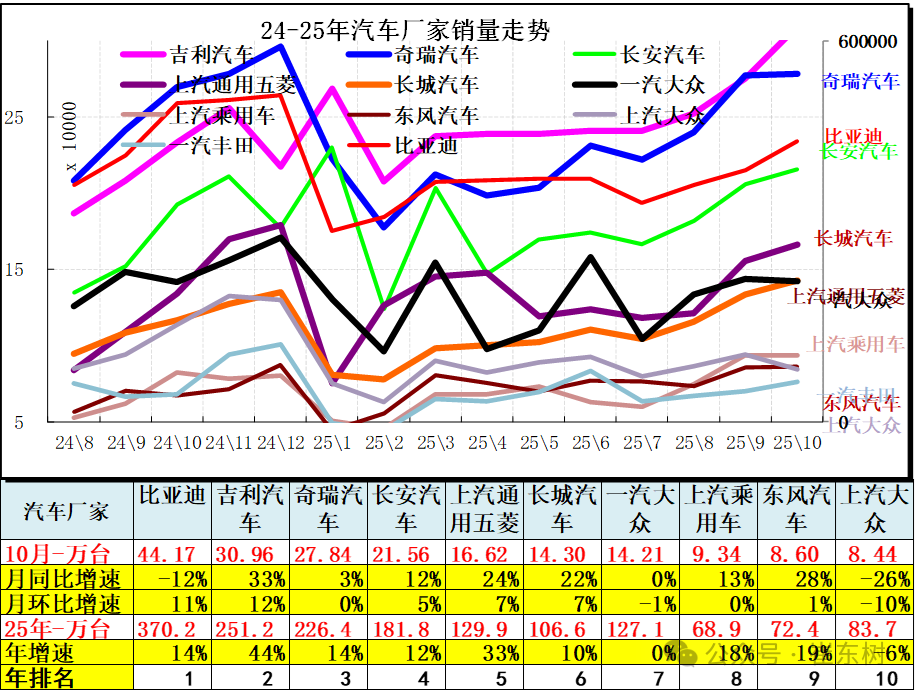
The overall sales volume of manufacturers strengthened month-on-month in October. Some manufacturers such as Geely Automobile and BYD showed a strong month-on-month trend compared to September, while Geely, Wuling, and Dongfeng strengthened year-on-year, while sales of some manufacturers such as SAIC Volkswagen adjusted strongly year-on-year in October.
4. Production and sales trends of passenger car companies in the narrow sense
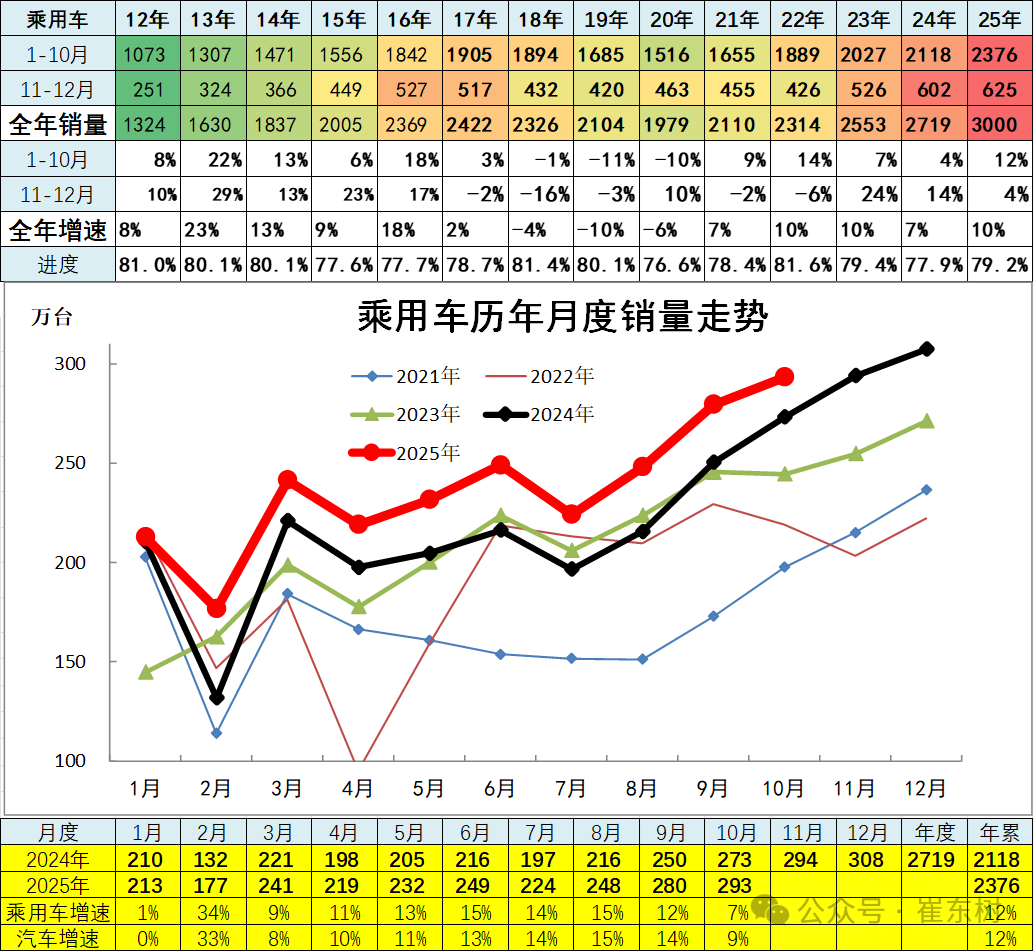
From January to October 2025, the total sales volume of passenger cars in the narrow sense was 23.76 million units, with a cumulative growth rate of 12%; in October, the total sales volume of passenger cars in the narrow sense was 2.93 million units, an increase of 7% over the previous year. In recent years, technological innovation in new energy vehicles and the competitiveness of new products have continued to grow, and the launch of new fuel vehicles has been weak. New energy vehicles grew rapidly after the Spring Festival in 2025. The car market maintained a strong development of 14% in May-September. The base figure increased in October, and the growth rate of passenger cars was still strong.
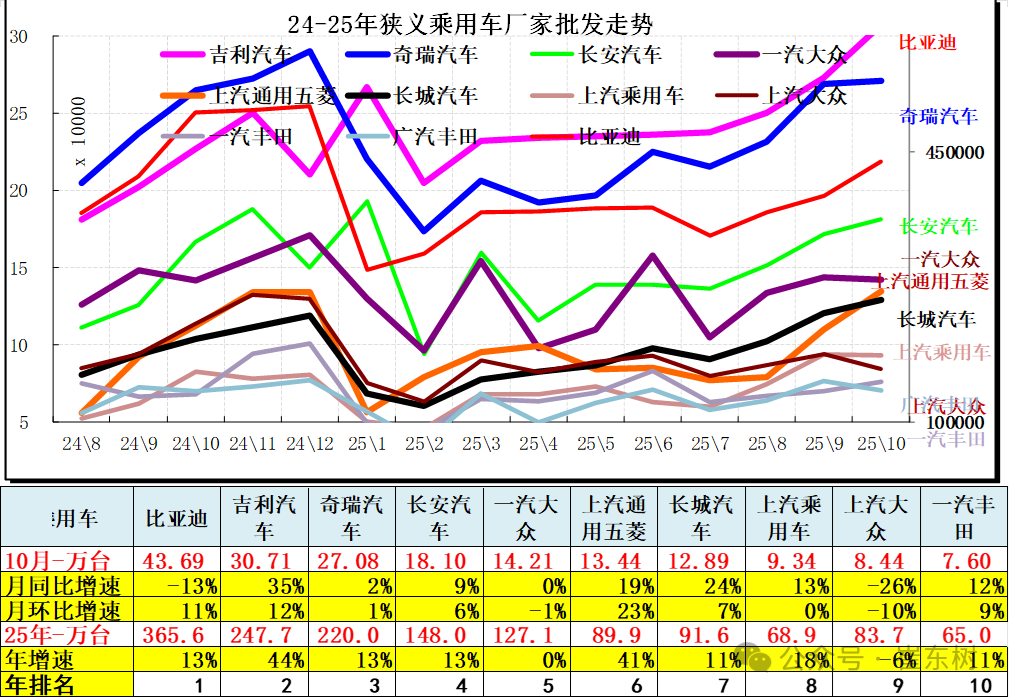
Major car companies were generally strong in October, with strong autonomy, and joint ventures improved relatively well in October. BYD led the way, Geely ranked 2nd, and Chery held 3rd place in October, and the top three are getting closer. Joint ventures such as FAW-Volkswagen and SAIC Volkswagen performed relatively smoothly.
The main passenger car manufacturers quickly split. Manufacturers that mainly focus on new energy vehicles performed well, and the differentiation in autonomous performance was particularly obvious.
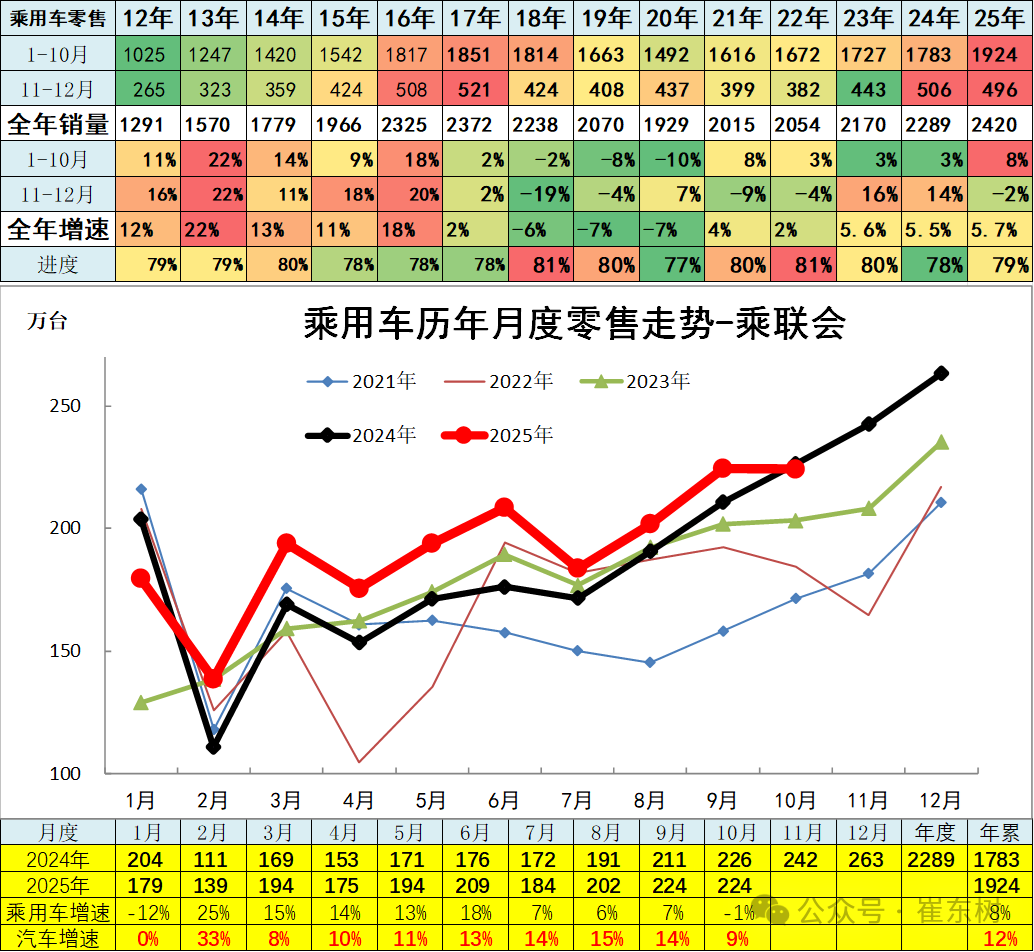
In 2023, the total retail sales of passenger cars in the narrow sense of the word were 21.7 million units, with a cumulative growth rate of 6%; in 2024, the total sales volume was 22.89 million units, up 5.5% year on year; in October 2025, the total retail sales volume of passenger cars in the narrow sense was 2.24 million units, down 1% year on year. The total retail sales volume from January to October 2025 was 19.24 million units, up 8% year on year, and there was a deceleration trend in October.
5. Production and sales trends of new energy passenger vehicle companies
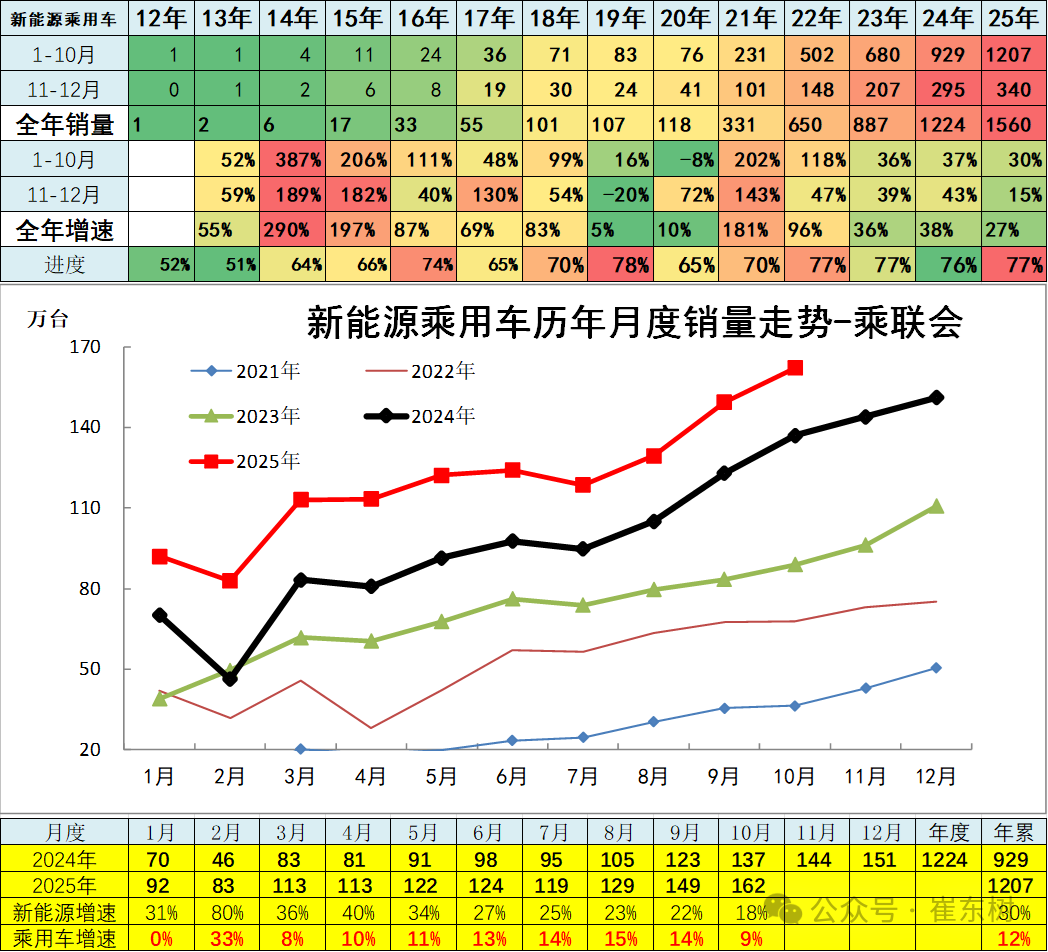
The trend of sales of new energy passenger vehicles increased by 38% to 12.24 million units in 2024. Scrap and renewal subsidies, manufacturer price cuts, and new cars brought good growth.
In October 2025, the total sales volume of new energy passenger vehicles was 1.62 million units, up 18% year on year; in January-October, total wholesale sales of new energy passenger vehicles were 1.07 million units, up 30% year on year.
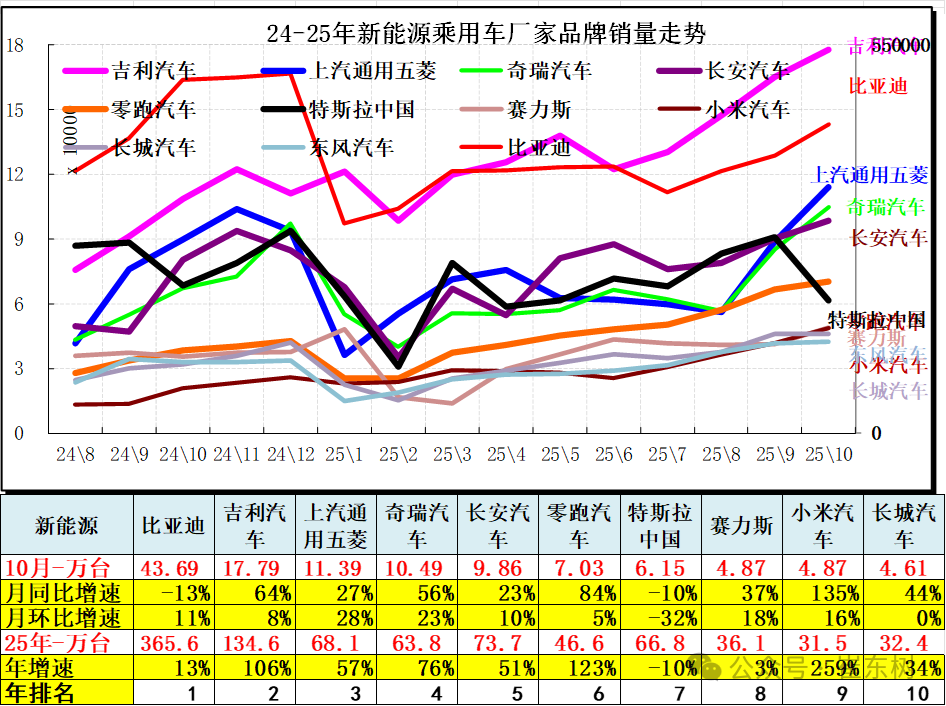
The month-on-month trend of Chery and Wuling was strong in October, while the trend of Tesla and others was slower in October. The national car market is sharply divided, with large differences in growth rates between provinces and regions, and large differences in the growth rate of manufacturers.
6. Production and sales trends of traditional power passenger car companies
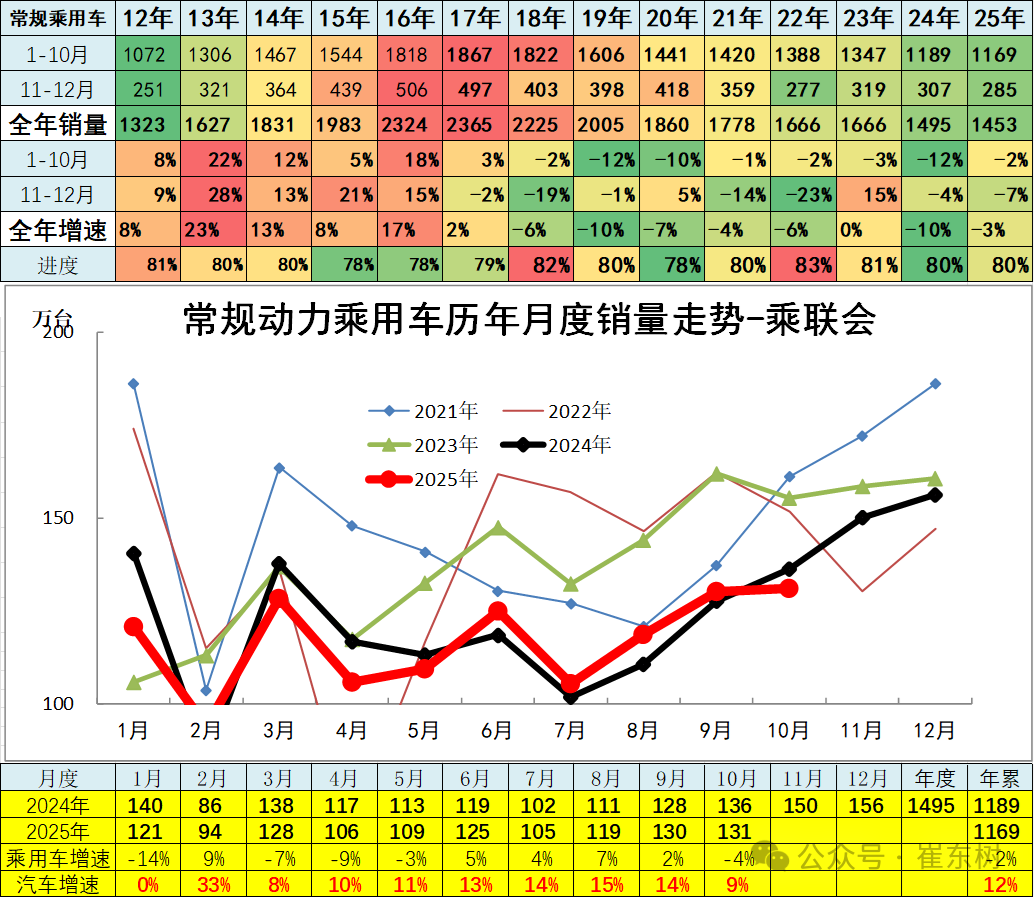
In 2023, sales of passenger cars in the narrow sense of fuel were 16.66 million units, which was basically the same as in the same period in 2022; in 2024, sales of 14.95 million traditional passenger cars, down 10% year on year; sales volume from January to October 2025 was 11.69 million units, down 2% year on year, with a year-on-year decrease of 4% in October.
The continued decline in conventional passenger cars in the early period brought great market pressure, and recently continued to grow positively in June-October. The trend of traditional cars has picked up relatively recently, but the price impact of new energy will continue to be reflected. It is hoped that traditional cars will also stabilize and resume growth.
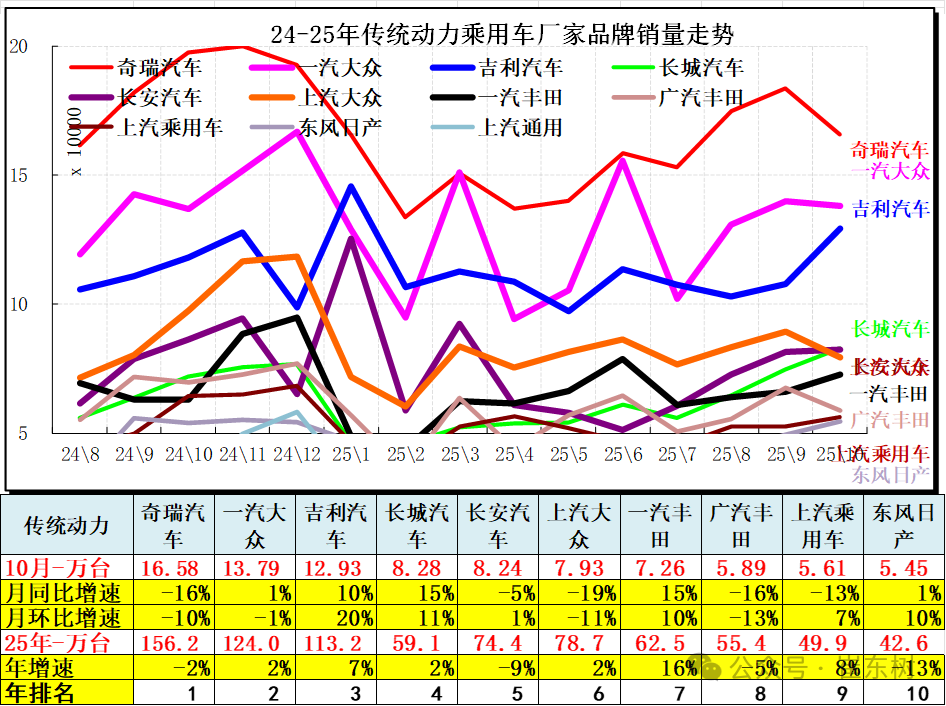
The situation where conventional-power passenger car joint ventures are the main ones is gradually changing, and the market for Chery, Geely, Great Wall, and the top three joint ventures is still strong. FAW-Volkswagen is absolutely leading in joint ventures, and the advantages of independent brands over joint ventures for fuel vehicles are not obvious, and joint venture car companies still have excellent fuel vehicle technology heritage.
7. Production and marketing classification trends of bus companies
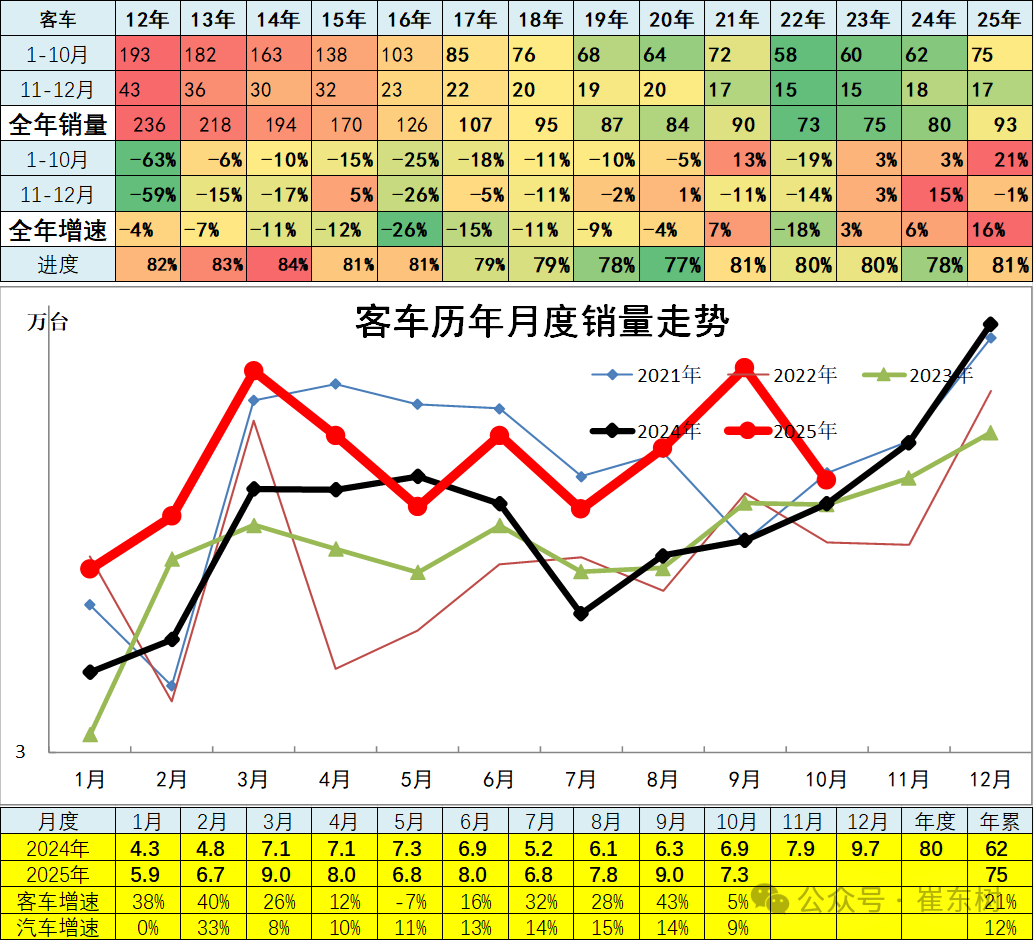
For the full year of 2023, the cumulative sales volume of buses by manufacturers was 750,000 units, with a cumulative growth rate of 3%; cumulative total bus sales volume of 800,000 units in 2024, a cumulative increase of 6%; total bus sales volume from January to October 2025 was 750,000 units, with a cumulative growth rate of 21%; and total bus sales volume in October was 73,000 units, an increase of 5% over the previous year. The driving effect of new energy logistics vehicles is obvious.
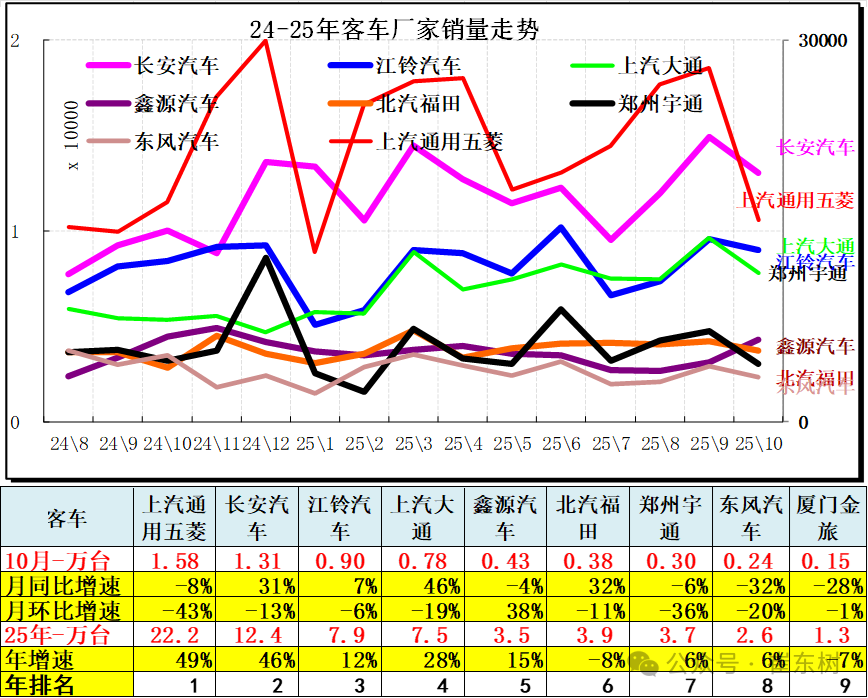
The bus trend was relatively strong in early 2025. From February to April 2025, the sales volume of leading manufacturers surged, with strong month-on-month growth in August-September. Changan fell 13% in October, and Chase fell 19% month-on-month. Basically, market demand for logistics light buses and WeChat customers fluctuated. In 2025, commercial vehicle trends in Wuling, Changan, Chase, and Xinyuan were relatively good. Due to the resumption of growth in the new energy WeChat category, preferential policies on vehicle purchase tax still have a strong stimulating effect.
8. Production and marketing classification trends of truck companies
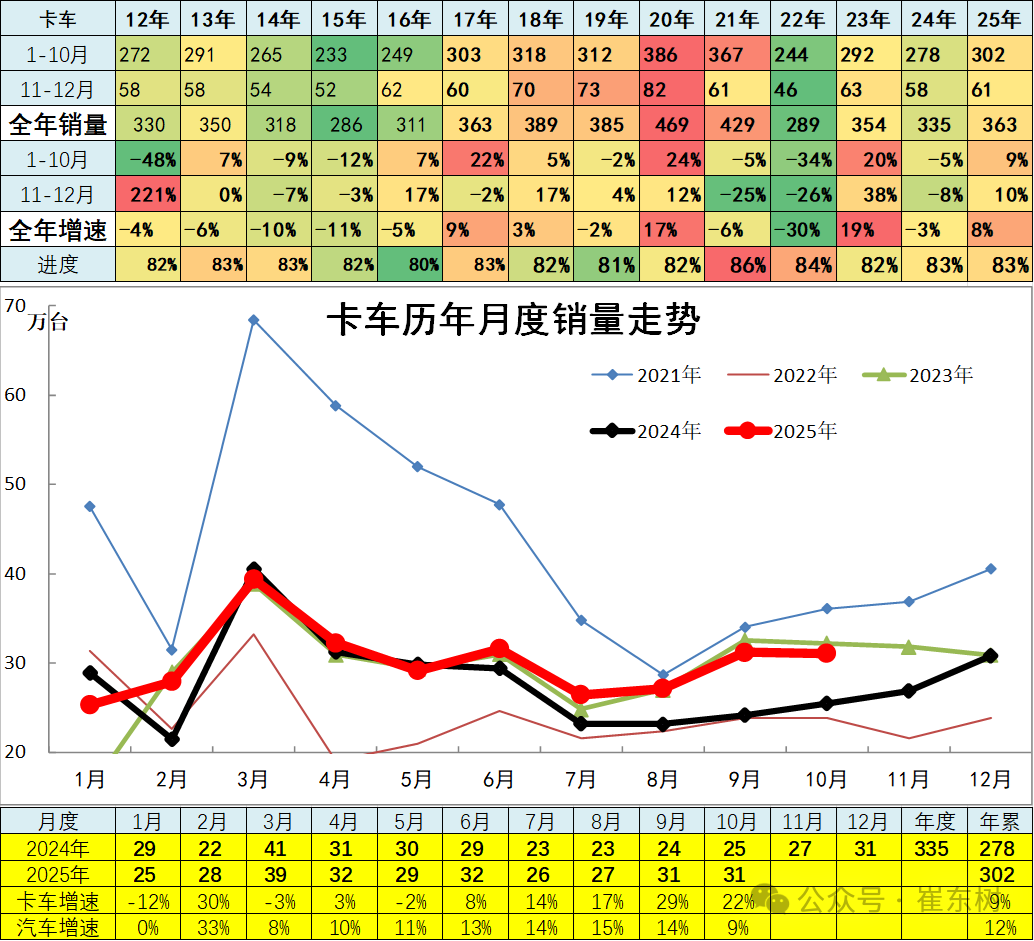
In 2023, cumulative truck sales were 3.54 million units, with a cumulative growth rate of 19%; cumulative truck sales in 2024 were 3.35 million units, a cumulative decrease of 3%; from January to October 2025, cumulative truck sales were 3.02 million units, with a cumulative growth rate of 9%; and truck sales in October were 310,000 units, up 22% year on year.
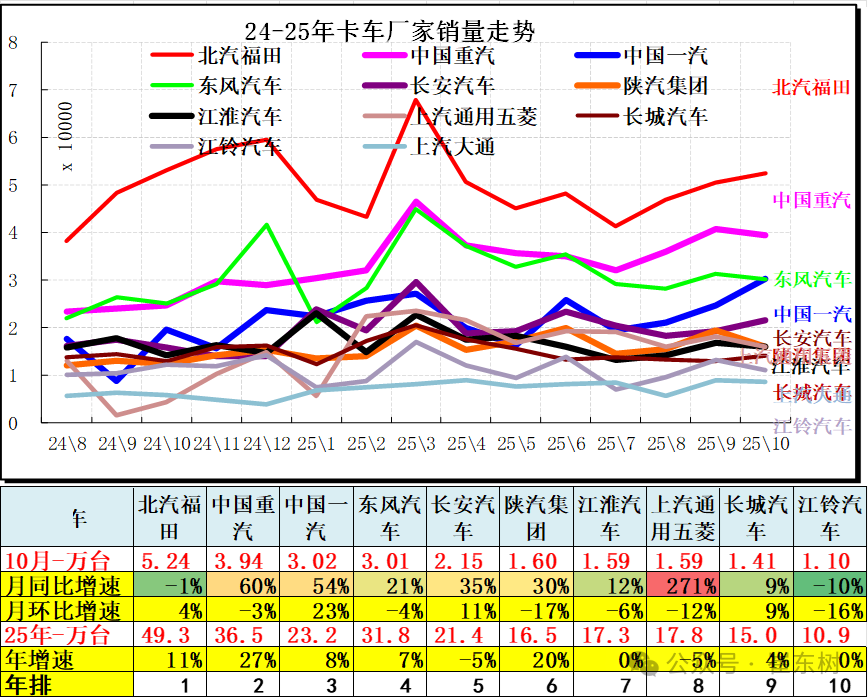
Major truck manufacturers in 2025 were clearly divided, with leading manufacturers showing strong performance. FAW, Sinotruk, and Wuling Motors surged compared to October last year, while Wuling Motors and Changan's light trucks performed better year-on-year in October.
Heavy trucks skyrocketed in 2025. Pure electric heavy trucks performed very well. FAW, Shaanxi Automobile, and Sinotruk grew strongly, and the industry pattern was relatively stable.