
Goldman Sachs: US stock performance will be at the bottom of the world in the next ten years! It is appropriate to shift capital to emerging markets such as China
The Zhitong Finance App learned that Goldman Sachs strategist Peter Oppenheimer, who previously accurately predicted that US stocks will outperform other regional stock markets this year, predicted that the US stock market will continue to lag behind other major global markets in the next ten years. Oppenheimer and his team recommended that investors increase the diversified allocation ratio in markets outside the US, as US stock valuations are currently high, which significantly curbs the room for upward stock prices. They expect the S&P 500 to have an annualized yield of 6.5% over the next ten years, the weakest performance of any region. Emerging markets are expected to be the strongest, with an annualized return of 10.9%.
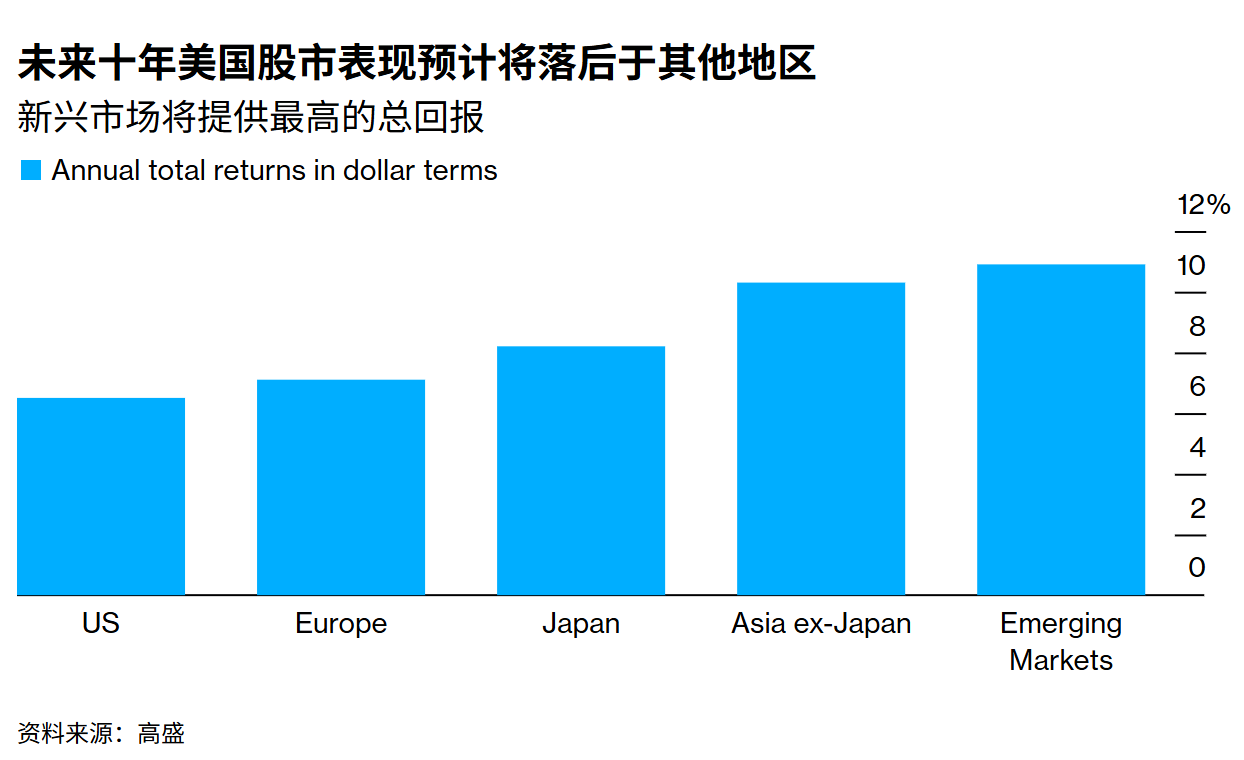
Figure 1
Driven by the rise in technology stocks and the boom in artificial intelligence, although the S&P 500 index has continued to lead the global market for the past ten years, it has lagged significantly behind its peers in major global stock indexes since 2025. The benchmark index rose 16%, while MSCI's global index, which excludes the US, rose 27%.
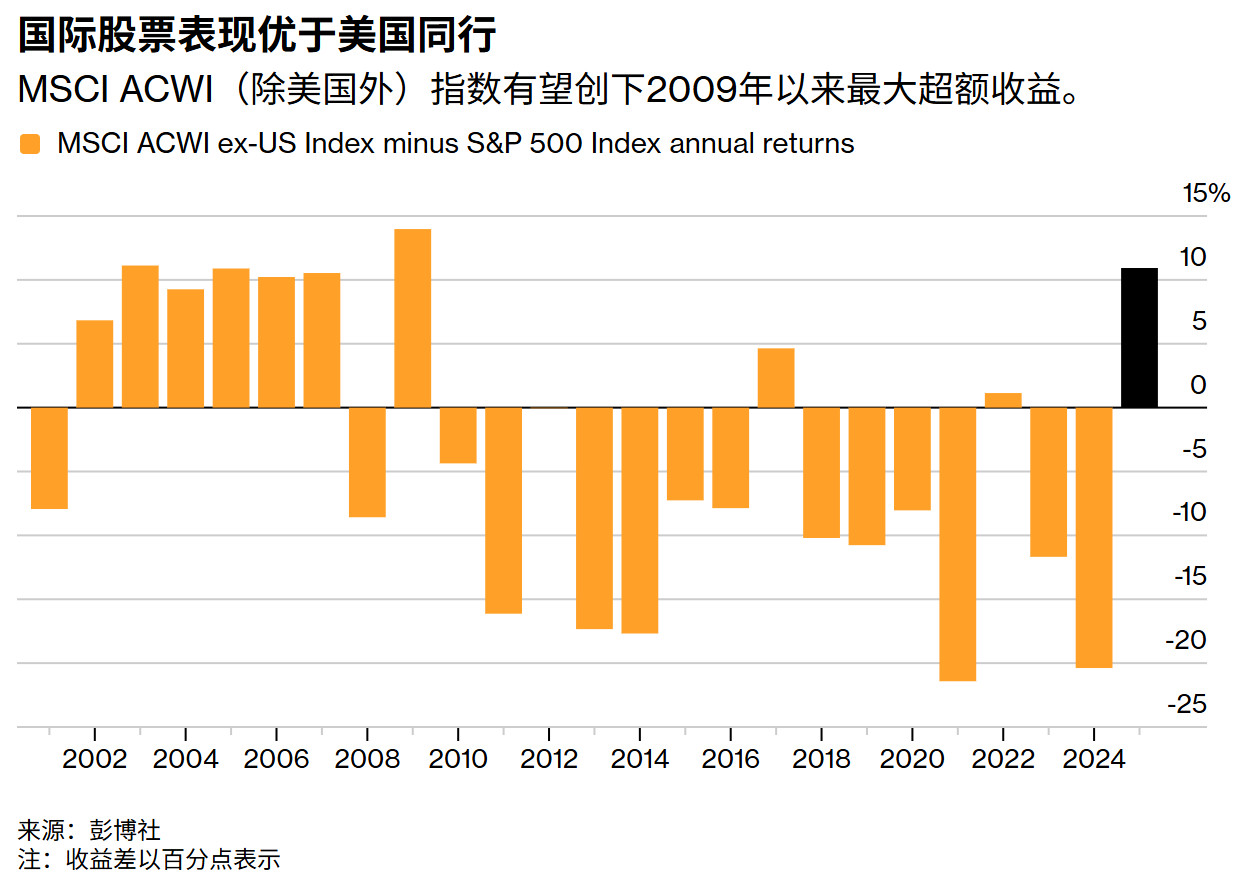
Figure 2
“Diversify the allocation beyond the US and focus on emerging markets,” Oppenheimer and his team wrote in a report. We expect higher nominal GDP growth and structural reforms to benefit emerging markets, and the long-term benefits of artificial intelligence should be widely distributed, not limited to the US technology sector.”
The bank's strategists expect that earnings in emerging markets in the next few years will be driven by strong profit growth in China and India. Asia, excluding Japan, is considered the second-best performing region, with an annualized return of 10.3%. With the dual support of policy-driven investor dividend optimization and profit growth, the Japanese stock market is expected to achieve an annualized return of 8.2%. Europe is expected to provide investors with an annualized return of 7.1%.
As early as the beginning of last year, Oppenheimer warned that US stocks were beginning to seem too expensive, and began advocating a shift to international markets that have been underdeveloped for a long time.
In 2025, the performance of the S&P 500 index in dollars clearly lags behind most regions of the world. As markets expect global earnings growth to sync next year, the appeal of this benchmark index has been further weakened. Currently, its forward price-earnings ratio has soared 23 times, which is not only the peak level after the pandemic, but also close to the record high set during the Internet bubble period.
The US index currently has a premium of more than 50% over similar global indices. The Goldman Sachs team said that the drivers that drove S&P 500 prices and profits higher in the past decade, such as rising profit margins, lower taxes, and lower interest rates, are unlikely to be as strong in the next ten years.
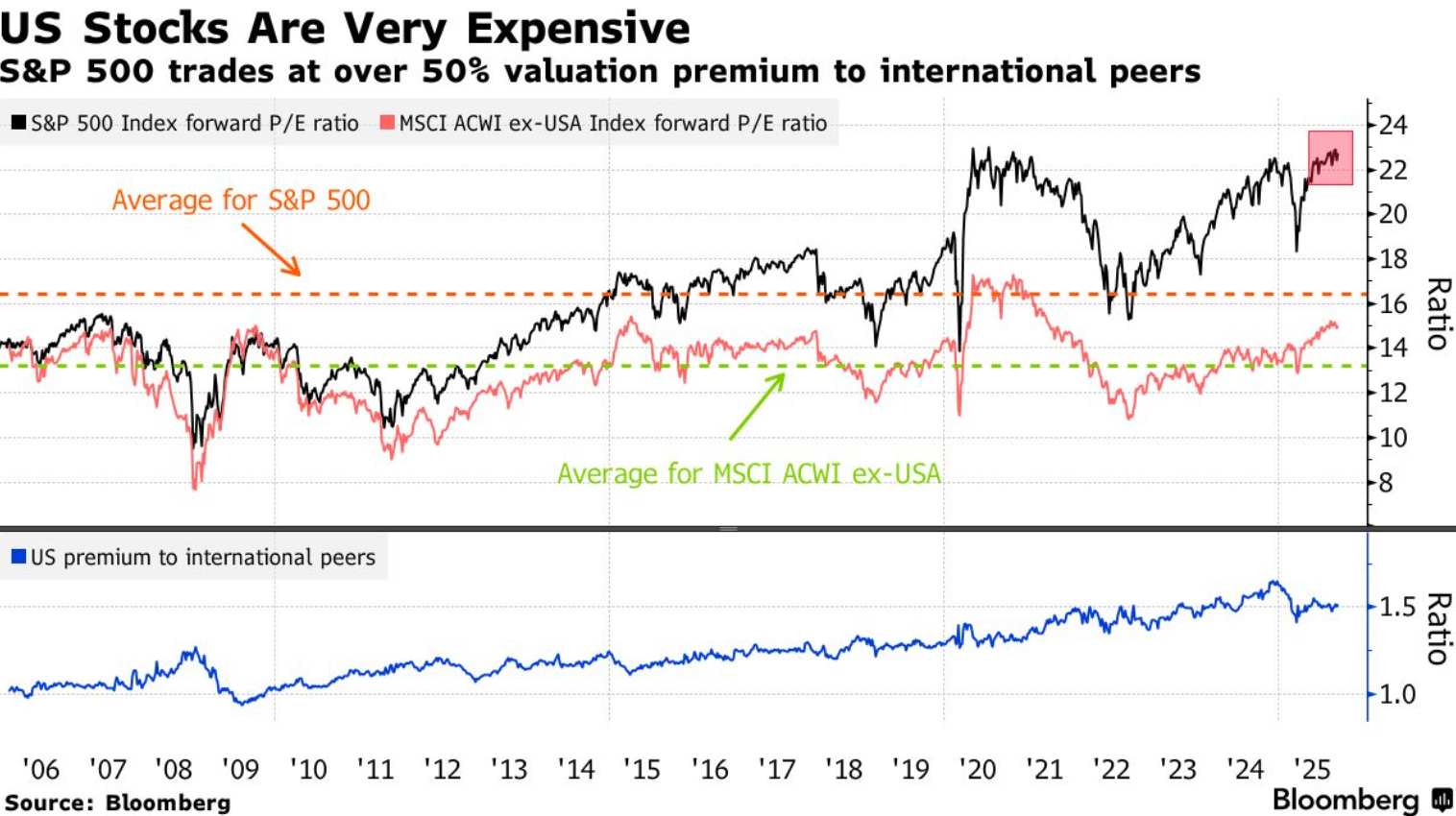
Figure 3
“The net profit margin and return on net assets of the S&P 500 index are currently at close to the highest level in history, and many of the smooth wind factors supporting corporate profitability in recent decades are unlikely to push profits to a similar level in the future,” the bank's strategists said.