
KPMG released a report at the Expo to decode the new circuit of the face value economy
The Expo is not only a window for showcasing innovative technology and innovative achievements, but also a testing ground and litmus test for observing industrial development. At this year's fair, the medical and aesthetic industry was also one of the areas that all parties focused on. In the medical device and healthcare exhibition area, “Healthy China, Better Life” became a major theme gathering exhibitors and visitors. The world's leading medical technology forces gathered here, covering the entire industry chain from innovative pharmaceutical research and development, biomedical technology to digital diagnosis and treatment, health and beauty, and showcased cutting-edge technology in all aspects of the industry.
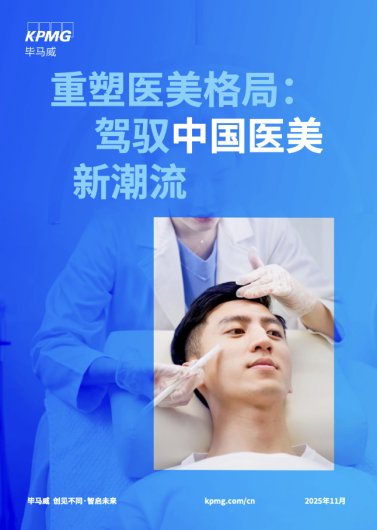
KPMG released the report “Reshaping the Medical and Aesthetic Landscape: Navigating New Trends in Chinese Medicine and Aesthetics” (hereinafter referred to as the “Report”) at the Expo. Based on the rapid development and structural changes of the Chinese medical and aesthetic market, the “Report” comprehensively analyzes the current status and development path of the industry from various dimensions such as market size, consumer groups, technological evolution, policy environment and future trends.
Jiang Liqin, KPMG's partner in charge of customer and business development in China, pointed out that China's medical and aesthetic industry is rapidly rising and has become the focus of global attention due to its huge market size, rapidly changing technology, and growing consumer demand. As one of the most promising markets in the world, China's medical and aesthetic industry is characterized by rapid growth, rising demand for medical and aesthetic treatments, and a growing number of young, tech-savvy consumers. Driven by policy and innovation, China's medical and aesthetic industry is reshaping the future of the global medical and aesthetic market. It is hoped that the “Report” released by KPMG will help market participants grasp the general trend and seize strategic opportunities.
Generation Z carried half of Jiangshan, light medicine, and beauty gradually became mainstream in the market
At present, China's medical and aesthetic industry has formed a market volume of 100 billion and is maintaining the world's leading growth rate. The growth potential is among the highest in the world. It is expected to reach trillion dollars by 2030. Behind this growth is the all-round evolution of consumer groups and demand preferences.
From the perspective of consumer groups, youthfulness and diversification have become core characteristics. According to the “Report” released by KPMG at the Expo this time, Gen Z (born in 1997-2012) contributed more than 50% of market demand among consumers who first received medical and aesthetic medicine in 2024. Unlike the previous generation that viewed medical and aesthetic programs as corrective treatments, Gen Z sees it as a daily form of self-care to prevent aging through early use of programs such as botulinum toxin and hyaluronic acid, as well as laser treatment or photorejuvenation. At the same time, demand from male consumers is rising, and light medical and aesthetic programs such as hyaluronic acid injections, botulinum toxin, microneedling, and intense pulsed light have become the first choice for men.
Under this trend, light medical/non-invasive/minimally invasive programs, such as botulinum toxin and hyaluronic acid fillings, are becoming increasingly popular among Gen Z. The “Report” shows that between 2018 and 2023, the market size of light medicine and beauty increased from RMB 50.2 billion to RMB 146 billion, and the number of consumers increased from 7.4 million to 23.5 million. Due to their lower risk, shorter recovery times, and easier access, there has been a significant shift in the market towards non-surgical programs.
Multiple factors drive industry growth, technology and service innovation become core competitiveness
The rapid development of China's medical and aesthetic industry is not the result of a single factor; it is inevitable that it is driven by multiple dimensions such as economy, population, technology, policy, and social culture.
Economic and demographic factors form the basic support. Yu Zilong, KPMG's managing partner in China's life sciences industry, said that on the one hand, China's urban middle income group has exceeded 400 million, and is expected to reach 800 million in the next ten years. The per capita disposable income continues to grow, changing medicine and beauty from luxury goods to optional consumption. On the other hand, China's increasing aging trend has promoted the popularity of anti-aging and skin repair programs, which have become a key factor driving the growth of the medical and aesthetic industry. Emerging middle-aged and elderly consumers are increasingly demanding medical and aesthetic projects. In particular, the rise of non-invasive medical and aesthetic products and services has become an important complement to the growth of the industry.
At the same time, medical and aesthetic providers continue to launch personalized service programs that meet the characteristics and target needs of consumers, and widely use advanced tools such as artificial intelligence skin analyzers to generate personalized medical and aesthetic recommendations. At the policy level, the State Drug Administration has simplified the approval process, shortened the clinical trial cycle from 60 working days to 30, and introduced regulations such as the “Regulations on the Supervision and Administration of Cosmetics” to regulate ingredient disclosure and product safety, providing a more favorable environment for industry innovation.
The geography of the market is also evolving at the same time. Demand for medicine and beauty is spreading from traditional first-tier consumer centers such as Shanghai and Beijing to emerging Tier 1 and 2 cities such as Chengdu, Chongqing, and Hangzhou. The low cost of living and the considerable disposable income of residents in these cities are becoming a new driving force for growth.
Innovation becomes the key to meeting challenges Digitalization and new models lead the future
Despite strong growth, China's medical and aesthetic industry is currently facing multiple challenges such as safety compliance, talent shortages, and consumer exodus. The “Report” points out that medical beauty, remote consultation, and business model innovation will become the main ways for the medical and aesthetic industry to achieve rapid and intelligent growth.
In terms of service models, with the gradual spread of 5G and satellite broadband networks in small and medium-sized cities and rural areas, the medical and aesthetic service model will gradually shift from a centralized model of first-tier urban clinics to a digital decentralized model covering small and medium-sized cities and rural areas. Some platform-based service companies allow users to receive personalized medical and aesthetic advice remotely through integrated artificial intelligence consulting services. At the technical level, regenerative medicine is becoming the new frontier of industry growth. Cell-free therapy, represented by stem cell technology and exosomes, provides a new path for anti-aging and skin regeneration by promoting collagen production, repairing damaged tissue and stimulating hair growth.
In terms of business models, in order to improve customer stickiness and cash flow stability, subscription-based beauty solutions may become a new type of business model in the medical and aesthetic industry in the future. By providing monthly or quarterly services such as injections, facial care, and regenerative medical and aesthetic packages, beauty institutions can establish a continuous closed loop of services and achieve innovation and upgrading of the business model. Furthermore, as demand for medical and aesthetic services continues to grow in Southeast Asia, Chinese medical and aesthetic companies are expected to expand their business into this market.
The “Report” released by KPMG at the Expo is a systematic review of the development context of the industry and accurately grasps the development trends of policy, consumption and technology. With the rapid expansion of business, optimization of the policy environment, and structural changes in consumer groups, China's medical and aesthetic industry is moving towards a more mature, standardized and intelligent stage of high-quality development. In the future, with CIIE as a global sharing platform, China's medical and aesthetic industry is expected to further activate the potential of domestic demand while strengthening international collaboration and leading technological innovation, inject new growth momentum into the global beauty and health industry, and help implement the “Healthy China 2030” strategy.