
The “AI bubble” is raging, Goldman Sachs doesn't believe the rumor
As the valuation of artificial intelligence (AI) related companies soared, large-scale AI investments, and the AI ecosystem became increasingly closed, concerns about the AI bubble resurfaced.
The level of fervor in AI investment is unprecedented. According to reports, the total valuation of the world's ten unprofitable AI startups has skyrocketed by nearly 1 trillion US dollars in the past 12 months, setting the fastest pace of wealth expansion in history. Meanwhile, since this year, they have jointly attracted more than 200 billion US dollars in venture capital, accounting for two-thirds of the total annual investment of US VCs. However, almost all of them are in the red.
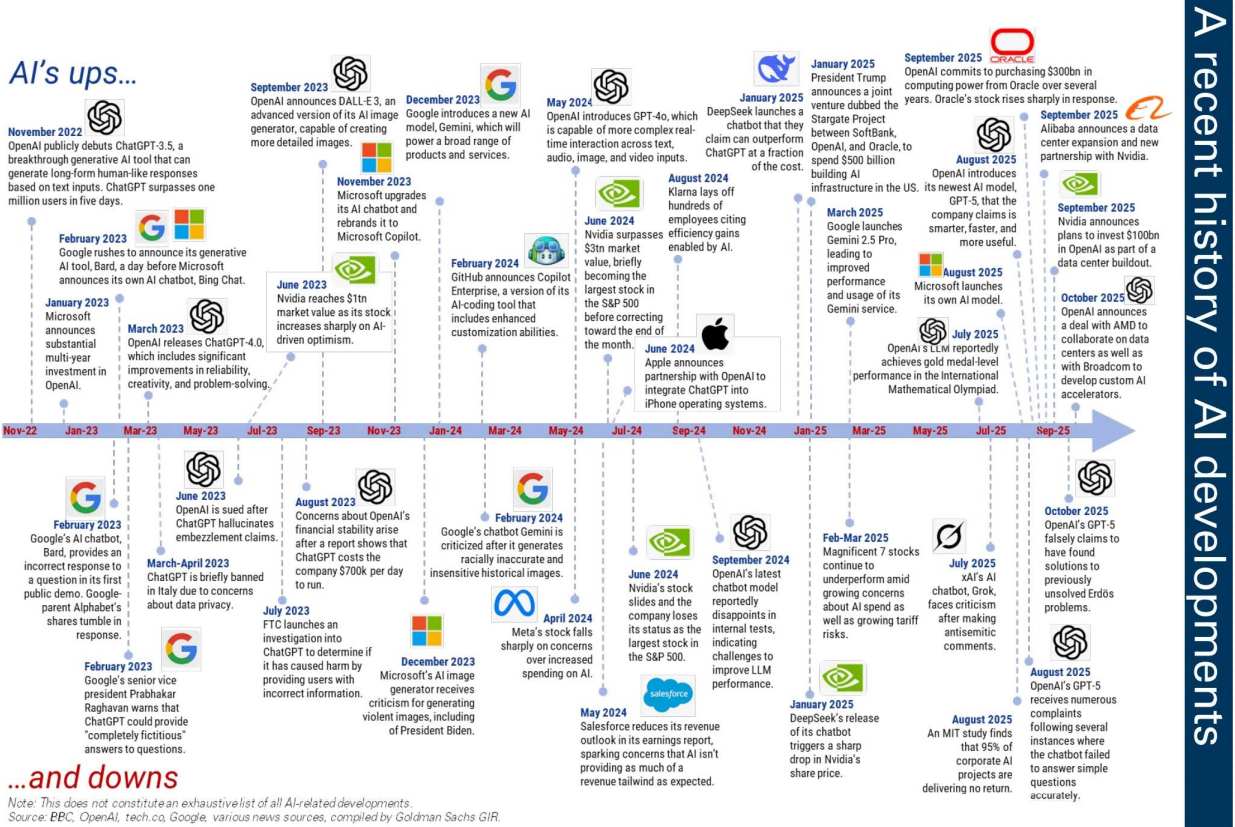
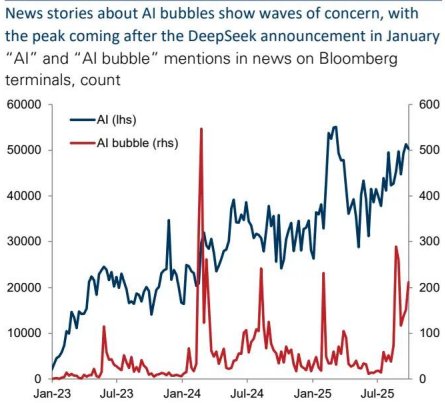
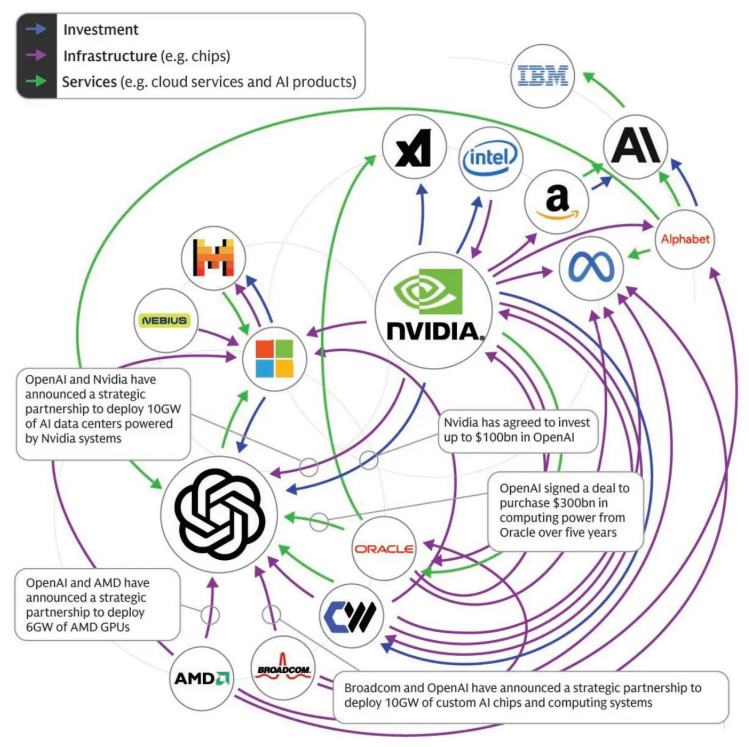
Concerns about the AI bubble have resurfaced, and it can be said that they are stronger than ever. The valuation of many companies involved in the AI field has risen significantly, investment in AI construction continues to increase dramatically, and the AI ecosystem is becoming increasingly circular. Model companies, infrastructure providers, and hyperscale enterprises have signed agreements with each other. These agreements blur the boundaries between customers, suppliers, and capacity providers. Against the backdrop of these developments and growing concerns, that is, the rise in large technology stocks may have overshadowed signs of weakness in the wider market, concerns about whether the AI bubble is reasonable have become the focus of the market.
Earlier, major US banks reported record quarterly results — both trading activity and receivables hit new highs, partly fueled by the artificial intelligence (AI) boom. However, many Wall Street executives have warned that the AI industry may be falling into excessive fanaticism. Meanwhile, Bank of England and IMF Managing Director Kristalina Georgieva also expressed concern this month about the boom in US stocks driven by the AI boom.
Furthermore, the Zhitong Finance App learned that according to Bank of America's latest fund manager survey, as artificial intelligence (AI) concept stocks experienced a round of strong growth this year, the proportion of global fund managers who think this sector has fallen into a bubble reached a record high. In the October survey, about 54% of respondents said that technology stocks are currently overvalued; just last month, nearly half of respondents were negative about concerns that “technology stocks are overvalued.” At the same time, concerns about overvaluation of global stock markets also peaked in this survey.
So is this concern justified or excessive?
After several years of optimism and continued record highs in the stock market, some investors are now expressing concern about the US stock market bubble, comparing it to the capital-spending boom and subsequent collapse during the internet bubble.
In response, the Goldman Sachs team said that although they have all seen some worrying factors, they generally believe that the US tech industry has not yet fallen into a bubble (at least not yet), but they are more concerned about the huge gap between open market valuations and (higher) private equity market valuations.
Goldman Sachs stock strategists pointed out that although some characteristics of the current period are similar to past bubbles, and the circularity of transactions is worth being wary of, the level of open market valuations and capital market activity is still below the peak of the online stock bubble period. He also pointed out that Mag7 continues to generate excess free cash flow, make share repurchases and pay dividends — behavior that was rare during the cyber stock bubble. As a result, he seems less inclined to call the current open market situation a bubble, although he admits that “artificial intelligence may not have become a bubble yet.” Byron Deeter, partner at venture capital firm Bessemer Venture Partners, is also more optimistic about the boom in AI capital spending.
However, Sequoia Capital analyst David Cahn has a different opinion. He believes that only general artificial intelligence (AGI) can prove the rationality of large-scale data center construction by 2030, while still optimistic about the many opportunities for private AI application companies. And NYU professor Gary Marcus is still skeptical about the technology itself, at least in its current form.
Lauren Taylor Wolfe, managing partner of Impactive Capital, also pointed out that the AI industry is in a bubble and will eventually burst. She compared the current AI investment frenzy to the internet bubble period in the late 1990s. Her core concern is a serious disconnect between investment and return in AI.” Trillions of dollars of capital are being planned to be invested in the AI field, and the Big Seven tech companies are only generating hundreds of billions of dollars in free cash flow. Who can prove that the next five years will generate trillions of dollars in profits? This is simply unattainable; it's not true from a mathematical point of view.”
Despite this, Goldman Sachs believes that the current rise — particularly the strong performance of technology stocks — “has so far been mainly driven by fundamental growth rather than irrational speculation.”
So how should investors lay out?
Goldman Sachs concluded that opportunities in the tech industry still exist, but diversification is a smart move. In the technology sector, Goldman Sachs analysts believe that stocks that can benefit from potential AI disruptions and underappreciated growth stories are valuable, and see opportunities at every level of AI infrastructure, platforms, and applications; at the same time, they also believe that the investment theme of leading semiconductor companies remains stable.
CahnCahn, a partner at Sequoia Capital, also said he sees huge opportunities in AI application companies, which mainly exist in today's private market and “are expensive, but the business model is of high quality.”
Deutsche Bank, on the other hand, emphasized that it is almost impossible to identify a bubble because no one can agree on the exact definition of “asset price significantly higher than intrinsic value.” Historical experience shows that bubbles are not linear; they usually develop in several rounds of ups and downs. Deutsche Bank concluded that the market may remain “irrational” longer than investors remain solvent. The bank advises investors to adopt a long-term holding strategy to obtain the risk premium required to cover equity investment risks.