
IPO News | Hantian Tiancheng once again submitted to the Hong Kong Stock Exchange as the world's first manufacturer to achieve mass external supply of 8-inch silicon carbide epitaxial chips
The Zhitong Finance App learned that according to the Hong Kong Stock Exchange's disclosure on October 14, Hantian Tiancheng Electronic Technology (Xiamen) Co., Ltd. (hereinafter: Hantian Tiancheng) has once again submitted a listing application to the Hong Kong Stock Exchange, with CICC as the sole sponsor. The company submitted a statement to the Hong Kong Stock Exchange on April 8. As mentioned in the prospectus, Hantian Tiancheng is the world's first manufacturer to achieve mass external supply of 8-inch silicon carbide epitaxial chips, and the first manufacturer in China to commercialize mass supply of 3-inch, 4-inch, 6-inch, and 8-inch silicon carbide epitaxial chips.
According to the prospectus, Hantian Tiancheng is a leader in the global silicon carbide (SiC) epitaxial industry. The company is mainly engaged in R&D, mass production and sales of silicon carbide epitaxial chips. According to Insight Consulting's report, since 2023, in terms of annual sales, Hantian Tiancheng has been the world's largest supplier of silicon carbide epitaxial films, with a market share of over 30% in 2024.
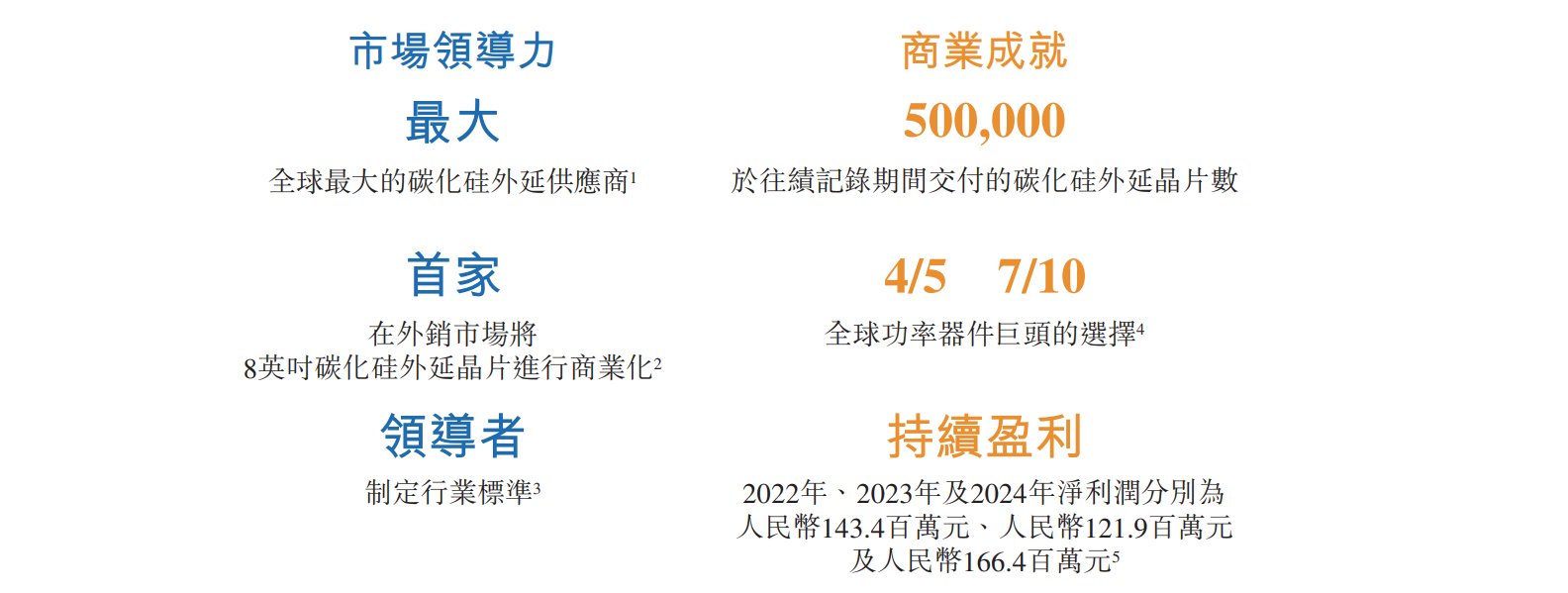
Hantian Tiancheng took the lead in writing and formulating the world's first and currently only silicon carbide epitaxial International Semiconductor Equipment and Materials Industry Association (SEMI) industry standard. In 2024, Hantiancheng sold more than 164,000 silicon carbide epitaxial chips through epitaxial chip sales and OEM models; during the track record period, the company delivered a total of more than 500,000 silicon carbide epitaxial chips.
Hantian Tiancheng has a broad and loyal customer base. During the track record period, the company had 123 customers. According to Insight Consulting's report, 4 of the world's top 5 silicon carbide power device giants and 7 of the top 10 global power device giants are Hantiancheng's customers. Power devices prepared using silicon carbide epitaxial chips have stable performance in high temperature and high power applications. Hantiancheng's customers use its silicon carbide epitaxial chip manufacturing products (usually power devices), which are suitable for a wide range of downstream industrial application scenarios, such as electric vehicles, charging infrastructure, renewable energy, energy storage systems, and emerging application scenarios, such as home appliances, AI computing capabilities, and data centers, smart grids, and eVTOL.
As mentioned in the prospectus, Dr. Zhao Jianhui, the founder of Hantian Tiancheng, is a top scientist in the silicon carbide industry. He has focused on silicon carbide technology development research and development for more than 35 years, and is the first researcher in the world to be selected as an IEEE Fellow (IEEE Academician) for making significant contributions to silicon carbide technology research and industrial application.
In terms of market opportunities, according to the Insight Consulting report, in terms of open market revenue, the five largest silicon carbide epitaxial foundries occupied 93.4% of the global market share in 2024, and their concentration significantly surpassed the substrate field and power device sector. The market share of the five major manufacturers in the latter two fields was about 80%. In this context, the silicon carbide epitaxial foundry market will usher in significant growth. According to the Insight Consulting report, more and more power device giants prefer to cooperate with third-party silicon carbide epitaxial foundries rather than produce their own, and this trend will become more obvious starting in 2021.
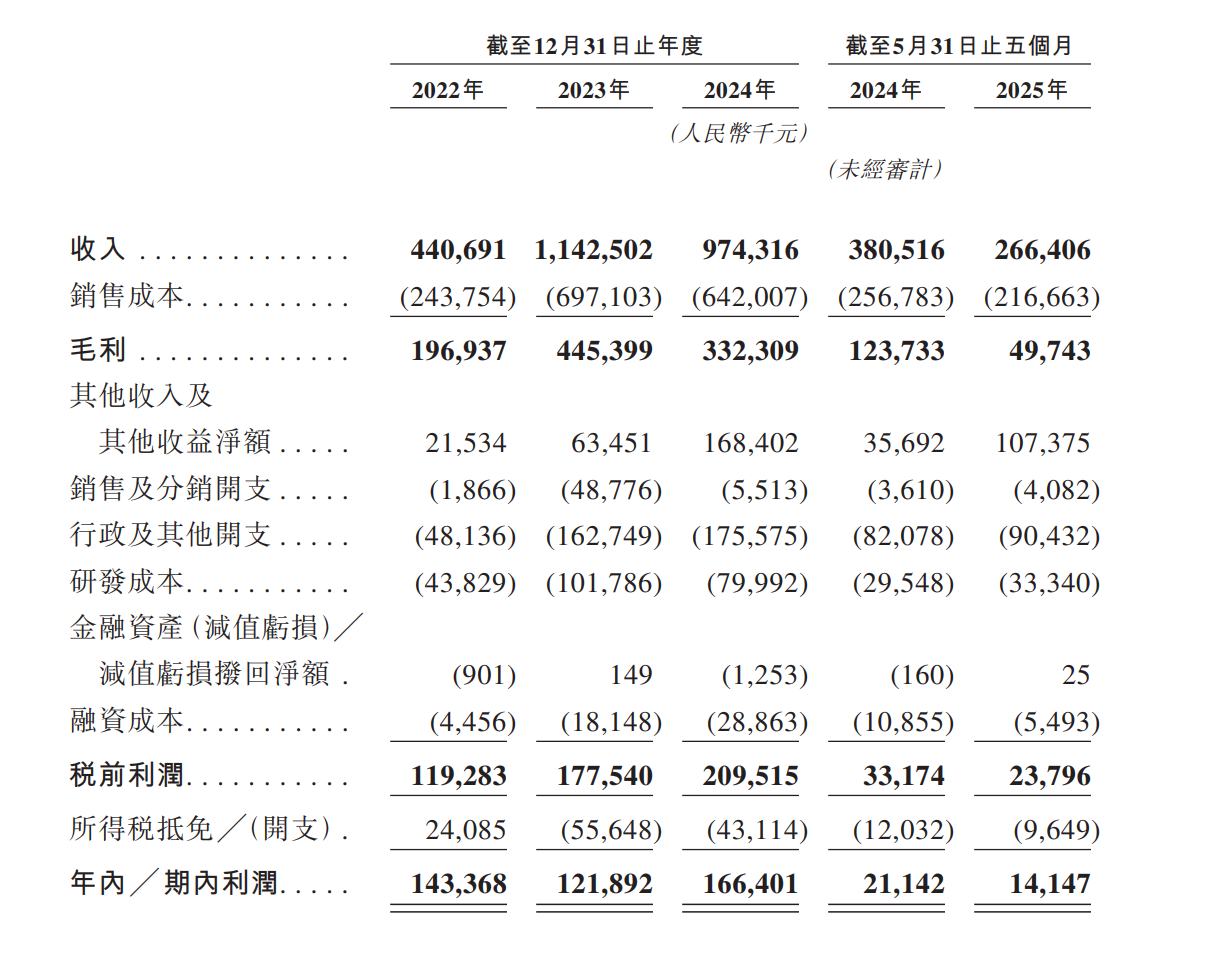
On the financial side, in the five months ended May 31 in 2022, 2023, 2024, and 2025, Hantian Tiancheng's revenue was approximately RMB 441 million, RMB 1,143 million, RMB 974 million, and RMB 266 million respectively. In the same period, profits for the year/period were approximately RMB 143 million, RMB 122 million, RMB 166 million, and RMB 14 million, respectively.
According to Hantian Tiancheng's prospectus or existing risk factors section, fluctuations in raw material prices or supply shortages may interfere with the company's supply chain, increase production costs, cause the company to delay delivery of products to customers, and affect market prices. This will further affect the business, financial situation and operating performance.