
Motorola Strikes Back Sample: How Lenovo Is Bringing Old Phones Back to Growth
At the recently concluded International Consumer Electronics Fair (IFA) in Berlin, Germany, Motorola unveiled a number of new products, completely refreshing the smartphone product line.
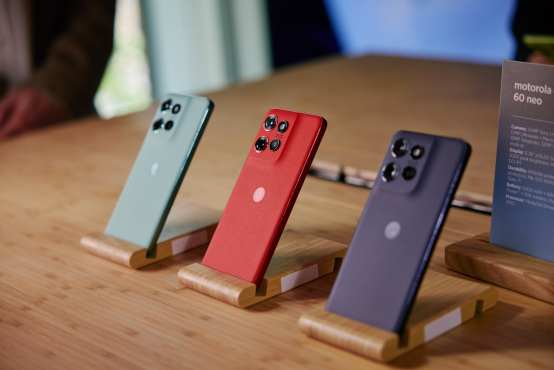
According to the reporter's live observation, the new Motorola Edge and Moto G series smartphones cover different sizes and design styles, and are equipped with the core features that users are most looking forward to. From the lightweight and stylish Motorola Edge 60 Neo, to the Moto G06 with an oversized screen, to the Moto G06 Power, which has the largest battery in the industry, Motorola provides more diverse choices for consumers with different lifestyles and usage preferences.
According to the latest IDC report, in the second quarter of 2025, Lenovo Motorola ranked 8th in global revenue share. In overseas markets other than China, its revenue has remained fourth in the world for several consecutive quarters. From the technological totem that invented the mobile phone to its strong recovery after years of silence, Motorola's path back is legendary and has become a classic story that can be written in the smartphone industry.
This time in Berlin, we had an in-depth conversation with Fabio Capocchi, vice president of Lenovo Group and general manager of Motorola EMEA (Europe, Middle East and Africa). Through our conversation with Fabio Capocchi, we were able to learn more about how Motorola, an established mobile phone giant, is setting a new flag in the smartphone industry by deepening technology, accurately positioning the global market, and betting on the future of AI.
Building differentiated competitiveness
Motorola's return began with a reanchoring of “technology leadership.”
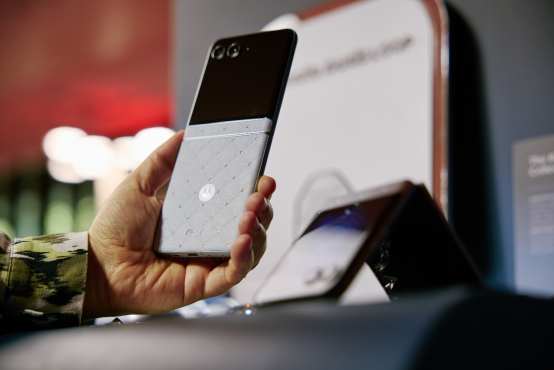
As the first smartphone and a pioneer in global 5G activities, Motorola's technical genes have never faded. Since 2018, the company has clearly used technology as its anchor, not only bringing the classic Razr brand back to the market, connecting new and old users across generations in a folding form, but also building the differentiated advantage of “high appearance+strong performance” through detailed polishing.
In the field of design, Motorola's “beyond device” concept is particularly noteworthy. Fabio Capocchi explained that the exclusive global agreement with Pantone allows every Motorola product to carry the popular colors of the year, and the colors have been professionally verified to last 18-24 months on the market, making it a unique label for visual competitiveness. In terms of material selection, from plain leather and acetate fiber to sports car-grade Alcantara materials, Motorola not only balances touch and aesthetics, but also adheres to the principle of sustainability. All products are spillproof/waterproof, and some meet military durability standards, firmly grasping the intersection of practicality and high-end sense.
The new model released at IFA this time is a good reflection of the above technology and product concept. As the lightest and thinnest model in its class, the Motorola Edge 60 Neo is equipped with IP68/69 protection and military certification, and is equipped with a 6.4-inch 3,000-nit high-brightness screen; its professional triple camera system includes a 10 megapixel telephoto lens, which supports 3x light conversion and 30x super zoom, making it the only model equipped with telephoto at the same price. The Moto G06 series, on the other hand, uses an ultra-large 7,000mAh battery (Moto G06 power), a 50 megapixel main camera system supported by AI algorithms, a plain leather body, and IP64 protection to meet users' core requirements for battery life and durability.
From regional breakthroughs to global blossoms
Motorola's global return is a battle of positions fought step by step.
Since joining the Lenovo Group in 2014, Motorola's strategy contracted for a while and left many markets. In 2018, Motorola relaunched its global expansion, and Europe became a “must win first” market.
“A lot of people see EMEA (Europe/Middle East/Africa) as the same market. In fact, it covers 127 countries and 87 languages.” Fabio Capocchi said, “Within Europe, even with the euro, we are still facing 14 different languages, and each country has different tax systems and consumption habits. ”
According to reports, after analyzing the market, Motorola decided, based on the characteristics of its product portfolio at the time, to first move in from Eastern Europe, where product acceptance was higher, to gain 17% of the market share in Poland and lead the high-end market. Subsequently, with a deep understanding of “fashion and quality,” Motorola successfully entered the design-focused southern European markets such as Italy (15% market share) and Spain, and also ranked in the top three in the UK with a 6% market share. Currently, it is penetrating into markets such as France at an accelerated pace.
According to Canalys data, as of the second quarter of 2025, Motorola had a 5% share of the European smartphone market, ranking fourth, with shipments of 1.5 million units.
Motorola is also making steady progress in emerging markets. The African market is divided into four major regions, and the South African business has been restarted and laid out in Egypt; in the Middle East, Motorola has become the fastest growing brand in Saudi Arabia through cooperation with Alat and the construction of local factories. This gradient strategy “from open markets to mature markets to emerging regions” has enabled it to achieve strong growth from point to point on a global scale.
Faced with increasingly fierce market competition, Fabio Capocchi emphasized that the market will always have a winning formula: let users choose you (X) because of a certain value (Y) you provide. This is exactly what Motorola has been doing. “It's not just about fighting hard against competitors, but for end users to clearly understand why we're in the mobile business — we're here to provide the best digital experience, the best product, the best color, and the best feel, so they can hold it in their hands and proudly display it to their friends. ”
AI is the future
In the face of the AI wave, Motorola is trying to build its own differentiating advantage.
Fabio Capocchi said, “AI is the future. The topic surrounding AI may be overrated in the short term, but it's definitely underrated in the long run. AI is like the moment the internet enters our lives.”
Currently, Lenovo's AI strategy covers multiple devices such as PCs, mobile phones, and tablets, forming a unified framework that allows users to obtain consistent services across different terminals. On the smartphone side, Moto AI brings a wealth of innovative features: quick recall through voice, gestures, or dedicated keys, supports avatar generation, sketch conversion, voice creation, etc., and can even link with Google Gemini to enable scenario-based services such as circle selection search and intelligent assistant interaction.
Fabio Capocchi emphasized that the ultimate goal of AI is not to disrupt devices, but rather to reinvent the way it interacts — from a “need-based” passive response to a “predictive” active service. For example, users don't need to open the app manually; they only need to say “I want to go home” and the device can link to the ride-hailing service; the system can also anticipate needs and reserve vehicles for users in advance. This kind of thinking “beyond the function of the device itself” is driving Motorola's transformation from a hardware manufacturer to an “intelligent experience service provider.”
From technological revival to global implementation, to forward-looking layout in the AI era, Motorola's return was not only a brand counterattack, but also confirmed the industry truth of “user-centered and innovation-driven”. In the fiercely competitive smartphone market, this established company is continuing to write its own new legend with solid product strength and flexible strategies.