
From opening a position to washing the market for a second time: Jiuyuan Gene (02566) capital trading techniques and the 100 billion imagination of simeglutide
On August 18, the Hong Kong stock biotechnology sector revealed the “Level 2” myth — Jiuyuan Gene (02566) hit HK$16.29 in intraday, up more than 218% from a low of HK$5.119, and its market capitalization surpassed HK$30 billion. This wave began with an epic rise in early June, putting the GLP-1 drug-focused BioTech company on the cusp of capital.
Behind the rush of funds is the weight loss indication for the blockbuster drug simeglutide biosimilar (JY29-2), which is to report production in the first half of 2026 (that is, submitting a drug marketing application). Regarding the market layout and channel planning of simeglutide, the company stated that it will strengthen its first-mover advantage in the hospital market, expand accessibility through the decline in pharmacy networks, and cooperate with e-commerce platforms to accelerate brand building and user reach.
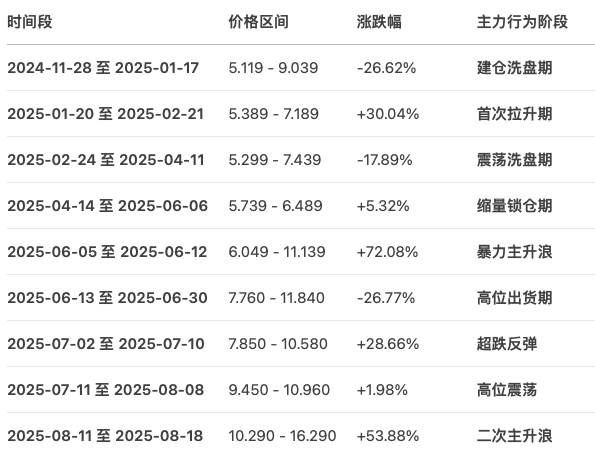
It is worth noting that undercurrent surges beneath the feast. From November 2024 to August 2025, Jiuyuan Gene completed a classic “open a position - wash the plate - pull up - ship - raise it twice” capital game. Is this capital frenzy fueled by innovative drug expectations a discovery of value or fueled by capital?
Position opening period: High amplitude oscillation to restructure the chip structure
According to the Zhitong Finance App, Jiuyuan Gene's position opening period was from November 28, 2024 to January 17, 2025. During this period, funds were drastically shaken to restructure the chips.
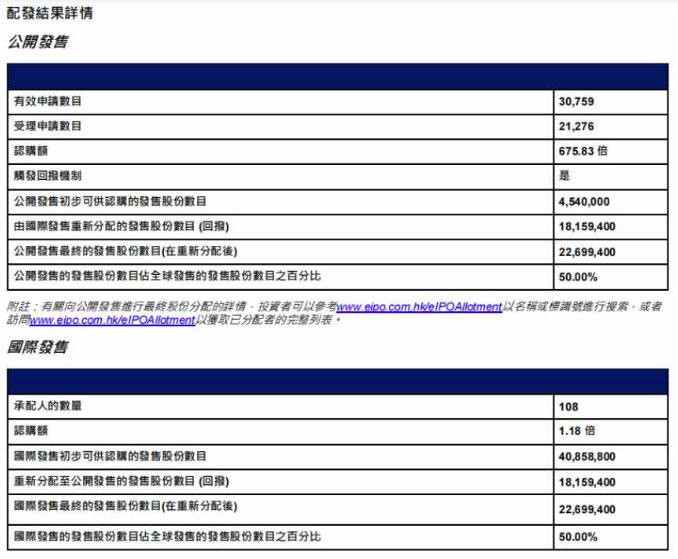
I still remember that Jiuyuan Gene's IPO was quite popular. According to public information, the company sold 45.398,800 shares globally, accounting for 50% of the public sale (after redistribution) and 50% of the international sale (after reallocation); of these, the public sale was subscribed 675.83 times, and the international sale was 1.18 times subscribed. The net proceeds from the global offering were approximately HK$485 million.
Due to the public sale, part of the subscription ratio was more than 100 times, triggering the refund mechanism, Jiuyuan Gene transferred back 18.1594 million shares from the international sale to the public sale. As a result, the retail shareholding ratio surged, and there was a lack of institutional ballast stones. The market on the first day showed that due to a sharp drop in Jiuyuan Gene's stock price, a large number of chips were forced to stop losses, and it closed down 38.41% on the same day.
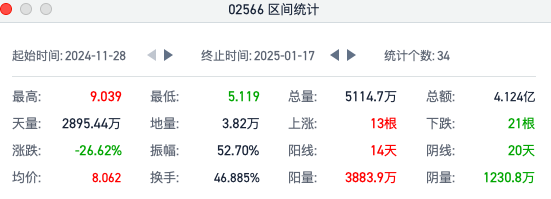
During the period of opening a position and washing up the market, funds were attracted through high-amplitude fluctuations. First, by creating a decline of 26.62%, combined with a high amplitude of 52.7%, a “sharp fluctuation+downturn” combination was presented, forcing retail investors to leave the market. A positive amount of 388.39 million appeared at a low level, and a negative dose of 1.32 million appeared at a high level, forming a “low volume absorption fund+high reduction” model. The turnover rate is 46.885%, chips are fully exchanged, and the main force attracts funds at low cost. The average price was HK$8.062, and the main position opening cost was about HK$7.5-8.5, leaving room for more than 50% increase.
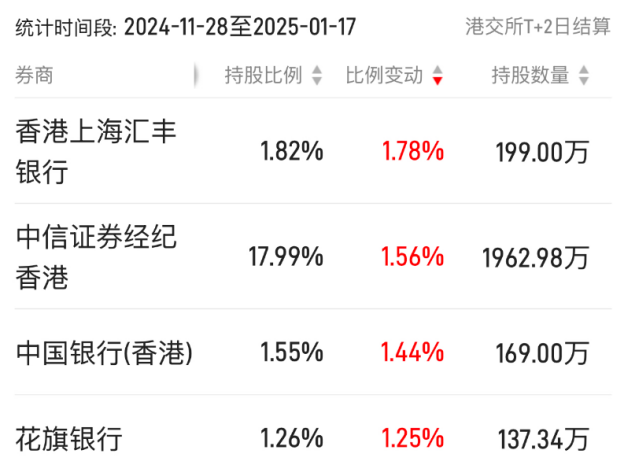
The main fund-raising seats during the position opening period were Hong Kong and Shanghai HSBC, CITIC Securities Broker Hong Kong, Bank of China (Hong Kong), and Citibank, respectively. Their shareholding ratios increased by 1.78%, 1.56%, 1.44%, and 1.25%, respectively.
Washing period: chip rebalancing
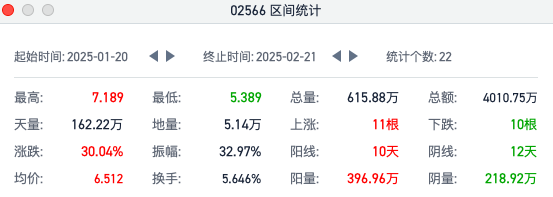
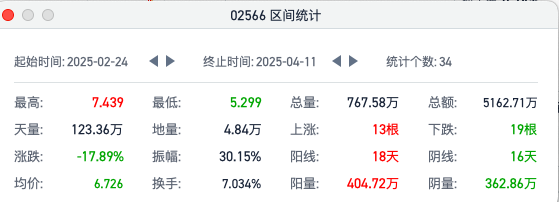
Chip rebalancing during the restructuring period can be divided into two stages: the first is the initial lift (January 20 to February 21), leaving the cost zone to test market acceptance; the second is the volatile market wash period (February 24 to April 11), which saves energy for a second lift.
First, during the initial upward period, the market showed a moderate volume breakthrough. The increase during this period was 30.04%, but the turnover was only 5.646%, indicating that capital was highly controlled, with positive volume accounting for 64.5%. Capital intervention was obvious during the rise. At this point, it was tested repeatedly at the HK$7.0 mark, and after breaking through, it quickly rose to HK$7.189, eliminating costs. It is worth noting that the turnover rate is low, which indicates that capital has not been disbursed on a large scale; it is simply a matter of cost reduction.
During the period of fluctuation and restructuring, the market showed a contraction and correction, and yin and yang were interlaced. At this point, the 34-day trading day decline was only 17.89%, with an amplitude of 30.115%. The capital traded time for space. The positive line was 18 days and the negative line was 16 days long and short. The turnover was 7.034%, up from the previous stage, showing some financial positions. Furthermore, there is a divergence between volume and price, with a daily volume of 1,233,600 and a land volume of 48,400, and capital “throwing high and absorbing low”, forming a “high point volume induces more volume+low point shrinkage to wash dishes”. The positive amount is 4,047,200 and the negative amount is 3,628,600. The capital is increased when it rises and shrinks when it falls to maintain stable chips.
During this period, there was a steady movement of almost a small amount of capital raised. The top three buying seats were Hong Kong and Shanghai HSBC, Tiger Securities Hong Kong Global and BNP Paribas, which increased their shareholding ratios by 0.6963%, 0.3804%, and 0.3417%, respectively.
Main rise and high level delivery: lock-up, attract capital, and distribute at a high level
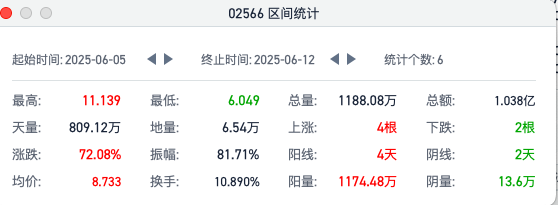
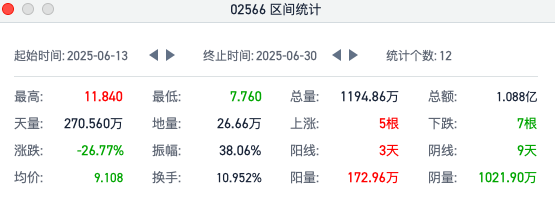
After gaining momentum, Jiuyuan Gene ushered in a major upsurge and shipping period. This stage can be divided into three stages: hedging preparation period (April 14 to June 5), main rise (June 5 to June 12), and shipping period (June 13 to June 30).
In the first stage, during the hedging preparation period, the turnover rate plummeted to 2.7%. The average daily turnover was only 83,300 (225,800 in the previous period). The signs of hedging were obvious.
What followed was a major rise in violence, and the market showed an extreme trend of emptying. Specifically, it soared 72.08% in 6 days, and the positive volume accounted for 98.85%. There was no negative correction, and volume and price match. The exchange rate was 10.89%, and the chips were loose for a short period of time, but there were no large-scale shipments. The average price of 8.733 has doubled compared to the cost area, and the capital is abundant.
The third stage is the delivery period for high-ranking chips. The price range at this stage was a high of 11.84 and a low of 7.76, a decrease of 26.7% and an amplitude of 38.06%, showing a cliff-style downward trend. Meanwhile, after 9 days of the negative line and 3 days of the positive line, bears have taken control of the situation, and the funds have entered the stage of distributing chips. The turnover rate is 10.952%, which indicates active chip exchanges.
Over-fall rebound and second main upward wave: chip redistribution after technical rebound to meet the acceleration period of the main upward wave
After that, Jiuyuan Gene experienced a sharp rebound in technology (July 2 to July 10), and funds were redistributed at a high level (July 11 to August 8) to prepare for the main upward wave accelerator (August 11 to August 18).
During the overrun rebound, the price rose by 28.66% from HK$7.85 to HK$10.58. Some of the losses were quickly recovered in the short term. Positive volume of 4,016,200 (accounting for 90.7%) compared with negative volume of 410,400 (9.3%), volume during rise (2.604 million daily volume), and extreme contraction during decline (land volume 77,400), showing signs of capital recovery from the main forces. Furthermore, the turnover rate at this stage is 4.058%: a significant decrease from the previous stage (10.952%), indicating a reduction in selling pressure.
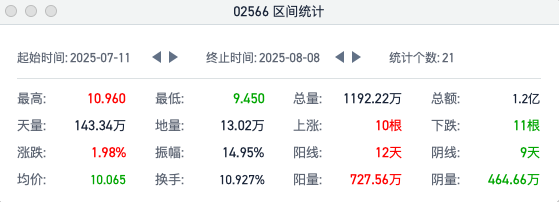
After a sharp decline and rebound, funds restructured floating funds through shocks to prepare for future direction choices. At this point, the price operating range was up to 10.960 and the lowest to 9.450 (amplitude 14.95%). The overall pattern showed a high-level box oscillation pattern. The rise and fall rate was only 1.98%, and long and short were at an impasse. Furthermore, in the 12-day positive line compared to the 9-day negative line, the bulls had a slight advantage but did not make a breakthrough, indicating that the main players are exchanging time for space to absorb pressure. Positive volume of 7.275,600 (accounting for 61%) compared to negative volume of 4.646,600 (39%): when rising, volume prevailed, but there was no breakthrough in daily volume (maximum of 1,4333,400 thousand).
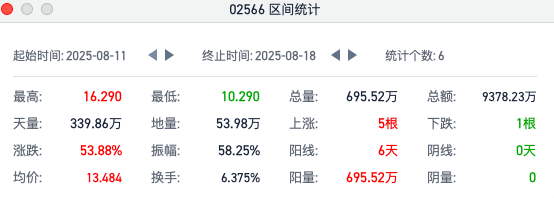
After the clean-up phase, the second main upswing starts. Looking at the market, there were 6 consecutive positive lines, an increase of 53.88%, and the price increased from 10.29 to 16.29, showing an extreme bearish rise, completely dominated by bulls. The positive volume is 6.955,200, and the volume can be amplified when it rises (3.3986 million per day), and the capital seems to have entered the market firmly. The turnover rate of 6.375% is down from 10.927% in the previous period, but prices have risen sharply, capital may be locked up and raised, and floating capital is scarce in the market.
Simply put, from the intense turbulence during the opening period, to the emptying market where positions were locked up, to the cliff-style decline of high-ranking distributions, the epic rise was finally completed with a second major upswing. In terms of market characteristics, low volume absorption, contraction and restructuring, lock-up and high-volume shipping, etc. are interlaced, in line with subtle changes in turnover rate and capacity, highlighting the high ability of capital to control the market, and the redistribution of chips after an overrun decline and rebound.
It is worth noting that the top three buying seats in the past month were Citibank, Hong Kong and Shanghai Bank, and BNP Paribas, which increased their shareholding ratios by 0.5555%, 0.3661%, and 0.3234%, respectively, with shareholding ratios of 2.45%, 4.84%, and 0.6059%, respectively.
Multi-faceted resonance creates a path of “counterattack”
The Zhitong Finance App believes that this round of growth in Jiuyuan Gene may not be simply financial speculation, but rather the result of a combination of fundamental breakthroughs, rotation in the pharmaceutical sector, and value revaluation after a long period of undervaluation in the market.
First, the company's meglutide biosimilar (JY29-2) opens up a market space of 10 billion dollars. Earlier, at the performance exchange meeting on March 27, the relevant person in charge of Jiuyuan Gene mentioned that the weight loss indications will be reported for the first half of 2026 (that is, submitting a drug marketing application).
In addition, Jiuyuan Gene also authorized the overseas rights of simeglutide to other domestic pharmaceutical companies: it signed an exclusive licensing cooperation agreement with Kexon Biotech in major Latin American countries; it signed key terms of the product license agreement with Fosun Pharmaceutical, granting Fosun Pharmaceuticals exclusive clinical development, registration and commercialization rights for various products including simeglutide in the Middle East, North Africa, sub-Saharan Africa and some ASEAN countries. It is expected that new drug applications for simeglutide will be submitted to Brazil and Saudi Arabia within 2025.
Recently, a number of brokerage firms have released reports and expressed positive views on weight loss concept stocks. The GLP-1 circuit may become a new capital favorite.
Dongwu Securities believes that at a compound growth rate of 20%, the GLP-1 drug market is expected to exceed 150 billion US dollars in 2030. It is optimistic about opportunities for domestically produced oral diet pills, and believes that the GLP-1 track for innovative drugs is significantly underestimated.
Everbright Securities believes that as domestically produced diet pills are about to be commercialized, sales capacity will become a major factor in considering the future competitive advantage of enterprises, and companies with leading R&D progress and strong sales execution will occupy an advantageous position in commercial competition. As terminal demand continues to expand, the entire GLP-1 industry chain will continue to enter an upward boom channel.
It can be seen from this that the surge in Jiuyuan Gene is inseparable from the resonance effects of “product growth potential+racetrack trend+valuation repair”.
In summary, Jiuyuan Gene's capital feast was not only a victory in “revaluation”, but also the ultimate interpretation of a “game between market sentiment and capital.” Behind the 218% increase from HK$5.119 to HK$16.290, there was a perfect resonance between fundamental breakthroughs, sector rotation, and main trading.