
Taylor Wimpey (LON:TW.) Will Pay A Dividend Of £0.0467
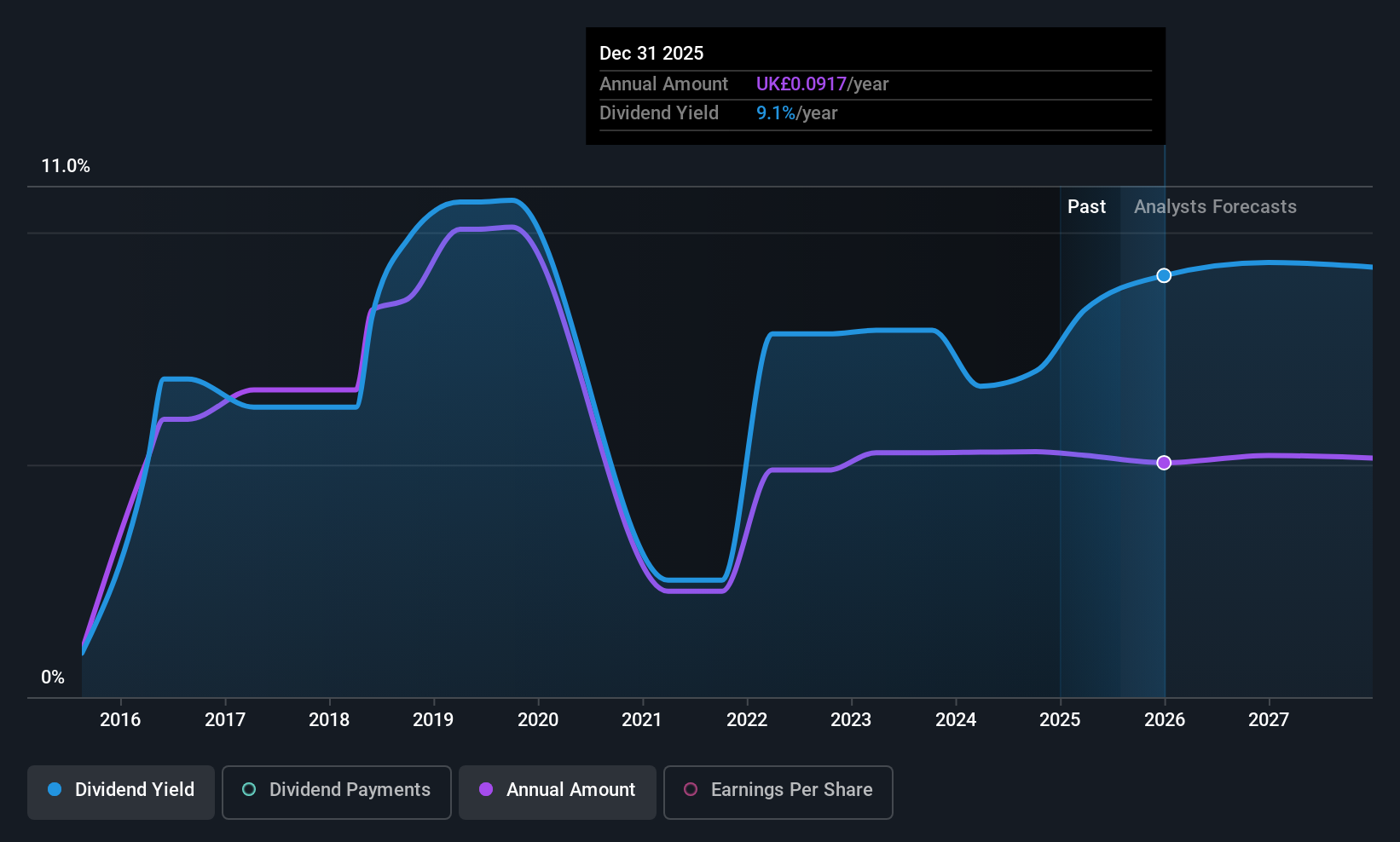
Taylor Wimpey plc (LON:TW.) has announced that it will pay a dividend of £0.0467 per share on the 14th of November. This means the annual payment is 9.4% of the current stock price, which is above the average for the industry.
Taylor Wimpey's Payment Could Potentially Have Solid Earnings Coverage
Impressive dividend yields are good, but this doesn't matter much if the payments can't be sustained. Before making this announcement, the company's dividend was much higher than its earnings. Without profits and cash flows increasing, it would be difficult for the company to continue paying the dividend at this level.
The next 12 months could see EPS growing very rapidly. If the dividend continues along recent trends, we estimate the payout ratio could reach 84%, which is on the higher side, but certainly feasible.
Check out our latest analysis for Taylor Wimpey
Dividend Volatility
While the company has been paying a dividend for a long time, it has cut the dividend at least once in the last 10 years. The dividend has gone from an annual total of £0.0156 in 2015 to the most recent total annual payment of £0.0946. This works out to be a compound annual growth rate (CAGR) of approximately 20% a year over that time. Dividends have grown rapidly over this time, but with cuts in the past we are not certain that this stock will be a reliable source of income in the future.
Dividend Growth Potential Is Shaky
With a relatively unstable dividend, it's even more important to evaluate if earnings per share is growing, which could point to a growing dividend in the future. Taylor Wimpey's EPS has fallen by approximately 28% per year during the past five years. A sharp decline in earnings per share is not great from from a dividend perspective. Even conservative payout ratios can come under pressure if earnings fall far enough. However, the next year is actually looking up, with earnings set to rise. We would just wait until it becomes a pattern before getting too excited.
We're Not Big Fans Of Taylor Wimpey's Dividend
To sum up, we don't like when dividends are cut, but in this case the dividend may have been too high to begin with. The company isn't making enough to be paying as much as it is, and the other factors don't look particularly promising either. Considering all of these factors, we wouldn't rely on this dividend if we wanted to live on the income.
Market movements attest to how highly valued a consistent dividend policy is compared to one which is more unpredictable. Still, investors need to consider a host of other factors, apart from dividend payments, when analysing a company. For example, we've identified 3 warning signs for Taylor Wimpey (1 is significant!) that you should be aware of before investing. If you are a dividend investor, you might also want to look at our curated list of high yield dividend stocks.
Have feedback on this article? Concerned about the content? Get in touch with us directly. Alternatively, email editorial-team (at) simplywallst.com.
This article by Simply Wall St is general in nature. We provide commentary based on historical data and analyst forecasts only using an unbiased methodology and our articles are not intended to be financial advice. It does not constitute a recommendation to buy or sell any stock, and does not take account of your objectives, or your financial situation. We aim to bring you long-term focused analysis driven by fundamental data. Note that our analysis may not factor in the latest price-sensitive company announcements or qualitative material. Simply Wall St has no position in any stocks mentioned.