
Meme stock frenzy sweeps through US stocks: retail investors use social media to push up multiple stocks, risk shorting, triggering institutional warnings
The Zhitong Finance App learned that recently the US capital market is setting off a new wave of meme stock speculation, and retail traders' enthusiasm for high-risk assets continues to heat up.
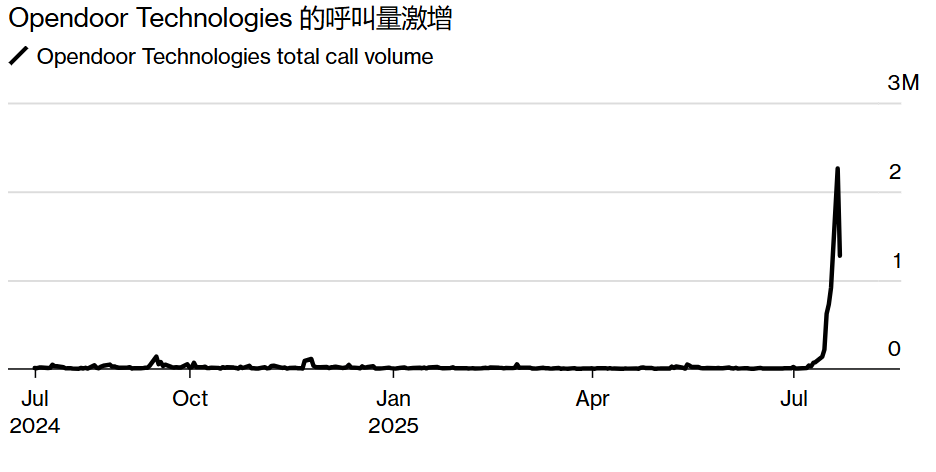
This social media-driven speculative frenzy initially focused on digital real estate company Opendoor Technologies (OPEN.US), whose stock price soared 312% from less than $1 in six days, and options trading volume surpassed 2 million shares, surpassing the level of GME.US (GME.US) when it was at its peak in 2021. However, the stock fell continuously for the next two trading days. On Wednesday, it fell 20% in a single day, and trading volume surged to more than 340% of the average for the past three months.
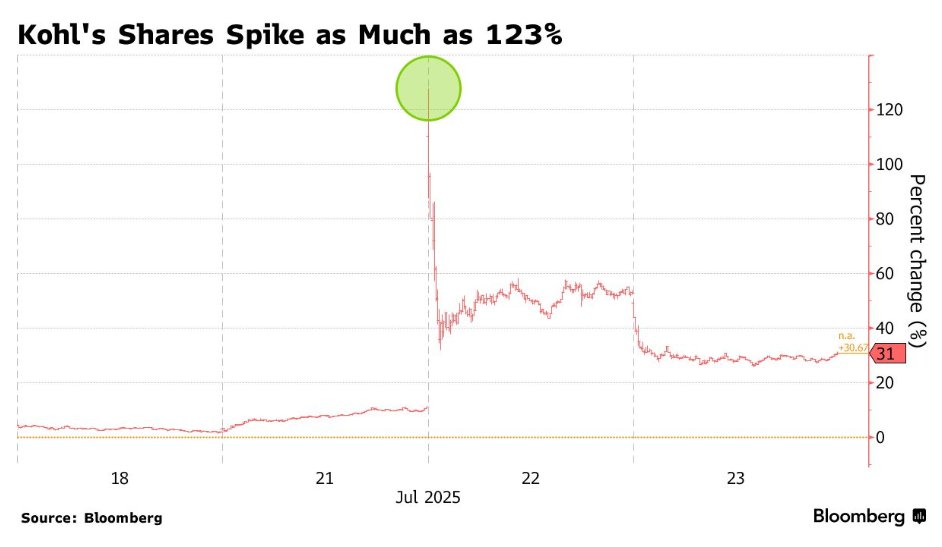
The speculative feast soon spread to more low-cap stocks. The troubled retailer Kohl's (KSS.US) became the focus due to short positions accounting for 48% of freely tradable shares. After the stock price soared 38% in a single day on Tuesday, there was another sharp correction of 14% in the intraday market on Wednesday.
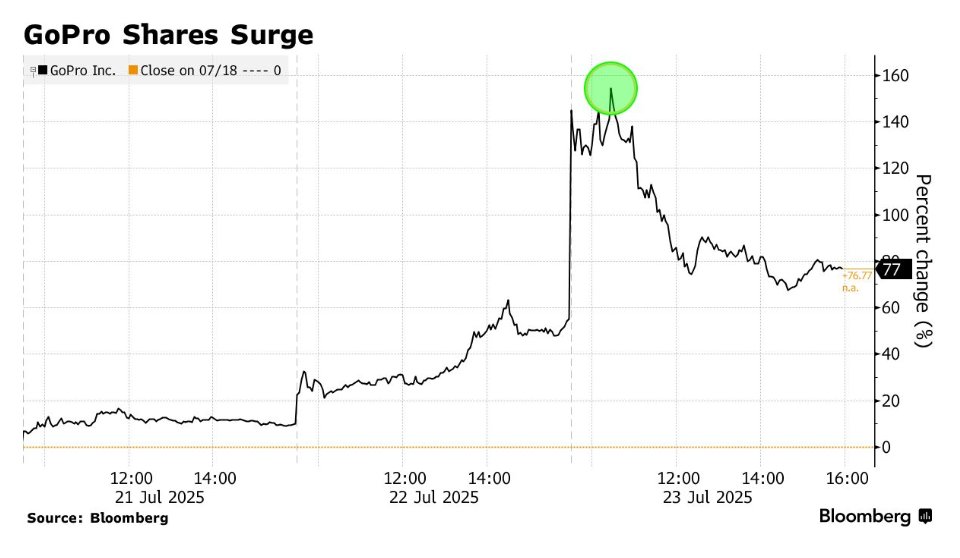
Wearable device manufacturer GoPro (GPRO.US) has accumulated a cumulative increase of 75% this week, the biggest weekly increase in history. The fact that its short positions account for nearly 10% of tradable shares attracted the attention of a large number of retail investors. Additionally, this year the company was involved in a patent infringement dispute with competitor Insta360.
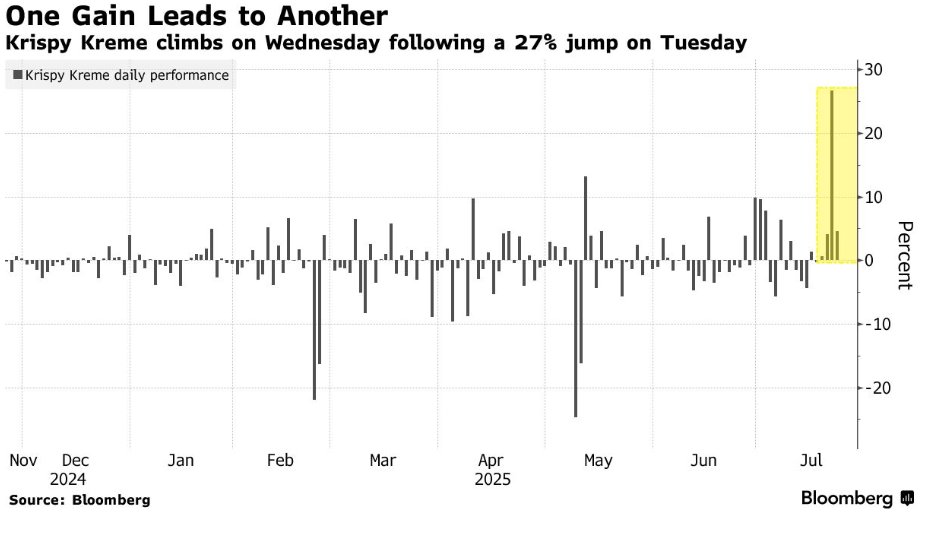
Donut maker Krispy Kreme (DNUT.US) surged 35% in the intraday session on Wednesday. Although it eventually narrowed to a 4.6% increase, the overall increase this week still reached 38%, with bullish options trading volume breaking the record high of 1 million copies. Notably, the company's recent stock price was under pressure due to the suspension of quarterly dividends and the termination of cooperation with McDonald's, and the background that 30% of tradable shares were shorted provided a basis for shorting it.
Max Gokhman, Deputy Chief Investment Officer of Franklin Templeton Investment Solutions, pointed out that the current retail investment logic has fundamentally changed: “For meme stock traders, company fundamentals are no longer central to decision-making; the appeal of social media opinion leaders is the key.
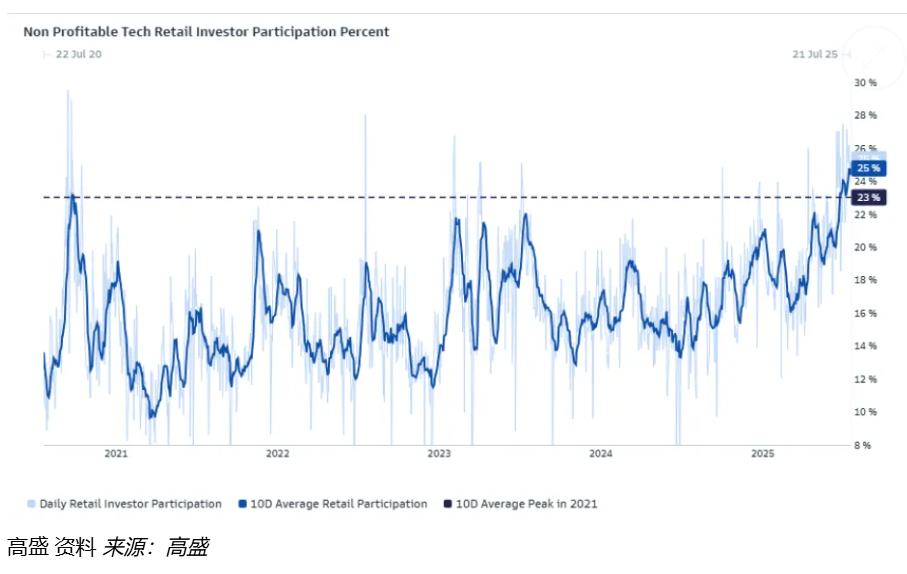
A TikTok blogger's recommendation could instantly drive 100,000 investors to follow suit.” According to Citadel Securities data, retail investors have been net buying cash stocks for 19 consecutive trading days, the longest record since the meme stock boom in 2021. The 10-day average retail participation rate tracked by Goldman Sachs has risen to a record high of 25%.
Jack Janasiewicz, portfolio manager at Natixis Investment Management Solutions, believes that the current market shows clear rotation characteristics: “This is like extensive sector rotation. Varieties that have risen too much in the previous period have been sold off, while those that have surpassed the decline have been squeezed out.” Joe Gilbert, portfolio manager at Integrity Asset Management, warns of risk: “Retail confidence is at an all-time high due to the effectiveness of recent dips buying strategies, but this consistent expectation just lays a risk for a market correction.”
According to the data, bears made up a remarkable amount of strength in the meme stock market in this round. Taking Opendoor as an example, its short positions faced tremendous pressure during the sharp rise in stock prices, while stocks with high short selling ratios such as Kohl's also showed signs of shorting. However, unlike AMC (AMC.US) and GameStop using stock price increases to finance through additional stock issuance in 2021, most companies have yet to announce capital operation plans, and the market is concerned about whether these companies can turn short-term stock price fluctuations into long-term value.
The sustainability of this speculative feast is being tested. Krispy Kreme fell from a 35% increase to 4.6% on Wednesday, Opendoor pulled back for two consecutive days, and GoPro's closing gains narrowed to 12% on Wednesday, all showing that the current gains are unstable.
Analysts pointed out that during the critical period of the Federal Reserve's policy shift, the phenomenon of retail capital continuing to pour into ultra-small market capitalization stocks not only reflects an increase in market risk appetite, but also conceals the risk of inflection points in liquidity. As more low-liquidity stocks are brought into speculative view, this social media-driven capital game is likely to face more intense fluctuations.