
- PREMIUM
- LIVE QUOTES
- INSTITUTIONS
 Index Options


 State Street
 CME Group
 Nasdaq
 Cboe
Cboe TradingView
 Wall Street Journal
Here's Why We're Not Too Worried About Palladyne AI's (NASDAQ:PDYN) Cash Burn Situation
Just because a business does not make any money, does not mean that the stock will go down. For example, Palladyne AI (NASDAQ:PDYN) shareholders have done very well over the last year, with the share price soaring by 378%. But the harsh reality is that very many loss making companies burn through all their cash and go bankrupt.
In light of its strong share price run, we think now is a good time to investigate how risky Palladyne AI's cash burn is. In this article, we define cash burn as its annual (negative) free cash flow, which is the amount of money a company spends each year to fund its growth. First, we'll determine its cash runway by comparing its cash burn with its cash reserves.
When Might Palladyne AI Run Out Of Money?
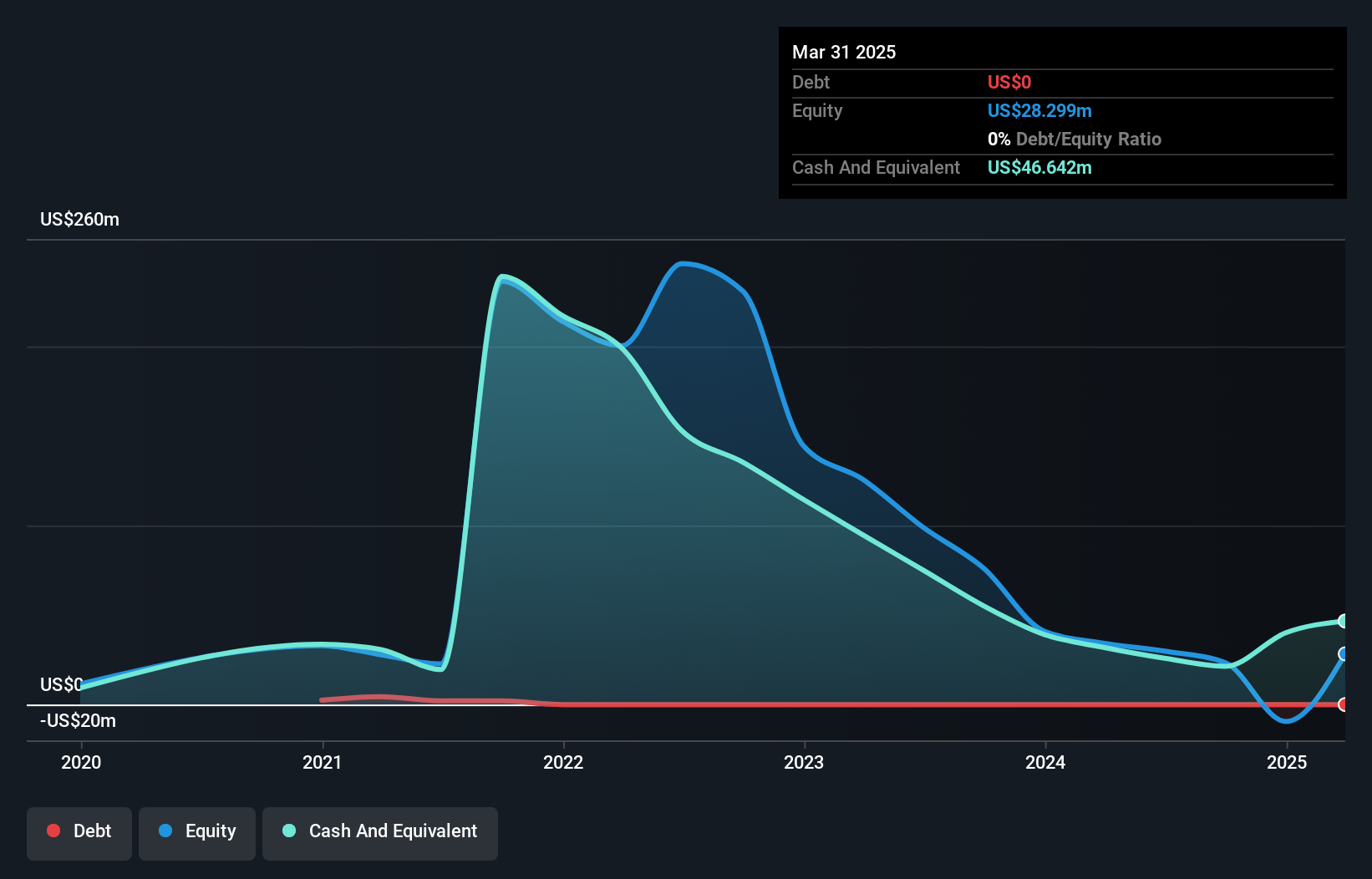
You can calculate a company's cash runway by dividing the amount of cash it has by the rate at which it is spending that cash. As at March 2025, Palladyne AI had cash of US$47m and no debt. In the last year, its cash burn was US$23m. So it had a cash runway of about 2.0 years from March 2025. That's decent, giving the company a couple years to develop its business. You can see how its cash balance has changed over time in the image below.
See our latest analysis for Palladyne AI
How Well Is Palladyne AI Growing?
Happily, Palladyne AI is travelling in the right direction when it comes to its cash burn, which is down 64% over the last year. But it was a bit disconcerting to see operating revenue down 17% in that time. On balance, we'd say the company is improving over time. Clearly, however, the crucial factor is whether the company will grow its business going forward. So you might want to take a peek at how much the company is expected to grow in the next few years.
How Easily Can Palladyne AI Raise Cash?
Palladyne AI seems to be in a fairly good position, in terms of cash burn, but we still think it's worthwhile considering how easily it could raise more money if it wanted to. Generally speaking, a listed business can raise new cash through issuing shares or taking on debt. Commonly, a business will sell new shares in itself to raise cash and drive growth. We can compare a company's cash burn to its market capitalisation to get a sense for how many new shares a company would have to issue to fund one year's operations.
Since it has a market capitalisation of US$294m, Palladyne AI's US$23m in cash burn equates to about 7.9% of its market value. That's a low proportion, so we figure the company would be able to raise more cash to fund growth, with a little dilution, or even to simply borrow some money.
How Risky Is Palladyne AI's Cash Burn Situation?
On this analysis of Palladyne AI's cash burn, we think its cash burn reduction was reassuring, while its falling revenue has us a bit worried. Considering all the factors discussed in this article, we're not overly concerned about the company's cash burn, although we do think shareholders should keep an eye on how it develops. Taking a deeper dive, we've spotted 3 warning signs for Palladyne AI you should be aware of, and 1 of them makes us a bit uncomfortable.
Of course, you might find a fantastic investment by looking elsewhere. So take a peek at this free list of interesting companies, and this list of stocks growth stocks (according to analyst forecasts)
Have feedback on this article? Concerned about the content? Get in touch with us directly. Alternatively, email editorial-team (at) simplywallst.com.
This article by Simply Wall St is general in nature. We provide commentary based on historical data and analyst forecasts only using an unbiased methodology and our articles are not intended to be financial advice. It does not constitute a recommendation to buy or sell any stock, and does not take account of your objectives, or your financial situation. We aim to bring you long-term focused analysis driven by fundamental data. Note that our analysis may not factor in the latest price-sensitive company announcements or qualitative material. Simply Wall St has no position in any stocks mentioned.