
After the release, the stock price surged 20% in a single day. Botox became the “panacea” for Kedi B (02487)?
On March 10, the new Hong Kong Stock Connect list adjustments officially came into effect. Innovative drug companies “enter six out of one”, and Cordi-B (02487) is one of them.
Looking at the past period, after being technically transferred out of the Hong Kong Stock Connect investment target, individual stocks will mostly experience significant stock price declines in the short term due to factors such as liquidity and withdrawal pressure, and Kodi is no exception. Within 6 trading days of the official withdrawal, Kodi's stock price fell by 20.60%.
However, Kodi's stock price did not continue to decline. Instead, it fluctuated sideways after exiting the “three consecutive days” on March 20. Until April 7, the company's stock price fell 26.88% in a single day due to sharp fluctuations in the Hang Seng Index market. And this seems to have thrown a “golden hole” for Kodi.
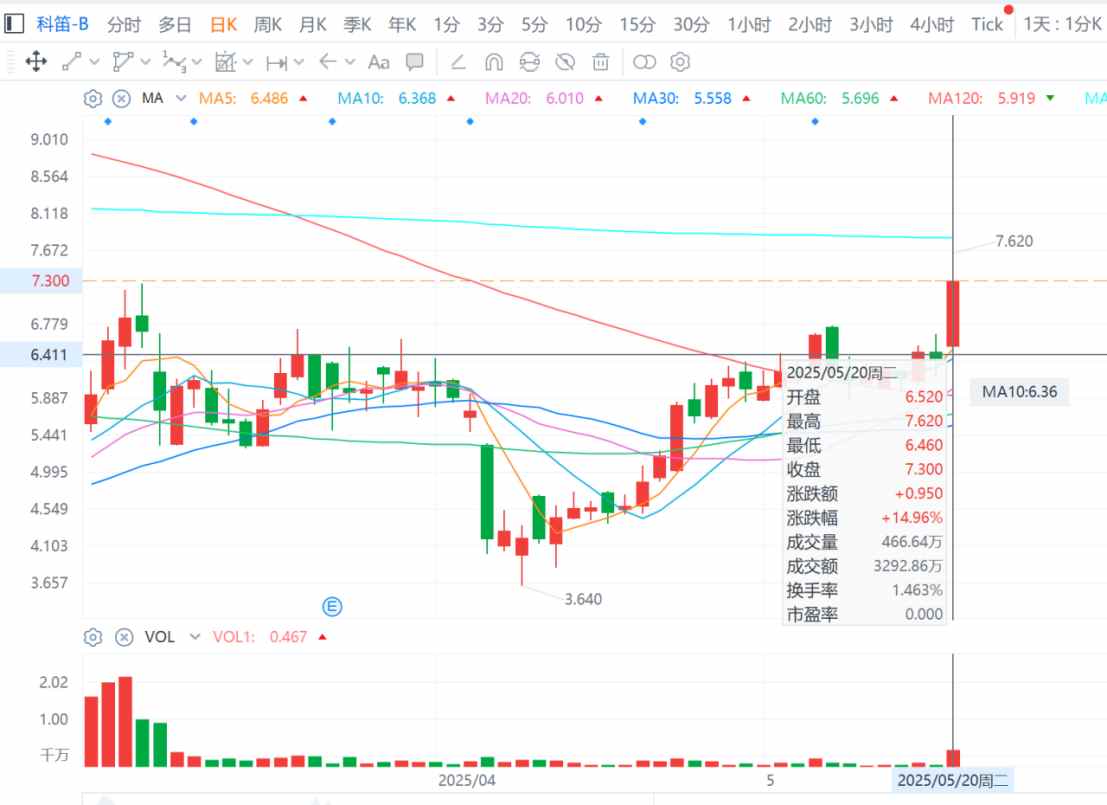
The Zhitong Finance App observed that on April 9, Kodi's stock price bottomed out at HK$3.64, a new low since listing, but continued to rebound over the next month and a half. On May 20, Kodi's intraday stock price rose as high as 20%, reaching a maximum price of HK$7.62, breaking through the previous high stock price before withdrawal. In other words, after more than 2 months of stock price fluctuations, Kodi's stock price finally recovered all of its declines after “clearance.”
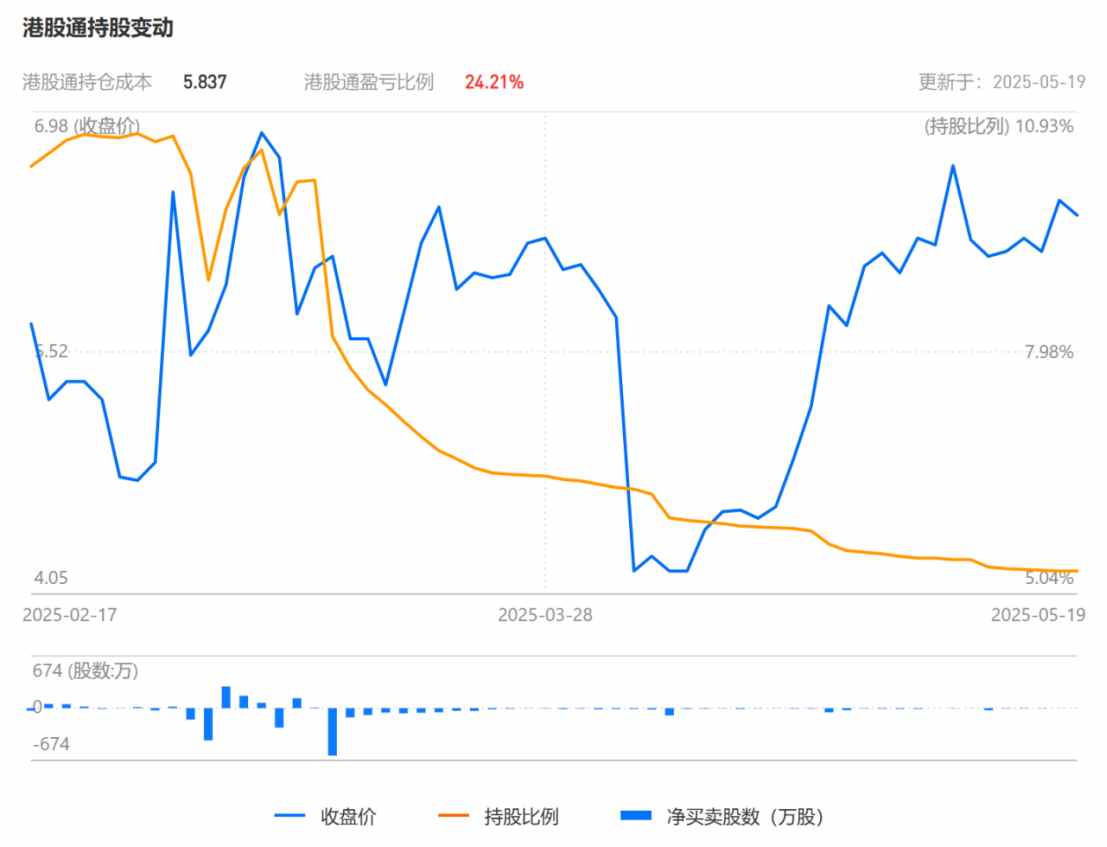
Judging from changes in Hong Kong Stock Connect, Kodi's Hong Kong Stock Connect shareholding ratio was 10.07% on March 10. Over the next 2 months, regardless of whether the company's stock price rose or fell, the shareholding ratio continued to decline. As of May 19, only 5.32% remained. However, when a new round of upward market growth began on April 10, Kodi's Hong Kong Stock Connect shareholding ratio was 5.94%. The change ratio was only 0.62% in the past 40 days, which is a significant slowdown from the previous period.
Stock prices supported by fundamentals after withdrawal
As mentioned above, Kodi's stock price experienced a continuous wave of bottoming back after April 7 this year. From a technical point of view, April 22 was a critical point. The company's stock price surged 6.33% on the same day and reached the 10-day EMA for the first time, thus starting the subsequent upward trend between the 5th and 10th lines.
On April 22, Kodi officially revealed its 2024 annual report. Its solid fundamental performance is undoubtedly the key to supporting the starting stock price. The Zhitong Finance App learned that in 2024, Kodi's total revenue was about 280 million yuan, up about 103% year on year; current gross profit was about 144 million yuan, up about 102.0% year on year; net loss was about 434 million yuan, narrowing 77.91% year on year.
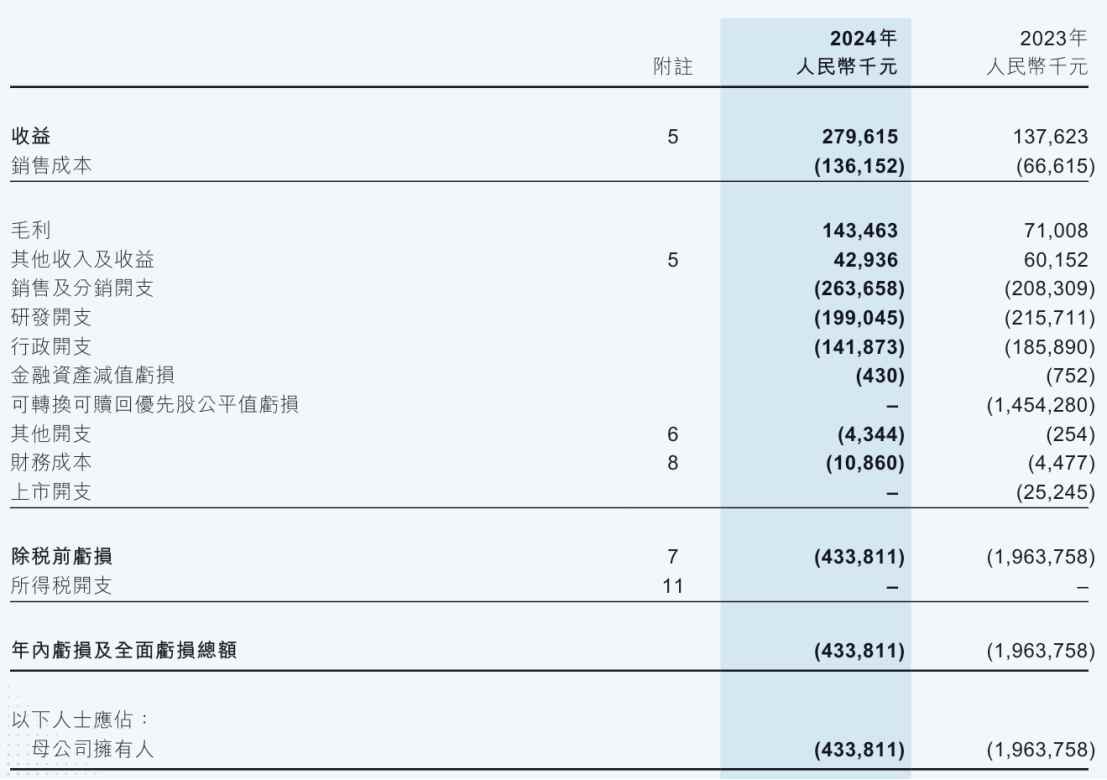
Based on financial reports, the company's revenue growth during the reporting period was mainly due to increased sales of its hair disease and care products and daily skincare products.
Judging from the company's revenue split, current hair and domestic revenue exceeded 160 million yuan, with a year-on-year growth rate of about 70%. Among them, products such as selenium disulfide, OTC minoxidil, and anti-release capsules under the company's blue silk geometric brand achieved rapid release; the repurchase rate for repeat customers of cross-border products was about 34% in 2024. However, the skincare product line is mainly European brand, with revenue exceeding 110 million yuan, with a year-on-year growth rate of about 170%, of which the oleocanthal series sold about 70%. The annual sales volume of the oleocanthal series exceeded 170,000 bottles, and the color repair series sold over 70,000 bottles; the year-on-year e-commerce channel of interest grew by more than 200%, accounting for about 40%.
Thanks to the gradual adjustment and maturity of the company's current skincare brand line, the increase in the gross margin of the brand line is driving the company's overall gross margin upward. According to the data, the company's gross margin in the second half of last year was about 50.6%, an increase of 2.4 percentage points over the previous year, thus stabilizing the company's annual gross margin at 51.3%.
On the other hand, Kodi also achieved further cost reduction and efficiency on the cost side in 2024. Financial reports show that in 2024, Kodi's sales, management and R&D expenses accounted for 94.29%, 50.74%, and 71.19% of total revenue, respectively, a year-on-year decrease of about 57%, 84% and 86%, respectively. Also, on the basis of doubling revenue, the company's total operating expenses in 2024 were 600 million yuan, a decrease compared to 2023.
On this basis, Kodi's net loss of non-return to mother in 2024 was 433 million yuan, a year-on-year decrease of 13.23%; 24H2 deducted non-net loss of 233 million yuan, a year-on-year decrease of 27.86%.
In addition to impressive financial data, the financial report also mentioned that in 2025, the company will enter the second phase of growth, and will launch three major prescription drugs, namely 4% minocycline foam for acne, topical finasteride spray to treat hair loss, and topical lidocaine tinocaine cream for epidermal anesthesia.
Among them, topical 4% minocycline foam and topical finasteride spray are license-in models, with low milestone payments and sales shares; medical anesthetic paste is self-developed by the company. The product market space is large, the competitive landscape is relatively better, and the profit margin is the main driving force for continuous growth over the next 3 to 5 years. The market is expected to reach 600 to 1 billion yuan at that time.
How to open up the botulinum toxin market
In March of this year, an injectable type A botulinum toxin (CU-20101) was approved by the Korea Food and Drug Administration (MFDS), which attracted market attention. The reason is that this botulinum toxin is a product project developed by Korea's Jong-geun-dang Biology in collaboration with Kodi and led by Kodi to improve moderate to severe wrinkles between eyebrows. This time, CU-20101 was first approved in Korea, and to a certain extent, it is also proof of the technical strength of Kodi products.
The recent rise in stock prices also shows, to a certain extent, the market's positive attitude towards Kodi's involvement in the domestic botulinum toxin market.
In fact, this comes at a time when domestic consumer health results for the first quarter are under pressure. According to the Zhitong Finance App, in the first quarter of this year, the performance of most listed companies in the domestic consumer healthcare industry declined to varying degrees.
Specifically, leaders in all segments of consumer medicine, from medical aesthetics, ophthalmology, dentistry, pharmaceutical retail, branded traditional Chinese medicine to growth hormone, handed over the worst “report card” in history in the first quarter of 2025. For example, Haohai Biotech in the medical and aesthetic field saw a “double drop” in revenue and net profit in a single quarter for the first time. Even so, Haohai Biotech stated at the first quarter results meeting that it “will accelerate the botulinum toxin market layout.”
At the 2024 and 2025 first quarter results briefing, Hou Yongtai, chairman of Haohai Biotech, said, “The company is jointly developing botulinum toxin products with Eirion of the United States. Among them, topical botulinum toxin products have completed phase II clinical trials and are entering phase III clinical trials. We plan to start phase III testing in China and the US at the same time, so that the products can basically be launched simultaneously in China and the US.”
After announcing the latest progress in botulinum toxin product development, Haohai Biotech's stock price recently rebounded markedly. As of May 20, the company's stock price had broken out of “three lianyang” and followed the trend to recover the decline since April 7.
It is easy to see from the market's performance that investors are concerned about the development of Haohai Biotech's botulinum toxin products, and this may be related to the market's spatial potential and competitive pattern.
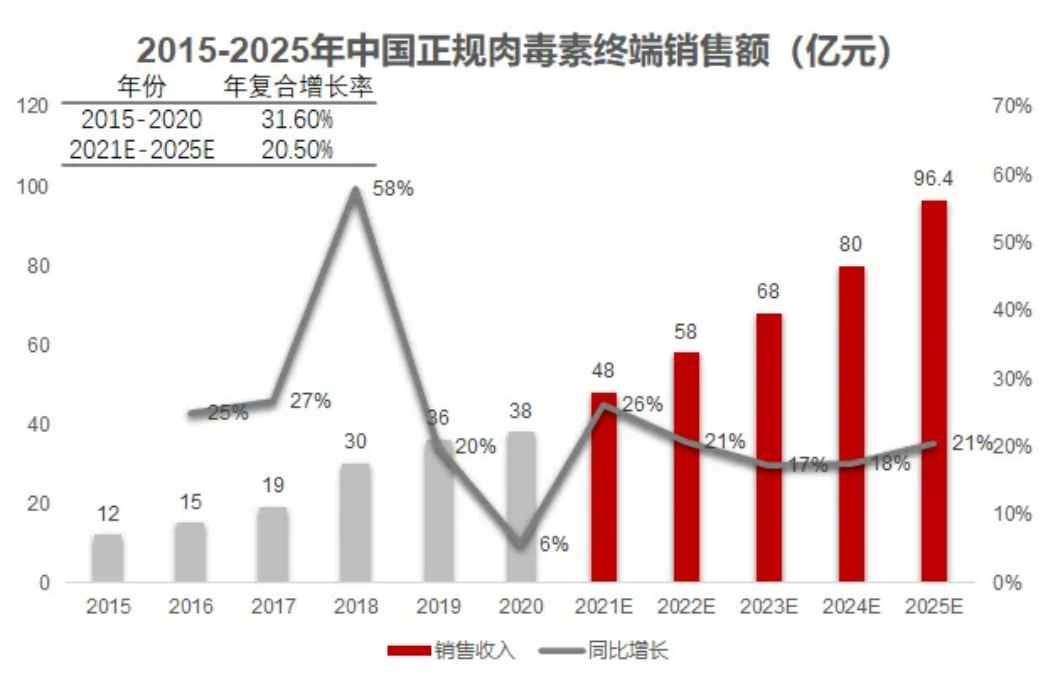
The Zhitong Finance App learned that as people's awareness and acceptance of medical beauty continues to increase, the scale of consumption in the botulinum toxin market will continue to expand. According to the Frost & Sullivan report, China's medical and aesthetic botulinum toxin products market will reach 11.4 billion yuan in 2025, and the compound annual growth rate from 2020 to 2025 is 23.9%, showing a strong growth trend.
In terms of the competitive landscape, up to now, there are a total of 6 botulinum toxin products that have been approved for marketing in China. They are Lanzhou Biotech's Baotou, America's Ipsom, France's Ipsom, Korea's Xiujie's Le Tibao, Germany's Maxx Aesthetics, and Dashibile from American Revance. Among them, Botox and Hengli are the first botulinum toxin products to enter the market, and occupy the high-end and lower end markets respectively. Botox's market share is about 50%, and Hengli's market share is 30%.
And with the new explosion of the botulinum toxin market since 2024, latecomers are expected to seize market share from traditional giants with differentiated advantages such as raw materials or product forms. For example, the botulinum toxin product disclosed by Haohai Biotech this time is an external application. Compared with the injection method, the topical application is more suitable for home supplementation and meets the current lunch-style medical and aesthetic needs of consumers.
Back to Kodi, although the company has not disclosed any further information on its CU-20101, now CU-20101 has been approved first in Korea, which not only shows that Kodi's technical ability in the botulinum toxin medical and aesthetic product line has been verified, but also provides a key fulcrum for opening up the global market. It is worth noting that another recombinant botulism product from Kodi is also progressing steadily. In this context, although Kodi has been “released,” the valuation is still expected to continue to rise, driven by subsequent “medical and aesthetic premiums.”