
- PREMIUM
- LIVE QUOTES
- INSTITUTIONS
 Index Options


 State Street
 CME Group
 Nasdaq
 Cboe
Cboe TradingView
 Wall Street Journal
“Tiangong Ultra” won the championship in half, and the majority shareholder preferred choice (09880) ushered in investment opportunities
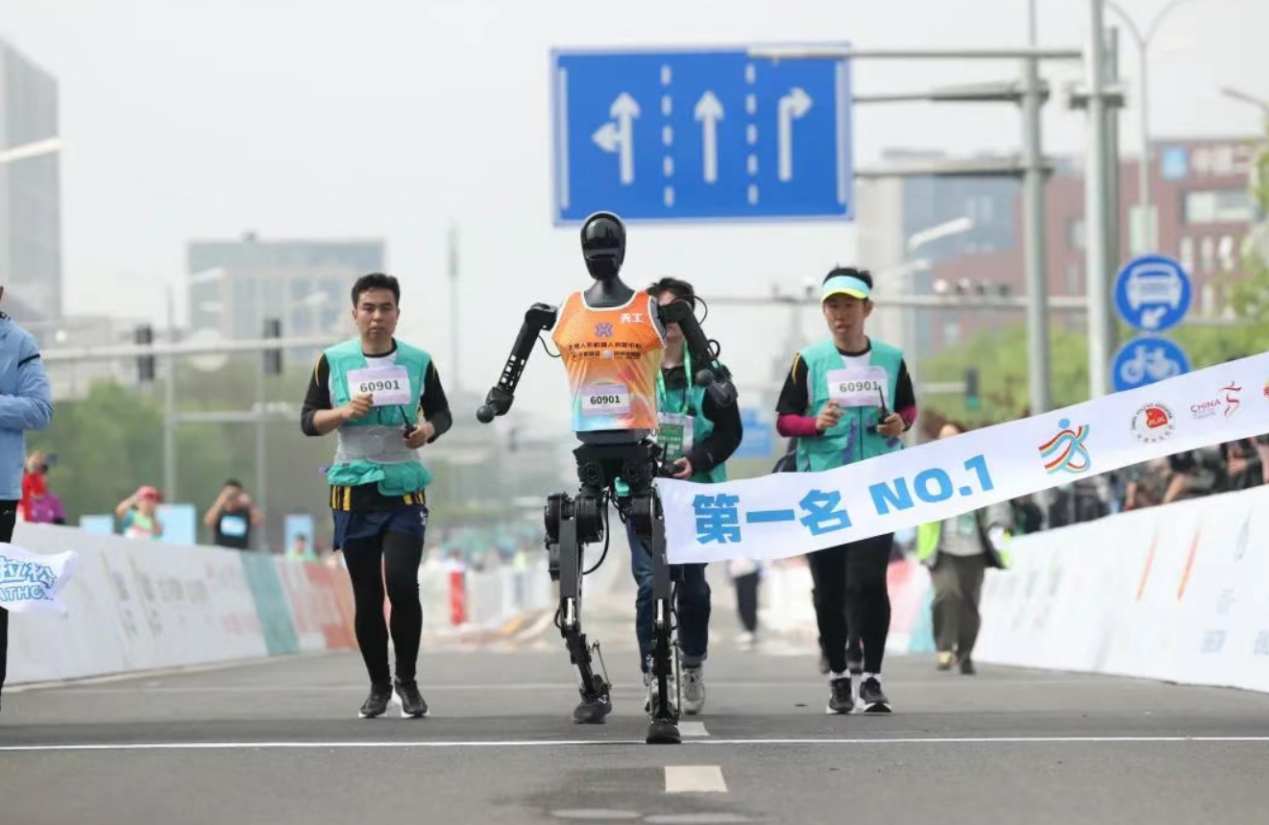
The Zhitong Finance App learned that on April 19, the world's first humanoid robot half marathon was held in Yizhuang, Beijing. Tiangong Ultra from the Beijing Humanoid Robot Innovation Center took the lead in hitting the line and won the first humanoid robot half marathon with a score of 2 hours and 40 minutes.
The “Tiangong Ultra” robot is popular, and the shareholders and related concepts behind it have become an investment hotspot. For example, the “First Humanoid Robot Stock” (09880) listed in Hong Kong is an important shareholder behind the Beijing Humanoid Robot Innovation Center. Just yesterday, Preferred Choice announced that it will establish a wholly-owned subsidiary of Walker Tiangong Robotics in Yizhuang, Beijing to be responsible for the full commercialization and global sales of humanoid robots such as the Walker (Walker) series, Tiangong series, and Tiangong Walker (scientific research and education version). This is another major initiative following the joint launch by the Preferred Choice Science and Innovation Center on March 12, a full-scale humanoid robot platform for scientific research and education, Tiangongongzhier.
“Tiangong Ultra” won the world's first humanoid robot half marathon
On April 19, the world's first “man-robot running together” half marathon began in Yizhuang, Beijing. The total distance was about 21.1 kilometers. A total of 20 robot teams from different provinces participated, covering robot runners such as Tiangong Ultra, Songyan Power N2, Yushu G1, Zhuoyide XO2, Kuafu, and Walker 2.
In the end, Tiangong Ultra won the championship in this competition with a time of 2 hours and 40 minutes. The N2 robot and Walker 2 recorded runner-up and third place in 3 hours and 37 minutes and 4 hours 25 minutes respectively. According to information, Tiangong Ultra's R&D center is the Beijing Humanoid Robot Innovation Center, the N2 robot is Beijing Songyan Power, and the Walker 2 is Shanghai Zhuoyide Robotics Company.
Picture Source: Online Media
The Tiangong Ultra robot is 1.8 meters tall and weighs 55 kilograms. It is one of the few full-sized humanoid robots among all “contestants”. This height requires fast running on all kinds of outdoor surfaces, and places very high demands on hardware stability and software generality. Behind winning the championship is the accumulation of technology from many star companies in the field of robotics. At the end of 2023, as the initiator and general manager unit, YoubiChuan co-funded the establishment of the Beijing Humanoid Robot Innovation Center with 10 industry-leading enterprises and institutions, including Beijing Mechatronics, Xiaomi Robotics, and Yizhuang Robotics. Xiong Youjun, executive director and CTO of Preferential Choice, acted as the legal representative and general manager of the Innovation Center.
Among them, Preferential Choice, which has developed humanoid robots for more than ten years, has strongly supported the development of the Innovation Center. According to Xiong Youjun in an interview with the media, at the beginning of the establishment of the Innovation Center, Youbi Choice not only dispatched R&D personnel to help launch multiple projects, but also opened more than 300 patents to the Innovation Center to help rapidly develop the universal robot parent platform “Tiangong”, and realized the anthropomorphic run of the world's first full-size pure electric humanoid robot. The three major technologies of Tiangong Robotics, motion control, physical intelligence, and ontology platforms all come from the original accumulation of Preferential Choice.
This time, the champion Tiangong Ultra robot not only increased its speed from 6 km/h to a peak speed of 12 km/h, but also became more intelligent through the “Wisdom Discovery”, a general-purpose intelligent platform equipped with “one brain with multiple abilities” and “one brain with multiple machines.” In addition, this robot has high-power integrated joints and a low inertia leg structure design, which is extremely explosive in terms of running speed. At the same time, it also uses a lightweight design, and uses joint heat transfer technology and air cooling technology to achieve thermal balance for the joints, so that the robot can run continuously for a long time.
This contest may go down in history
This humanoid robot half marathon will go down in the annals of history. Looking back on history, every technological change is driven by competition, creating a golden age for decades or even centuries to come under the collision of entertainment and technology.
During the industrial revolution, from the invention of steam engines to internal combustion engines, the automobile industry continued to evolve, and advances in technology allowed cars in the arena to be gradually applied to popular usage scenarios. At the end of the 19th century, soon after the introduction of gasoline internal combustion engine cars, France hosted the world's first car competition using internal combustion engines. The race schedule was 126 kilometers. A total of 102 cars registered. The championship speed was 20 kilometers per hour, which was only equivalent to the average level of horse-drawn carriages at the time. On some sections of the road, cars even needed manpower to drag and move forward. France hosted the first car race in human history using internal combustion engines.
After that, the United States and some European countries had to hold an auto race every few years. In June 1904, France, England, Germany, Belgium and other European countries initiated the establishment of the International Automobile Federation to promote the development of the automobile industry. However, these competitions and technical collisions have made automobile technology more mature, while reducing costs and implementing mass consumption scenarios. If the industrial revolution is centered around Europe, then in the age of artificial intelligence, China will become the center of the world.
Just like the manned lunar landing program, which may seem like an unattainable task, the competition uses extreme environments or extreme targets to test the viability of technology. Through an open competition mechanism, leading scientific and technological achievements are stimulated, and the transformation of cutting-edge technology from the laboratory to the market can also be accelerated. And the advancement and commercialization of these technologies, just like the advent of internal combustion engines in the automobile era, will also drive the progress of human civilization. Just like this, the world's first humanoid robot marathon will also leave a strong mark on history.
Preferably selected humanoid robots stand on the cusp of demand
The Zhitong Finance App learned that the preferred choice is the leader in the humanoid robot industry. In recent years, it has continued to increase R&D investment in humanoid robots. In 2024, the R&D cost was 478 million yuan, and the R&D cost rate was 36.6%. As of December 31, 2024, the company held a total of 2,680 authorized patents, with a year-on-year increase of more than 500, accounting for 57.87% of invention patents.
Strong R&D investment has enabled the company to have the most advanced humanoid robot technology in the industry, artificial intelligence technology (BrainNet group brain network architecture), and humanoid robots and artificial intelligence fusion technology (including positioning and navigation, machine vision, and motion control). The company's humanoid robot technology, products and solutions have entered application scenarios in various fields, including AI education, logistics, business services, and industrial manufacturing.
2025 is the first year of mass production of humanoid robots, and their performance growth is expected to accelerate. On the one hand, its Walker S series humanoid robot focuses on industrial scenarios. It has taken the lead in entering many well-known automobile factories to conduct practical training, and has received intended orders for more than 500 units from car manufacturers. Through data collection and training for real scene exercises, the preferred humanoid robot technology and products have evolved rapidly. The newly unveiled third-generation industrial humanoid robot Walker S2 has achieved autonomous power exchange, and achieved breakthroughs in core indicators such as joint stability, reliability of the whole machine structure, battery life, software system stability, positioning and navigation, motion control, and scene adaptability. At present, Preferential Choice has begun collaborative training with multiple, multi-scene, and multi-task humanoid robots at the factory, evolving from stand-alone autonomy to group intelligence, further consolidating its ability to implement large-scale implementation in industrial scenarios. At the same time, it will also increase the company's performance.
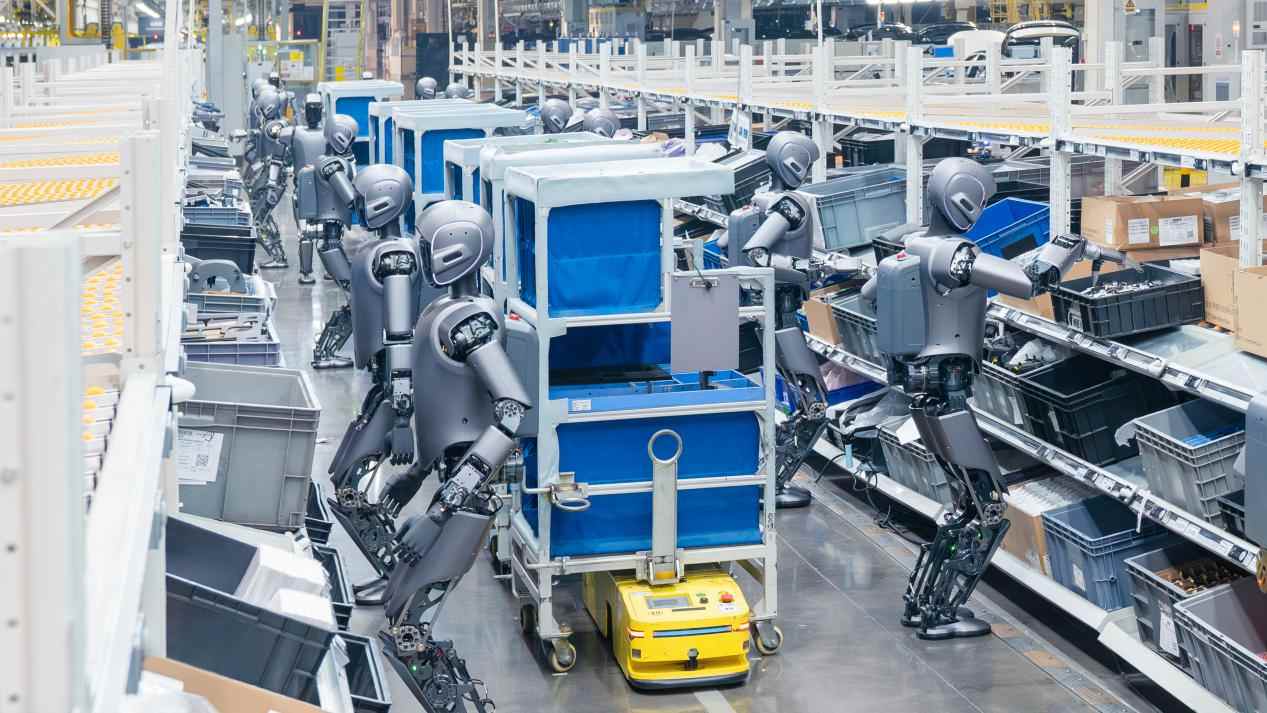
On the other hand, other industry scenarios are also exploding. In March, Easyhome signed a strategic cooperation agreement with YoubiChuan to jointly promote the application of humanoid robots in commercial sales scenarios such as Easyhome's new retail stores. In 2025, Easyhome will procure and deploy 500 units of Yibi Simulated Humanoid Robots, promote the product, and plan to sell 10,000 units during the target period of the strategic cooperation. In the field of scientific research and education, Preferred Choice and the Beijing Humanoid Robot Innovation Center released the 1.7-meter full-size humanoid robot Tiangong Walker for scientific research and education. The price starts at 299,000 yuan. It is the first research-grade humanoid robot within 300,000 yuan in the industry. Pre-orders are open, and delivery will begin in the second quarter. And in this competition, Tiangong Ultra won the championship and brought related humanoid robot products to the forefront of demand.
Highly deterministic investment opportunity
In the capital market, due to the impact of the general environment, Preferential Choice has entered the best “hitting zone”. In the short term, the continuous fermentation of Tiangong Ultra robots will attract a large number of long-term and short-term speculators and continue to drive the valuation recovery; in the long run, mass production of humanoid robots will drive the company's high performance, and the industrial and education scenarios will become a highlight of growth, and market value will also rise steadily under the influence of performance.
The company's management is very optimistic about the company's development. It was announced on April 7 this year that the company's management, including board members, supervisory board members, and senior management each purchased H shares on the open market with their own funds, and may further increase their holdings of the company's shares in due course. Within 12 months after the announcements on February 2, 2025 and April 2, 2025, the management expects that the total amount of H shares purchased will not exceed RMB 50 million.
Major investment banks have also placed very high expectations on Preferred Choice. For example, Citibank's latest report indicates that the current valuation of Preferred Choice can be compared to the level of Bistula's nascent NEV in 2010-2011, adding that the current market value of the company is only 14% of the valuation of Figure AI, the leading global humanoid robot company, while the industry penetration rate is still at the “0 to 1” stage, and there is significant room for growth premiums. It should be noted that since 2011, Tesla's valuation has doubled nearly 200 times.
Overall, this “human-robot co-run” half marathon will accelerate commercial mass production of humanoid robots, and Tiangong Ultra robots will also bring investment opportunities to the best choice and the industrial chain. Preferred Choice is a driving force and an industry leader. Its humanoid robots have been commercialized in various fields, especially in the fields of industrial manufacturing, commercial services, and scientific research and education. There is high certainty in performance growth expectations, and the company has huge room for valuation repair.