
- PREMIUM
- LIVE QUOTES
- INSTITUTIONS
 Index Options


 State Street
 CME Group
 Nasdaq
 Cboe
Cboe TradingView
 Wall Street Journal
Roche Diagnostics joins hands with Kangsheng Global (09960) to pioneer the “full speed era” of accurate diagnosis and treatment
In the era of precision medicine, integrated management of diagnosis and treatment for various diseases such as genetic diseases, solid tumors, and hematological tumors is inseparable from the support of accurate and high-quality diagnostic technology. In recent years, with various advantages such as high throughput, high sensitivity, and low cost, next-generation sequencing (NGS) has shown unprecedented value in assisted disease identification, diagnostic classification, treatment guidance, minimal residual lesion (MRD) monitoring, and prognostic evaluation, empowering a new pattern of accurate diagnosis and treatment.
Zhitong Finance App learned that recently, at the 22nd China International Laboratory Medicine and Blood Transfusion Instruments and Reagents Expo (CACLP), Kangsheng Global (09960) participated in discussions on innovative applications of NGS testing technology in the management of various diseases, breaking the automation and personalized collaboration of NGS technology in genetic disease testing and hematological tumor application scenarios, helping scientific research and clinical transformation to provide more accurate and efficient NGS solutions for patients.
Unstoppable, NGS solves the diagnosis and treatment dilemma
Among hematologic malignancies, lymphoma pathomorphology is complex and highly heterogeneous. According to the World Health Organization (WHO) classification criteria, 90% of lymphomas are non-Hodgkin lymphoma (NHL), of which diffuse large B-cell lymphoma (DLBCL) accounts for 45% to 50%. According to data from the National Cancer Center in 2022, there are 105,000 new lymphoma patients in China, including 98,000 NHL patients.
Rapid and accurate diagnosis is a key part of achieving personalized diagnosis and treatment management of hematologic tumors, and is essential to improving the current state of the disease. Currently, lymphoma diagnosis and treatment methods rely on tissue biopsy and imaging evaluation. There are multiple limitations such as high risk of invasiveness, inability to dynamically monitor molecular evolution, and low sensitivity of MRD detection, leading to delays in early recurrence warning and lack of accurate basis for treatment plan selection. As a cutting-edge diagnostic technology in the field of life sciences, NGS provides a key and reliable basis for molecular typing, prognostic stratification, and treatment drug selection of lymphoma through comprehensive analysis of tumor gene mutations and molecular characteristics. Traditional NGS testing has technical bottlenecks in many areas, such as complicated and time-consuming manual operation and lack of standardization. Establishing an automated and standardized testing process has become an important direction for laboratories to break through urgently.
Furthermore, in accurate diagnosis and treatment of hematologic tumors, dynamic monitoring of MRD plays an unprecedented clinical value as a core step in evaluating efficacy, predicting recurrence, and optimizing treatment. NGS technology based on circulating tumor DNA (ctDNA) is reshaping a new era of MRD detection with advantages such as ultra-high sensitivity, non-invasiveness, and easy collection, and has become the “golden standard” for accurate diagnosis and treatment of lymphoma somatization.
Collaborate to break the game and build an accurate future for hematological tumors
Roche Diagnostics teamed up with Kangsheng Global to accelerate the clinical transformation of lymphoma molecular typing and dynamic monitoring, and provide a precise molecular basis for the formulation of individualized treatment strategies. Both sides are committed to promoting the application and implementation of MRD testing based on lymphoma ctDNA based on the KAPA HyperCap DS NHL panel based on Roche diagnosis. According to reports, the KAPA HyperCap DS NHL panel covers coding regions and some untranslated regions of 383 genes, as well as some intergenic regions. These regions include genomic variants related to NHL and are suitable for different NHL subtypes. At the same time, the panel can be combined with the KAPA HyperCap workflow and open source bioinformatics analysis process to better help laboratories carry out NHL ctDNA testing, which is suitable for various scenarios such as drug use testing, MRD analysis, and cell origin (COO) analysis. Furthermore, the panel uses hybrid capture to concentrate important regions to improve detection sensitivity. In large-scale POLARIX clinical studies, more than 1,000 samples have completed the study using this panel, verifying the potential of ctDNA in dlBCL as a prognostic biomarker.
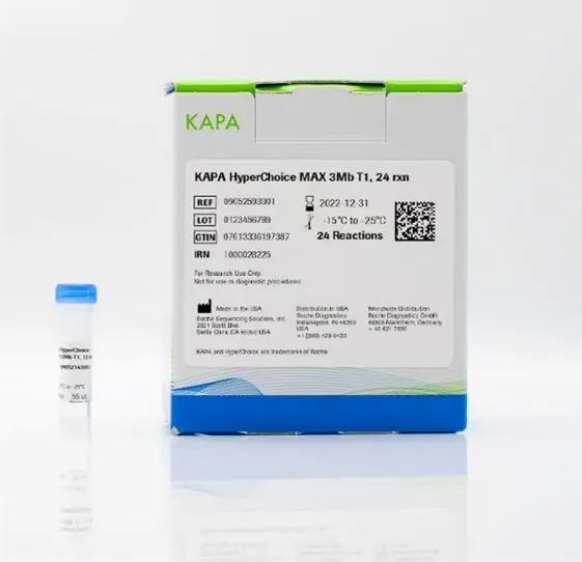
At the same time, the two sides will also accelerate the automation, standardization and systematic upgrading of NGS testing for lymphoma. Based on the latest NCCN clinical practice guidelines and clinical requirements for DLBCL molecular typing testing in China, Kangsheng Global's lymphoma molecular typing NGS testing program is equipped with the “Sample in Result Out” (Sample in Result Out) full-process automated NGS testing program launched by Roche Diagnostics based on local needs. The two sides further explored innovative models and jointly created a complete NGS solution for lymphoma application scenarios.
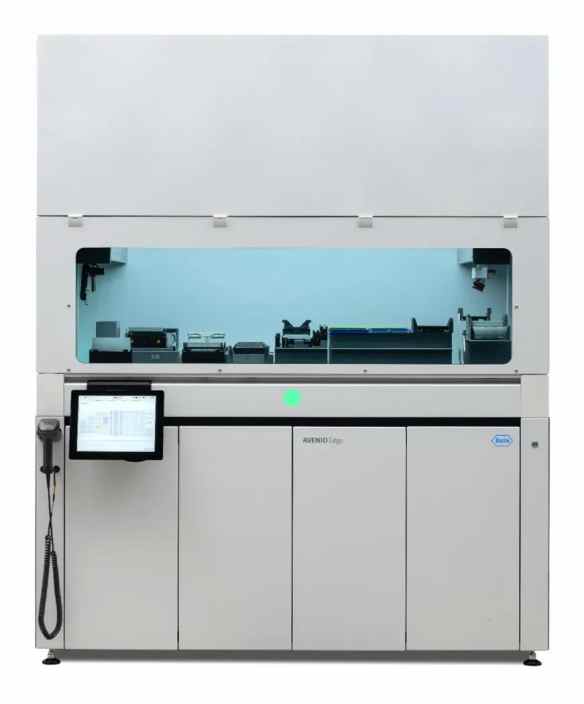
It is reported that by integrating Roche's AVENIO Edge System* fully automated NGS library construction workstations and related library construction and targeted enrichment reagent products, the solution enables one-stop service for the whole process from sample collection, library preparation, to high-throughput sequencing, to bioinformation analysis and test reports, enabling laboratory standardization, automation, personalized construction and management, and providing efficient and reliable support for accurate diagnosis and treatment of lymphoma.
Liang Liang, executive deputy general manager of Wuhan Kangshengda Medical Laboratory Co., Ltd., said, “Kangsheng is committed to providing rich and professional special clinical hematology services. Accurate diagnosis is not only a prerequisite for formulating an effective treatment plan, but also the key to monitoring changes in the condition and evaluating treatment effects. Only by ensuring that diagnostic solutions are advanced, ubiquitous, and standardized can we benefit more patients. I believe that through the 'technological highway' of Roche's automated NGS solution, equipped with Kangsheng's personalized testing project as an 'intelligent navigation system', the two will continue to be deeply integrated, leading China's hematological tumor testing into a new era of 'autonomous driving' for accurate diagnosis and treatment, providing innovative and efficient support for clinical application and patient management.”
Wang Feng, senior director of Roche Diagnostics China, said, “As a global leader in in vitro diagnostics, Roche Diagnostics has continued to increase its NGS layout over the years, bringing advanced, high-quality sample preparation solutions through technological innovation, and promoting a new pattern of automation and standardization of NGS testing. At the same time, Roche Diagnostics has always adhered to the concept of 'in China, for China', pioneered innovative cooperation, and accelerated the implementation of innovative solutions to meet the needs of the local market. This collaboration with Kangsheng Global is another breakthrough leap forward since the cooperation last year. By fully integrating the technical resource advantages of both parties, we are helping to reach a new level of accurate diagnosis and treatment of hematological tumors such as lymphoma. In the future, Roche Diagnostics will maintain open cooperation, accelerate the clinical value transformation of cutting-edge technologies such as NGS, enable precision medicine, and benefit more Chinese patients.”
*The AVENIO Edge System has not been approved by the National Drug Administration. It is for scientific research only and is not used for clinical diagnosis.