
Creating Your Own Trading Strategy
What’s the difference between investing and trading?
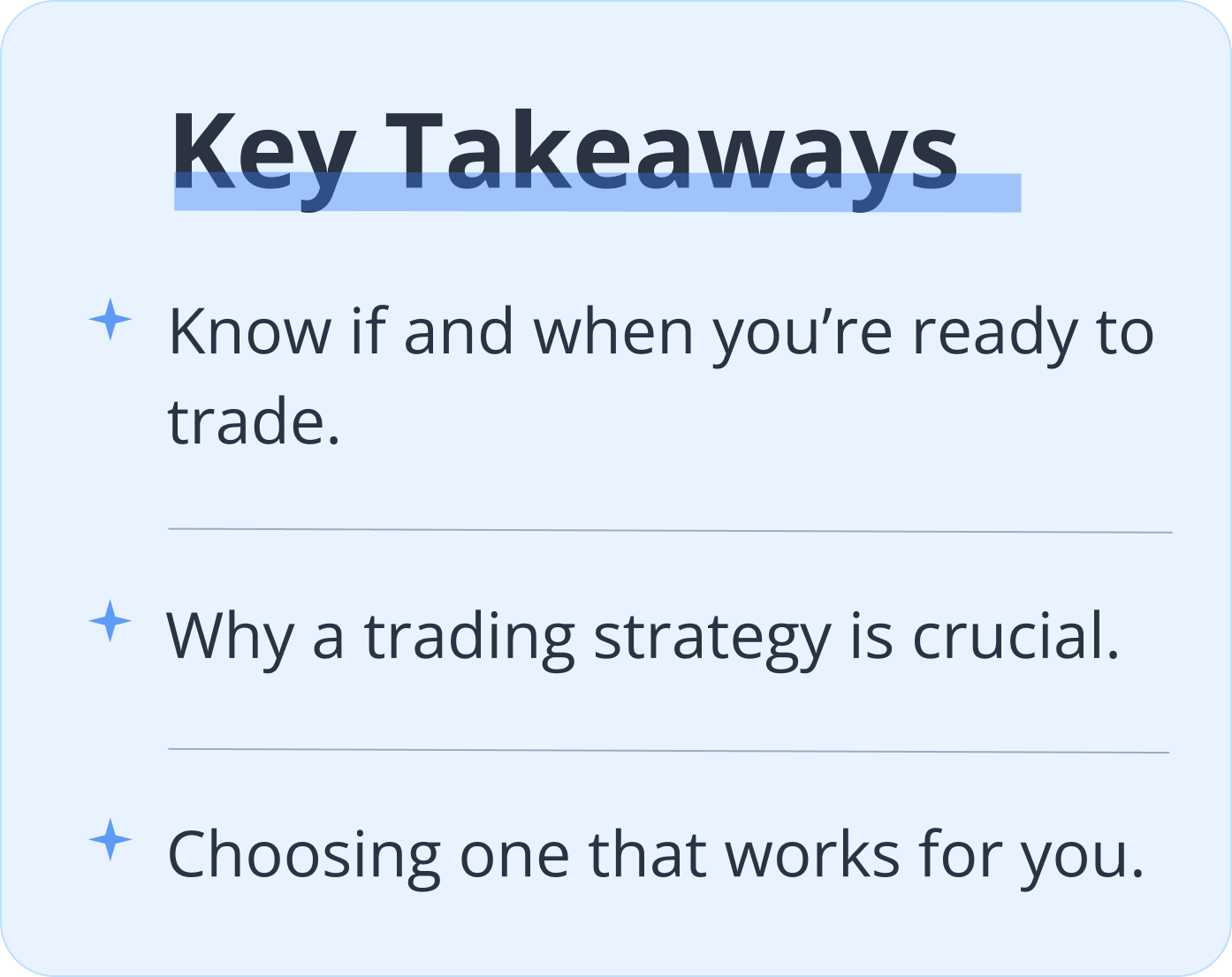
While investing and trading are similar, they aren’t exactly the same. Trading is more about your day-to-day while investing involves the whole of your longer-term goals in the stock market. Both are important concepts, but it’s necessary to know the difference as an investor. Your trading strategies will help you with your trading, while your overall investment goals will be dependent on this. How do you come up with a trading strategy? In this article, we will explore things to consider when developing your own unique strategy.
Developing a good strategy
Not every strategy is suitable for every trader. Sometimes, you may want to come up with your own unique strategy. This is a great way to enhance your skills if you are already an experienced trader. But, if you’re new to investing, it may be wise to hold off on developing an original strategy until you’re more comfortable trading more common ones. If you are only just beginning your investment journey but are interested in creating your own strategies in the future, keep this in mind as you continue to learn. Focus on how strategy development works and the fundamental processes of applying them to trades.
- Know your goals: The first step is to be aware of what you want out of your investments. This way, you will have a clear path to follow for the best chance of reaching your desired outcome.
- Make the rules: Set up rules for yourself. Know exactly what conditions need to be met before you can place a trade.
- Notice patterns: Knowing how to recognize patterns will help you know when and where is the best place to enter a trade. Noticing this can make the process of implementing your strategy easier. Keep certain patterns in mind when coming up with your strategy.
- Be specific: Have certain market conditions you want to profit in. Know the exact specifications of your trading needs and only use your strategy when the conditions are right.
- Choose indicators: You will need to select indicators that work for what you’re hoping to get out of your trading method. Not all indicators perform the same function, so it’s important to know which ones can be best used alongside your strategy.
Once you’ve successfully done these things, you can use your strategy for the first time and see how it works in a real trade. This is where trial and error come into play. It’s possible that your strategy doesn’t work out the way you hoped, and you need to start from square one.
Putting your strategy to work
When the time comes to put your strategy to the test, you’ll get to see how your strategy performs. See if it works the way you intended. It may take a few trades to see how it might pan out in the long run of your investment. If your strategy is flexible, it should allow you to withstand losses and be able to face any market ups and downs that come your way. If your strategy doesn’t do this, you might want to rethink your method. No matter what, it’s necessary to review your strategy every now and then. As the markets are always changing, you need to make sure you can adapt.
Consider your risk tolerance
Don’t forget your risk tolerance when investing. There’s no such thing as a perfect strategy. No matter what you do or how much time you spend crafting the ideal trading strategy, it’s not possible to win every time. Expect to experience loss, and plan for this ahead of time. Not every trade will be right for you, and you may need to learn this over time. If you spend the time and energy to develop a strategy for a trade that might not suit you, it’s important to know that this is part of the process. Don’t continue with a trade or strategy that won’t work in your favor. There’s no shame in returning to the drawing board to come up with a new strategy or look for a trade that fits your tolerance level better.
The bottom line
Creating an effective trading strategy isn’t always simple. It takes time, and you may need to develop a few different ones before settling on the one that works best for you and your needs. Go into trading strategy development with an open mind and a clear idea of what you want out of your trades. Don’t forget that your strategy can change if necessary, and failure is only a part of the process. Not every strategy will be a success, and you won’t win out on every trade.
Want to test out your strategy before using it? Try it out on paper trading !