Planning an Exit in Day Trading
Disclosure: Day trading is a high-risk investment strategy that requires thorough research and understanding of the associated risks. Please consider Webull's Day Trading Risk Disclosure.
It’s important to plan ahead in day trading—exit when your profit target or max loss is reached to avoid the market turning against you. Having a plan helps minimize the impact of market volatility on day traders.
Here are a few strategies and order types that can help traders exit their trades.
Find your risk/reward ratio
The risk/reward ratio (r/r) compares how much a trader is willing to lose (risk) against how much they believe they could profit on a trade (reward). For example, suppose you’ve decided not to risk more than 1.5% of your investment in day trading. If you enter a long position at $40, your stop loss order would be set at $39.4. You also believe that you can exit this trade with a profit at $41.2. This trade has an r/r of 1:2 as you are potentially risking $.60 to make $1.20.
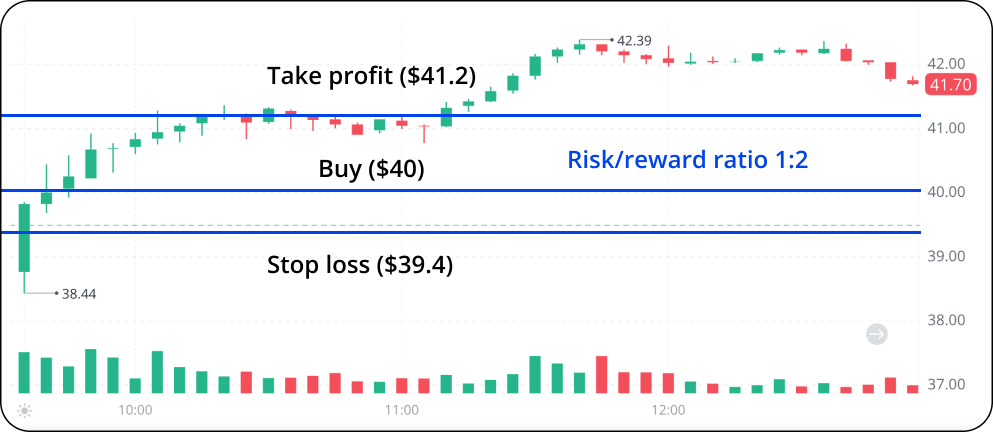
The positive side of a fixed risk/reward ratio is that the losses are always limited to a certain level. Risk control is very important in day trading, especially if short selling is involved.
The downside is that if the stop loss is too narrow, the order may be triggered too early, giving up profits if the trade “bounces back”. It usually takes time for day traders to find a risk/reward ratio that works for them.
Exit order types
After you’ve made an exit plan, you can implement the plan by using some order types.
Stop order
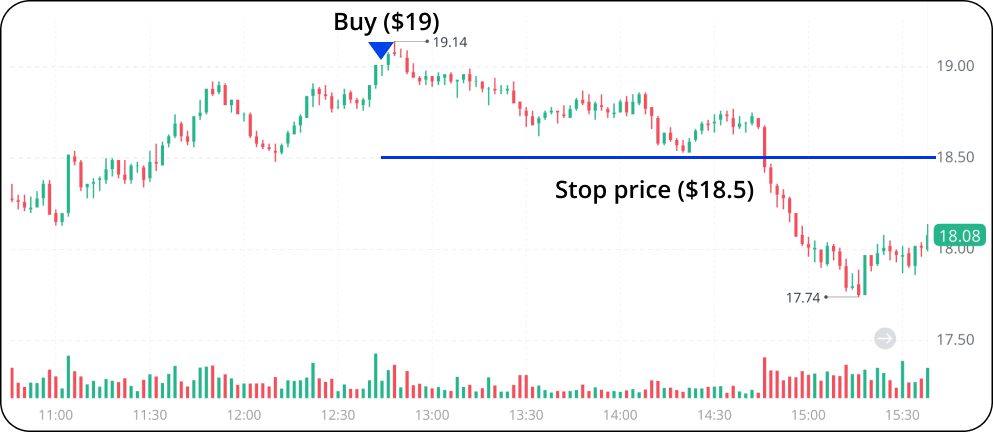
Stop order is also called stop loss order. This type of order is designed to help investors limit losses and automatically close positions if a security reaches a certain price of their choosing. The order will be triggered when the stop price is reached and filled as a market order. Please note, it is possible that a stop order may fill at a price much different from the stop price you entered, especially in a volatile market.
So, for day traders who would like to plan their exit once they enter a trade, this order type would be useful in stopping losses, but not so much in taking profits.
Trailing stop order
Trailing stop order is a more flexible solution to take profit or stop losses. It works like a stop order, but its stop price changes when the market price moves in a favorable direction.
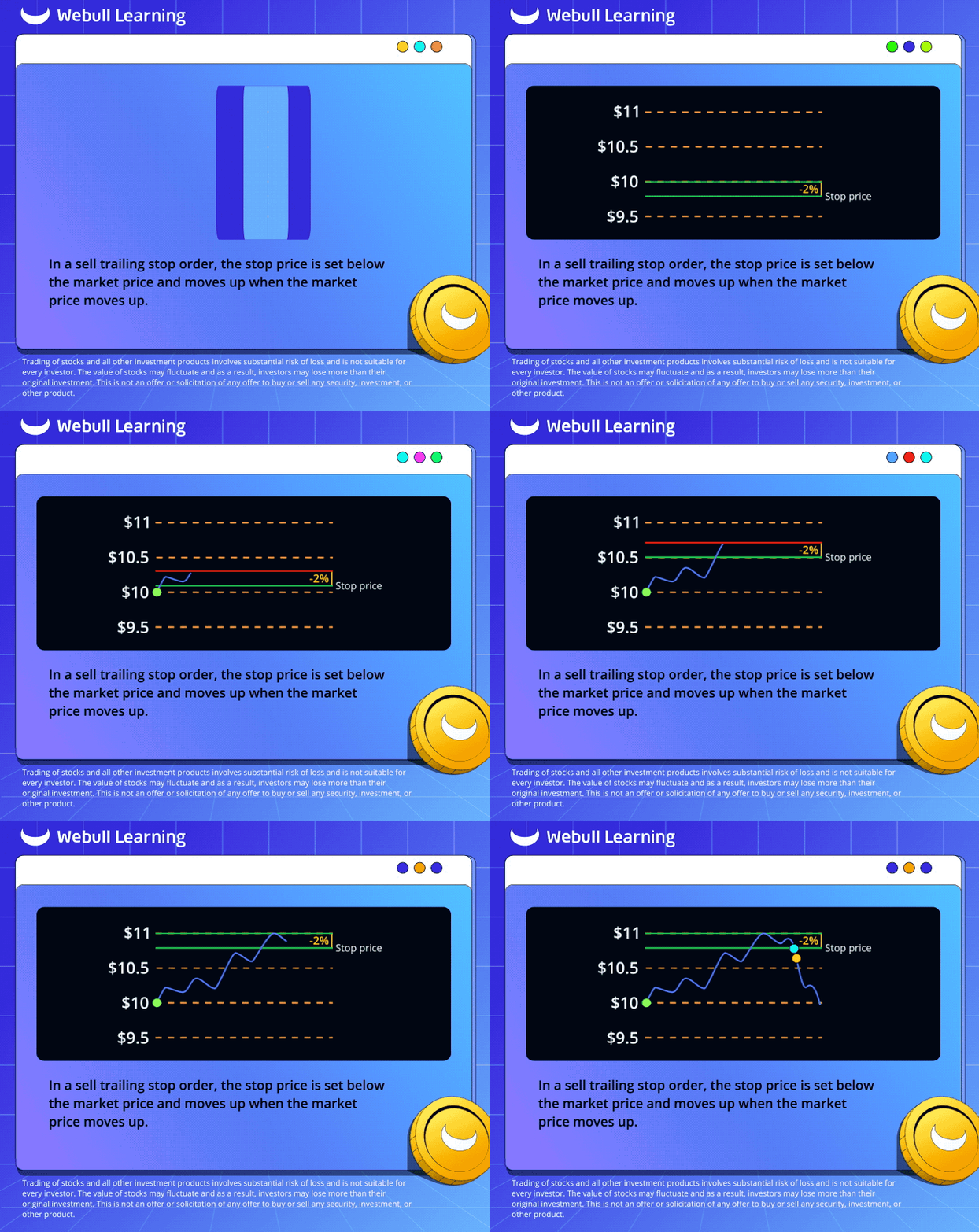
Suppose an investor opens a long position at $10 and places a trailing stop order with a 2% trail percentage to sell the shares. The initial stop price is $9.8 and it will only move up when the market price goes up.
As shown below, the stop price goes up each time a new high is hit. Eventually, the trailing stop order is triggered at $10.78 before the price drops further.
Take profit/stop loss (TPSL) order
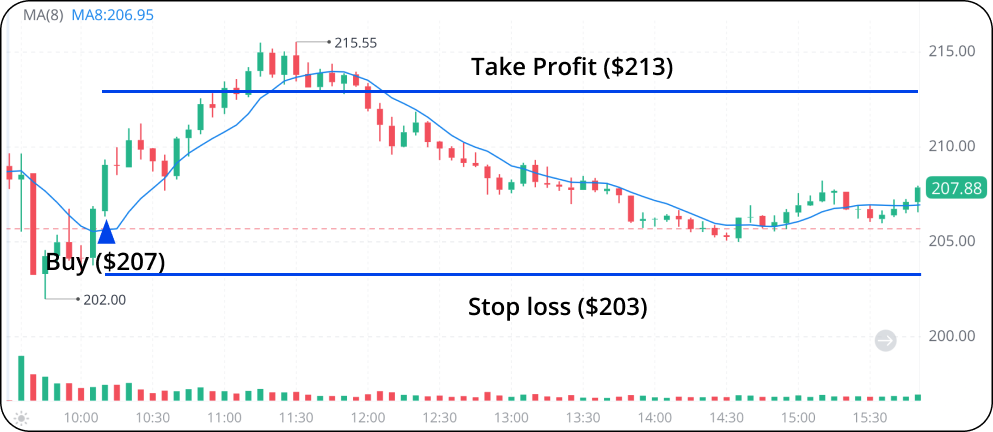
This is a group order that enables investors to open a position and plan an exit in one order. It is a combination of three orders.
The first is a market/limit order to open a long or short position. The other two are sub-orders that will only be submitted when the first one is filled. Both are exit orders—a limit order to protect profits and a stop order to stop losses.
The Bottom Line
Risk management is important in day trading. Investors can establish their exit plans as soon as entering a trade to lock in profits and stop losses.